


A modern blood test for health check isn't just about spotting what's wrong; it's about understanding what's right and how to extend your healthspan. Think of it as a detailed, personalised MOT for your body - a chance to look under the bonnet and get the actionable data you need to stay in peak condition, long before any warning lights start flashing.
A Modern Approach to Longevity with Blood Tests
What if you had a clear map of your internal health, one that showed you the road ahead instead of just where you've been? That's exactly what today's advanced blood analysis offers. The whole philosophy has shifted. It’s no longer a reactive tool we use when we feel unwell, but a forward-thinking one that helps us plot a course for a longer, more vibrant life.
This data-first approach is the bedrock of any serious longevity strategy. By regularly tracking key biomarkers, you can catch subtle changes in your health years, sometimes even decades, before they could grow into chronic problems. The goal here is to extend your 'healthspan', the number of years you spend in good health, not just your lifespan.
From Reactive to Proactive Health Management
In the past, you’d go for a health check to get an all-clear on a specific concern. The modern approach flips this on its head, focusing instead on optimisation and prevention. You're not waiting for something to break; you're actively fine-tuning the system for long-term resilience and performance.
This means looking at a broader set of markers that paint a much richer picture of your health, including:
- Underlying Inflammation: Often called the 'silent killer,' this is a root cause of ageing and many chronic illnesses.
- Metabolic Health: A look at how well your body is managing and using energy from food.
- Hormonal Balance: These chemical signals control everything from your mood and energy levels to your metabolism.
- Nutrient Status: Are you getting the essential vitamins and minerals your body truly needs to function at its best?
When you turn raw biochemical data into clear, actionable insights, you're no longer just a passenger on your health goals. You're in the driver's seat, able to make informed choices that steer you towards a longer, healthier future.
This guide will demystify these important biomarkers. We’ll explore the advanced tests that can predict future health risks and show you how to turn those numbers into a practical, personalised longevity plan. Whether you're aiming for peak performance in your career or simply want more vibrant years ahead, you'll see why blood analysis is an essential tool in your personal health arsenal.
What's Really Inside Your Blood Test Results?
Think of your blood test results as a detailed report card on your body's inner workings. It’s not about passing or failing; it's about getting the clarity you need to make smarter, more informed decisions for your long-term health and vitality. A comprehensive blood test for health check is the first step in moving beyond guesswork and creating a data-driven strategy for longevity.
We start with the foundational panels, which form the core of any good health assessment. These tests give us a broad overview, setting the stage for a deeper look at specific markers tied to how you age and perform.
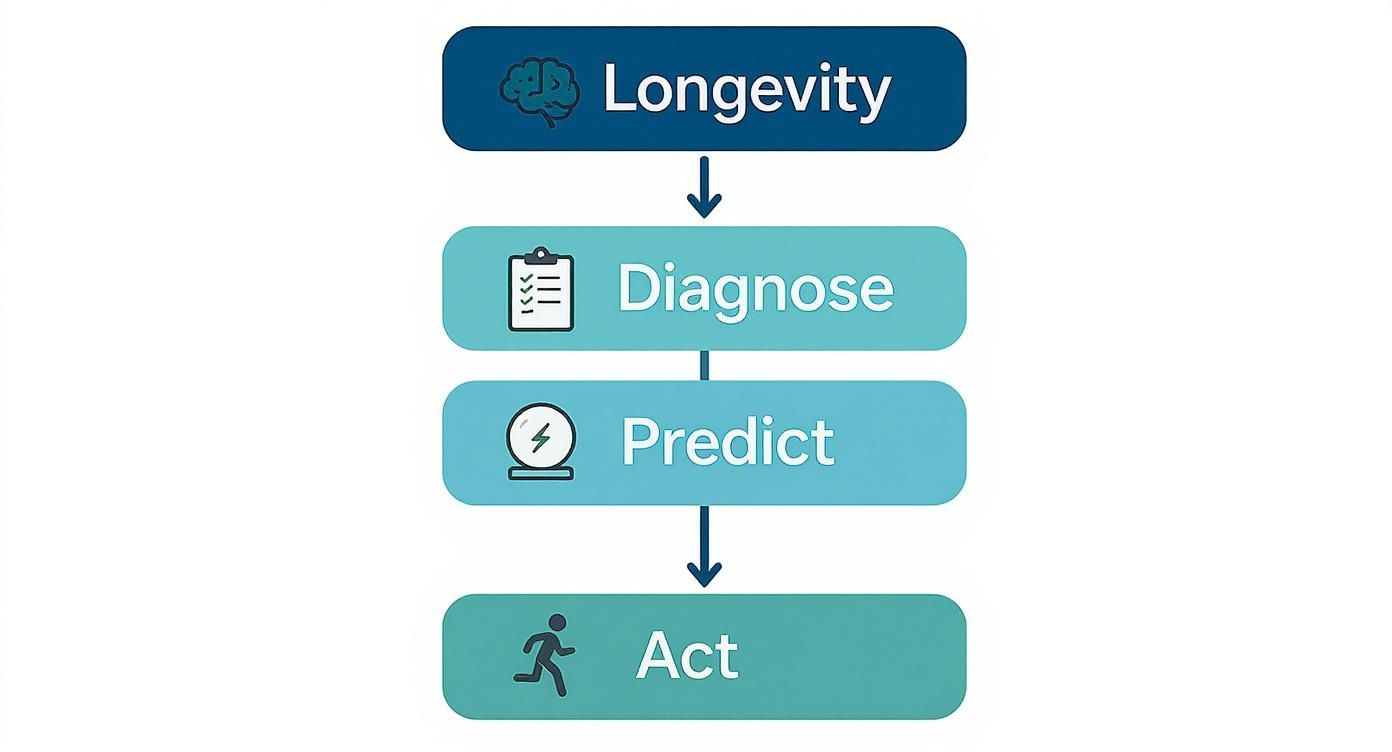
As this shows, the journey to a longer, healthier life follows a clear path: diagnose your current state, predict future risks based on that data, and then act decisively. A blood test is your starting block.
Your Core Health Dashboard
The first layer of your report involves two critical assessments: the Full Blood Count (FBC) and Liver Function Tests (LFTs). Consider these the essential building blocks for understanding your overall health right now.
Think of your FBC as a 'cellular census' of your bloodstream. It counts your red blood cells (the oxygen couriers), your white blood cells (the immune system's soldiers), and your platelets (essential for clotting). A simple count can quickly flag signs of anaemia, infection, or other issues that might be quietly draining your energy and resilience.
Next up, the Liver Function Tests act as a performance review for your body's main 'detox plant'. Your liver is a workhorse, processing nutrients, filtering out toxins, and making vital proteins. LFTs check for enzymes and proteins that tell us how well it’s handling its massive workload, offering important clues about your metabolic health and cellular stress.
Going Deeper: Longevity Markers to Watch
With the fundamentals covered, we can now zoom in on specific markers that give us direct insights into the ageing process itself. These are the data points that help you to build a proactive longevity plan.
One of the most important is HbA1c (glycated haemoglobin). This isn't just a snapshot; think of it as a three-month average of your blood sugar control. Persistently high levels can speed up ageing by fuelling inflammation and damaging cells, making HbA1c a vital marker for metabolic health. Actionable insight: If elevated, focus on reducing refined carbohydrates and increasing fibre intake.
Another key player is hs-CRP (high-sensitivity C-reactive protein). This measures low-grade, chronic inflammation simmering away in your body. Since this type of inflammation is a known driver of nearly every major age-related disease, keeping your hs-CRP low is a primary goal for anyone serious about a long and healthy life. Actionable insight: A high reading might prompt you to add more anti-inflammatory foods like oily fish and turmeric to your diet.
Tracking markers like HbA1c and hs-CRP means you’re no longer just reacting to symptoms. You’re actively monitoring and managing the deep biological processes that dictate how well you age.
For example, the NHS Health Check for adults aged 40-74 is designed to catch these risks early. One regional analysis found that the screening identified a new case of hypertension for every 27 appointments and revealed that one in eight attendees had a greater than 20% risk of a major cardiovascular event in the next decade. This just shows the power of proactive testing.
The table below breaks down some of the most important biomarkers you'll find in a detailed health check, explaining what they measure and why they matter for your longevity.
Key Biomarkers from Your Health Check Blood Test
| Biomarker Panel | Key Markers | What It Measures | Longevity Insight |
|---|---|---|---|
| Metabolic Health | HbA1c, Fasting Glucose | Average blood sugar control over 3 months & current sugar levels. | Poor glucose control is a primary driver of accelerated ageing and chronic disease. |
| Inflammation | hs-CRP | Low-grade, systemic inflammation in the body. | Chronic inflammation is a root cause of most age-related conditions, from heart disease to cognitive decline. |
| Liver Function | ALT, AST, GGT | Enzymes indicating liver stress or damage. | Your liver is central to detoxification and metabolism; poor function impacts overall cellular health. |
| Hormonal Balance | Testosterone, DHEA-S | Key hormones for energy, muscle mass, and vitality. | Declining hormone levels can significantly affect quality of life, energy, and physical resilience. |
| Kidney Function | eGFR, Creatinine | How well your kidneys are filtering waste from your blood. | Kidney health is vital for maintaining blood pressure and eliminating metabolic by-products. |
| Lipid Profile | ApoB, LDL, HDL | Measures cholesterol-carrying particles linked to cardiovascular risk. | Understanding your lipid balance is key to preventing plaque build-up in your arteries. |
By looking at these markers together, you start to see a complete picture of your health, rather than just isolated numbers.
The Hormonal Blueprint for Performance
Finally, a complete health check must include a look at your hormones. These chemical messengers regulate everything from your mood and energy to your metabolism and recovery. When they're out of balance, the knock-on effects can be huge for both your daily performance and your long-term health.
Key hormones to keep an eye on include:
- Thyroid Hormones (TSH, Free T4, Free T3): These set your metabolic rate. An underactive thyroid can lead to fatigue and weight gain, while an overactive one might cause anxiety and sleep issues.
- Testosterone: While often seen as a male hormone, it's important for both sexes, influencing muscle mass, bone density, energy, and even cognitive function.
- Cortisol: Known as the 'stress hormone,' chronically high levels can wreck your sleep, slow down recovery, and contribute to metabolic problems.
Understanding these individual data points is the first step. The real magic happens when you see how they all connect, creating a holistic view of your health. For a more detailed guide on what each biomarker means, you can explore our complete breakdown explaining your blood test results in the UK. By decoding this report, you can identify your unique strengths, pinpoint areas that need support, and turn that information into a clear, actionable health strategy.
Advanced Biomarkers for Cardiovascular Health
To really get a handle on your cardiovascular risk, a cornerstone of longevity, we need to look beyond the standard lipid panel. While the usual tests give you a basic snapshot of your cholesterol, a new generation of biomarkers provides a much sharper, more predictive picture of your heart's long-term health. It’s about shifting from a general guess to a precise, forward-looking analysis.
Think of it like this: a standard cholesterol test is like glancing at a motorway and checking the speed of the traffic. It's useful, but it doesn’t tell you how many cars are actually on the road or if they're the type likely to cause a pile-up. Advanced biomarkers give you that important, deeper level of detail.
Troponin: A Sensitive Look at Heart Strain
One of the most powerful of these next-gen markers is troponin. You might have heard of it in the context of detecting a heart attack, but highly sensitive modern tests can now measure incredibly low levels of this protein in the blood. These tiny amounts can signal subtle, subclinical heart muscle strain that older tests would have missed entirely.
Even when it’s technically within the 'normal' range, a slightly elevated troponin level can be an early warning sign of underlying stress on the heart. It’s a more direct measure of your cardiac muscle's health than cholesterol could ever be, offering a real-time indicator of strain. This moves the focus away from indirect risk factors and puts it squarely on the health of the heart muscle itself.
This insight can be a complete significant advantage for assessing your risk. Research has shown that a simple blood test for troponin can predict the risk of heart attacks and strokes more accurately than traditional methods. This is especially valuable for the 35% of patients often labelled as 'intermediate risk', potentially preventing one major cardiovascular event for every 500 people tested.
By identifying this 'silent' heart muscle damage, troponin testing allows for proactive health interventions long before a serious event occurs. It can reclassify someone's risk from 'moderate' to 'high', prompting earlier and more decisive action.
Beyond LDL Cholesterol with ApoB and Lp(a)
For decades, LDL cholesterol (LDL-C), or "bad cholesterol," has been the main character in heart health conversations. But today, Apolipoprotein B (ApoB) is widely seen as a far more accurate predictor of arterial plaque. ApoB is the main protein found on all the "bad" cholesterol particles, including LDL.
Measuring ApoB is like counting the total number of potentially dangerous vehicles on the motorway, not just estimating their speed. A high number of these particles, regardless of how much cholesterol each one is carrying, dramatically increases the chance of them getting into the artery wall and forming plaque. It's why so many longevity experts now prioritise ApoB over LDL-C. For a deeper look at this important marker, check out our guide on the role of an ApoB test in cardiovascular health.
Another critical biomarker you need to have on your radar is Lipoprotein(a), or Lp(a).
- It's Genetically Determined: Unlike most other cholesterol markers, your Lp(a) level is largely fixed by your genes and stays pretty stable throughout your life.
- It's a Causal Risk Factor: High levels of Lp(a) are known to directly cause arterial plaque, heart attack, and stroke, completely independent of other risk factors.
- It's Often Overlooked: Because it doesn't really respond to diet or exercise, it’s frequently left out of standard health checks.
Knowing your Lp(a) number is vital because it reveals a hidden, lifelong risk that you can't change through lifestyle alone. While specific treatments are still being developed, knowing you have a high level help you to manage all other modifiable risk factors, like your ApoB and blood pressure, far more aggressively. While advanced biomarkers help us understand cardiovascular health, exploring methods for actively improving circulation naturally for better health can be a valuable next step.
Choosing Your Blood Test Path: Home Kits vs. Clinic Visits
Once you’ve decided to get proactive about your health and longevity, the next big question is a practical one: how should you get your blood test done? You’ve really got two main options: the convenience of an at-home, finger-prick kit or a more traditional visit to a clinic. Neither one is universally "better" - the right choice really boils down to your personal health goals, what you’re testing for, and your lifestyle.
At-home kits are fantastic for their sheer convenience and privacy. You can collect your sample from the comfort of your own home, on your own schedule. This makes them a great option for regularly tracking a handful of key biomarkers. On the flip side, an in-clinic appointment with a professional phlebotomist provides what’s known as a venous draw (blood from a vein). This method is the gold standard, allowing for a much broader and more complex panel of tests while ensuring top-notch sample quality.
If you’re weighing the pros and cons, our detailed guide explores the key differences between at-home and clinic blood tests to help you decide.

To help you decide which route is best for your health check, here’s a quick comparison of the key features for at-home kits versus traditional clinic appointments.
At-Home Blood Test vs In-Clinic Visit a Comparison
| Feature | At-Home Test Kit | In-Clinic Visit |
|---|---|---|
| Convenience | High - collect your sample anywhere, anytime. | Lower - requires scheduling and travel to a clinic. |
| Sample Type | Capillary blood from a finger-prick. | Venous blood drawn from a vein by a professional. |
| Test Range | Generally limited to fewer, more stable biomarkers. | Extensive - suitable for a thorough range of tests. |
| Accuracy | Good for many markers, but technique can affect results. | Considered the gold standard for accuracy and reliability. |
| Best For | Routine tracking of specific metrics (e.g., Vitamin D). | wide-ranging health overviews and sensitive hormone tests. |
Ultimately, whether you choose the convenience of a home kit or the comprehensiveness of a clinic visit, the most important thing is that you’re taking the step to monitor your health.
Preparing for Your Test to Ensure Accurate Results
No matter which method you go with, proper preparation is absolutely non-negotiable. What you do in the 24-48 hours before your sample is collected can have a huge impact on your results, sometimes skewing the very data you need to build your health plan. Think of it like a science experiment - to get reliable data, you have to control the variables.
For most detailed blood tests, you'll need to fast for 8-12 hours beforehand. This just means no food or drink, except for water. Fasting is essential because it prevents a recent meal from temporarily spiking markers like glucose and triglycerides, giving you a true picture of your baseline metabolic health.
Ensuring a clean, accurate sample is the most critical part of the testing process. Your results are only as good as the data you provide, and proper preparation is your first step toward getting clear, actionable insights.
Your Pre-Test Longevity Checklist
To make sure your results are a true reflection of your health, just follow this simple prep guide. These steps are designed to minimise any temporary blips in your biomarkers, giving you a clean slate to build your strategy from.
-
Hydrate Well (with Water): Make a point to drink plenty of water the day before and the morning of your test. Being well-hydrated makes it easier for a phlebotomist to find a vein and can improve blood flow for a finger-prick test. Just stick to water during your fasting window - no coffee or tea.
-
Time It Right: This is especially important for hormone tests like testosterone or cortisol. These hormones fluctuate throughout the day, so an early morning sample (ideally between 7 a.m. and 10 a.m.) is important for an accurate reading.
-
Postpone Intense Exercise: A really tough workout within 24 hours of your test can temporarily raise inflammatory markers like hs-CRP and muscle enzymes like creatine kinase. It's best to hold off on that high-intensity session to avoid any false alarms.
-
Stay Consistent with Medications: Keep taking any regular medications as prescribed, unless your doctor has specifically told you otherwise. It is, however, a good idea to hold off on certain supplements like biotin until after your blood is drawn, as it can interfere with some lab tests.
By following these simple steps, you're setting yourself up for success, ensuring the data from your blood test for health check provides a solid foundation for your longevity goals.
Translating Your Results into Peak Performance
Your blood test results are far more than just a list of numbers; they're a personalised roadmap to optimising your life. When you get a blood test for health check, you’re handed a powerful set of data. The real skill lies in learning how to read this data in the context of your own longevity goals, turning raw information into an actionable plan.
This is about shifting your mindset from, "Am I ill?" to the much more powerful question, "How can I be better?" The insights buried in your blood work can reveal new levels of energy, resilience, and focus - whether you're navigating a high-stakes boardroom or pushing your physical limits on the track.

Beyond Normal: Understanding Optimal Ranges
One of the first things you need to get your head around is the difference between ‘normal’ and ‘optimal’ ranges. The 'normal' range you see on a lab report is often incredibly wide. It’s based on averages from the general population - not a group of people who are thriving. It's really designed to flag outright disease, not to identify suboptimal function.
But for longevity and peak performance, you're not just aiming to be 'not sick'. You want to be truly well. This is where optimal ranges come into play. These are much tighter, evidence-based targets linked to the lowest risk of future illness and the highest levels of health.
Think of it this way: a 'normal' engine temperature just means the car isn't overheating. An 'optimal' temperature, however, ensures maximum fuel efficiency and performance. Your body is no different; optimal biomarker levels are the key to running more efficiently for longer.
A Performance Lens for the Busy Professional
For driven professionals in high-pressure roles, certain biomarkers offer a direct window into your ability to handle stress and maintain cognitive stamina. Your blood test can show exactly how well your body is coping with the demands of a relentless schedule, providing insights to build long-term resilience.
A few key areas to focus on for sustained performance:
- Stress and Resilience: Cortisol, your main stress hormone, should follow a natural daily rhythm. If it’s chronically high, that’s a red flag for burnout, which can wreck your sleep and cloud your decision-making. Actionable insight: An elevated cortisol reading could be your cue to prioritise stress-management techniques like meditation or nature walks.
- Sustained Energy: Markers like ferritin (your iron stores) and Vitamin B12 are important for energy production. If these are low, it’s a very common reason for that persistent fatigue and brain fog that can really drag down your professional output. Actionable insight: Low ferritin might lead to increasing iron-rich foods or targeted supplementation.
- Metabolic Efficiency: Your HbA1c and fasting insulin levels paint a picture of how well your body is managing energy. Poor metabolic health is often behind those afternoon energy crashes and a lack of mental clarity.
By getting these markers into their optimal ranges, you’re not just improving your health. You're making a direct investment in your career performance by sharpening your focus and building your resilience to meet whatever challenges come your way.
Fine-Tuning the Engine for Athletes
For athletes and fitness enthusiasts, the focus shifts to markers that reflect how well you’re adapting to training, how effectively you’re recovering, and your body's capacity to perform under intense physical stress. The right blood test gives you the data you need to train smarter, not just harder, and sidestep frustrating setbacks.
This athletic-focused analysis zeroes in on:
- Training Load and Muscle Recovery: An enzyme called creatine kinase (CK) is a great indicator of muscle damage. It’s normal for it to rise after a tough workout, but if it stays persistently high, that’s a clear warning sign of overtraining and poor recovery.
- Systemic Inflammation: High-sensitivity C-reactive protein (hs-CRP) is another critical marker to watch. Elevated hs-CRP can point to underlying inflammation that slows down recovery, raises your injury risk, and puts the brakes on performance gains.
- Hormonal Harmony: The balance between hormones like testosterone and cortisol is everything for an athlete. A healthy testosterone-to-cortisol ratio is essential for muscle repair and growth, while an imbalance can mean your body is breaking down faster than it can rebuild.
Looking at your blood work through this performance lens puts you back in control. It means you can tweak your training, nutrition, and recovery based on hard biological data, not just on how you feel on a particular day. This proactive approach helps you prevent burnout, cut your injury risk, and make sure you’re always building towards your peak potential.
Building Your Data-Driven Longevity Plan
Getting your blood test results back isn't the finish line; it’s the starting block. The real value comes from turning those numbers into concrete, everyday actions that genuinely improve your healthspan. This is the point where you shift from just knowing your data to actively building a proactive, data-driven longevity plan.
Think of it as creating a powerful feedback loop for your health. Your biomarkers are like signposts on a map, each pointing to a specific aspect of your wellbeing that you can directly influence. Instead of following generic health advice, you suddenly have a personalised guide for making targeted tweaks to your nutrition, lifestyle, and supplements.
This whole process changes how you think about your health. You’re no longer just guessing what your body needs. Instead, you're responding to clear biological signals, allowing for precise interventions that maximise your efforts and lead to real, measurable improvements.
From Biomarkers to Actionable Steps
Connecting your blood work to real-world actions is surprisingly straightforward. It all starts with identifying which biomarkers are outside the optimal range and understanding what they’re telling you. This helps you create a focused strategy instead of trying to overhaul everything at once.
Here’s how you can turn common blood test insights into a practical plan:
- Elevated hs-CRP (Inflammation): If this marker is high, it’s a clear signal to focus on bringing down inflammation. You might look at increasing your intake of Omega-3s from oily fish or consider a high-quality fish oil supplement.
- Suboptimal Vitamin D: A very common finding, especially in the UK. Low levels point directly to a plan for more sensible sun exposure and targeted supplementation to support immune function and bone health.
- Poor Metabolic Markers (e.g., HbA1c): Results indicating shaky blood sugar control can guide you to cut back on processed carbs and refined sugars, while making protein, fibre, and healthy fats your priority.
The core principle is simple: test to establish your baseline, implement targeted changes based on the data, and then re-test later to measure the impact. This creates a powerful, personalised cycle of continuous health optimisation.
Making Informed Decisions on Supplements
The supplement world is noisy, full of big promises that make it hard to know what actually works. A blood test for health check cuts right through that confusion, giving you the evidence needed to make smart, informed decisions - even for newer longevity compounds like NMN.
For instance, instead of taking NMN just because you’ve heard about it, you could track biomarkers related to cellular energy and ageing before you start. After taking it consistently for a while, a follow-up test helps you see if it's having a tangible effect on your biology.
This evidence-based approach is vital, especially when you're thinking about long-term health. Official NHS and Public Health England data shows that managing key biomarkers is important for tackling major health challenges in the UK, like cardiovascular disease, which is tightly linked to high cholesterol and diabetes. As detailed in these UK health trends and variation reports, regular blood tests are fundamental for monitoring these risks and preventing serious issues down the line.
in the end, this strategy turns supplementation from a shot in the dark into a precise tool for optimising your health, ensuring your investment of time and money delivers real, verifiable results.
Common Questions About Blood Tests for Health Checks
Once you start using blood analysis to guide your health strategy, a few practical questions almost always pop up. Getting to grips with how often to test, what the results really mean, and how this all connects to longevity is key to turning that data into genuine progress. Here are some straightforward answers to the most common queries we hear.
How Often Should I Get a Blood Test for a Health Check?
There’s no one-size-fits-all answer here; the right frequency depends on your age, your goals, and where your health is right now. Think of it less like a one-off photo and more like building a personal trend line of your health over time.
For most healthy adults under 40, a complete check-up every 2-3 years is a great way to establish a solid baseline. But if you're over 40, or you’re actively tracking your health for performance and longevity, testing once a year is a much better rhythm. And for anyone making big lifestyle changes, like a new diet or fitness plan, or managing an existing health condition, testing every 6-12 months lets you see exactly what impact your efforts are having and make adjustments on the fly.
Are "Normal" Blood Test Results Good Enough?
This is a fantastic question, and the answer is often no—especially if your goal is optimal health, not just avoiding illness. Standard lab ranges are usually based on the average person, who, let's be honest, isn't always a model of perfect health. These ranges are designed to catch clear signs of disease, not to show you where you could be functioning better.
For longevity and peak performance, the aim isn't to just be 'normal'; it's to be optimal.
An optimal range is a much tighter, evidence-based window linked to the lowest risk of future disease and the highest level of wellbeing. For example, a 'normal' Vitamin D level might be enough to avoid a deficiency disease like rickets, but an 'optimal' level is what you need for a strong immune system and better athletic recovery. It’s vital to look at your results through this high-performance lens.
Can a Blood Test Genuinely Improve Longevity?
Without a doubt. Think of a blood test as an early warning system for your body. It helps you take control of your healthspan—the number of years you spend in good, vibrant health. By catching the deep-rooted drivers of ageing, like chronic inflammation (measured by hs-CRP) or poor metabolic health (tracked with HbA1c), you can step in long before they become serious chronic diseases.
This kind of data-driven insight moves you from a reactive mindset of treating problems as they appear to a proactive one focused on prevention and optimisation. You’re no longer just guessing what your body needs. Instead, you're using precise biological feedback to fine-tune your personal plan for living a longer, healthier life.
Take the first step towards a data-driven health strategy with Lola. Our full blood tests, analysed in UKAS-accredited labs and reviewed by doctors, give you the clear, actionable insights you need to build your longevity plan. Discover your optimal health today.
At-Home Blood Testing
Check your levels from home
Professional phlebotomist visit. Doctor-reviewed results in 2-5 days. Track your health with comprehensive blood panels.
→45-70 biomarkers tested · Venous blood draw · From £130