


A full blood test is like a comprehensive MOT for your body, giving you a detailed snapshot of what’s happening on the inside. It’s not just a single test, but a whole panel of them. This goes way beyond simply diagnosing illness; it's about proactively fine-tuning your health for a longer, more vibrant life.
Your Health MOT: What Is a Full Blood Test, Anyway?
Think of a full blood test as the foundational data for your personal longevity strategy. Instead of waiting for symptoms to pop up, regular testing lets you spot subtle changes and internal trends early on. This gives you the power to make informed lifestyle tweaks aimed at extending your healthspan—that’s the number of years you spend in good health, not just your lifespan.
Many people first get a taste of this through workplace wellness programmes, where comprehensive health screenings often include blood tests as a key part of an annual check-up. These screenings offer a fantastic baseline, helping you understand what’s really going on beneath the surface.
Beyond Diagnosis: Proactive Health Optimisation
Traditionally, blood tests were used to figure out what was wrong once you already felt unwell. But their real power, especially for longevity, lies in proactive monitoring. By tracking your biomarkers over time, you can see the direct impact of your diet, exercise routine, and other lifestyle choices. This shifts the focus from reactive sick-care to proactive self-care.
A full blood test provides the data you need to stop guessing about your health and start making strategic, evidence-based decisions. It turns abstract wellness goals into concrete, measurable targets for a longer, healthier life.
Take the full blood count (FBC), for example. It's the most frequently requested test in UK primary care. Research published in Nature shows that its use shoots up in the months before a cancer diagnosis, which really underscores its value as an early warning system.
Taking Control with Data
Ultimately, a full blood test gives you agency over your long-term health. The results provide a clear, objective starting point for conversations with healthcare professionals and for personalising your own wellness plan.
Instead of following generic advice, you can target the specific areas that need attention, whether that’s getting inflammation under control, balancing your blood sugar, or optimising your nutrient levels. For anyone looking to get started, learning more about the convenience and benefits of a home blood test can be an excellent first step. This data-driven approach is the cornerstone of modern longevity science.
Decoding the Core Markers for a Longer Life
Think of your blood test results as a detailed story about your health, not just a list of numbers. By understanding what these key markers mean, you can shift from simply reacting to illness to proactively building a foundation for a longer, healthier life. Let's break down what these essential components in a full blood test tell us about longevity.
This infographic shows how a full blood test acts like a Health MOT for your body, helping with both diagnosing illness and optimising your health before problems start.
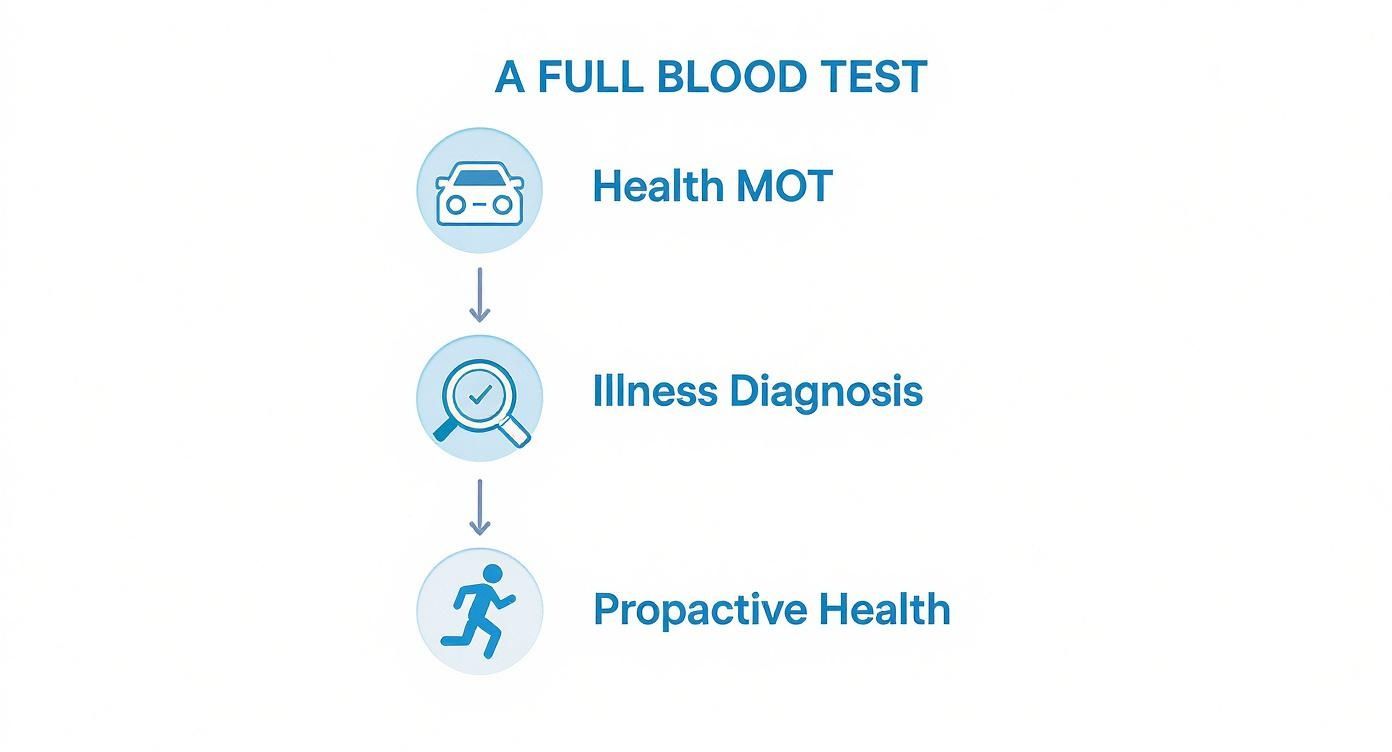
The key takeaway here is that while diagnostics are important, the real power for longevity comes from using this data to stay ahead of the curve.
Your Full Blood Count (FBC) and Cellular Health
The Full Blood Count (FBC) is the absolute cornerstone of any blood panel. It’s essentially a census of the cells floating around in your bloodstream—your red blood cells, white blood cells, and platelets.
Red blood cells are the couriers, delivering oxygen everywhere, which is vital for your energy and overall vitality. White blood cells are your immune system's security team; their numbers can flag anything from a hidden infection to chronic inflammation, a major driver of ageing. For a closer look at these components, you can explore our guide to https://lolahealth.com/blogs/longevity/understanding-full-blood-count-explained.
Liver and Kidney Function: Vital Organ Efficiency
Your liver and kidneys are the body's master filtration and detox systems. Blood tests measure specific enzymes and waste products to check how well they're handling their workload.
-
Liver Function Tests (LFTs): Markers like ALT and AST can signal liver stress long before you'd ever feel any symptoms. A happy liver is crucial for processing nutrients, clearing out toxins, and managing cholesterol.
-
Kidney Function Tests: These look at waste products like creatinine and estimate your filtration rate (eGFR). Efficient kidneys are non-negotiable for balancing fluids, controlling blood pressure, and getting rid of waste.
When these organs are working at their best, your body can handle metabolic stress far more effectively, which is a massive factor in slowing down the ageing process at a cellular level.
The Cholesterol Panel and Cardiovascular Longevity
Your cholesterol panel gives you a critical window into your heart health, something that's directly tied to how long and well you live. It’s not just about one number, but the delicate balance between different types of fats in your blood.
It's a common myth that all cholesterol is "bad." Your body actually needs it to build cells and make hormones. The real story lies in the balance between HDL ("good") cholesterol, LDL ("bad") cholesterol, and triglycerides—this is what really tells us about your risk.
High levels of LDL and triglycerides can lead to plaque building up in your arteries, a process called atherosclerosis. Keeping an eye on these markers allows you to make targeted diet and lifestyle changes to protect your heart for the long haul. It's also important to remember how interconnected our health is; for instance, the link between chronic anxiety and heart health risks shows that our mental state can have a real physical impact.
Metabolic Markers and Your Ageing Pace
Metabolic health is arguably one of the most important dials you can tune for longevity. Key markers like glucose and HbA1c reveal how well your body is managing energy and blood sugar over the long term.
A particularly powerful marker is HbA1c. It doesn't just give you a snapshot of your blood sugar right now; it tells the story of your average levels over the past three months. Consistently high blood sugar speeds up cellular ageing through a process called glycation, so keeping this number in a healthy range is a potent anti-ageing strategy. By tracking these markers, you can directly influence your metabolic health and, by extension, your biological age.
To put this all into perspective, here’s a quick summary of the most important longevity markers you’ll find in a comprehensive blood test.
Essential Longevity Markers in a Full Blood Test
| Biomarker Category | Key Markers | Longevity Significance |
|---|---|---|
| Cellular Health | Red & White Blood Cells, Platelets | Indicates immune function, oxygen transport, and underlying inflammation or infection. |
| Organ Function | ALT, AST (Liver), Creatinine (Kidney) | Assesses the efficiency of the body's detoxification and filtration systems. |
| Cardiovascular Risk | LDL, HDL Cholesterol, Triglycerides | Provides a clear picture of heart disease risk and arterial health. |
| Metabolic Health | Glucose, HbA1c | Measures long-term blood sugar control, a key factor in the rate of biological ageing. |
Understanding these categories gives you a powerful framework for interpreting your results and taking meaningful action to support your long-term health.
Advanced Tests for Proactive Health and Longevity
While a standard blood panel gives you a great overview, digging deeper with more specialised tests can offer a high-definition view of how your body is ageing. It’s like switching from a basic road map to a detailed satellite image of your health. These advanced markers go beyond the fundamentals to give you actionable insights for a truly targeted longevity strategy.
These specialised additions to a full blood test are often overlooked in routine check-ups but are absolutely vital for getting a complete picture. They help you understand the subtle, underlying processes that can speed up ageing, long before they turn into significant health issues.

Uncovering Silent Inflammation
One of the biggest culprits behind age-related decline is chronic, low-grade inflammation. It’s a silent process that can damage cells and contributes to nearly every major chronic disease we know of.
A standard full blood test might not even pick up on this subtle inflammation. That’s where a marker like high-sensitivity C-reactive protein (hs-CRP) comes in. Think of it as a smoke detector for your body, sensing even tiny amounts of inflammation that could be putting stress on your cardiovascular system.
Knowing your hs-CRP level means you can take proactive steps—like adopting an anti-inflammatory diet or improving your sleep—to cool down this internal fire and protect your long-term health.
Hormones: The Conductors of Your Health Orchestra
Hormones are powerful chemical messengers that regulate just about everything, from your energy levels and mood to your muscle mass and bone density. As we get older, these levels naturally shift, but keeping them in optimal balance is a huge part of feeling youthful and vital.
A few crucial hormones to watch for longevity include:
- Testosterone: It’s vital for both men and women, supporting muscle mass, bone density, energy, and cognitive function. When levels are less than optimal, it can lead to fatigue and a drop in physical strength.
- Oestrogen: While we often think of it as a female hormone, it plays a role in bone health and cardiovascular protection for both sexes. Tracking its levels is essential, especially around perimenopause and menopause.
Monitoring these hormones allows you to address imbalances before they really start to impact your quality of life. In fact, analysis of blood test data in the UK highlights just how important this is, with one study of over 20,000 results quantifying testosterone levels to help diagnose metabolic and age-related changes. You can discover more insights about these UK hormone statistics on Forthwithlife.co.uk.
Essential Nutrients for Cellular Performance
Even if you eat a really healthy diet, you can still have specific nutrient deficiencies that silently sabotage your health and speed up the ageing process. Two of the most common—and impactful—are Vitamin D and B12.
Think of these micronutrients as the spark plugs for your cellular engines. Without them, your body simply can't perform its essential maintenance and energy-production tasks efficiently.
Vitamin D is crucial for your immune system, bone health, and mood regulation. Given the UK's famously limited sunshine, deficiencies are incredibly common here. Vitamin B12, on the other hand, is essential for nerve function and making red blood cells. A shortage can lead to that all-too-familiar fatigue and cognitive fog.
By including these advanced markers in your full blood test, you’re moving way beyond basic health monitoring. This detailed data empowers you to have much more informed conversations with your doctor, personalising your health plan to directly target your unique longevity goals.
How to Prepare for Your Blood Test to Get Accurate Results
What you do in the 24 hours leading up to your full blood test is just as important as the test itself. If you want a true snapshot of your baseline health—the kind of data that forms the bedrock of a solid longevity strategy—you absolutely have to prepare correctly.
Think of it like tuning a guitar before a concert. Proper prep work ensures the results you get are clear, accurate, and truly reflect what’s going on inside your body. It helps minimise all the temporary variables that can throw your results off, giving you a reliable foundation for making smart health decisions.

The Golden Rules of Test Preparation
To make sure your results are as precise as possible, it’s best to follow a few practical steps. Each one is designed to control for common factors that can influence key biomarkers tied to ageing and performance.
-
Fasting is Non-Negotiable: For a lot of tests, particularly those looking at glucose and lipids, you’ll need to fast for 8-12 hours. That means nothing to eat or drink except for water. Eating just before a test can cause a temporary spike in blood sugar and fats, which could give a misleading picture of your metabolic health.
-
Hydrate, but with Water Only: Staying well-hydrated is a huge help. It makes your veins plumper and easier to find, which simplifies the whole blood draw process. But it’s crucial to stick strictly to water. Coffee, tea, and other drinks can interfere with your results, especially markers for kidney function and your overall hydration status.
-
Schedule It for the Morning: Many of your hormones and other biomarkers follow a natural daily cycle, known as a circadian rhythm. Cortisol (the stress hormone) and testosterone, for instance, are almost always highest in the morning. Getting your test done early provides a consistent, standardised measurement that can be tracked reliably over time.
Factors That Can Skew Your Numbers
Beyond the essentials, a few other things can temporarily mess with your blood chemistry. Being aware of them is key to getting data you can actually trust for your long-term health planning.
The whole point of preparation is to remove the 'noise' from your results. You want the test to reflect your chronic, underlying health state, not the short-term effects of a hard workout or a stressful day.
Try to avoid any strenuous exercise for at least 24 hours before your test. A really intense gym session can temporarily raise inflammation markers like hs-CRP and certain muscle enzymes, which could easily be misinterpreted as a sign of a problem. In the same way, high stress and a bad night's sleep can push up your cortisol and blood sugar levels.
Finally, always be completely open about any medications or supplements you’re taking. Biotin, for example, is famous for interfering with certain hormone tests. Providing a full list ensures your results are interpreted in the right context, turning your full blood test into an incredibly powerful tool for your longevity journey.
Turning Your Results Into Actionable Longevity Strategies
Getting your full blood test report back isn’t the end of the story; it’s the very beginning. Those numbers on the page aren't a final judgement on your health. Think of them as a personalised roadmap, pointing you directly towards the areas that need your attention for a longer, healthier life.
This is where the real work—and the real magic—happens. We take that raw data and turn it into a practical, powerful action plan. Instead of feeling overwhelmed, you can use these insights to build a strategy that’s tailored to your unique biology, putting you firmly in the driver's seat of your long-term health.
Building Your Personalised Action Plan
Your results will shine a light on specific areas for improvement, whether it's inflammation, metabolic health, or a simple nutrient deficiency. The idea is to tackle these head-on with sustainable, real-world changes.
For example, if your report flags high levels of inflammation, your next steps become crystal clear. It’s no longer about vague advice like "eat better." It's about knowing you need to add more anti-inflammatory foods like oily fish and leafy greens to your diet. This is what data-driven health is all about.
Your blood test results are the ultimate feedback loop. They show you exactly how your lifestyle choices are playing out inside your body, letting you fine-tune your approach and see real, measurable progress over time.
This targeted approach means you can stop guessing. You're no longer chasing generic wellness trends, but putting your energy exactly where it will have the biggest impact on your vitality for years to come. For a deeper dive into making sense of your report, our guide on how blood test results are explained in the UK is a great place to start.
Targeting Inflammation for a Longer Healthspan
We now know that chronic, low-grade inflammation is one of the key drivers of ageing. If a marker like hs-CRP (high-sensitivity C-reactive protein) comes back elevated, it’s a clear sign that it's time to cool down your body’s internal fire.
Here are a few specific strategies to get you started:
- Eat an Anti-Inflammatory Diet: Start by bringing in foods packed with omega-3s, like salmon and walnuts. At the same time, fill your plate with colourful vegetables and fruits—think berries and kale—which are bursting with protective antioxidants.
- Make Sleep a Priority: It’s non-negotiable. Aim for 7-9 hours of proper, quality sleep each night. Skimping on sleep is a sure-fire way to ramp up inflammation.
- Move Mindfully: You don't need to thrash yourself in the gym. Regular, moderate exercise like brisk walking, swimming, or yoga is fantastic for lowering inflammatory markers without putting too much stress on your system.
Optimising Metabolic Health
Markers like HbA1c (your average blood sugar over three months) and fasting glucose give you a direct look at how well your body is managing energy. This is absolutely critical to how you age. If those numbers are creeping up, it’s a clear call to action.
Consider these practical steps:
- Choose Carbs Wisely: Swap out refined carbohydrates like white bread and sugary cereals for complex, high-fibre options. Think quinoa, oats, and beans. This simple change helps keep your blood sugar stable.
- Build Some Muscle: Incorporating strength training into your routine does more than just make you stronger. Muscle is brilliant at soaking up glucose from your blood, which improves your body's overall insulin sensitivity.
- Think About Food Timing: Pay attention to not just what you eat, but when. Avoiding big, heavy meals late at night can give your metabolic system a well-deserved rest and a chance to reset.
By connecting your full blood test results to concrete actions like these, a simple report becomes your most powerful tool for improving not just your lifespan, but your healthspan.
The table below offers a quick guide, translating some of the most common findings from a blood test into a longevity-focused plan you can start today.
Action Plan Based on Common Blood Test Findings
| Common Finding | Potential Longevity Impact | Actionable Strategy |
|---|---|---|
| Elevated LDL Cholesterol | Increased risk of arterial plaque and heart disease. | Increase soluble fibre from foods like oats and apples, and add more healthy fats from avocado and nuts. |
| High hs-CRP | Signifies chronic inflammation, which accelerates ageing. | Adopt a Mediterranean-style diet, find effective ways to manage stress, and prioritise getting enough sleep. |
| Suboptimal Vitamin D | Linked to weaker immune function and poor bone health. | Get sensible sun exposure when possible and consider supplementing, especially during the darker UK winters. |
| High HbA1c | Indicates poor long-term blood sugar control, a key ageing factor. | Cut back on sugar and refined carbs. Make regular physical activity a non-negotiable part of your routine. |
Ultimately, this is about shifting from being a passenger to being the pilot of your own health journey. Your blood test provides the map; the actions you take are what move you toward your destination of a longer, more vibrant life.
Common Questions About Full Blood Tests
When you start digging into proactive health, it’s only natural for questions to pop up. Let's tackle some of the most common ones we hear about using a full blood test as part of a longevity strategy. My goal is to give you clear, straightforward answers so you can feel confident and in control.
How Often Should I Get a Full Blood Test for Longevity?
For a healthy adult who's serious about staying on top of their health, getting a comprehensive blood test once a year is a brilliant starting point. Think of it as your annual health MOT. This frequency helps establish a clear baseline of your internal health, letting you spot any meaningful trends over time.
Of course, this isn't a one-size-fits-all rule. If you're managing an existing health condition or have recently shaken things up with a new diet or fitness plan, your doctor might recommend more frequent tests. Checking in every three to six months can be really useful to see how your body is responding and to make sure your new habits are delivering the results you want.
My GP Said My Results Are ‘Normal’ – Can I Still Improve Them?
Yes, absolutely! This is probably one of the most important things to understand when you're focused on longevity. The 'normal' ranges you see on a standard lab report are designed to catch outright disease, not to pinpoint what optimal health looks like. They’re based on averages from the general population, which, frankly, includes a lot of people who aren't in peak condition.
Think of it like this: the 'normal' range means you've passed the exam. The 'optimal' range means you've got an A+. When we're talking about longevity, the goal isn't just to be 'not sick' – it's to be truly thriving.
So, while your fasting glucose might be technically 'normal', if it’s creeping up towards the higher end of that range, that’s a valuable heads-up. It’s a sign that you could start tweaking your diet and exercise now to head off potential problems down the road. This is where specialist interpretation really shines – it helps you spot those opportunities for optimisation.
Can I Order a Full Blood Test Myself?
You certainly can. In the UK, you can go through the NHS or choose a private service. A GP will usually order tests to investigate specific symptoms or diagnose an illness, but private services are there to empower you to be proactive about your health.
Choosing a private full blood test often gives you access to a much wider panel of advanced biomarkers that are specifically geared towards preventative health and longevity. It provides a richer, more detailed picture, giving you actionable insights to steer your personal health journey with greater precision.
Are There Any Risks with Getting a Blood Test?
Getting a blood test is an incredibly safe and routine procedure. The most you're likely to experience is a bit of temporary discomfort or a small bruise where the needle went in. For most people, the main 'risk' isn't physical at all; it's the potential for feeling anxious when you get the results back.
The key is to see your report for what it is: empowering information, not a final verdict. This data is a tool, plain and simple. It's there to help you make smarter, more informed decisions and guide you towards a longer, more vibrant life.
Ready to stop guessing and start knowing? With Lola, you can get a complete picture of your health from the comfort of your own home. We bring together professional sample collection and NHS-standard lab analysis, then deliver your results in an easy-to-use app, complete with a personalised review from a doctor. Take charge of your health journey and book your test at https://lolahealth.com today.