


Gamma-GT is your liver’s radar for longevity. Use it as a feedback tool: track monthly, adjust your diet and lifestyle based on small shifts. Even slight upticks in gamma-GT can signal oxidative strain and accelerate ageing, giving you the chance to intervene early.
Why Gamma GT Level Predicts Healthy Lifespan

Research shows each 10 IU/L increase in gamma GT level links to roughly 20% higher all-cause mortality. This underscores why GGT matters far beyond routine liver screening.
Key reasons GGT matters for longevity and how to act:
- Early Warning: Slight GGT shifts flag hidden liver strain. Check readings every 4–8 weeks and adjust habits promptly.
- Detox Gateway: GGT drives toxin clearance—support it by adding glutathione precursors (e.g., N-acetylcysteine) to your routine.
- Oxidative Marker: Elevated readings reflect mounting free-radical damage; boost antioxidants (berries, leafy greens) to counteract.
- Longevity Tool: Maintaining GGT within optimal range through sleep optimization and stress management underpins healthier ageing.
By monitoring gamma-GT, you can make targeted habit tweaks—whether in diet, exercise or recovery—and often lower your levels before overt symptoms appear.
Gamma GT Function And Repair
GGT sits on the surface of liver cells, grabbing harmful compounds and routing them for breakdown. Its activity mirrors your body’s capacity to repair and regenerate under stress.
Insight: GGT acts like a smoke alarm in the liver, detecting even subtle stress before symptoms appear.
Action Steps to Support GGT Function:
- Load up on glutathione competitors: include foods rich in cysteine (e.g., eggs, legumes).
- Hydrate consistently—aim for 2–3 L/day to aid toxin clearance.
- Avoid environmental toxins (smoking, pollution) and schedule regular saunas or steam sessions to promote detox pathways.
Tracking this enzyme over time uncovers shifts long before discomfort sets in. That early warning ties directly into strategies for long-term health and peak performance.
Applying Gamma GT Insights
Watching gamma-GT trends provides a clear roadmap for healthy ageing. Pair regular tests with modest lifestyle changes and measure their impact:
- Set monthly GGT reminders in your calendar or app.
- After any spike, implement a 2–4 week plan: rest, targeted nutrition and stress reduction.
- Celebrate each downward trend to maintain motivation and refine your longevity protocol.
Key Takeaways On Gamma Gt Level
| Metric | Optimal Range | Risk Threshold | Next Action |
|---|---|---|---|
| Liver Stress Marker | 10–30 IU/L | > 55 IU/L | Reduce alcohol intake; schedule retest in 4 weeks |
| Oxidative Stress Indicator | 15–35 IU/L | > 40 IU/L | Increase antioxidant intake; add NAC |
| Cellular Repair Capacity | 20–40 IU/L | > 50 IU/L | Schedule medical review; boost sleep quality |
Use this snapshot to guide your next 4–8 week action plan and steer your longevity regimen with confidence.
Next, we’ll explore normal reference ranges, testing protocols and actionable interventions in greater detail. Stay tuned to refine your GGT monitoring habits now.
Exploring Gamma Gt As A Vital Liver Biomarker
Gamma-glutamyl transferase (GGT) sits on the surface of liver cells and in other tissues. It shuttles amino acids and helps the body manage oxidative stress.
Think of GGT as a smoke detector for your liver—any rise in its reading can signal trouble long before you feel fatigue or discomfort. Act on these early signals to extend your healthspan.
How GGT Enters The Bloodstream
Most GGT remains anchored to cell membranes, but a trickle escapes into your blood every time cells renew themselves.
Practical Tip: Avoid intense workouts and heavy meals for 24 hours before testing to get a stable baseline.
- Liver: 70% of total GGT activity, highlighting its detox role
- Kidney: 20% contribution towards amino acid recycling
- Pancreas: 10% involved in digestive enzyme maintenance
This split explains why shifts in GGT can reflect both liver and wider metabolic stress.
What Shifts In GGT Levels Mean
When GGT climbs, it usually points to ramped-up repair or oxidative strain. On the flip side, unusually low readings might hint at impaired enzyme production or severe under-nutrition.
Action Triggers:
- If GGT >40 IU/L: start a 4-week alcohol reduction plan and increase sleep to 7–9 hours.
- If GGT drops <10 IU/L: evaluate for under-nutrition and consider micronutrient supplementation.
- Track trends weekly to distinguish healthy adaptation from chronic overload.
Key Insight
GGT fluxes act like early warning alarms, flagging trouble before symptoms appear.
Grasping these patterns sets the stage for comparing GGT with additional biomarkers.
GGT And Other Health Markers
GGT rarely changes in isolation. It often climbs alongside ALT or AST when the liver is under strain.
Refine your longevity strategy by monitoring this panel:
| Marker | Typical Function | What a Rise Suggests |
|---|---|---|
| GGT | Detoxifies compounds | Oxidative stress or bile issues |
| ALT | Supports protein metabolism in the liver | Hepatocyte damage |
| AST | Fuels energy production in mitochondria | Muscle or liver injury |
Action Step: If only GGT is elevated, focus on bile-supportive foods (e.g., artichoke extract) and reassess in 4–6 weeks.
Real-World Example: A business professional cut out weekend drinks and saw GGT drop from 55 IU/L to 35 IU/L in three months. That simple change eased oxidative load and boosted overall energy.
Enzyme Function And Oxidative Repair
GGT kick-starts the breakdown of glutathione, our body’s top antioxidant, to neutralise free radicals. This sequence supports cell membrane repair after oxidative damage.
Steps to Enhance Oxidative Repair:
- GGT cleaves extracellular glutathione into cysteinylglycine
- Cells absorb the resulting amino acids for fresh antioxidant production
- A balanced loop keeps oxidative stress in check and preserves liver health
Support this cycle by supplementing with vitamin C, selenium and NAC.
Integrating GGT into your routine health checks reveals subtle shifts before major problems surface.
- Schedule tests at regular intervals to catch trends early
- Combine lab insights with targeted lifestyle adjustments
- Seek medical advice for borderline or persistently high readings
Next Section Dives Into Your Reference Ranges.
Assessing Normal Gamma Gt Level Ranges In The UK
When you receive your gamma-GT (GGT) result, it’s important to view it through the lens of age and sex. NHS guidelines place the upper normal limit at 55 IU/L for men and 38 IU/L for women. These thresholds are designed to catch early liver stress before any symptoms arise.
Private UK laboratories also track how mean GGT levels climb with age, mirroring shifts in metabolism and lifestyle. Discover more insights on GGT reference ranges.
Mean Gamma Gt Values By Age Band And Sex
Below is a snapshot of how average GGT readings shift across different age brackets for men and women in the UK.
| Age Band | Men Mean (IU/L) | Women Mean (IU/L) |
|---|---|---|
| 18–29 | 19.1 | 16.8 |
| 30–39 | 24.8 | 20.3 |
| 40–49 | 32.1 | 24.7 |
| 50–59 | 35.7 | 28.2 |
| 60+ | 40.8 | 32.5 |
Action Point: Use these values to set personal benchmarks and schedule follow-up tests every 3–6 months.
Lifestyle Influence On Gamma Gt Level
Everyday habits play a major role in shaping your GGT result. For longevity, audit these factors monthly:
- Moderate daily alcohol use can nudge levels toward the upper normal limit—aim for at least two alcohol-free days per week.
- Excess body fat often correlates with higher baseline readings—use interval training to accelerate fat loss.
- Intense workouts may trigger temporary spikes—plan deload weeks every 4–6 weeks.
- Diets rich in unhealthy fats can prompt extra enzyme release—swap processed oils for olive oil and nuts.
- Rapid weight loss sometimes causes a short-term rise before stabilisation—pair weight loss with antioxidant support.
Stress and poor sleep add another layer of influence, so implement nightly wind-down rituals and mindfulness practice.
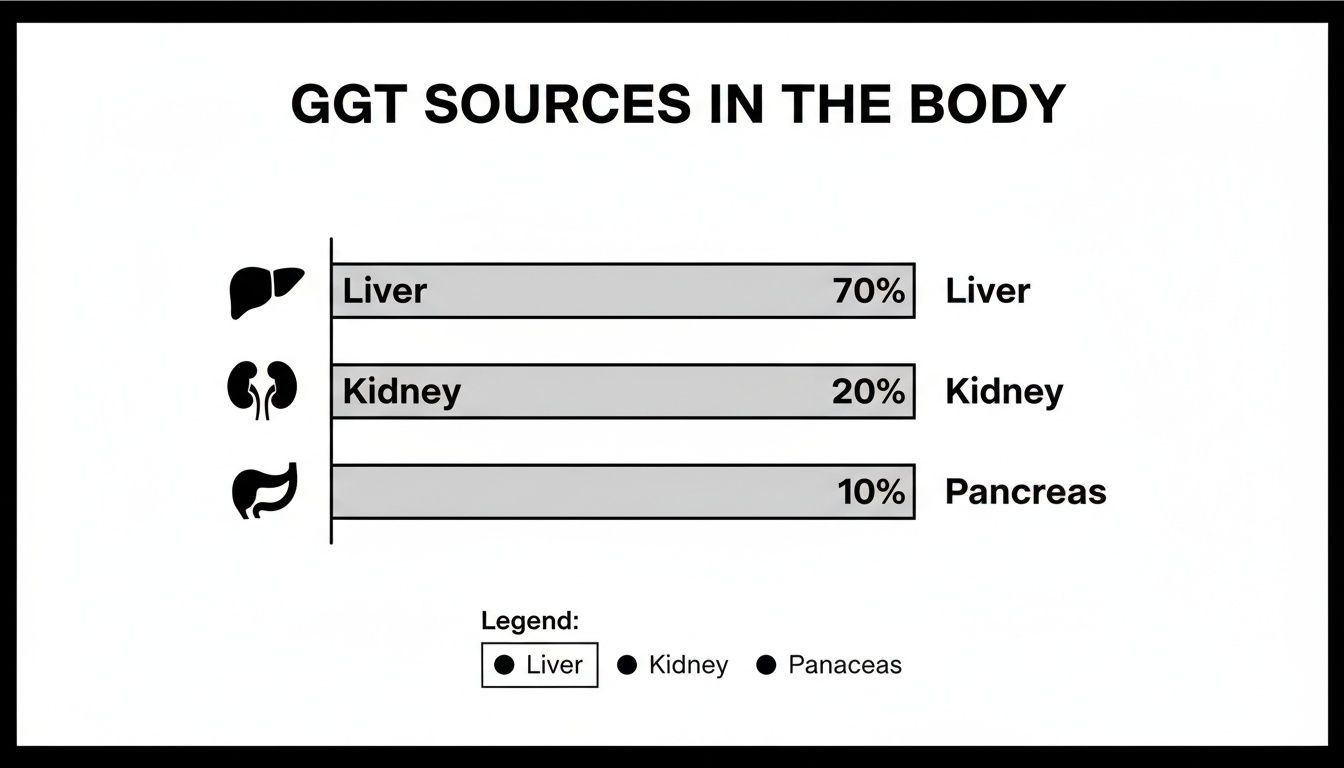
In this infographic, you’ll see that 70% of GGT comes from the liver, 20% from the kidneys and 10% from the pancreas.
Athlete Example
A competitive rower recorded 45 IU/L after a heavy training block. By adding rest days and focusing on antioxidant-rich meals, they brought the reading down to 30 IU/L in two months.
Interpreting Borderline Values
When your GGT is just above the NHS cut-off, simple tweaks often do the trick:
- Cut back on alcohol for 4–6 weeks and track effects.
- Scale workouts to prevent constant muscle strain and add active recovery.
- Lose a few kilos through balanced calorie reduction and monitor progress.
Persistent high GGT can signal silent liver strain that deserves medical review
If levels stay high—above 60 IU/L in men or 45 IU/L in women—further tests are recommended.
Guidance For Follow Up Testing
Book a retest 4–8 weeks after making lifestyle changes to see real trends. If your numbers remain elevated:
- Consult a GP or liver specialist.
- Ask for an ultrasound or an extended liver panel.
- Consider at-home retesting with a professional phlebotomist.
Lola’s app visualises each intervention against your GGT readings. You can download reports or export CSVs to share with your GP. Real-time alerts flag any values breaching your custom thresholds, so you’re always one step ahead.
Tip: Track your trends in the Lola app to celebrate every improvement and catch anomalies early.
Lab Variation And Method Differences
Not all assays are identical. For example:
- NHS labs use standard rate reagent methods to keep results consistent across the country.
- Private labs sometimes calibrate against healthier cohorts, which can shift the reported “normal” range.
Knowing which method your lab uses helps you interpret your results more accurately.
Identifying Common Causes Of Gamma Gt Level Changes

Think of your liver as a finely woven filter, catching toxins and stressors before they flood your bloodstream. When that filter is overworked, Gamma Gt levels climb, flagging early stress or damage long before symptoms emerge.
Often, it’s our daily routines—seemingly harmless habits—that push GGT upward without us noticing until a routine blood test.
Alcohol And Evening Drinks
Jane’s evening habit of two glasses of red wine crept up on her. Over a few months, her reading jumped from 25 IU/L to 38 IU/L, despite feeling perfectly well.
- Alcohol Metabolism drives GGT production as the liver works overtime on ethanol.
- Daily Rituals pile up oxidative stress without obvious warning signs.
- Threshold Shift: Regular nightly drinks can raise GGT by 10–15% over time.
Regular moderate alcohol can elevate GGT before any discomfort arises
Action Step: Swap 2–3 nights per week of wine for herbal tea or kombucha and retest after 6 weeks.
Fatty Liver And Metabolic Strain
Non-alcoholic fatty liver disease (NAFLD) quietly deposits fat inside liver cells, disrupting detox pathways and nudging GGT higher.
- Excess Body Fat increases oxidative stress and fat infiltration.
- High-Sugar Diets overwhelm the liver’s capacity to process glucose.
- Insulin Resistance frequently precedes visible liver changes and GGT spikes.
NAFLD can double your GGT level without warning symptoms
Action Step: Try intermittent fasting (16:8) and low-carb meal cycles; monitor GGT changes at 4-week intervals.
Medications And Intense Workouts
Some prescription drugs and heavy training sessions can also affect your GGT.
- Drug Metabolism: Anti-seizure or cholesterol medications often induce liver enzymes.
- Exercise Spikes: A marathon might boost GGT by up to 20% in the days that follow.
- Supplement Interactions: High doses of certain herbs demand extra detox pathways.
Athletes usually see GGT normalise once training intensity eases. Regular checks help distinguish an exercise-related bump from a genuine health concern.
Action Step: Align your retest schedule with training cycles and medication reviews to pinpoint causes.
Genetics And Other Triggers
Inherited traits and uncommon conditions set your personal GGT baseline.
- Family History: Similar patterns often show up in close relatives.
- Chronic Illnesses: Issues like cholestasis or Wilson’s disease can isolate GGT elevation.
- Environmental Toxins: Long-term exposure to certain chemicals stresses your liver.
Genetic factors can override lifestyle tweaks without clear signs
Action Step: Discuss targeted genetic or metabolic testing with your healthcare provider if GGT remains elevated despite optimised habits.
Decision Tree For Action Steps
-
GGT Below 35 IU/L (Men) Or 25 IU/L (Women)
- No immediate action needed
- Routine testing every 6–12 months
-
GGT 35–60 IU/L (Men) Or 25–45 IU/L (Women)
- Review alcohol, diet and exercise habits
- Apply lifestyle tweaks for 4–8 weeks
-
GGT Above 60 IU/L (Men) Or 45 IU/L (Women)
- Consider medical review for further diagnostics
- Learn more about managing high GGT levels in our detailed guide
Taking these steps early helps you stabilise enzyme levels and supports long-term health. For best results, track meals, workouts and supplements alongside your GGT readings. A simple log or app that timestamps each entry can reveal patterns you’d otherwise miss.
Finally, collaborate with a healthcare professional to interpret persistent abnormalities. If you choose at-home testing, aim for a mid-morning sample—avoid heavy meals or intense workouts beforehand for the most reliable baseline.
Optimizing Gamma GT Level For Professionals And Athletes
Gamma GT can reveal hidden metabolic strain in both busy professionals and dedicated athletes. A clear grasp of its shifts helps you juggle peak performance with long-term health.
Impact Of Stress And Sleep
In high-pressure roles, late emails and endless meetings drive up cortisol and oxidative load. Over time, your Gamma GT drifts upward as the liver defends against mounting stress.
- Morning cortisol surges from poor rest can elevate GGT production.
- Extended screen time suppresses melatonin, slowing liver repair overnight.
- Weekend burnout wipes out any recovery you built during the week.
Action Plan:
- Set a firm “no-email” cutoff at least 60 minutes before bed.
- Practice 5-minute mindfulness breaks every 2 hours to regulate stress.
- Aim for 7–9 hours of sleep; track sleep stages with a wearable device.
For instance, large cohort studies show that modest GGT elevations near clinical limits predict higher mortality. Compared with a low-decile reference of about 14.5 U/L, readings close to 48 U/L for women and 60 U/L for men are linked with significant risk.
Mortality Risks At Common GGT Thresholds
| Outcome | Women HR | Men HR |
|---|---|---|
| Liver-Related Death | 1.83 | 3.25 |
| Cardiovascular Death | 1.21 | 1.43 |
| All-Cause Death | 1.15 | 1.31 |
These figures highlight why even small GGT shifts demand your attention, especially under tight deadlines or heavy training loads. Monitoring trends over time, rather than one-off readings, uncovers unhealthy patterns before they escalate.
Training Load And Transient Spikes
Intense workouts often send Gamma GT upward as muscles and liver clear exercise by-products. Thankfully, these spikes usually normalise within days if you prioritize proper recovery.
- Schedule light recovery sessions (yoga, foam rolling) after heavy training days.
- Incorporate cold therapy or contrast showers to boost circulation.
- Track your Gamma GT weekly to map spikes against workout intensity.
Action Step: Adjust your training plan based on enzyme readouts; reduce volume if GGT remains elevated for more than 5 days.
Read our guide on how to use blood tests for fitness to align your workouts with enzyme trends from the start.
Nutrition Strategies For Optimal GGT
A diet rich in antioxidants, lean protein and healthy fats supports liver detox pathways and steadies Gamma GT. Proper hydration also speeds up metabolite clearance and eases oxidative strain.
- Add cruciferous veg like broccoli and kale for phase II detox boost.
- Include berries and citrus fruits to load up on vitamin C and flavonoids.
- Choose oily fish for omega-3s that soothe inflammation and protect cells.
- Limit processed sugars and refined carbs that fuel fatty liver changes.
Action Plan:
- Aim for at least 2 servings of cruciferous vegetables daily.
- Include one antioxidant smoothie (berry + greens) each morning.
- Drink 500 ml of water with lemon upon waking.
NMN supplements can further support mitochondrial health and repair. Paired with solid sleep habits, these tweaks keep Gamma GT in check without overhauling your routine.
Key Takeaway Consistency in diet, rest and stress control yields the most lasting improvements in your Gamma GT level.
Monitoring Frequency And Best Practices
Professionals under pressure and athletes alike should check Gamma GT every 3–6 months. After any lifestyle change, retest at 4–8 weeks to see immediate effects.
Pair your Gamma GT results with other liver enzymes like ALT and AST to confirm overall liver health. Using Lola’s at-home or clinic phlebotomy options keeps your data uniform and easy to review.
By blending stress relief, training tweaks and smart nutrition, you can maintain a Gamma GT range that supports both performance and longevity. Schedule your Gamma GT test today and watch how small, consistent adjustments pay off over time.
Using Lola Testing For Gamma GT Level Tracking

Navigating your gamma GT level has never been simpler. Lola provides three clear paths: at-home fingerprick kits, clinic-based phlebotomy and analysis through NHS-standard labs.
- At-home kits arrive in 2–5 days with a detailed collection guide.
- Clinic appointments for phlebotomy can be booked within 2–5 days at no extra cost.
- Samples are processed in UKAS-accredited labs boasting a 99.8% success rate.
Preparing For Your Test
A reliable result starts with simple prep. Fast for 8 hours and skip vigorous workouts to avoid temporary spikes.
- Fast for at least 8 hours.
- Stay well-hydrated to ease sample collection.
- Avoid alcohol and intense exercise for 24 hours.
Testing Options Compared
| Option | Collection | Turnaround | Cost Impact |
|---|---|---|---|
| At-Home Kit | Fingerprick | 3–5 days | Included |
| Clinic Phlebotomy | Venipuncture | 2–4 days | Included |
| NHS Lab | Standard | 5–7 days | NHS tariff |
Reviewing Trends In The Platform
Once labs finish analysis, your results appear in the Lola app within 3–5 business days. Compare GGT alongside past readings and other liver enzymes.
- Interactive graphs overlay multiple test dates.
- Custom alerts flag any reading above your thresholds.
- Downloadable PDF or CSV reports simplify sharing with your GP.
Action Tip: Set custom alerts at 30 IU/L to get notified before risk thresholds.
A 14% rise in pancreatic cancer risk per SD increase in log2 GGT—and a 68% higher risk for those in the top group—highlights why routine monitoring pays off. Read the full study here: GGT and Pancreatic Cancer Study.
Tracking trends over time helps you catch subtle shifts before any single high result demands urgent action.
Case Study
John, a 45-year-old manager, ordered Lola’s at-home kit while leading a major project launch. He recorded his GGT each month and saw steady improvement after tweaking sleep schedules, adding mindfulness breaks and cutting back on alcohol. The app’s charts kept him motivated and on course.
All data is GDPR-compliant and encrypted, with a doctor review for extra confidence.
Scheduling Follow Up
If your gamma GT edges above normal, the app will prompt you to book a doctor review. You can choose a video consultation or lifestyle coaching session.
Testing every 3–6 months builds a reliable data trail for long-term health planning. This proactive approach empowers you to adjust habits and maintain peace of mind.
Head over to our Gamma-GT product page for details on kits, pricing and doctor review reports.
Frequently Asked Questions About Gamma-GT Level
It isn’t always obvious what a healthy gamma-GT reading looks like across different ages and sexes. Generally, NHS laboratories flag 10–55 IU/L for men and 10–38 IU/L for women as the typical window. Of course, younger adults tend to sit at the lower edge of these bands.
What Is An Ideal Gamma-GT Level For My Age And Sex?
| Age Group | Men (IU/L) | Women (IU/L) |
|---|---|---|
| 18–29 | 15–25 | 10–20 |
| 30–49 | 20–35 | 15–30 |
| 50+ | 25–45 | 20–38 |
These brackets aren’t pulled from thin air. They line up with lower risks of liver stress and better overall health in large population studies. For instance, a 35-year-old woman targeting around 15 IU/L usually enjoys strong detox abilities and minimal oxidative strain.
Why Might Gamma-GT Rise After Exercise?
Intense workouts can act like a gentle liver challenge—muscle fibres repair themselves, releasing enzymes into your bloodstream. You might see a bump in your reading, but it rarely sticks around.
Transient increases after heavy workouts are usually benign and resolve with rest and hydration.
Give yourself 48–72 hours of recovery and you’ll often see levels dip back down.
How Often Should I Recheck Borderline Results?
- Retest after 4–8 weeks of targeted lifestyle adjustments.
- If values stay near the top end, check monthly until they stabilise.
- For reliable sampling, consider professional phlebotomy support.
Can Diet And Lifestyle Lower Gamma-GT Level?
Absolutely. Small, consistent tweaks add up:
- Reduce alcohol intake and cut back on saturated fats.
- Load up on antioxidants from berries, leafy greens and colourful veggies.
- Keep active, maintain a healthy weight and stick to regular sleep patterns.
Tracking your gamma-GT alongside these changes can be motivating—you’ll see the difference in real time.
Ready to stay on top of your liver health? Book your next test with Lola for UKAS-accredited lab analysis and expert review.