


In the UK, the goal for long-term blood sugar control is an HbA1c level below 42 mmol/mol (6.0%). Think of this as the optimal zone for your health and a cornerstone of your personal longevity strategy.
If your result falls between 42 and 47 mmol/mol (6.0-6.4%), it's a sign of pre-diabetes. This isn't a diagnosis of diabetes itself, but it's a important warning that your body is struggling to manage blood sugar effectively - a process that can accelerate ageing. A result of 48 mmol/mol (6.5%) or higher on two separate occasions typically leads to a diagnosis of diabetes, a condition with significant long-term health implications.
Your Guide to the HbA1c Normal Range Chart UK
Getting to grips with your HbA1c number is one of the most enabling things you can do for your long-term healthspan. Unlike a finger-prick glucose test that only shows a snapshot in time, the HbA1c test gives you the bigger picture - your average blood sugar over the last two to three months.
This longer-term view provides a much more reliable insight into your metabolic health, which is why it's considered such a vital biomarker for longevity. Sustained high blood sugar can speed up the body's ageing process and increase the risk of chronic illness. By keeping your HbA1c in the optimal range, you're not just dodging diabetes risk; you're making a direct investment in a healthier, longer future.
This guide will walk you through how to interpret your results using a clear hba1c normal range chart UK clinicians use, explaining what each level means for your healthspan and longevity.
Interpreting UK HbA1c Levels
The chart below gives you a quick visual reference for the key HbA1c thresholds used in the UK, from the ideal range right through to the diabetic range. Understanding where you fall is the first step in optimising for longevity.
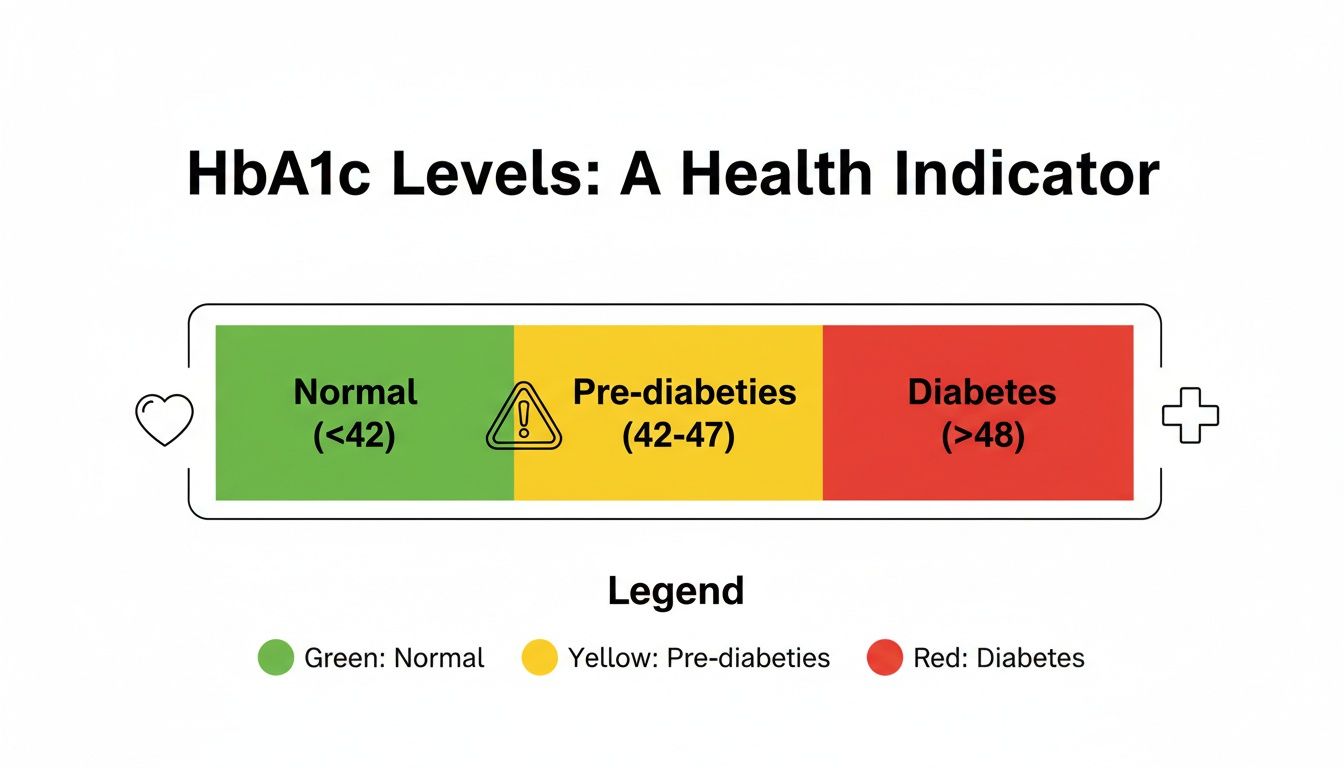
As you can see, keeping your level below 42 mmol/mol is key to protecting your long-term health. The pre-diabetes range is that critical window where proactive lifestyle changes can make a real difference, preventing progression to type 2 diabetes and preserving cellular health.
HbA1c Clinical Thresholds in the UK (NICE Guidelines)
For a more detailed breakdown, this table outlines the official classifications according to the National Institute for Health and Care Excellence (NICE) guidelines. It also explains what each threshold means for your long-term health and longevity.
| HbA1c Level (mmol/mol) | HbA1c Level (%) | Classification | Longevity Implication |
|---|---|---|---|
| Below 42 | Below 6.0% | Normal / Optimal | Supports healthy ageing by minimising cellular damage. This range is associated with a lower risk of metabolic disease and age-related complications. |
| 42 - 47 | 6.0% - 6.4% | Pre-diabetes | A critical warning. Increased risk of type 2 diabetes and cardiovascular issues that can shorten healthspan. An urgent window for preventative action. |
| 48 or above | 6.5% or above | Diabetes | Significantly higher risk of long-term health complications affecting the heart, kidneys, eyes, and nerves, which can accelerate the ageing process. |
These thresholds are the standard used by the NHS and private healthcare providers across the UK to diagnose and monitor blood glucose control, providing a clear framework for understanding your results and planning your next longevity-focused steps.
Understanding What Your HbA1c Numbers Really Mean
While an HbA1c normal range chart for the UK gives you the essential thresholds, knowing why this number matters is the real key to taking charge of your long-term health. Your HbA1c result, which stands for glycated haemoglobin, isn’t just a random figure; it paints a detailed picture of your metabolic efficiency over the last three months.
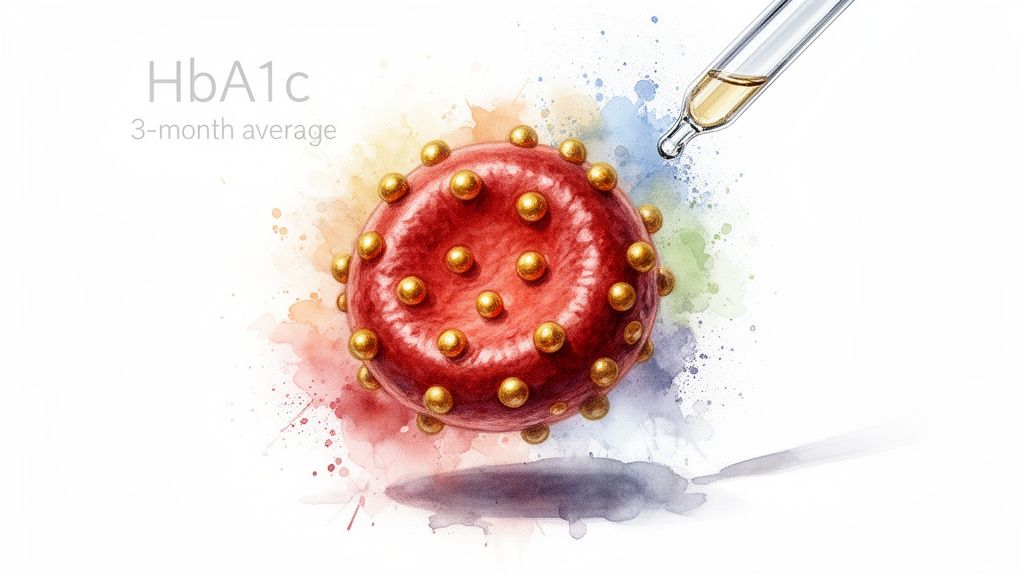
Unlike a standard blood glucose test that only captures a single moment in time, HbA1c gives a reliable, long-term average. It’s this stability that makes it such a useful measure for understanding how well your body manages sugar—a process absolutely fundamental to slowing the ageing process.
The Science of Glycation and Cellular Ageing
So, what’s actually happening in your body? Imagine your red blood cells as tiny couriers moving through your bloodstream. The glucose from the food you eat acts like a sticky substance they brush past on their journey.
When blood sugar levels are consistently high, more of this sticky glucose latches onto the haemoglobin protein inside your red blood cells. This process is called glycation. The HbA1c test simply measures what percentage of your red blood cells have become "glycated," or coated in sugar.
A higher HbA1c means that over the last three months, your body has been exposed to excess sugar. This sustained exposure is a major driver of cellular ageing and inflammation, affecting everything from your skin’s elasticity to the health of your arteries and brain.
This is precisely why keeping your HbA1c in a stable, healthy range is so closely linked to a longer, healthier life. It’s a direct reflection of a body that’s managing its energy efficiently and minimising the subtle, background damage that can speed up the ageing process. For a deeper look at the mechanics, you can learn more about what HbA1c is in our detailed article.
Critical UK Thresholds and What They Mean for You
Here in the UK, NHS guidelines set out clear diagnostic boundaries. A result of 48 mmol/mol (6.5%) or higher is the threshold for a likely diagnosis of type 2 diabetes. For anyone focused on longevity, the goal is to stay comfortably below 42 mmol/mol (6%).
Interestingly, UK-based research has uncovered some important demographic nuances. For example, women under 50 often have HbA1c levels that are, on average, 1.6 mmol/mol lower than men of the same age. This variation suggests some premenopausal women might be at risk even if their results don't meet the standard diagnostic criteria. You can find more insights on these thresholds from Diabetes UK.
Understanding these numbers is enabling. Your result isn’t a final verdict; it's a vital piece of data for your longevity toolkit. It shows you how your body is performing and gives you actionable insight to fine-tune your lifestyle for optimal metabolic health. By aiming for the optimal range, you are actively choosing to slow down the clock at a cellular level.
How HbA1c Levels Change Across UK Age Groups
To really get a handle on your HbA1c result, you need to see the bigger picture. A standard HbA1c normal range chart for the UK is a great starting point for clinical thresholds, but understanding how levels naturally shift with age gives you far more practical insight for managing your long-term healthspan.
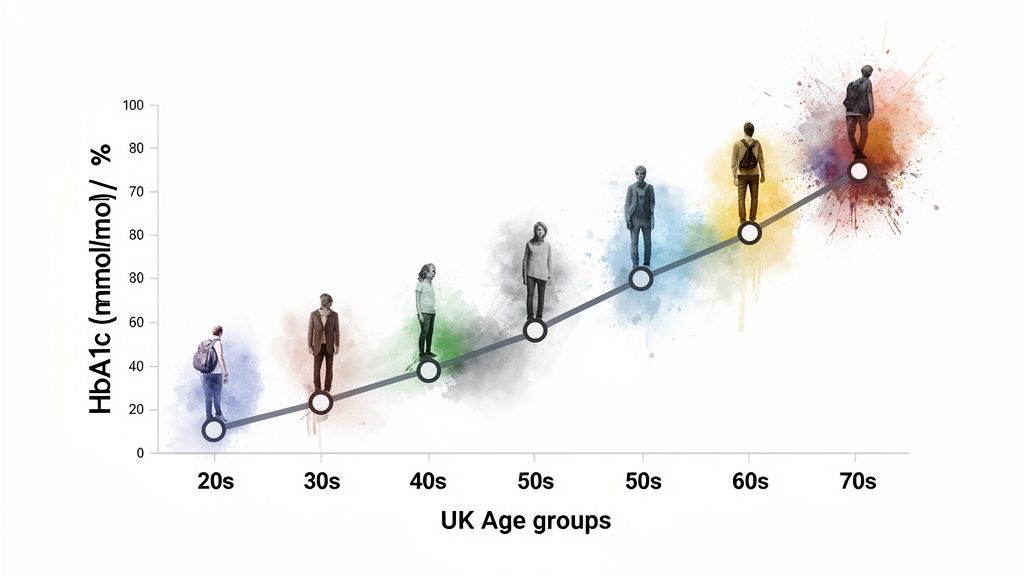
It’s a well-observed pattern that average HbA1c levels tend to creep up as we get older. But it’s important to realise this is a common trend, not an inevitable part of ageing. Looking at this data is about benchmarking your own metabolic health against your peers, giving you the context to take control and actively defy the average.
What’s Your Metabolic Age?
One of the most effective anti-ageing strategies is to maintain the metabolic profile of a younger person. It’s a sign that your body is still handling glucose efficiently, which is key to protecting your cells from the kind of glycation damage that can speed up the ageing process. Seeing the typical levels for different age groups gives you a real, tangible target to aim for.
UK-specific data really brings this trend to life. For example, an analysis of customer data from the health service Forth showed that while the overall average HbA1c is 35 mmol/mol, this figure changes quite a bit through different stages of life. The average for someone aged 18-29 is an excellent 32.8 mmol/mol, but this climbs to 38.5 mmol/mol for those aged 60 and over. You can explore more detailed statistics about HbA1c by age group to see where you fit.
Turning Knowledge into a Longevity Plan
This isn't just interesting data; it's a clear call to action. If your HbA1c is lower than the average for your age, that's fantastic news. It’s a strong signal that your current lifestyle is helping to preserve your metabolic youth. On the other hand, if your number is tracking higher, consider it a valuable early warning sign to adjust your strategy.
Here’s how to put this knowledge to work:
- Set a Clear Goal: Aim to keep your HbA1c well within the optimal range (below 42 mmol/mol). For an advanced longevity goal, try to match or beat the average for a younger age bracket.
- Monitor Your Trajectory: A single result is just a snapshot. The real power comes from tracking your HbA1c over time to ensure it remains stable, not slowly creeping up as the years go by.
- Aim to Defy the Average: Use these benchmarks as motivation. Instead of accepting rising levels as a given, you can use targeted diet, exercise, and lifestyle habits to maintain the metabolic efficiency of your younger self.
In the end, understanding these age-related patterns is all about empowerment. It helps you shift from passively accepting what comes with age to actively managing your metabolic health. That gives you a powerful advantage in the pursuit of a longer, healthier life.
Why Your HbA1c Level Is a Key Predictor of Long-Term Health
It’s one thing to see your number on an HbA1c normal range chart for the UK, but it’s another to truly understand why this single biomarker is so fundamental to your healthspan. Think of your HbA1c level as more than just a snapshot of blood sugar; it’s a direct window into the level of metabolic stress your body is under, with serious implications for how well you age.
When your blood glucose is persistently high, it shows up as an elevated HbA1c reading. This sets off a chain reaction that can speed up the ageing process and dramatically raise your risk of developing chronic diseases. For anyone serious about longevity, viewing HbA1c as a cornerstone of proactive health, not just a marker for diabetes, is a important shift in mindset.
The Domino Effect: From High Glucose to Higher Health Risks
Once your HbA1c levels creep out of the optimal zone (anything below 42 mmol/mol), it’s a clear sign that your body is dealing with too much glucose, too often. This isn't just a temporary problem; this sustained exposure is the real culprit behind many long-term health complications, and they reach far beyond a diabetes diagnosis.
What's happening behind the scenes? High glucose levels fuel systemic inflammation and oxidative stress, which are like internal rust, damaging cells and tissues over time. This process is especially destructive to the fine network of blood vessels that nourish your most vital organs, including your heart, brain, kidneys, and eyes.
- Cardiovascular Disease: An elevated HbA1c is a well-established risk factor for heart attacks and strokes. That’s because excess sugar can damage the delicate lining of your arteries, creating the perfect conditions for atherosclerosis (the dangerous build-up of plaque).
- Cognitive Decline: A growing body of research now connects poor glucose control to an increased risk of cognitive decline and even neurodegenerative conditions. Your brain is an energy-hungry organ, and disrupting its fuel supply can impair its function over the long haul.
- Nerve Damage (Neuropathy): The tiny blood vessels that supply your nerves are incredibly fragile. High sugar levels can easily damage them, leading to the pain, tingling, or numbness known as neuropathy, which often starts in the hands and feet.
- Kidney Disease (Nephropathy): Your kidneys are essentially sophisticated filters packed with tiny blood vessels. When they’re constantly exposed to high glucose, this filtering system can break down, leading to impaired kidney function over time.
To put this into a clearer context, the table below outlines how different HbA1c levels correspond to specific health risks and the actions you should consider.
HbA1c Levels and Associated Health Risk Profile
This table cross-references HbA1c ranges with their associated long-term health risks and recommended actions, based on UK clinical guidance.
| HbA1c Range (mmol/mol) | Risk Level | Common Associated Complications | Recommended Action |
|---|---|---|---|
| Below 42 | Optimal | Very low risk of diabetes-related complications. | Maintain healthy lifestyle habits: balanced diet, regular exercise, and stress management. Continue routine monitoring as advised for your longevity plan. |
| 42-47 | Pre-diabetes | Increased future risk of type 2 diabetes and cardiovascular disease. Early signs of insulin resistance may be present. | Act now. Focus on preventative lifestyle changes like diet and exercise to reverse the trend and protect your long-term health. |
| 48-63 | Type 2 Diabetes | Increased risk of neuropathy (nerve damage), retinopathy (eye damage), and early-stage kidney disease. | Actively manage with diet, exercise, and potentially medication. Regular monitoring with your GP is essential to halt progression. |
| 64 and above | High-Risk Diabetes | Significantly higher risk of heart attack, stroke, severe kidney disease, and limb amputations due to poor circulation and nerve damage. | Requires intensive management under medical supervision, often involving multiple medications and specialist care to minimise damage. |
As you can see, the higher the number, the more urgent the need for intervention. The good news is that you have a great deal of control over this.
Every Small Improvement Makes a Big Difference
The connection between your HbA1c and future health complications is remarkably direct. This means that even small reductions in your reading can have an outsized impact on your long-term wellbeing. Essentially, every single point you manage to lower your HbA1c genuinely matters for your healthspan.
For instance, compelling data from Buckinghamshire Healthcare NHS Trust illustrates this perfectly. It shows a clear correlation: as HbA1c levels climb, so does the risk of complications like retinopathy (eye damage). For someone with an HbA1c above 75 mmol/mol (9%), the chance of developing this condition is a stark 1 in 3.
But here's the powerful part: for every 11 mmol/mol (1%) you reduce your HbA1c, your risk of developing complications like this drops by about 10%. You can discover more insights about the complications of diabetes directly from this NHS data.
This statistical link is an incredibly powerful motivator. It turns your HbA1c result from just a number on a page into an active lever you can pull to directly shape your healthspan. Getting a handle on it is one of the most effective things you can do to add more healthy, vibrant years to your life.
This entire process is intricately linked to how sensitive your body is to insulin, the hormone tasked with managing your blood sugar. By improving your insulin sensitivity, you can naturally bring your HbA1c down and significantly reduce these long-term risks. You can learn more about how to check for insulin resistance in our detailed guide.
Practical Steps to Improve Your HbA1c Levels
Knowing where you sit on the HbA1c normal range chart UK is the first step. The next, and most important, is turning that knowledge into meaningful action to safeguard your longevity. The good news is that lowering your HbA1c doesn't have to mean gruelling workouts or overly restrictive diets. It’s all about making smart, sustainable changes that help your body work more efficiently.
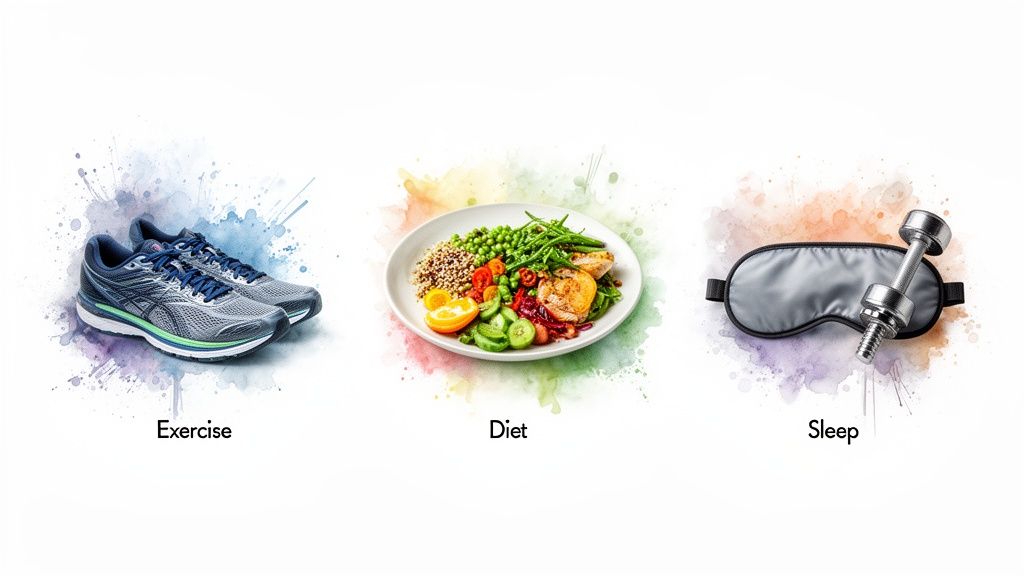
This guide is designed for busy people. It focuses on high-impact habits that you can realistically fit into a demanding schedule. The aim isn't just to improve a number on a lab report, but to build a solid foundation for metabolic health that boosts your energy, sharpens your focus, and extends your healthspan.
Fine-Tune Your Diet for Better Blood Sugar Control
What you eat is the single most useful measure you have for managing your blood glucose. The trick is to focus on food quality and timing to prevent the sharp blood sugar spikes that push your HbA1c up over time and accelerate ageing.
Instead of getting bogged down in calorie counting, think about building your meals around three key elements: protein, healthy fats, and fibre. These components slow down digestion and the rate at which carbohydrates are absorbed, leading to a much gentler, more stable release of glucose into your bloodstream.
- Lead with Protein and Fibre: Try starting your meals with a source of protein and some non-starchy vegetables. This simple tactic can significantly blunt the blood sugar response from any carbs you eat afterwards.
- Switch to Complex Carbs: Swap refined foods like white bread and pasta for whole-grain options like quinoa, oats, or brown rice. Their higher fibre content means they release energy slowly and steadily.
- Don't Fear Healthy Fats: Make sure to include foods like avocados, nuts, seeds, and olive oil. Healthy fats help you feel full and play a key role in managing inflammation, a critical factor in overall metabolic health and longevity.
To really get to the heart of the matter, it helps to understand the underlying causes. For a deeper dive, it's worth exploring these natural ways to reduce insulin resistance, which is often the root cause of elevated HbA1c.
Use Exercise to Boost Insulin Sensitivity
Physical activity is fundamental for improving how well your body uses insulin. Both cardio and resistance training bring unique benefits to the table when it comes to getting your HbA1c into the optimal zone for longevity.
Resistance training, think lifting weights or even bodyweight exercises, builds muscle. Your muscles are the primary storage depot for glucose in your body, so having more muscle mass means you can clear sugar from your blood far more effectively after you eat. This is a powerful anti-ageing strategy.
Cardiovascular exercise, whether it's a brisk walk, a run, or a cycle, makes your cells more sensitive to insulin. This means your body doesn't have to work as hard or produce as much insulin to do its job, which reduces the overall strain on your system.
A great longevity-focused goal is a balanced routine with at least 150 minutes of moderate-intensity cardio and two resistance training sessions each week. This combination is a powerful one-two punch for your metabolic health.
Get a Handle on Sleep and Stress
Sleep and stress are two of the most underrated, yet important, pillars of metabolic health. A lack of sleep and chronic stress can directly contribute to higher blood sugar levels and undermine your longevity efforts.
When you're sleep-deprived, your body naturally becomes more insulin resistant. At the same time, your levels of the stress hormone cortisol rise, which tells your liver to release more glucose into the bloodstream. It's a vicious cycle that can steadily increase your HbA1c.
- Make Sleep a Priority: Aim for 7-9 hours of good-quality sleep a night. Having a consistent sleep schedule and a relaxing bedtime routine helps signal to your body that it's time to wind down.
- Actively Manage Stress: Find ways to build stress-reduction techniques into your day. This could be anything from a 10-minute mindfulness session to some deep breathing exercises or even just a short walk outside during your lunch break.
By weaving these strategies into your life, you can turn your health data into a powerful roadmap for a longer, healthier future, keeping your results firmly in the optimal part of the HbA1c normal range chart.
Ensuring an Accurate HbA1c Test in the UK
When you're building a long-term health strategy, everything hinges on the quality of your data. For something as fundamental as your metabolic health, a reliable HbA1c result isn't just nice to have—it's essential. This means knowing the difference between testing methods to be sure the numbers you're tracking are precise.
After all, making smart decisions for your longevity starts with gold-standard data. The most accurate way to measure HbA1c is with a venous blood draw, where a sample is taken from a vein in your arm. This method provides a much larger and more stable volume of blood for analysis than a simple finger-prick test can offer.
Venous Blood Draw vs Finger-Prick Tests
Finger-prick tests are certainly convenient, but they're also much more prone to error. The tiny sample size can easily be contaminated by things on your skin or diluted by tissue fluid, which can skew your results. For a measurement as important as HbA1c, that's a risk you don't want to take.
A venous sample, by contrast, is sent to a proper laboratory for professional analysis. This controlled environment removes the variables that can throw off a finger-prick result, giving you a number you can trust when making decisions about your diet, exercise, and overall health.
Think of your HbA1c result as a key performance indicator for your metabolic health. Choosing a lab-analysed venous sample means you're working with the most accurate data possible, taking the guesswork out of your health plan.
The Gold Standard for Accuracy and Trust
For the highest level of reliability, your blood sample needs to be analysed at a UKAS-accredited laboratory. This is the very same standard the NHS relies on, which guarantees the lab meets rigorous quality and competency requirements. It’s a seal of approval that validates the integrity of your results.
Services like Lola's at-home phlebotomy now bring this clinical-grade accuracy to your doorstep. A trained professional performs a venous blood draw in the comfort of your home or office, and your sample goes directly to a UKAS-accredited lab. This approach merges the convenience you want with the high standards you need. You can learn more about the benefits of an at-home blood test and see how it fits into a proactive health schedule.
Even with the best testing method, some factors can still influence your HbA1c reading. It's good to be aware of conditions that might affect your results:
- Conditions affecting red blood cells: Things like iron deficiency anaemia or certain haemoglobin variants (uncommon genetic traits) can artificially raise or lower your HbA1c levels.
- Certain medications: High doses of some drugs, such as opioids or long-term aspirin, have been known to interfere with the test's accuracy.
- Liver or kidney disease: Severe issues with these organs can impact red blood cell turnover and affect HbA1c readings.
Knowing about these potential influences helps you and your doctor interpret your results in the right context, making sure your health plan is always built on a solid foundation of accurate data.
Your HbA1c Questions Answered
When you're trying to get a handle on your metabolic health, it's natural to have questions. Let's clear up some of the most common queries about HbA1c testing so you can feel confident in what the results mean for your health.
How Often Should I Get My HbA1c Checked?
This really depends on your individual situation. If you have no known risk factors for diabetes and your results are consistently in the clear (below 42 mmol/mol), checking in every year or two is a sensible approach. It gives you a reliable baseline to keep an eye on things long-term.
On the other hand, if your result creeps into the pre-diabetes range (42-47 mmol/mol), you'll want to test more often. Re-testing every three to six months is a good idea, especially if you're actively working on your diet and exercise to bring that number down. It’s the best way to see if your efforts are paying off. For anyone with a diabetes diagnosis, your GP will set the schedule, which is typically every three to six months.
Can I Lower My HbA1c Level Quickly?
Because HbA1c reflects your average blood sugar over the last two to three months, it’s not a number you can change overnight. That slow-moving nature is precisely what makes it such a powerful indicator of your long-term metabolic health.
You can definitely see a noticeable drop within three months if you stick to positive changes in your diet and exercise routine. The real goal isn't a quick fix, though. It’s about making steady progress towards a healthy, stable level by building habits that will last a lifetime.
Is an HbA1c Test the Same as a Finger-Prick Glucose Test?
They're two very different tests, each telling a different part of the story. A standard blood glucose test is just a snapshot in time. It measures the sugar in your blood at that exact moment, and that reading can swing wildly depending on what you’ve just eaten, if you've been exercising, or even how stressed you are.
The HbA1c test, in contrast, gives you the big picture. It provides a stable average of your blood glucose control over the past few months. This is why clinicians in the UK rely on it as the gold-standard measurement for diagnosing and monitoring diabetes – it smooths out the daily fluctuations and reveals the underlying trend.
Do I Need to Fast Before an HbA1c Blood Test?
No, and that’s one of its biggest advantages. Because the test measures a long-term average, what you ate for breakfast won't have any meaningful effect on the result.
This makes scheduling your test so much easier. You can book an appointment for any time of day that suits you, without having to plan your meals around it or turn up hungry.
Getting to grips with these details helps you use the HbA1c test for what it is: a useful measure for understanding and improving your metabolic health. By tracking this key marker, you gain the clarity you need to make smart decisions for a longer, healthier life.
Take control of your metabolic health with data you can trust. Lola provides professional, at-home phlebotomy services with analysis at UKAS-accredited labs. Get the accurate insights you need to build your longevity strategy. Learn more and book your test today.
Test This Biomarker at Home
This biomarker is included in our HbA1c Test and Core Health 45 — results in 2-3 working days with GP-reviewed insights.
At-Home Blood Testing
Check your levels from home
Professional phlebotomist visit. Doctor-reviewed results in 2-5 days. Track your health with comprehensive blood panels.
→45-70 biomarkers tested · Venous blood draw · From £130