


Hormone blood tests in the UK offer a powerful way to look under the bonnet of your own health. While the NHS provides tests for specific medical concerns, private providers now offer comprehensive panels that let you get ahead of the curve, focusing on wellness and long-term health. These tests measure your body's key chemical messengers, giving you the data you need to fine-tune everything from your energy levels and mental focus to your future vitality.
Your Blueprint for a Longer, Healthier Life

What if you had a personalised roadmap to your body's inner workings? This isn't science fiction anymore; it’s precisely what modern hormone testing delivers. Think of it as a detailed blueprint that can help you sidestep future health hurdles and actively build a more vibrant life for years to come.
This guide looks at blood tests differently. We’re moving beyond the old-school view of them as just a tool for diagnosing illness. Instead, we’ll reframe hormone blood tests in the UK as a cornerstone of proactive health management—the key to a longer, healthier life. Understanding your hormones means shifting from a reactive "wait-and-see" approach to a proactive one.
The Power of a Hormonal Baseline
Establishing your unique hormonal baseline is like setting the coordinates on a GPS for your health journey. It gives you a clear snapshot of where your body is right now, creating a vital reference point to measure any future changes against. Without it, you're essentially navigating blind, often only reacting once symptoms become too disruptive to ignore.
For example, subtle shifts in thyroid hormones or testosterone can creep in years before you notice that constant fatigue or a frustrating dip in performance. Catching these changes early means you can make simple, targeted lifestyle adjustments—like optimising your diet or introducing strength training—rather than needing more significant interventions down the line.
"Think of a hormone test not as a report card for your health, but as a user manual for your body. It provides the specific instructions you need to fine-tune your systems for peak performance and durability."
This proactive approach is the very essence of improving your "healthspan"—the part of your life you spend in good health. It's about making sure your vitality keeps pace with your lifespan.
From Data to Actionable Insights
The real power of a comprehensive hormone panel is its ability to turn complex biological data into a clear, actionable plan for longevity. It’s not just about looking at numbers on a page; it’s about understanding what they mean for you and your long-term goals.
A detailed analysis helps you connect the dots between how you feel day-to-day and what's actually happening with your internal biochemistry. This information empowers you to make smarter decisions about your nutrition, exercise, and stress management long before minor imbalances become chronic problems.
Consider this your first step in building the foundations for a longer, more vibrant life. By taking control of this crucial data, you can take action to:
- Enhance Daily Energy: Identify specific imbalances draining your stamina and adjust your nutrition or sleep routine accordingly.
- Sharpen Cognitive Function: Understand how hormones like cortisol impact your focus, then implement stress-reduction techniques to improve clarity.
- Support Physical Performance: Optimise markers for muscle health through targeted exercise, such as resistance training to support testosterone.
- Strengthen Long-Term Resilience: Build a robust internal system better equipped to handle stress and the effects of ageing by addressing inflammation and metabolic markers early.
Ultimately, a hormone blood test is an investment in your future self. It provides the blueprint you need to build a life defined not just by length, but by wellness and vitality.
Why Monitoring Your Hormones Is a Game Changer
That persistent fatigue, the overwhelming brain fog, unexplained weight changes… we’re often told these are just inevitable parts of getting older. But what if they aren’t? More often than not, these are the first signals your body sends when its internal communication system—your hormones—is out of sync.
Thinking of these signs as actionable data is the first real step towards taking back control of your health. Instead of waiting for small issues to snowball into bigger problems, you can use hormone monitoring to stay ahead of the curve. This is especially true during key life stages like perimenopause, andropause, or even just periods of high stress.
It’s about shifting your mindset from reactive healthcare, where you only get a test when you're already unwell, to a proactive strategy focused on feeling your best. Understanding these powerful chemical messengers is fundamental to preventing age-related decline and unlocking a much higher quality of life.
From Vague Symptoms to Clear Insights
Think of your hormones as the intricate software running your body's hardware. When the code is optimised, everything just works. But when even one line is off, it can cause system-wide issues that show up as those frustrating, non-specific symptoms. A hormone blood test in the UK is essentially a diagnostic tool for this software.
It turns those vague feelings of being "off" into concrete data points you can actually work with. For example, that afternoon slump you’ve been blaming on a busy schedule could be a clear sign of a cortisol imbalance, pointing towards a need for better stress management or sleep hygiene. In the same way, a lack of motivation might not just be in your head; it could be directly linked to declining testosterone, suggesting a need for more resistance training.
This diagram shows how those common, everyday signals can lead to proactive health management through proper testing.
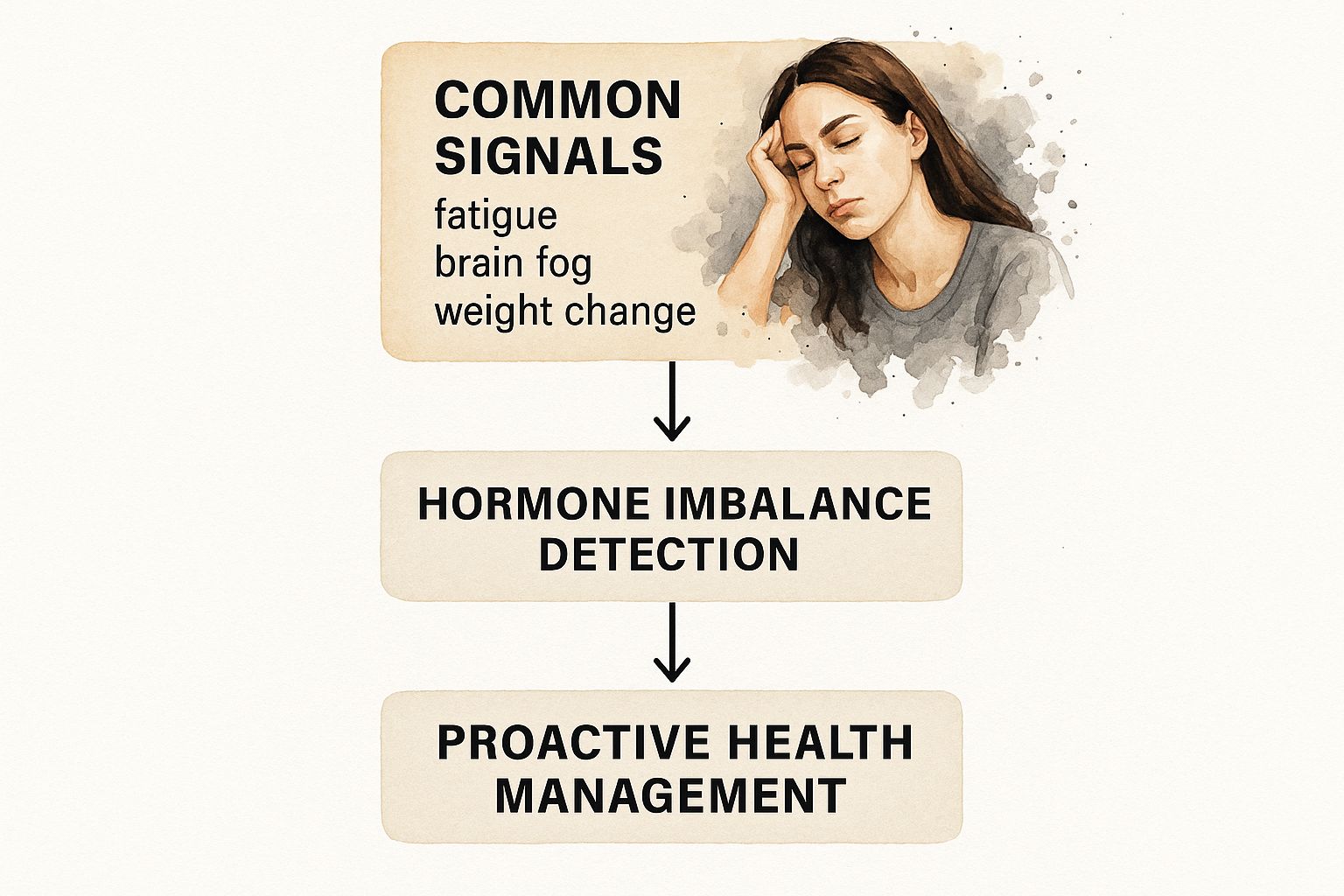
The image clearly maps out a path: it starts with identifying common health complaints and uses hormone imbalance detection as the critical next step towards taking control of your long-term wellness.
Proactive Monitoring for a Longer Healthspan
Ultimately, the goal of monitoring your hormones isn't just about fixing problems—it's about extending your healthspan. That's the part of your life you spend in good health, full of energy and free from chronic disease. Proactive testing is a key pillar of this longevity-focused approach.
It allows you to establish a personal baseline, which is basically a snapshot of your hormonal state when you're feeling good. With this baseline, you can track changes over time and make precise, targeted adjustments to your lifestyle, nutrition, and exercise long before a minor imbalance becomes a major health concern. This is the difference between simply getting older and actually ageing with vitality.
By regularly checking in with your body's key messengers, you move from being a passenger in your health journey to being the driver. You gain the ability to make informed decisions that directly contribute to a longer, healthier, and more productive life.
In the UK, hormone blood tests are crucial for more than just planning for a long life; they are essential in many areas of healthcare. For women, markers like follicle-stimulating hormone (FSH) and luteinizing hormone (LH) are routinely measured to assess ovarian function and confirm menopause. Interestingly, UK data reveals that women are nearly twice as likely as men to show elevated levels of the stress hormone cortisol (10.38% vs. 6.96%), highlighting the unique hormonal pressures they face.
Key Moments for a Hormonal Assessment
While regular monitoring is a great idea for everyone, certain life stages and situations make it particularly important. A comprehensive hormone blood test can give you critical insights during these times.
- Periods of High Stress: Chronic stress floods your system with cortisol, which can disrupt sleep, mess with your metabolism, and suppress other vital hormones. Testing reveals the real impact, allowing you to take targeted action like improving sleep hygiene or incorporating mindfulness.
- Perimenopause and Menopause: For women, this transition involves huge fluctuations in oestrogen, progesterone, and other hormones. Testing helps manage the often-difficult symptoms and supports long-term bone and cardiovascular health.
- Andropause: Men also experience an age-related hormonal decline, especially in testosterone. Monitoring these levels can help address symptoms like low energy and guide lifestyle changes like strength training to support vitality.
- Performance Plateaus: If you're an athlete, hitting a wall in your training can be incredibly frustrating. This is often linked to hormonal factors like overtraining (high cortisol) or suboptimal testosterone for recovery, providing clear data to adjust your training load.
By understanding what’s really going on inside your body during these key moments, you can turn potential challenges into genuine opportunities for optimising your health.
Key Hormones to Track for Longevity
Getting a hormone panel report back can feel a bit like being handed a complex engineering schematic for your own body. All those acronyms and numbers can be intimidating.
But here’s the thing: getting to grips with a few key markers is one of the most powerful steps you can take towards a longer, healthier life. Instead of just rattling off a list of hormones, it’s much more useful to think about them in terms of the jobs they do and the actions they prompt.
This overview breaks down the most important hormones to watch, explaining not just what they are, but why they’re such a critical piece of your personal longevity puzzle. Once you understand these, you’ll know what a truly comprehensive hormone blood test in the UK ought to cover.
Energy and Metabolism Regulators
How you feel day-to-day—your energy, your metabolic rate, even how you handle stress—isn’t just down to willpower. It’s directly controlled by a specific group of hormones. Think of them as your body's internal management team, making sure you have the fuel and stability to perform at your best.
-
Thyroid Panel (TSH, Free T3, Free T4): Your thyroid is essentially the accelerator pedal for your metabolism. TSH (Thyroid-Stimulating Hormone) is the signal from your brain, but it’s T3 and T4 that actually set your metabolic speed. If they’re out of balance, it can cause everything from persistent fatigue and weight gain (underactive) to anxiety and heart palpitations (overactive).
-
Cortisol: Known as the "stress hormone," cortisol is vital for managing inflammation and blood sugar. The problem is, chronic stress keeps levels persistently high, which can wreck your sleep, encourage belly fat, and speed up ageing. A healthy cortisol rhythm—high in the morning, low at night—is a key longevity goal, achievable through better sleep and stress management.
Vitality and Strength Hormones
This next group is all about your sense of drive, physical strength, and overall vitality. Keeping these hormones at their peak is fundamental for preserving muscle mass, bone density, and even cognitive sharpness as you get older.
When these levels are off, it can cause symptoms we often mistakenly write off as just "getting older."
A major player here is testosterone. It's crucial for both men and women, influencing everything from building muscle to your mood and libido. When levels drop, it can lead to fatigue and less muscle mass. To dive deeper, you can learn more by understanding your testosterone blood test for a longer, healthier life and its role in a longevity strategy.
A key concept in longevity medicine is the difference between 'normal' and 'optimal'. A 'normal' range on a lab report is just the average for a huge population, which includes plenty of unhealthy people. An 'optimal' range is the much narrower band associated with peak vitality and the lowest risk of age-related disease.
Other crucial hormones for vitality include:
-
DHEA-S (Dehydroepiandrosterone Sulfate): Produced by the adrenal glands, DHEA is a building block for other hormones like testosterone and oestrogen. Its levels naturally fall as we age, and keeping them healthy is linked to better immune function, bone density, and cognitive health.
-
Oestrogen (Estradiol): While essential for female reproductive health, oestrogen also has a vital job protecting bone, brain, and heart health in both men and women. An imbalance can throw your mood, sleep, and body composition out of whack.
A Deeper Look at Longevity Markers
A forward-thinking hormone blood test should go beyond the usual suspects. It needs to give you a window into your cellular health and biological age. The table below summarises key markers that provide deeper, actionable insights into how well your body is coping with time.
Essential Hormone Markers for a Longevity-Focused Blood Test
This table summarises the key hormones to monitor, their primary functions related to healthspan, and common symptoms of imbalance.
| Hormone | Primary Role in Longevity | Symptoms of Imbalance (High or Low) |
|---|---|---|
| Thyroid Hormones (TSH, T3, T4) | Regulates metabolism, energy production, and body temperature. | Fatigue, weight changes, mood swings, hair loss, feeling cold/hot. |
| Cortisol | Manages stress response, inflammation, and blood sugar. | Sleep disruption, anxiety, weight gain (especially belly fat), burnout. |
| Testosterone | Supports muscle mass, bone density, libido, and cognitive function. | Low energy, reduced muscle strength, low mood, poor concentration. |
| DHEA-S | Precursor to sex hormones; supports immune function and anti-ageing. | General fatigue, decreased libido, reduced sense of well-being. |
| Oestrogen (Estradiol) | Protects bone, brain, and cardiovascular health in both sexes. | Mood swings, sleep problems, brain fog, changes in body composition. |
| IGF-1 | Reflects growth hormone activity for cell repair and regeneration. | Low levels: muscle loss. High levels: linked to increased cancer risk. |
| HbA1c | Indicates long-term blood sugar control and glycation damage. | High levels point to accelerated ageing and chronic disease risk. |
| hs-CRP | Measures low-grade, chronic inflammation throughout the body. | Often no direct symptoms, but a silent driver of age-related disease. |
Tracking these markers lets you make targeted lifestyle changes—like adjusting your protein intake for IGF-1 or focusing on fibre for HbA1c—that can genuinely slow down ageing at a cellular level. It’s the ultimate form of proactive health management.
How to Get Your Hormones Tested in the UK
Knowing your hormones are important is the first step, but getting your hands on the actual data is what really matters. Thankfully, getting a hormone blood test in the UK is simpler than it's ever been. You’ve really got two main options: going through the NHS or using a private, at-home testing service.
Each route is designed for a different purpose. The NHS is set up to diagnose and treat specific medical conditions, which is its core strength. Private services, on the other hand, are geared towards proactive health optimisation, giving you direct access to the information you need to build a long-term wellness strategy.
Let’s walk through both so you can figure out what’s right for you. We’ll focus mostly on the private at-home option, as it’s the one that puts you in control of your health journey. It’s a process built for convenience, privacy, and speed, cutting through a lot of the old-school barriers to getting tested.
The NHS Pathway vs Private Testing
Trying to navigate the healthcare system can feel a bit like a maze. Let's break down the real-world differences between going to your GP and ordering a private test. Understanding what each is good for helps you know what to expect and which path fits your goals.
The NHS Route
Your first port of call is always your GP. You'll need to book an appointment, explain what’s going on, and if your doctor thinks your symptoms point towards a hormonal issue, they’ll arrange a test.
- Focus: It’s all about diagnostics—finding a specific medical problem that needs treatment.
- Cost: Free at the point of care, which is fantastic.
- Process: You need that initial GP consultation and a solid clinical reason for the test to be approved.
- Scope: The tests are usually very targeted. Your GP will only check the specific hormones directly linked to the symptoms you’ve described.
The Private At-Home Service
This is the modern approach. It gives you direct access to a huge range of tests without needing to see a doctor first. You simply order a kit online, collect a small sample at home, and get your results sent directly to you.
- Focus: Proactive and preventative. It’s designed for people who want to optimise their health and longevity.
- Cost: You pay for the test yourself.
- Process: Just order online, do a quick finger-prick sample whenever it suits you, and pop it in the post.
- Scope: You get to choose. You can opt for comprehensive panels that look at a wide range of hormones linked to things like energy, vitality, and even cellular ageing.
For anyone serious about long-term wellness and performance, private testing offers a level of insight and control you just can't get elsewhere. It lets you establish your personal baseline and track how it changes over time, empowering you to make smart, informed tweaks to your lifestyle.
Your Step-by-Step Guide to At-Home Hormone Testing
The whole point of at-home testing is to make it easy and straightforward. It strips away the mystery and puts powerful health data right at your fingertips. Here’s a rundown of how it generally works.
1. Choose and Order Your Test Kit
First things first, you pick a hormone panel that matches what you want to achieve. Are you focused on boosting your energy? Improving athletic performance? Or just getting a complete overview of your health? There's a test for that. You order it online, and the kit arrives discreetly at your home.
2. Collect Your Sample
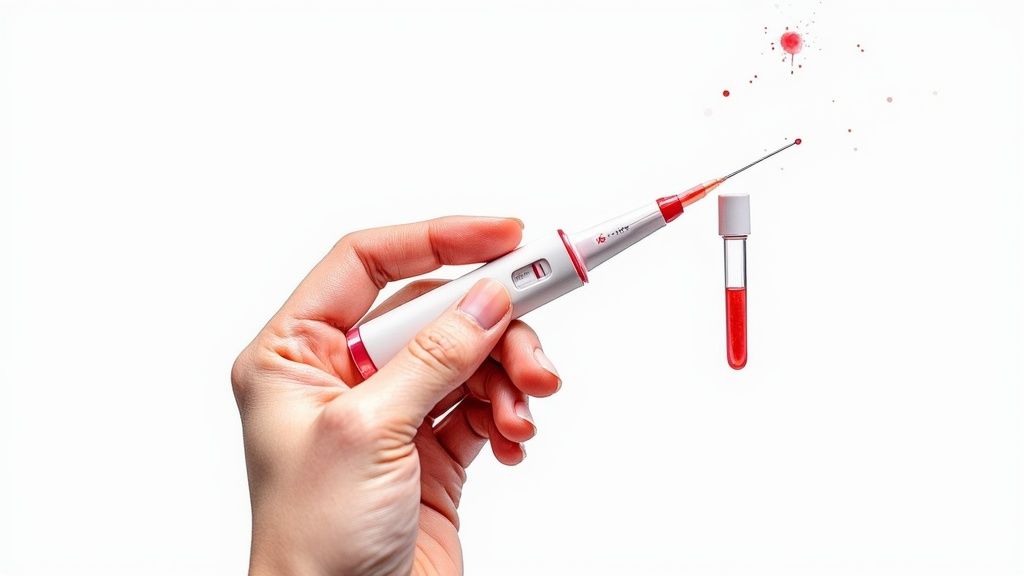
Inside the kit, you’ll find everything you need for a simple finger-prick blood sample. The instructions are crystal clear. You use a tiny, sterile lancet to prick your fingertip and collect a few drops of blood into a small vial. Honestly, it’s over in minutes. If you want a closer look at this part, check out our detailed guide on hormone level testing at home.
3. Post Your Sample
Once you’ve got your sample, you just pop it into the provided packaging and send it back to the lab using a prepaid envelope. It's worth knowing that the best private services use the very same accredited labs that the NHS and private hospitals rely on, so you can be confident your sample is being analysed to the highest clinical standards.
4. Receive and Understand Your Results
Within a few days, your results will be ready. You’ll usually get them through a secure online dashboard or an app. But you won’t just get a list of numbers and medical jargon. A good service will give you a clear, easy-to-understand report explaining what each marker means, often with personalised insights from a qualified doctor to help you see the bigger picture.
It’s a process designed to take the guesswork out of the equation, making it an empowering and surprisingly simple way to access vital information about your health.
Turning Your Test Results into Action
Getting your hormone blood test results back is a big moment, but let's be honest, a report packed with numbers and acronyms can feel more confusing than helpful. This is where the real work begins: turning that raw data into a personal roadmap for a longer, healthier life. The trick is learning how to translate those figures into insights you can actually use, moving way beyond a simple "pass" or "fail".
First, there's a crucial distinction that often gets missed in standard healthcare. Your results will show your levels plotted against a 'normal' clinical range. This range is huge, and it’s designed to flag outright disease. It’s based on averages from the general population, which, frankly, includes a lot of people who aren't in peak condition.
For longevity and true vitality, we're not aiming for 'normal'; we're aiming for 'optimal'. This is a much tighter, more refined target zone linked to the lowest risk of age-related disease and the highest levels of well-being. Chasing optimal isn't just about dodging illness; it's about proactively building a more resilient, energetic, and vibrant version of yourself.
Looking Beyond the Numbers
Your test results are just one piece of the puzzle. To build the full picture, you have to look at them through the lens of your own life. Numbers on a page mean very little without the context of how you actually feel day-to-day.
Start by connecting the dots between the data and your own experience. For example, is your testosterone on the low side of 'normal', and does that line up with the fatigue and lack of motivation you've been battling? Is your cortisol sky-high, matching that feeling of being constantly stressed and sleeping poorly? This is where real insight happens—when the data validates your experience.
A hormone test isn't a final verdict on your health. It's the beginning of a conversation—a dialogue between you, your body, and your healthcare provider, guided by objective data.
This approach means you can have far more productive conversations with clinicians. Instead of just saying, "I feel tired," you can now say, "My TSH is at the upper end of the normal range, and I'm dealing with fatigue and brain fog. Can we explore what this means for my thyroid health?"
Building Your Personalised Action Plan
Once you have a clear understanding of your results, you can start making targeted changes. We're not talking about drastic, miserable overhauls here. It's about small, consistent adjustments to your diet, exercise, and lifestyle that are directly informed by your unique biochemistry.
- Dietary Tweaks: If your report shows high hs-CRP or HbA1c, focus on adding more anti-inflammatory foods like berries and leafy greens, and increase fibre to improve blood sugar control.
- Targeted Exercise: Low testosterone or DHEA is a direct signal to incorporate strength training, which is proven to boost these crucial vitality hormones.
- Lifestyle Adjustments: High cortisol is your body’s call to action for stress management. Implement a consistent sleep schedule, try mindfulness, or simply schedule more genuine downtime.
This process of turning data into daily action is where the real value of a hormone blood tests UK service lies. The aim is to create a sustainable plan that gets to the root causes flagged in your report. You can dive deeper into making sense of your report in our guide that explains your blood test results in the UK.
This isn't just theory; it’s being applied in preventative medicine today. For instance, recent UK research has shown how these tests can guide cancer prevention. A study led by Manchester University NHS Foundation Trust found that a specific hormone blood test can identify which post-menopausal women at high risk of breast cancer would benefit most from a preventative drug. This allows for truly personalised and effective care. You can read more about these important research findings.
The Importance of Tracking Trends Over Time
Finally, remember that one test is just a snapshot in time. The real magic comes from monitoring your hormones periodically—maybe every six to twelve months—to see how your levels respond to the changes you’ve made.
This allows you to spot trends and fine-tune your approach. Are your efforts to lower cortisol actually working? Are your thyroid markers moving into a more optimal zone? This continuous cycle of testing, adjusting, and re-testing is the foundation of a smart longevity strategy, making sure you stay on the right track for a long and healthy life.
Your Personalised Path to a Longer, Healthier Life
Getting your hormone test results back isn’t the finish line. Far from it. Think of it as the starting pistol for taking a much smarter, more informed approach to your health. This data is the raw material you need to build a genuine longevity strategy—one that’s based on your unique biology, not just generic advice.
True health optimisation is a constant feedback loop: measure, manage, and monitor. Your first hormone blood test in the UK gives you a detailed blueprint of where you are right now. The next, most crucial step, is using that blueprint to build targeted habits that can naturally improve your hormonal balance and, ultimately, extend your healthspan.
Building Your Longevity Toolkit
With your results in hand, you can start making small, consistent changes that pack a real punch over the long term. This isn’t about extreme diets or punishing workout routines. It’s about precision—using your body’s own data to guide your choices.
Your personalised plan can be built around four key pillars:
- Strategic Nutrition: Do your results hint at inflammation or blood sugar issues? That’s your cue to bring in more anti-inflammatory foods like leafy greens and omega-3s, while perhaps easing up on processed carbs.
- Targeted Exercise: If your testosterone or DHEA levels are on the lower side, that’s a clear signal to prioritise resistance training. It’s one of the most effective, natural ways to boost these crucial hormones, which in turn supports muscle mass and metabolic health.
- Sleep Hygiene: High cortisol is often a tell-tale sign of poor sleep. Simply creating a consistent sleep routine is one of the best things you can do to regulate your stress response and help your body recover overnight.
- Stress Management: Your cortisol-to-DHEA ratio can reveal the real biological toll of chronic stress. This hard data can be the motivation you need to finally prioritise practices like mindfulness, breathwork, or even just scheduling more downtime to find your balance.
Personalised Medicine in Practice
This data-led approach is where healthcare is heading. The world of hormone blood testing in the UK is constantly evolving to offer more precise and inclusive care for everyone. A fantastic example is the landmark TransRIHTS study, which is developing new blood test reference ranges specifically for trans and non-binary people on hormone therapy. This is incredibly important because therapy changes the expected results for tests monitoring organ health. Without UK-specific ranges, clinicians could easily misinterpret vital data. You can learn more about how this research is creating safer standards.
"Your hormone test results are a powerful tool for self-advocacy. They transform your health from something that happens to you into something you actively direct, day by day."
Ultimately, this entire process is about taking ownership. It’s about using objective data to fine-tune your lifestyle and make sure you’re not just living longer, but living better. A simple blood test becomes the key that unlocks a more vibrant and resilient future, making a longer healthspan a real, achievable goal.
Frequently Asked Questions
How Often Should I Test My Hormones for Longevity?
Think of it like this: your first comprehensive hormone test is your starting point, your personal health baseline. To really make sense of the data for long-term health, the magic is in the follow-up.
We generally recommend re-testing every 6 to 12 months. This rhythm lets you see how diet, exercise, or other lifestyle changes are actually working. It helps you spot subtle shifts and trends before they grow into bigger problems. Of course, if you're working with a doctor on a specific health issue, they might suggest a more frequent schedule.
Do I Need to Fast Before My Hormone Blood Test?
It really depends on which hormones are being measured. For some, like cortisol and insulin, fasting for 8-12 hours is a must. Why? Because what you eat and drink directly nudges these levels, so a fasted state gives us a true, uninfluenced reading.
The best rule of thumb is to always follow the specific instructions that come with your test kit. They’ll give you the exact prep you need for the most accurate results.
Establishing your baseline and then tracking the changes over time turns your hormone data from a single snapshot into a dynamic, living map of your health journey. It’s what allows you to make precise, proactive adjustments along the way.
Can I Test My Hormones if I Use Hormonal Contraception?
Yes, you absolutely can, but there's a big caveat. Your results won't show your body's natural hormone production. Instead, they'll reflect the influence of the synthetic hormones from your contraception.
While the test can still provide valuable insights into your overall health, it won't give you a true picture of your natural hormonal baseline. To get that, you would need to be off contraception for several months, a decision that should only ever be made with guidance from your doctor.
Ready to take the first step towards a longer, healthier life? Get the actionable data you need with a comprehensive health analysis from Lola. Explore our advanced blood tests today.