


Waiting for blood test results can be a nerve-wracking experience. While most routine blood tests in the UK come back within 24 to 72 hours, this waiting period is your first step towards a proactive longevity strategy. Understanding what happens behind the scenes transforms idle waiting into informed anticipation of the data that will enable your health goals.
Your Guide to Blood Test Result Timelines

If you're serious about optimising your health and longevity, a blood test is one of the most powerful tools you can use. It provides a detailed snapshot of your internal health, offering important biomarkers to help you fine-tune your diet, fitness, and wellness strategy for a longer, healthier life.
Still, that period between the blood draw and getting the results can feel like a bit of a black box.
This waiting time isn't just random. Think of your blood sample's journey like a package delivery - some are sent express, while others take a standard route, all depending on what’s inside and where it’s going. Several factors can influence this timeline, from how complex the test is to the simple logistics of getting it to the lab.
Setting Clear Expectations for Action
Understanding the whole process demystifies the wait and puts you in the driver's seat of your own health goals. Across the UK, the NHS has operational targets to ensure patients get timely care, aiming to turn around most routine tests within 72 hours. This standard is pretty consistent across different trusts to keep things running efficiently. You can discover more insights about blood test turnaround times and what they mean for your care.
A blood test is more than just data; it's the starting point for proactive health management. Knowing how long blood test results take helps you plan the next steps in your longevity strategy without unnecessary stress or uncertainty.
In this guide, we’ll break it all down for you. We'll look at:
- The key factors that can speed up or slow down your results.
- What actually happens to your sample behind the scenes in the lab.
- How to turn your results into a practical plan for your long-term wellness.
By the end, you'll have the clarity you need to move from waiting for results to acting on them with confidence.
Key Factors That Influence Your Wait Time
Ever wondered why some blood test results pop up in your inbox within a day, while others feel like they take forever? It’s not random. There’s a whole process happening behind the scenes, and understanding it can help demystify the wait.
Think of it like ordering a meal. A simple glucose or cholesterol test is your standard takeaway - the process is routine, automated, and quick. Labs can churn these out in huge numbers. But a specialised genetic or complex hormonal panel? That’s more like a multi-course gourmet meal. It needs highly skilled technicians, unique methods, and a lot more time to get every detail perfect.
The Complexity of the Test Itself
The single biggest reason for the wait is the complexity of the test. Not all tests are created equal, and they require very different methods of analysis. A full blood count, for example, is a highly automated process that can be done very quickly.
On the other hand, more specialised tests involve some pretty intricate steps:
- Hormone Panels: These often need specific machinery and longer incubation times to accurately measure the delicate balance of hormones in your system.
- Genetic Testing: Analysing your DNA is a meticulous job. It involves sequencing and careful interpretation, which can easily take several days, sometimes even weeks.
- Microbiology Cultures: If you’re being tested for an infection, the lab needs to actually grow the bacteria from your sample. That takes time, often a few days, to see what, if anything, develops.
Sample Logistics and Transportation
The journey your blood sample takes from your arm to the lab is a important part of the puzzle. Once collected, it has to be transported safely, under the right temperature conditions, to a centralised, accredited laboratory. The efficiency of this courier network plays a huge role.
Naturally, a sample taken in a major city close to a lab will get there faster than one from a more remote clinic. This travel time, which can be anything from a few hours to overnight, is factored into the total turnaround time. To dive deeper, you can learn more by understanding why a fast turnaround for lab results is so important.
Laboratory Workflow and Batching
To work as efficiently as possible, labs don't just run one sample at a time. They group similar tests together and run them in batches. This approach is more cost-effective and helps maintain quality control. The downside? If your sample arrives just after a batch has started, you'll have to wait for the next run.
The lab’s priority is always accuracy over speed. Each sample undergoes rigorous quality checks before any data is released, ensuring the information you receive is reliable for making health decisions.
Finally, the lab’s overall workload and staffing can affect speed. A sudden surge in demand, like during flu season, can create a temporary backlog for less urgent tests. The entire system is built to deliver precision, because when it comes to your health, accuracy is everything.
Inside the Lab: What Happens to Your Blood Sample?
Once your blood sample is collected, its journey is really just beginning. From the collection point, it's whisked away to a highly controlled, accredited laboratory where the real magic happens. This behind-the-scenes process is a sophisticated dance between precision technology and expert human oversight, all designed to ensure the data you get back is spot-on.
When your sample arrives at the lab, it's carefully logged and prepped for analysis. A key step is often centrifugation - spinning the blood at high speed to separate it into its core components like plasma, red blood cells, and white blood cells. Different tests need different parts of the sample, so this separation is important. Following a strict sample collection protocol at every single stage is non-negotiable for maintaining the sample's integrity and producing results you can trust.
This flowchart gives you a bird's-eye view of the main stages that influence how long you'll wait, from the complexity of the test itself to the final doctor's review.
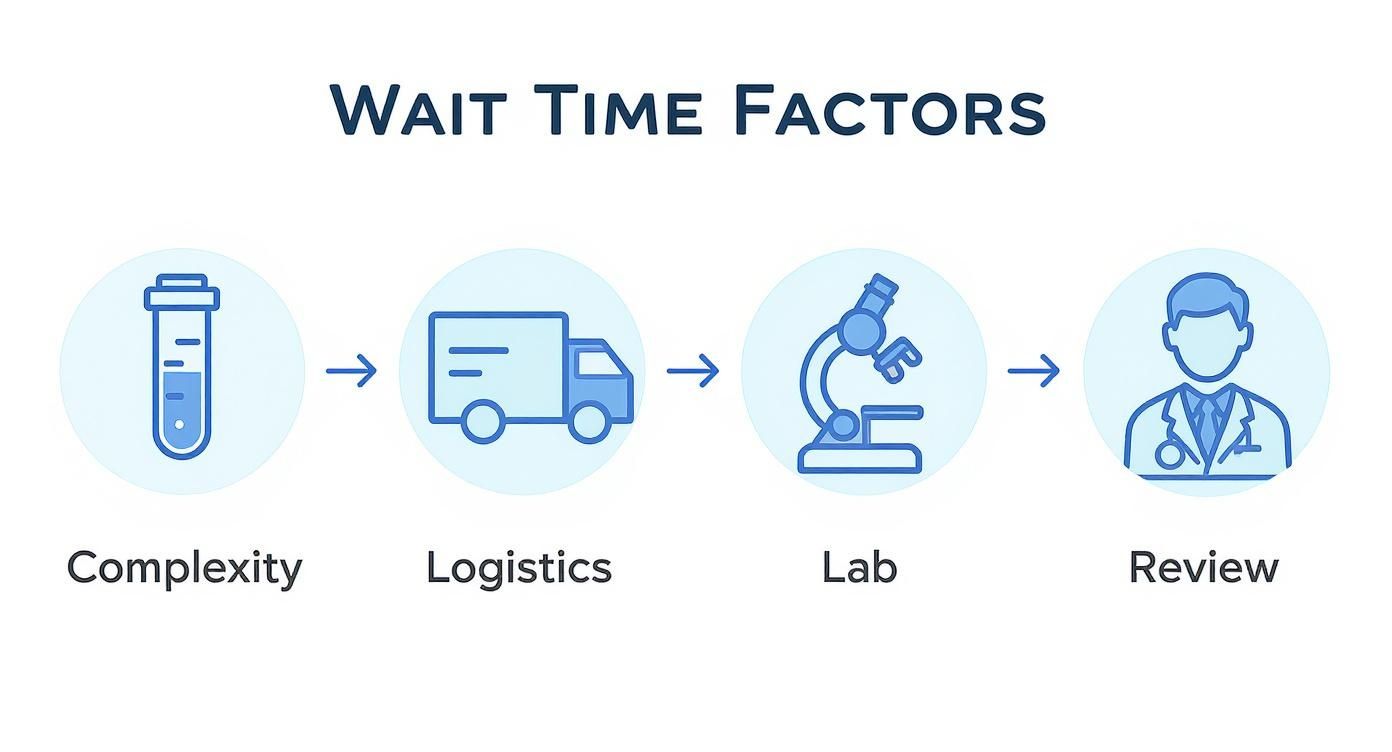
As you can see, every step, from logistics to the actual lab work, adds another layer to the timeline. It’s why a simple answer to "how long do blood test results take?" can be a bit misleading.
From Automation to Analysis
Today's labs are packed with sophisticated automated analysers capable of processing hundreds of samples an hour. These machines are the workhorses, measuring everything from your glucose levels to your liver enzymes with incredible speed and precision. But not all tests are treated with the same urgency.
A sample coming from an A&E department, for instance, will always jump to the front of the queue. For these urgent inpatient tests, the median turnaround time from the moment of collection to the result can be around 73 minutes. On the other hand, routine outpatient samples are usually run in batches to improve efficiency. This means your sample might have to wait its turn for the next scheduled run, a practice that helps keep costs down but naturally adds to your overall wait.
For some advanced blood samples, components might even be preserved using specialised cryogenic storage in medical labs, which is particularly common in research and biobanking.
The Final Step: Clinician Review
Even after the machines have crunched the numbers, the journey isn't quite over. This is where human expertise is absolutely vital. A qualified clinician or pathologist meticulously reviews the results, scanning for any abnormalities or patterns that might need a closer look.
A lab result is just a number until a medical professional interprets it within the context of your overall health. This review step is a critical quality check that turns raw data into meaningful, actionable health insights.
This final check explains why a result might be technically ‘ready’ in the lab’s system but isn't released to you right away. The doctor’s interpretation adds the all-important context, making sure you understand what the numbers mean for your health without causing any unnecessary worry.
Turning Your Results into a Longevity Strategy
Getting your blood test results back is a key moment. But it’s not the end of the story; it's really just the beginning of a smarter, more proactive approach to your long-term health. Knowing how long blood test results take helps manage the anticipation, but the real power comes from what you do with that information once it arrives.
Think of your results as a highly detailed, personal map of your body's inner workings. It pinpoints your current metabolic and cellular health, showing you exactly where you stand today. The exciting part is using that map to plot a course toward a longer, more vibrant life.
Decoding Key Biomarkers for Longevity
Your report is filled with different biomarkers, and each one is a small but important piece of a much larger puzzle. The trick is to translate these numbers into meaningful actions. For anyone serious about longevity, certain markers are especially insightful because they offer a glimpse into how your body is ageing at a biological level.
Here’s a quick look at a few of the most important ones:
- Cholesterol (HDL/LDL): This is about more than just your heart. The ratio of "good" (HDL) to "bad" (LDL) cholesterol says a lot about how well your body handles fats, which directly ties into inflammation and the resilience of your cardiovascular system.
- HbA1c (Glycated Haemoglobin): This marker gives you a 3-month average of your blood sugar levels. Keeping it in a healthy range is fundamental for good metabolic health and helps fend off the kind of cellular damage that can speed up the ageing process.
- Liver Enzymes (ALT/AST): Think of your liver as your body's main detox centre. If these enzymes are high, it can be a sign of stress or damage, which can affect everything from your energy to how you absorb nutrients.
Understanding what these biomarkers are telling you gives you the power to make precise, effective changes. For a much more detailed breakdown of what all the numbers mean, our guide on how to get your blood test results explained in the UK is a great resource.
From Data to a Personalised Action Plan
Raw data on its own won't change your health. A blood test becomes a useful measure when you and a medical professional use it to build a truly personalised action plan. This is how you turn a simple snapshot in time into a dynamic roadmap for your future wellbeing.
To help you get started, this table breaks down some of the most common biomarkers and explains why they matter for your long-term health.
Key Biomarkers and Their Role in Your Health
| Biomarker | What It Measures | Relevance to Longevity |
|---|---|---|
| HbA1c | Average blood glucose over 2-3 months | A key indicator of metabolic health; high levels are linked to accelerated ageing and chronic disease risk. |
| Lipid Profile (HDL, LDL, Triglycerides) | Levels of different fats in your blood | important for cardiovascular health; balanced lipids support a healthy heart and circulatory system as you age. |
| hs-CRP (High-Sensitivity C-Reactive Protein) | Low-level chronic inflammation in the body | Chronic inflammation is a root cause of many age-related diseases. Keeping it low is vital for healthy ageing. |
| Vitamin D | Your body's level of this essential vitamin | Supports immune function, bone health, and mood. Deficiencies can impact overall resilience. |
| ALT/AST (Liver Enzymes) | The health and function of your liver | A healthy liver is essential for detoxification and metabolism, processes that become even more important with age. |
These are just a few examples, but they show how specific data points can guide you toward targeted lifestyle improvements.
Your blood test results are not a grade; they are a guide. They provide objective feedback on your lifestyle, allowing you to fine-tune your approach to nutrition, exercise, and recovery for maximum impact.
Discussing your results with a doctor is the best way to build a strategy that's tailored specifically to you. This could mean making small tweaks to your diet, creating a more effective fitness plan, or simply scheduling regular tests to track your progress. This partnership turns numbers on a page into informed decisions that actively help you live a longer, healthier life.
What to Do When Your Results Are Delayed
It’s natural to feel a bit anxious when your blood test results are taking longer than you expected. You’re waiting for answers, after all. But most of the time, a short delay isn’t a sign of anything serious – it's often just down to routine administrative hiccups.
If a few days have passed since you expected to hear back, your first port of call should be the clinic or GP surgery that took your sample. A simple phone call can often clear things up, as the delay could be due to something as simple as a backlog in the office or a result that just needs to be filed.
Knowing When to Escalate
To make that call as productive as possible, it helps to have your details handy. This allows the staff to quickly locate your records and give you a proper update without any back and forth.
- Have your full name and date of birth ready.
- Know the date and rough time of your blood test.
- Mention the specific test name, if you know it.
A calm and clear approach always works best. Remember, the person on the other end of the line is there to help you track down the information you need.
It's also worth keeping in mind that the entire UK healthcare system is under considerable strain. Post-pandemic demand has stretched diagnostic services thin, and this can sometimes lead to longer waits for routine tests. For a wider perspective, you can look at the official NHS England statistics on diagnostic waiting times. This context can help explain why non-urgent results might occasionally take a bit longer than usual.
Of course, if you’ve waited a reasonable amount of time and are still without an update, or more importantly, if your symptoms have changed or worsened, don't hesitate. It's perfectly reasonable to book a follow-up appointment with your GP to discuss the situation and decide on the next steps.
Your Blood Test Questions, Answered
It's completely normal to have questions when you're getting a blood test. Let's clear up some of the most common ones so you know exactly what to expect on your health goals.
Can I Make My Blood Test Results Come Faster?
Sometimes, yes. If your results are genuinely urgent from a medical standpoint, your GP can flag the sample for the lab to prioritise.
Another route is using private health services. They often have a quicker process from start to finish—from the moment the sample is taken to delivering the results digitally with a doctor's commentary—which can trim down the total waiting time.
Why Does My Doctor Have to Review the Results First?
This is a important quality and safety check. A doctor doesn't just look at the numbers; they interpret them based on your personal health history, any symptoms you're having, and your lifestyle.
This professional oversight ensures you get accurate, meaningful medical advice and stops you from misinterpreting raw data, which could easily lead to unnecessary worry. To help patients with general queries about timelines and processes, some modern healthcare providers are using tools like an AI chatbot for customer service.
Will I Be Contacted If My Results Are Normal?
This really depends on your GP practice. Many clinics follow a "no news is good news" policy, meaning they'll only get in touch if your results need action. It’s always a good idea to confirm their specific procedure when you have your blood drawn.
On the other hand, most private health services, including digital ones, will notify you and provide your results no matter what they show.
What Should I Do If I Don't Understand My Results?
The best thing to do is book a follow-up chat with your GP or the clinician who reviewed them. They are the experts who can explain what each marker means for you personally and answer all your questions.
Avoid turning to Dr. Google to interpret your results on your own. Professional medical guidance is essential to turn that data into a real-world health plan that makes sense for you.
Ready to take control of your health with clear, actionable insights? Lola offers at-home blood testing with professional phlebotomy, analysis in UKAS-accredited labs, and a personalised doctor's review delivered directly to our app. Get the data you need to build your longevity strategy. Learn more and book your test today.
At-Home Blood Testing
Check your levels from home
Professional phlebotomist visit. Doctor-reviewed results in 2-5 days. Track your health with comprehensive blood panels.
→45-70 biomarkers tested · Venous blood draw · From £130