


Ever feel like you’re doing everything right—eating well, sleeping enough, staying active—but still not firing on all cylinders? It’s a common frustration, and the answer often isn’t to push harder, but to look deeper. This is where testing for deficiencies comes in. Think of it as a proactive strategy to understand what your body is truly missing before a minor issue evolves into a long-term health problem.
Your Hidden Advantage in Health and Longevity
I see it all the time with ambitious professionals and dedicated athletes. They meticulously plan their meals, stick to a rigorous training schedule, and guard their sleep, yet they still feel a nagging sense of being off their game. This gap between effort and outcome is often down to 'hidden hunger'—your body is getting calories, but it's starved of the essential micronutrients it needs to thrive and age well.
Even the most carefully constructed diet can fall short, especially when you're constantly pushing your mental and physical boundaries. The intense demands of modern life can burn through your vitamin and mineral stores faster than you can replenish them. This is precisely why deficiency testing is a cornerstone of any effective longevity strategy.
By getting a clear picture of your unique biochemical needs through precise testing, you stop guessing what your body needs and start knowing how to fuel it for peak performance and a longer, healthier life.
Beyond Guesswork to Precision Health
Instead of playing a frustrating game of supplement roulette or making shots in the dark with your diet, testing gives you a clear, data-backed roadmap. It shines a light on your specific requirements, enabling you to make targeted changes that compound over time. This is the very foundation of extending your healthspan—the number of years you live in vibrant, active health.
Getting to know your body at a molecular level is key to longevity. For example, that persistent brain fog you've been blaming on a busy schedule might actually be a sign of a borderline B12 deficiency, which can impact long-term cognitive health. That afternoon slump? It could be low iron, a factor that affects cellular energy and resilience. To dive deeper into this, you can explore the powerful connection between your diet and test results by learning more about blood testing for nutrition.
Switching from a reactive to a proactive health strategy gives you a powerful edge, especially when it comes to longevity:
- Early Detection: You can spot and correct subtle imbalances long before they spiral into more serious, chronic health issues.
- Personalised Strategy: Your results allow you to build a supplement and nutrition plan that’s tailored specifically to your body’s data, not a generic template.
- Performance Optimisation: You can ensure your body has the exact raw materials it needs to build resilience, sharpen cognitive function, and recover effectively, preserving your vitality for years to come.
Decoding Your Body's Warning Signs
That nagging brain fog you can't shake, or the fatigue that lingers long after your morning coffee – sound familiar? It’s easy to write these off as just part of a busy, demanding life. But more often than not, they’re actually your body’s way of sending out a quiet distress signal about your long-term health trajectory.
These feelings are often the first whispers of a nutrient shortfall. If you ignore them, they can snowball, affecting everything from your daily energy and focus to your long-term health and performance. The key is to stop guessing what’s wrong and start knowing how to fortify your body for the future.
High-stress careers and intense physical training place unique demands on the body. The very drive that pushes you to succeed also burns through crucial resources at an accelerated rate. This puts high-achievers in a tricky spot, making them particularly vulnerable to deficiencies that can quietly sabotage their performance, recovery, and long-term well-being.
The Key Players in Your Performance
Let's break down the most common culprits. Think of these nutrients less like items on a supplement label and more like critical workers, each with a specific, non-negotiable job inside your body that supports healthy aging.
-
Iron: Imagine iron as the oxygen delivery service for your entire system. It’s the heart of haemoglobin, which ferries oxygen to every cell. When this service slows, cellular energy production falters, leading to exhaustion and impacting the health of your brain and muscles. For a deeper dive, check out our guide on what causes low iron levels.
-
Vitamin B12: This is your body's chief energy strategist and neurological maintenance engineer. It’s absolutely vital for making healthy red blood cells and protecting the delicate sheath that surrounds your nerves. A chronic low level can lead to profound fatigue and cognitive issues that impact your quality of life as you age.
-
Vitamin D: We call it the "sunshine vitamin," but it acts more like a master hormone, directly influencing over 200 different genes. It's a cornerstone for a robust immune system, strong bones, and stable mood—all critical components of a long and healthy life. Low levels can leave you prone to illness and increase the risk of age-related bone issues.
-
Folate (Vitamin B9): Consider this the master builder, essential for cell growth, DNA repair, and methylation—processes fundamental to healthy aging. It's a key player in maintaining sharp cognitive function and cellular integrity. A shortfall often shows up as fatigue and irritability.
This concept map perfectly illustrates the shift from being reactive to proactive about your health.
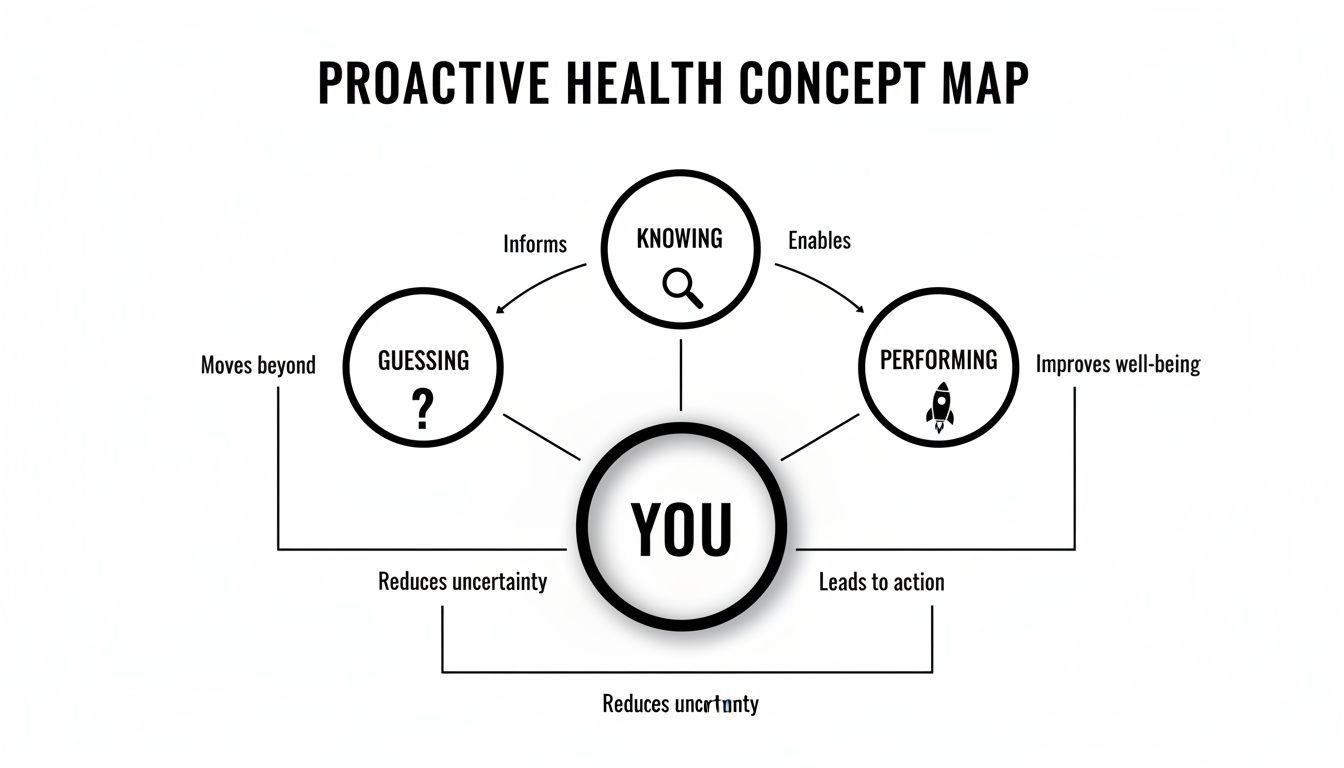
It’s about moving from uncertainty (Guessing) to clarity (Knowing) by using real data from your body. This is what unlocks the door to optimised health and a longer healthspan (Performing).
A Widespread Challenge
These deficiencies aren't rare; they're surprisingly common. Vitamin D deficiency, for example, is a huge issue in the UK. Recent data shows that nearly half of all adults have less-than-optimal levels, contributing to widespread fatigue and weakened immunity.
Folate levels are also a concern, with a significant number of women of childbearing age falling below the recommended intake. It's not just a minor issue – hospital admissions related to B12 and folate deficiencies are on the rise. These trends paint a clear picture of a wider problem with long-term consequences.
Connecting how you feel—that persistent tiredness or fuzzy thinking—to a potential deficiency is the most powerful first step you can take. It turns a vague complaint into a specific, solvable problem that you can address to improve your future health.
To get a better handle on the signals, it's worth learning more about recognizing vitamin B12 deficiency signs, as it's a common culprit behind many of these subtle symptoms.
The table below is a practical tool to help you connect the dots between how you’re feeling and what your body might be missing. See if any of these patterns resonate with you.
Symptom Checker: Your Body's Clues to Potential Deficiencies
| Symptom You're Experiencing | Potential Nutrient Deficiency | Why It Matters for Performance & Longevity |
|---|---|---|
| Constant Fatigue / Low Energy | Iron, Vitamin B12, Vitamin D | Your body can't produce energy or deliver oxygen efficiently, impacting long-term cellular health and vitality. |
| Brain Fog / Poor Concentration | Iron, Vitamin B12, Folate | These are essential for neurological function. A chronic lack can impact cognitive health as you age. |
| Frequent Illnesses | Vitamin D, Iron | A weak immune system leads to chronic inflammation, a key driver of aging, and disrupts your quality of life. |
| Low Mood / Irritability | Vitamin D, Folate, Vitamin B12 | These nutrients play a role in mood-regulating neurotransmitters, crucial for mental resilience over a lifetime. |
| Muscle Weakness / Slow Recovery | Vitamin D, Iron | Crucial for muscle function and repair. A lack hinders your ability to maintain strength and mobility as you age. |
| Tingling in Hands or Feet | Vitamin B12 | This can be a sign of nerve damage (neuropathy) due to a B12 shortfall, which is critical for nerve health. |
By paying attention to these signals, you can start forming a much clearer picture of what your body is trying to tell you and which areas might need a closer look.
Choosing the Right Tests for Optimal Results
So, you’ve connected the dots between how you’re feeling and what you might be lacking. The next step is moving from guesswork to facts by picking the right tests. This isn’t about just ticking boxes on a generic health screen; it's about being strategic with your testing for deficiencies to really move the needle on your performance and longevity. A scattergun approach rarely gives you the specific, actionable insights you need.
Think of it this way: a standard health MOT might tell you your car’s engine is about to conk out, but a proper diagnostic check will tell you exactly which spark plug is misfiring. For anyone serious about their long-term health, a targeted, comprehensive panel gives you far more useful data than a single-marker test, which can paint an incomplete picture.
Building Your Comprehensive Health Blueprint
To get a true 360-degree view of what's going on inside, you need to look beyond just one or two biomarkers. A smart testing strategy should include several key panels that work together, creating a detailed map of your internal health. This approach is what helps you see how different systems are influencing one another—a core principle of longevity science.
Here are the foundational tests that give the most actionable insights for performance and longevity:
- Full Blood Count (FBC): This is the bedrock of any serious health analysis. It checks the health of your red and white blood cells, giving clues about immune function, oxygen-carrying capacity, and chronic inflammation.
- Complete Iron Panel: Don't just stop at ferritin. A full panel measures serum iron, total iron-binding capacity (TIBC), and transferrin saturation. This reveals how your body is transporting and using this mineral, which is critical for cellular energy.
- Essential Vitamins (D, B12, Folate): As we've seen, these are the heavy hitters for energy, mood, and brainpower. Maintaining optimal levels is non-negotiable for anyone looking to protect their cognitive and physical health long-term.
- Key Minerals (Magnesium): It’s easy to overlook magnesium, but it’s involved in over 300 critical bodily processes, from muscle function and DNA repair to energy production. Deficiencies are incredibly common and can quietly sabotage your recovery and sleep.
Why a Full Picture Matters More Than Ever
Opting for a comprehensive panel over isolated tests is crucial because our bodies are interconnected systems. Low iron, for instance, might be linked to a B12 deficiency that's impairing absorption. You’d completely miss this critical link by only testing one of them.
A full-body analysis provides a holistic view, revealing the subtle patterns and relationships between different biomarkers. This is how you move from simply identifying a problem to understanding its root cause—a key to sustainable, long-term health.
This joined-up approach is more important now than ever. In the UK, a startling 48% of the population struggles to get enough vitamins and minerals from their diet alone, and that figure jumps to 61% for young adults. You can see the data for yourself and learn how UK adults are struggling with vitamin intake. This hammers home why proactive, thorough testing is no longer a luxury—it’s a necessity for feeling and performing your best for decades to come.
Making an Informed Choice for Accurate Data
Once you’ve decided which biomarkers to test, the next hurdle is making sure the data you get back is actually accurate and reliable. The way your sample is collected plays a massive role here. While finger-prick tests have their uses, a professional venipuncture—a proper blood draw from a vein in your arm—is the gold standard for accuracy.
This is where the difference between testing services really comes into focus. Choosing a service that uses a trained phlebotomist, whether they come to your home or you visit a clinic, ensures the sample is collected correctly and is large enough for a wide range of analyses. To get a better handle on your options, check out our guide on the difference between at-home and clinic blood tests. This choice directly impacts the quality of the insights you'll get, making it a critical decision in your journey towards optimal health.
Getting Your Test Right: Preparation is Everything
So, you’ve decided on the right tests. The next step is just as important: preparing for the blood draw itself. The quality of your results—and the actionable insights you gain for your longevity plan—hinges entirely on getting a clean, accurate sample.
Think of it like tuning a high-performance engine. A tiny miscalibration can throw the whole system off. In the same way, small things like a heavy meal, a tough workout, or even the time of day can temporarily skew your biomarkers, masking the true picture of your health.
Proper prep ensures the data we get is a genuine reflection of your baseline, not just a fleeting snapshot. This accuracy is the bedrock of effective testing for deficiencies and turns your results into a reliable roadmap for your health.
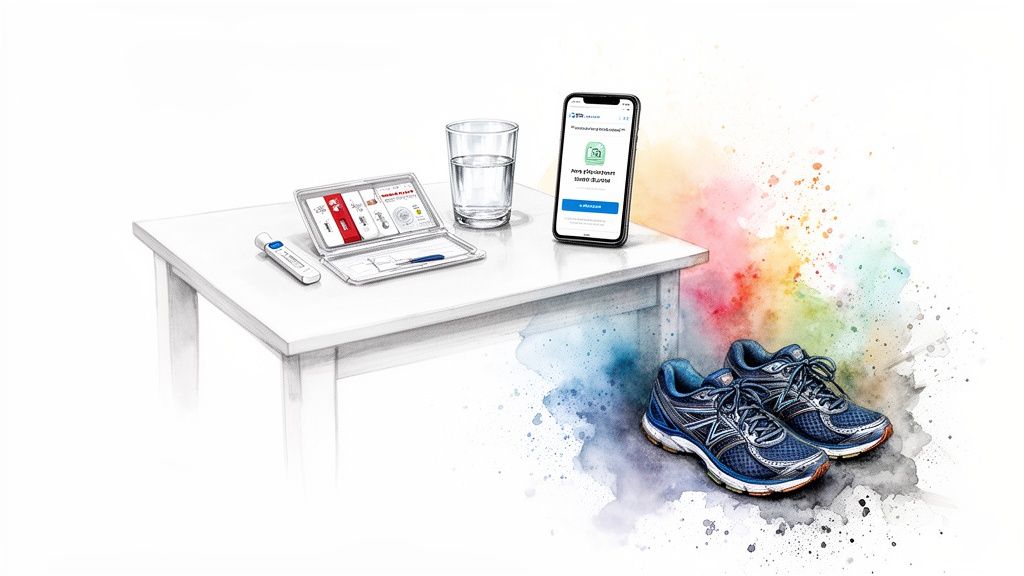
Key Steps for Reliable Results
To get the most value from your test, following a few simple guidelines makes all the difference. These steps help eliminate any background noise that could interfere with your results, giving you a clear and actionable health blueprint.
-
Time it Right: Many of your body’s markers, like the stress hormone cortisol or testosterone, naturally rise and fall throughout the day. That’s why most blood tests are best done in the morning. It gives us a consistent baseline to track how your levels change over time.
-
Fast for Clarity: For tests looking at things like lipids (cholesterol) and glucose, fasting is a must. This typically means no food or drink, other than water, for 8-12 hours beforehand. It ensures your results show your body’s true metabolic state, not just what you had for breakfast.
-
Hydrate, Hydrate, Hydrate: This one is simple but crucial. Drinking plenty of water in the 24 hours leading up to your appointment makes the blood draw much smoother. Good hydration makes your veins easier to find, helping the phlebotomist get a good sample on the first go.
-
Know What to Pause: To avoid inaccurate readings, it’s best to steer clear of a few things for 24 hours before your test:
- Strenuous Exercise: A heavy gym session can temporarily raise inflammation and muscle damage markers.
- Alcohol: It can impact your liver function results and affect hydration.
- Certain Supplements: Biotin (Vitamin B7) is a big one, as it can interfere with many lab tests. We usually recommend stopping it for at least 72 hours before your blood draw.
Making the Process Effortless
Gone are the days of inconvenient trips to a clinic just for a blood test. Modern services have completely redesigned the experience around your life, without ever sacrificing clinical quality.
The goal is to make gold-standard testing fit seamlessly into your day. A professional home visit from a trained phlebotomist offers the exact same reliability as a clinic, but with zero travel or waiting room time.
This modern approach takes the stress out of the equation. You book online, a professional comes to you, and your sample goes straight to a UKAS-accredited, NHS-standard lab. It guarantees your results are as accurate as they can be, transforming testing from a chore into a powerful, proactive step toward a longer, healthier life.
Turning Your Test Results into Real-World Action
So, you’ve got your results back. A page full of names, numbers, and ranges can look a bit intimidating at first glance, but this is where the magic happens. This is the moment your lab data becomes a personal roadmap to feeling better and living longer. The goal isn't just to look at the numbers; it's to use them to make smart, decisive changes that support your longevity.

This starts by understanding a crucial difference. The ‘normal’ ranges on a standard lab report are just an average taken from a huge group of people, many of whom might not be in the best of health. If you’re driven by longevity, just being ‘normal’ isn’t good enough.
Normal vs Optimal: The Longevity Mindset
You should be aiming for optimal ranges. These are the much narrower, more specific levels linked to peak physical performance, mental clarity, and preventing age-related disease. Think of it like tuning a high-performance car. The factory settings will get you from A to B, but a precision tune-up is what unlocks its real power and durability.
For example, a ‘normal’ Vitamin D level might be enough to prevent bone disease, but an optimal level is required for a robust immune system and stable mood, which are key to healthy aging. Similarly, an iron level that isn't technically anaemic could still leave you feeling drained because it can’t meet your body’s high demand for oxygen and cellular energy.
True optimisation isn't about dodging illness; it's about actively building a more resilient body and mind to extend your healthspan. Your test results are the coordinates for that journey, showing you exactly where to focus for the biggest return on your effort.
This proactive approach has never been more important. Recent data reveals that hospital admissions in England for vitamin deficiencies have shot up 5.4-fold over the last 20 years. This staggering increase shows just how common these problems are and proves how powerful early testing can be in heading off serious health issues. You can explore the research on rising deficiency trends to see the full picture.
From Data to Daily Habits: A Practical Game Plan
With your results and an expert doctor's review in hand, you get a clear set of recommendations. This isn’t just generic advice; it's a specific action plan designed around your body's unique chemistry to support your long-term health. Here’s how you turn those insights into real, daily habits that actually work.
- Precision Supplementation: If your report flags a shortfall, your plan will include the right supplements at the correct dose. This is the fastest way to get your levels back into the optimal zone while you work on longer-term dietary changes.
- Strategic Dietary Tweaks: Next, it’s about fine-tuning your nutrition for longevity. This could be adding more iron-rich foods like spinach and red meat to boost your ferritin or bringing in fatty fish to naturally increase your Vitamin D. These small, consistent changes build a resilient foundation over time.
- Informed Lifestyle Changes: Your results can also point to lifestyle adjustments. For instance, if your cortisol (the stress hormone) is high, the advice might be to build in mindfulness practices or adjust your workout intensity to allow for better recovery, reducing the chronic stress that accelerates aging.
By tackling each recommendation one by one, you turn a static lab report into a dynamic guide for everyday life. This is how testing for deficiencies becomes a genuine tool for longevity, helping you make small, consistent changes that add up to a longer, healthier future.
It's Time to Take Control of Your Long-Term Health
We've covered a lot of ground, but the core message is straightforward: understanding your nutrient levels is fundamental to building a long and vibrant life. It's about shifting from simply reacting to feeling unwell to actively constructing a more resilient, energetic you. In short, it’s time to stop guessing and start measuring.
When you test for deficiencies, you're handed the reins. Suddenly, vague issues like persistent fatigue or nagging brain fog aren't just things you have to put up with. They become clear signals—data points you can act on to improve your health trajectory. This is your first step towards understanding what your body truly needs to thrive for the long haul.
Armed with precise data and expert guidance, you can build a targeted health strategy that supports your ambitions and extends your healthspan for years to come.
This isn't about guesswork anymore. It's about making smart, informed decisions, whether that means adding specific supplements, making simple tweaks to your diet, or changing your daily habits. To keep that progress going, many people find success by finding the best app to track food for your health goals.
Ultimately, looking at your health this way is about more than just fixing deficiencies. It’s about creating a solid foundation that lets you perform at your best, not just today, but for decades to come. Your long-term health isn't out of reach—the key to unlocking it is in your hands.
Your Questions About Deficiency Testing Answered
Diving into the world of proactive health can feel like learning a new language, and it’s natural to have questions. This section is here to clear things up, answering the most common queries we hear about testing for deficiencies. Think of it as your friendly guide to feeling confident about taking control of your long-term health.
Deciding to move from simply guessing what your body needs to actually knowing is a massive step forward. Let's walk through some of the key things you might be wondering about.
How Often Should I Get Tested?
As a great starting point for building a longevity plan, I usually recommend a comprehensive test once a year. This gives you a solid baseline, a clear picture of your key biomarkers that you can track over time to spot any changes before they become problems.
But your testing schedule should really match your life. If you’re a serious athlete, making a big dietary shift, or trying to get to the bottom of some persistent symptoms, testing every six months is a much smarter move. This gives you more frequent feedback, letting you adjust your nutrition and lifestyle in real-time to stay on track with your long-term health goals.
Can I Fix a Deficiency with Diet Alone?
A food-first approach is always the best foundation for health – you can’t out-supplement a poor diet. But when you’re dealing with a genuine deficiency, trying to fix it with food alone can be a long, slow climb, and sometimes it's just not enough. This is especially true for nutrients like iron or vitamin B12, where your body's ability to absorb them can be a real limiting factor.
Think of it this way: supplements are the express lift to get your levels back into the optimal zone. A well-planned diet is what keeps you there. The most effective strategy is to use targeted supplements to correct the immediate shortfall, while simultaneously making sustainable dietary improvements to maintain those healthy levels for the long haul.
This two-pronged approach helps you feel better, faster, while building the habits that will support your health for years to come.
Are At-Home Blood Draws Reliable?
Absolutely, as long as they’re done properly. The key isn't where the sample is taken, but how. A professional service that sends a trained phlebotomist to your home for a venipuncture (a standard blood draw from a vein in your arm) is just as accurate as going to your local clinic or hospital.
The collection process is identical, and the blood samples are sent to the very same accredited, high-standard laboratories for analysis. It’s all about getting clinical-grade reliability without the hassle. This approach removes one of the biggest barriers to regular health monitoring—convenience—without compromising on the quality of your results.
What’s the Difference Between ‘Normal’ and ‘Optimal’ Ranges?
This is a crucial distinction, especially if you're focused on high performance and longevity. The 'normal' ranges you see on a standard lab report are incredibly broad. They're based on the average results from a general population, which unfortunately includes many people who aren't in the best of health.
'Optimal' ranges are much tighter and more specific. They represent the levels associated with peak physical and mental performance, reduced disease risk, and a longer, healthier life. For anyone looking to truly thrive, simply being 'not sick' isn't the goal. Aiming for optimal is about unlocking your body’s full potential and building resilience for the future.
Ready to stop guessing and start knowing exactly what your body needs to perform at its best? With Lola, you can book a professional phlebotomist to visit you at home and get a comprehensive analysis from an NHS-standard lab, all delivered with a doctor's review in our app. Take the first step towards a longer, healthier life by exploring your testing options at https://lolahealth.com.