


Testing for vitamin and mineral deficiency means getting specific blood tests to see the exact levels of crucial nutrients in your system. It's the only way to get a clear, honest picture of your body's biochemical state. This isn’t about guesswork; it’s about getting real data you can act on to fine-tune your health and build a solid foundation for longevity. Think of it as the essential first step to uncovering the hidden gaps that could be quietly compromising your healthspan.
The Hidden Drain on Your Long-Term Health
Think of your body as a high-performance engine designed for a long journey. You'd never intentionally fill it with subpar fuel, but that's precisely what happens when we let subtle nutrient gaps go unchecked. Over time, these small shortfalls act like a silent drain, slowly chipping away at your cellular performance and ultimately shortening the engine's lifespan.
This guide isn't just about fixing obvious problems. It's about showing you how proactive testing for vitamin and mineral deficiency is a cornerstone of any serious longevity strategy. It’s about making a fundamental shift from simply feeling ‘adequate’ to becoming truly ‘optimal’ for a longer, healthier life.
Why Optimal Levels Matter for Longevity
For years, nutritional advice focused on preventing outright deficiency diseases like scurvy. That’s important, but it sets an incredibly low bar for what it means to be healthy. Optimal levels are different. They provide your body with the resources it needs not just to get by, but to truly flourish and defend against the daily cellular stressors that accelerate ageing.
"Long-term, even minor nutrient insufficiencies can create a state of chronic cellular stress. This can impair DNA repair, weaken immune function, and reduce energy production, all of which are hallmarks of the aging process."
These subtle, long-term deficits often show up in ways we shrug off as 'getting older'—that nagging fatigue, slower recovery, or a general feeling of being 'off'. More often than not, these are early warnings of a deeper biochemical imbalance that can impact your healthspan. For instance, low iron is a notorious energy thief, and learning what causes low iron levels can be the first step towards restoring your vitality for years to come.
From Reactive to Proactive Health
Taking a proactive approach with testing gives you the precise information you need to start fine-tuning your biology for longevity. It helps you pinpoint exactly what’s missing so you can address it head-on, ensuring your body has all the raw materials it needs for key longevity pathways.
Here’s what that proactive mindset can unlock:
- Enhanced Cellular Repair: Nutrients like zinc and the B vitamins are absolutely critical for maintaining and repairing your DNA, essentially protecting your genetic blueprint from age-related wear and tear.
- Sustained Energy Production: Minerals like magnesium act as vital cofactors in over 300 enzyme reactions, including the ones that create cellular energy (ATP), fueling your body at the most fundamental level.
- Stronger Immune Resilience: Vitamins C and D are fundamental for a powerful immune system that can fend off infections and keep chronic inflammation—a key driver of ageing—in check.
By understanding your unique biochemical makeup, you can stop guessing what your body needs and start making smart, data-driven decisions that directly support a longer, healthier life.
Going Beyond a One-Size-Fits-All Health Approach
We've all been told to "eat a balanced diet." Yet, this generic advice doesn't explain why two people can follow the exact same healthy eating plan and have vastly different outcomes. One person might be thriving, while the other is battling constant fatigue, brain fog, or slow recovery from workouts.
The reality is, there's no such thing as a universally "perfect" diet for longevity. Our nutritional needs are a complex mix, shaped by our genetics, stress levels, physical activity, and environment. What’s optimal for one person can be insufficient for another. Those nagging symptoms? Think of them as early warnings – your body's way of telling you something is missing, long before it becomes a major problem affecting your long-term health.
These signals are valuable data. This is where proactive testing for vitamin and mineral deficiency comes in. It’s the tool that turns those vague feelings into a clear, personalised roadmap for optimising your healthspan.
Your Personalised Health Blueprint
Imagine your body's biochemistry as its own unique operating system. Just like software, it needs very specific inputs to run at its best. Generic health advice is like a generic software patch – it might help a little, but it doesn't address the underlying code that makes you you.
Personalised testing pulls you out of the guessing game. Instead of just reacting to symptoms – more coffee to fight fatigue, painkillers for aches – you can finally pinpoint and address the root cause. This shift in perspective is absolutely fundamental for anyone serious about their longevity.
By identifying your specific nutritional shortfalls, you can build a health strategy that directly addresses your body’s precise requirements. This forms the foundation of a targeted plan for not just feeling better today, but for extending your healthspan for years to come.
The Problem of Declining Nutrient Intake
On top of our bio-individuality, there’s another problem: the food we eat isn't as nutritious as it once was. Modern farming, soil depletion, and food processing mean that even a "healthy" diet might not be delivering the micronutrients your body needs to thrive.
This isn't just a theory. Long-term national survey data from the UK show worrying declines in our intake of several key vitamins and minerals over the last 20 years. Research highlights that average daily intakes of vitamin A, folate, vitamin D, iron, and calcium have all dropped, raising real questions about whether we're getting enough. You can read more about these ongoing nutritional challenges facing the UK population.
This makes personal testing more critical than ever. You simply can't assume your diet is covering all the bases for optimal long-term health.
The Longevity Advantage of Targeted Action
When you understand your body’s unique needs, you can take precise, effective action. It’s the difference between blindly taking a generic multivitamin and strategically supplementing with the exact nutrients your body is crying out for. This targeted approach gives you a real edge in building long-term vitality.
- Efficient Cellular Function: Giving your cells the right micronutrients is like giving them high-quality raw materials. It fuels energy production, DNA repair, and waste removal – all crucial processes for slowing down the biological clock.
- Reduced Inflammation: Chronic, low-grade inflammation is a known driver of ageing. Optimising levels of nutrients like magnesium and zinc helps keep this inflammatory response under control.
- Enhanced Cognitive Performance: Your brain is hungry for B vitamins, iron, and other key nutrients to maintain focus, memory, and mood. Addressing even a small deficiency can directly impact your long-term cognitive health.
Ultimately, testing for vitamin and mineral deficiency puts you in the driver's seat. It gives you the blueprint you need to build a resilient, high-performing body that's ready to thrive for the long haul.
Key Nutrient Tests for Your Longevity Blueprint

If you're serious about a longevity strategy, you first need a blueprint of your body's internal workings. That's exactly what comprehensive testing for vitamin and mineral deficiency provides. Forget the scattergun approach of grabbing random supplements; targeted testing pinpoints the exact nutrients your body is crying out for, so you can make changes that actually move the needle on your long-term health.
This isn't just about dodging illness. It's about fine-tuning your biochemistry to operate at its peak. Certain vitamins and minerals are absolute non-negotiables for the critical processes that govern how we age—like immune function, DNA repair, and cellular energy. Knowing your status for these is the essential first step to taking control of your healthspan.
The Foundational Tests for a Longer Healthspan
While a host of nutrients are important, a select few have a massive impact on the cellular machinery that underpins longevity. These biomarkers provide the most valuable insights and should form the core of any solid testing plan. By focusing here first, you get the biggest return on your investment in your future health.
Here are the critical tests that should be on your radar:
-
Vitamin D: Often dubbed the "sunshine vitamin," its influence goes way beyond bone health. It’s a powerful immune system modulator and is crucial for regulating cell growth and taming inflammation—two cornerstones of healthy ageing.
-
Vitamin B12: This is a true powerhouse for your brain and energy levels. B12 is vital for maintaining the protective sheath around your nerves and for making the red blood cells that shuttle oxygen to every corner of your body.
-
Magnesium: Acting as a helper in over 300 essential biochemical reactions, magnesium is a cornerstone of cellular function. It’s vital for DNA stability, muscle function, and creating cellular energy (ATP).
-
Zinc: Think of this mineral as a gatekeeper for your immune system and a key player in your DNA repair crew. Optimal zinc levels are essential to fend off infections and protect your genetic code from age-related damage.
Let's unpack why each of these is such a critical piece of your longevity puzzle.
To make this clearer, here’s a quick summary of the most important micronutrients to test for, what they do for longevity, and the tell-tale signs that you might be running low.
Essential Micronutrient Tests for Longevity
| Micronutrient | Role in Longevity | Common Deficiency Signs |
|---|---|---|
| Vitamin D | Regulates immunity, controls inflammation, and supports cellular health. | Frequent illness, fatigue, bone pain, low mood. |
| Vitamin B12 | Essential for neurological function, red blood cell formation, and energy production. | Brain fog, persistent tiredness, pins and needles. |
| Iron (Ferritin) | Crucial for oxygen transport via haemoglobin, supporting energy and cognitive function. | Fatigue, shortness of breath, poor concentration. |
| Magnesium | Involved in 300+ enzyme reactions, DNA repair, and cellular energy (ATP). | Muscle cramps, poor sleep, fatigue, anxiety. |
| Zinc | Key for immune defence, wound healing, and protecting DNA from damage. | Slow recovery, frequent colds, hair loss. |
By tracking these specific markers, you can get a clear, actionable picture of your body's unique needs and build a targeted strategy for a longer, healthier life.
Vitamin D: The Immunity and Cellular Guardian
Think of Vitamin D as your body's master regulator. Optimal levels help keep your immune system perfectly balanced—primed to fight off pathogens but calm enough to avoid the chronic inflammation that accelerates ageing. Letting your levels drop leaves you vulnerable.
The signs of low Vitamin D are often vague; it could be general fatigue, catching more colds, or a persistently low mood. Because it’s so tough to get enough from food and sunlight alone in the UK, testing is the only reliable way to know where you stand. Our guide on why Vitamin D deficiency testing is so important has even more detail.
B12 and Iron: Fuel for Your Cells and Brain
Your energy levels are directly tethered to your body's ability to transport oxygen and produce ATP. Both Vitamin B12 and iron are indispensable for these jobs. B12 is needed to create healthy red blood cells, while iron forms the core of haemoglobin—the molecule that carries oxygen.
A shortfall in either can lead to deep-seated fatigue, brain fog, and a drop in performance that many people write off as burnout. For anyone serious about long-term cognitive and physical vitality, keeping these levels optimal is a necessity.
It’s important to note that when testing for iron, a simple iron level isn’t enough. You need a full iron panel that includes a ferritin test. Ferritin is the protein that stores iron, giving you a much more accurate picture of your body's total iron reserves and an early warning of declining status.
Low ferritin is one of the earliest signs of iron insufficiency. Resources on understanding how to achieve optimal ferritin levels can be incredibly helpful for managing your iron status for long-term health.
Magnesium and Zinc: The Cellular Repair Crew
If your body is a high-performance machine, then magnesium and zinc are the essential maintenance crew working behind the scenes. Magnesium is involved in just about everything, from regulating your heartbeat to ensuring your muscles can contract and relax. It's the spark plug for your cellular energy.
Zinc, on the other hand, is the master of repair and defence. It supports the enzymes that patch up damaged DNA and is crucial for wound healing and a robust immune response. A deficiency might show up as slow recovery after exercise, brittle nails, or feeling like you catch every bug going around, all of which compromise your long-term resilience.
Choosing the Right Testing Method for Accurate Insights
When you decide to get serious about your longevity, the quality of your test results is everything. These numbers will guide your diet, supplementation, and lifestyle. But with different testing methods available, it’s vital to know which one provides the reliable information needed to support your long-term goals.
The world of testing for vitamin and mineral deficiency really comes down to two main options: the convenient at-home finger-prick test and the clinical-grade venous blood draw. While both offer a window into your body's inner workings, the accuracy and depth of insight they provide can be miles apart.
The Gold Standard: Venous Blood Draw
A venous blood draw—where a trained professional takes blood from a vein in your arm—is the undisputed gold standard for accuracy. It’s the same method the NHS and private clinics rely on, and for good reason. This technique yields a larger, cleaner sample, completely free from contamination by interstitial fluid (the liquid surrounding your body’s cells).
That purity is crucial for getting reliable results. A larger blood sample not only reduces the risk of skewed readings but also gives laboratories enough material to run a much wider and more complex range of tests. If you're building a true longevity strategy, you need this level of precision to track your progress with confidence.
Think of a venous blood draw as a high-resolution satellite image of your internal health. It delivers a clear, comprehensive, and dependable picture you can use to build a robust and effective health plan.
This method also has an exceptionally high success rate, typically around 99.8%, because it’s carried out by a professional phlebotomist. This eliminates the common user errors that can plague at-home kits, ensuring the sample is viable and the results are trustworthy from the get-go.
A Closer Look at Finger-Prick Tests
Finger-prick tests have become popular because they're convenient. However, that convenience often comes at the expense of reliability—a significant trade-off when your long-term health is on the line.
Here’s a straightforward comparison to help you weigh up the options:
| Feature | Venous Blood Draw (Clinical Standard) | Finger-Prick Test (At-Home) |
|---|---|---|
| Sample Quality | High-purity venous blood, free from contaminants. | Capillary blood mixed with tissue fluid, which can dilute results. |
| Sample Volume | Large volume allows for a wide array of comprehensive tests. | Small volume limits the number and complexity of tests possible. |
| Accuracy | The benchmark for precision and reliability. | Higher risk of inaccurate results due to contamination or user error. |
| Collection Process | Performed by a trained phlebotomist, ensuring a viable sample. | Self-administered, increasing the risk of clotting or insufficient sample. |
For anyone wanting to dig deeper, our detailed guide on the pros and cons of at-home health testing offers more insights to help you make an informed choice.
Why Laboratory Accreditation Is a Non-Negotiable
No matter how the sample is collected, the quality of the laboratory that processes it is just as important. This is where credentials like UKAS accreditation come in as a critical mark of quality. UKAS (United Kingdom Accreditation Service) is the only national body the government recognises to assess organisations that provide testing services.
When a lab is UKAS-accredited, it means it has met incredibly strict international standards for competence, impartiality, and performance. This isn't just a logo; it's your guarantee that:
- Equipment is precisely calibrated to ensure accurate measurements.
- Processes are standardised to eliminate errors and maintain consistency.
- Technicians are highly trained and follow strict quality control protocols.
Ultimately, choosing a service that uses UKAS-accredited labs means you can have complete confidence in your results. It ensures the data you receive is a true reflection of your biochemistry, giving you a solid foundation to build your longevity strategy on.
Turning Your Test Results into Actionable Health Gains
Getting a report filled with numbers and medical terms can feel daunting. But this is where the real progress for your longevity begins. Think of your test results not as a final score, but as the starting line for a smart, targeted plan to genuinely improve your healthspan.
It all starts with getting the most accurate data you can. A few simple steps before your test can make a world of difference. This usually means fasting for 8-12 hours to get a clean baseline, free from the immediate effects of your last meal. It’s also wise to pause certain supplements, like biotin (Vitamin B7), for a few days, as they can sometimes interfere with lab equipment and skew readings.
From 'Normal' Ranges to Your 'Optimal' Zone
When you get your results, you'll see if you fall within the "normal" range. That’s a decent first step to flag major deficiencies. But if you’re aiming for peak health and longevity, "normal" often isn't good enough.
Why? Because those "normal" ranges are just averages from a huge population, which includes many people who aren't in great health.
The real goal is to shift your focus from normal to optimal. Optimal ranges are much tighter and are geared towards what your body needs for peak performance, a rock-solid immune system, and long-term vitality. For instance, a "normal" Vitamin D level might be anything over 50 nmol/L. But for optimal cellular health and longevity, most experts would tell you to aim for somewhere between 75-125 nmol/L.
"Moving beyond 'normal' to 'optimal' is the difference between simply avoiding disease and actively building a resilient, high-performing body. It's a fundamental shift from a reactive mindset to a proactive one focused on long-term vitality."
This illustration shows how the process works, from that first sample to getting the data you need for action.
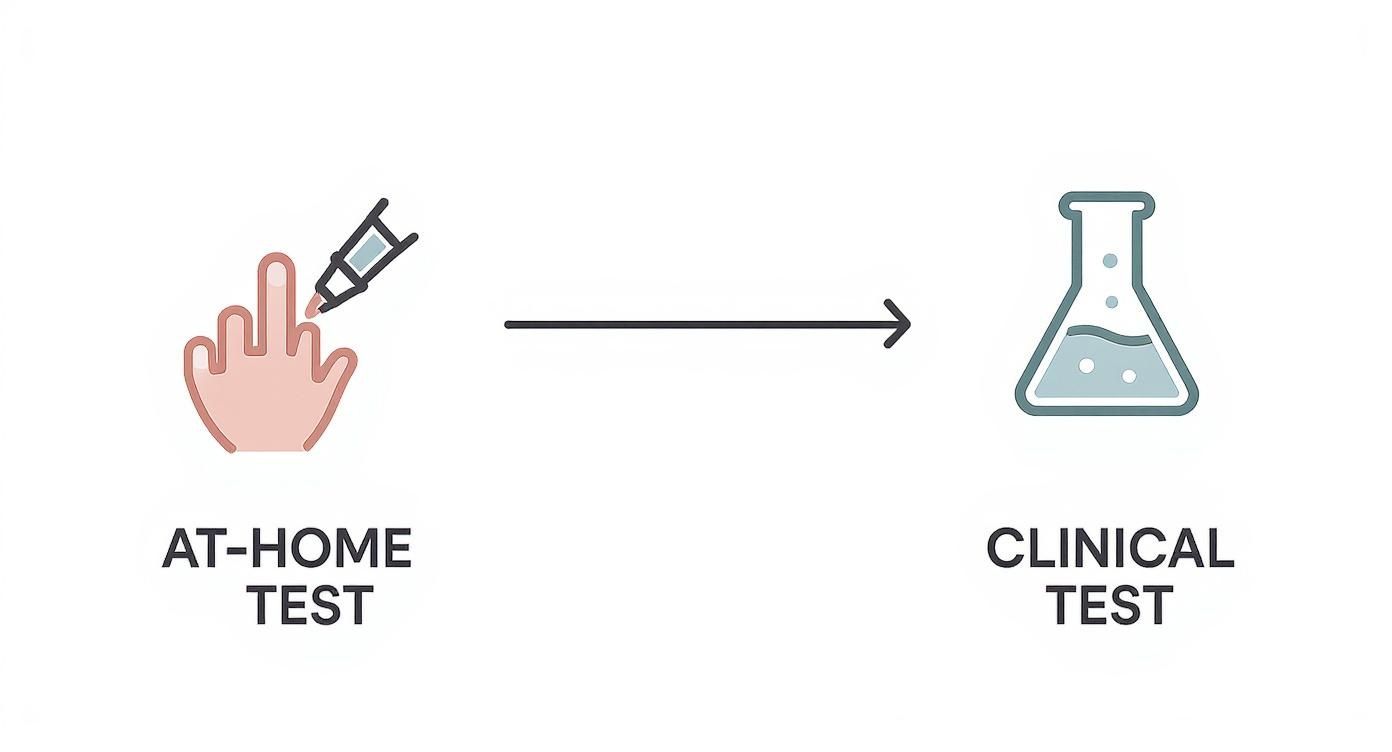
Whether you use a home kit or visit a clinic, the aim is the same: get precise data that a professional can help you translate into a meaningful longevity plan.
Creating Your Personal Action Plan
Once you see your results through this "optimal" lens, you can put together a clear, targeted action plan. This isn't about guesswork; it's about making specific changes based directly on what your body is telling you it needs for long-term health. This involves a mix of dietary tweaks, smart supplementation, and lifestyle adjustments.
Your plan might look something like this:
- Targeted Dietary Changes: If your results show low magnesium, your first move is to pack your plate with magnesium-rich foods like spinach, almonds, and pumpkin seeds.
- Strategic Supplementation: For significant shortfalls, or for nutrients like Vitamin D that are hard to get from food alone in the UK, a high-quality supplement is often the quickest way to get your levels back into the optimal zone.
- Lifestyle Adjustments: Your results can even point to lifestyle habits. We know chronic stress burns through magnesium, so your plan might include adding stress-management techniques to protect your long-term health.
- Re-testing Schedule: This is key. A good plan always includes a follow-up test, typically in 3-6 months, to monitor progress and fine-tune your approach.
Putting Your Diet Strategy into Practice
A food-first approach is always the best foundation. This means actively looking for foods packed with the vitamins and minerals your body is crying out for. To turn your test results into real-world food choices, it's crucial that you know how to effectively read food labels.
This one skill turns you into a savvy shopper, able to ensure what goes into your basket is aligned with your longevity goals.
For example, if you need more iron, you can start checking the percentage daily values (%DV) on packaging. You’ll quickly spot which foods offer the biggest bang for your buck. Suddenly, every trip to the supermarket becomes a chance to support your body's specific needs. When you pair your personal health data with smart food choices, you build a powerful, sustainable strategy for feeling your best, for longer.
Frequently Asked Questions About Nutrient Testing
It's completely normal to have questions when you start digging into the world of vitamin and mineral testing. Moving from guesswork to a data-driven approach to your health is a big step, and getting clear on the details is the best way to feel confident about your plan. I’ve put together answers to some of the most common queries I hear, breaking down the key concepts to help you get started.
Think of this as your practical guide to integrating testing into your health and longevity strategy, ensuring every decision you make is well-informed and right for you.
How Often Should I Get Tested?
There's no single right answer here; the best testing frequency really comes down to your personal health goals, lifestyle, and where your nutrient levels are right now. For most people proactively managing their health, a comprehensive test once a year is a great starting point. It gives you a solid baseline and lets you see how your levels are trending, so you can catch any slow declines before they become a real issue.
That said, some situations call for more regular check-ins.
- For High Performers: If you're an athlete or a busy professional dealing with high stress, your body burns through nutrients much faster. Testing every six months gives you the timely feedback needed to tweak your nutrition and supplementation, helping you sustain peak performance and avoid burnout.
- For Active Correction: If a test has flagged a specific deficiency (like low iron or Vitamin D) and you're taking action to correct it, you’ll want to monitor your progress. A follow-up test every three to four months is ideal to confirm your new plan is working and to adjust the dose if needed.
The key is consistency. Regular testing transforms isolated data points into a meaningful trend line, giving you a dynamic and far more useful picture of your health over time, which is crucial for any longevity strategy.
Can I Fix a Deficiency with Diet Alone?
A food-first approach should always be the bedrock of your nutrition. For minor insufficiencies—where your levels are just dipping slightly below the optimal range—you can often bring them back up with targeted dietary changes. This means consciously adding more foods rich in the specific nutrients you’re low on, like loading up on leafy greens and nuts for magnesium or including lean red meat for iron.
But diet isn't always the whole solution, especially when facing a significant deficiency or when aiming for optimal longevity ranges. Some nutrients, like Vitamin D, are just plain hard to get from food alone, particularly during the UK's autumn and winter months. In these cases, high-quality supplements become an essential tool to get your levels back into a healthy zone efficiently. A blood test is the only way to know for sure how severe a deficiency is and decide whether diet, supplements, or a combination of both is the right strategy for you.
Why Are Venous Blood Tests More Accurate?
When it comes to testing for vitamin and mineral deficiency, you want results you can rely on, and that’s where venous blood tests really shine. A sample taken from a vein by a trained phlebotomist is considered the gold standard for one simple reason: sample quality.
A venous sample is pure blood, free from the surrounding tissue fluid and cellular debris that can easily contaminate a finger-prick sample. This purity is absolutely crucial for getting a true reading, as contamination can dilute the sample and give you a number that doesn't accurately reflect what's going on inside your body.
On top of that, the larger volume of blood collected means the lab can run a much wider and more complex range of tests from a single sample. It also virtually eliminates the risk of user error that can happen with at-home finger-prick kits. The whole process is standardised and professional, ensuring the sample is perfect for analysis and giving you data you can actually trust to make big decisions about your long-term health.
What Does UKAS-Accredited Mean?
Seeing the term UKAS-accredited on a test is your mark of quality control. UKAS stands for the United Kingdom Accreditation Service, and it’s the only body recognised by the government to vet organisations that provide testing services.
When a lab is UKAS-accredited, it means it has passed a series of tough, impartial audits. These checks confirm that the lab’s equipment, processes, and staff all meet strict international standards.
For you, this is a huge deal. It’s a guarantee that:
- The equipment is precisely calibrated, meaning the measurements are accurate and consistent every single time.
- The analytical methods are standardised, which removes variables that could throw off your results.
- The staff are highly trained and follow strict quality control protocols from the moment your sample arrives to the moment your results are released.
Choosing a service that uses UKAS-accredited labs means you can have total confidence in your results. For anyone serious about using precise data to build an effective health strategy, it's a non-negotiable.
Ready to move beyond guesswork and unlock your body's true potential? With Lola, you get the gold standard in health insights. Our professional at-home phlebotomy service uses NHS-standard, UKAS-accredited labs to provide you with data you can trust. View your results, track trends, and receive a personalised doctor’s review all within our easy-to-use app.
Take control of your health journey today by exploring our comprehensive blood tests at Lola Health.