


The TG/HDL ratio is a simple calculation that compares the amount of triglycerides in your blood to your high-density lipoprotein (HDL) cholesterol. While it might sound technical, it's actually a powerful clue to your metabolic health and a surprisingly accurate predictor of your cardiovascular risk—often telling you more than your cholesterol numbers alone, making it essential for anyone focused on longevity.
A Key Biomarker for Longevity
Don't just think of your TG/HDL ratio as another number on a lab report. See it as a sensitive snapshot of your metabolic health. For anyone serious about extending their healthspan and living a long, vibrant life, getting to grips with this biomarker is non-negotiable. It offers a much sharper look into your cardiovascular risk than standard cholesterol figures, acting as a crucial early warning system for bigger problems down the line.
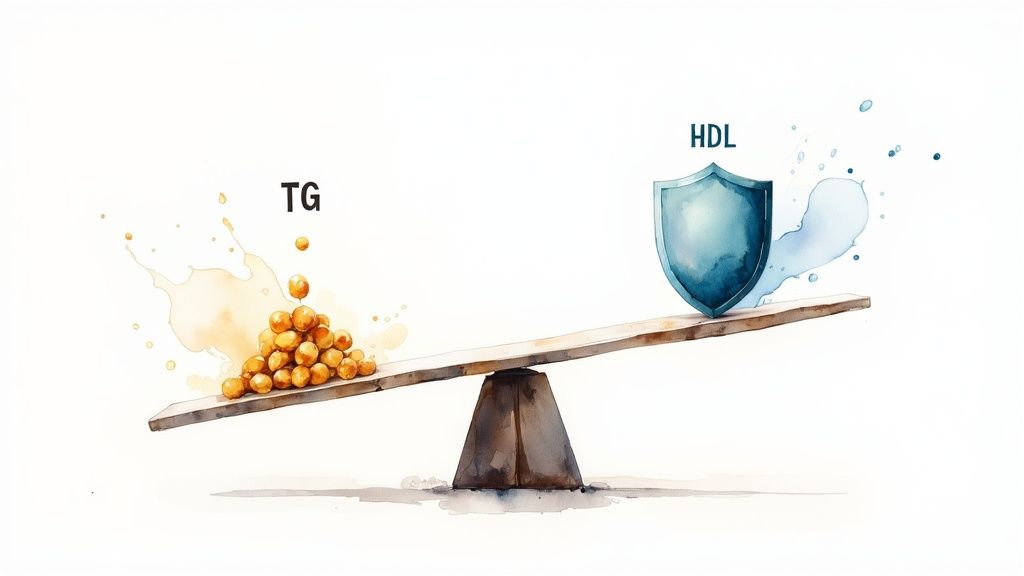
Picture a seesaw. On one end, you have triglycerides (TG)—these are the main form of fat your body uses to store energy from the food you eat. On the other end is high-density lipoprotein (HDL), what's often called 'good' cholesterol. HDL’s job is to act like a cleanup crew, clearing out excess cholesterol from your arteries.
In a healthy system, this seesaw is nicely balanced. An imbalance, with high triglycerides and low HDL, is a far more reliable sign of future heart disease than just looking at your LDL ('bad') cholesterol by itself. A low ratio is a hallmark of excellent metabolic health, a cornerstone of longevity.
Why This Ratio Matters for a Long Life
The real power of the TG/HDL ratio lies in how it reveals the dynamic interplay happening inside your arteries. A high ratio is a strong indicator that you have a lot of small, dense LDL particles floating around. These are the particularly nasty kind of cholesterol particles, far more likely to get stuck in your artery walls and kick off the plaque build-up known as atherosclerosis—a key driver of age-related disease.
This makes the ratio a critical marker for several health issues that can shorten your lifespan:
- Insulin Resistance: A high ratio is often one of the first signs your body is struggling to respond to insulin, putting you on the path towards type 2 diabetes and accelerated ageing.
- Metabolic Syndrome: It's a key piece of the puzzle for diagnosing this dangerous cluster of conditions that dramatically increases your risk of heart disease, stroke, and diabetes.
- Cardiovascular Risk: It gives you a clearer, more accurate picture of your heart health, allowing you to take proactive steps to extend your healthy years.
Here in the UK, the triglyceride to HDL cholesterol ratio is gaining recognition as a vital marker for cardiometabolic health. A ratio creeping over 3 is generally seen as a red flag for heightened cardiovascular risk.
By keeping an eye on your TG/HDL ratio, you're getting a forward-looking perspective on your health. It’s about moving beyond just counting cholesterol and getting real, actionable intelligence on how your metabolism is actually functioning. This is what empowers you to make targeted lifestyle changes that promote longevity.
Ultimately, understanding this one metric puts you in control. It's not about chasing a perfect number, but about using the data as a compass to guide you toward sustainable, health-promoting habits that last a lifetime. To see how this fits into a wider preventative health strategy, you can learn more by reading our detailed article on why blood tests for heart disease are vital for longevity.
What Your TG/HDL Ratio Really Tells You
Getting your blood test results is one thing, but truly understanding what the numbers mean for your longevity is another. The TG/HDL ratio isn't just a random calculation; it’s a powerful window into your body's inner workings, telling a story about how you handle energy and keep your arteries clear. Cracking this code is the first, crucial step to taking charge of your long-term health.
Think of triglycerides and HDL cholesterol as having completely opposite jobs. Triglycerides are essentially the body's way of storing leftover energy from food. HDL, often called the 'good' cholesterol, is the cleanup crew, sweeping excess cholesterol out of your arteries and taking it back to the liver to be processed.
So, a high TG/HDL ratio signals trouble. It means there’s too much fat circulating in your blood (triglycerides) and not enough of the cleanup crew (HDL) to manage it. This imbalance creates a dangerous environment inside your blood vessels that can accelerate the ageing process.
It's All About the Particle Size
One of the biggest problems with a high TG/HDL ratio is the effect it has on your low-density lipoprotein (LDL), or 'bad' cholesterol. When triglyceride levels are elevated, the LDL particles your body produces tend to become small and dense.
Here’s an analogy: imagine normal, healthy LDL particles are like big, fluffy beach balls floating down a river. They mostly just bounce off the riverbanks. But small, dense LDL particles are more like hard, heavy golf balls. They're much more likely to get wedged into tiny crevices in the artery walls, kicking off the process of plaque buildup.
This plaque buildup is called atherosclerosis – the slow hardening and narrowing of your arteries. These small, dense LDL particles are also more prone to oxidation, which triggers inflammation and is a primary driver of cardiovascular disease. The TG/HDL ratio is one of the best indirect measures we have for estimating how many of these dangerous particles are in your blood, giving you a powerful tool for disease prevention.
Connecting the Dots to Your Overall Health
A high TG/HDL ratio rarely exists in isolation. More often than not, it's an early warning sign of deeper metabolic problems brewing under the surface. It’s a powerful clue for several linked conditions that can seriously impact your healthspan and how well you age.
A high ratio often points to:
- Insulin Resistance: This is where your body's cells start ignoring the hormone insulin. A high TG/HDL ratio is one of the earliest and most dependable signs of this, often showing up years before your blood sugar starts to climb. Managing this early is a cornerstone of any anti-ageing strategy.
- Metabolic Syndrome: This isn't one disease, but a cluster of conditions that dramatically increase your risk of heart disease, stroke, and diabetes. The TG/HDL ratio is a key piece of this diagnostic puzzle, helping you identify and reverse these risks.
- Increased Cardiovascular Disease (CVD) Risk: The link here is direct and proven. A massive study using UK Biobank data confirmed that a higher TG/HDL ratio is strongly associated with a greater risk of cardiovascular disease, even after accounting for other traditional risk factors.
It's also worth remembering that other lifestyle choices can compound these risks, such as the well-documented health risks of smoking cigarettes.
By looking at your ratio as more than just numbers on a page, you can start to see the bigger picture. It's a dynamic indicator of your metabolic health, empowering you to shift from passively tracking results to actively managing your risk of chronic disease. For anyone serious about peak performance and a long, healthy life, that proactive mindset is everything.
How To Measure And Track Your TG To HDL Ratio
Gaining a clear picture of your metabolic health doesn't require a complex or obscure test. In fact, one of the most powerful insights for your longevity plan is already sitting in your standard blood work. The key is knowing how to find it and what to do with it.
Calculating Your Ratio
First things first, you'll need a blood test called a lipid panel. This is the standard test that measures the main fats, or lipids, floating around in your blood—including your triglycerides (TG) and high-density lipoprotein (HDL) cholesterol. If you're new to this, our guide on what is a lipid panel test breaks it all down.
Once you have your lab report, you’re looking for two specific numbers:
- Your Triglycerides (TG) level.
- Your HDL Cholesterol (HDL-C) level.
The maths is dead simple: just divide your triglyceride value by your HDL value.
Triglycerides ÷ HDL = Your TG:HDL Ratio
So, if your report shows triglycerides at 1.2 mmol/L and HDL at 1.5 mmol/L, your ratio is 0.8. It's an incredibly simple calculation for such a revealing health marker.
Modern Testing And Lab Accuracy
For busy professionals and dedicated biohackers, finding time for clinic visits can be a real barrier to consistent health tracking. That’s where services like Lola’s at-home phlebotomy come in. A qualified professional comes to your home or office to take your blood sample, fitting the whole process seamlessly into your schedule.
But convenience means nothing without accuracy. It's absolutely crucial that your sample is analysed by a UKAS-accredited lab. This is the gold standard for quality and reliability—the very same standard the NHS trusts. This ensures your results are medically sound, giving you a solid foundation to make important decisions about your health.
The infographic below shows exactly why this ratio matters, illustrating the chain reaction that a high TG:HDL ratio can set off.
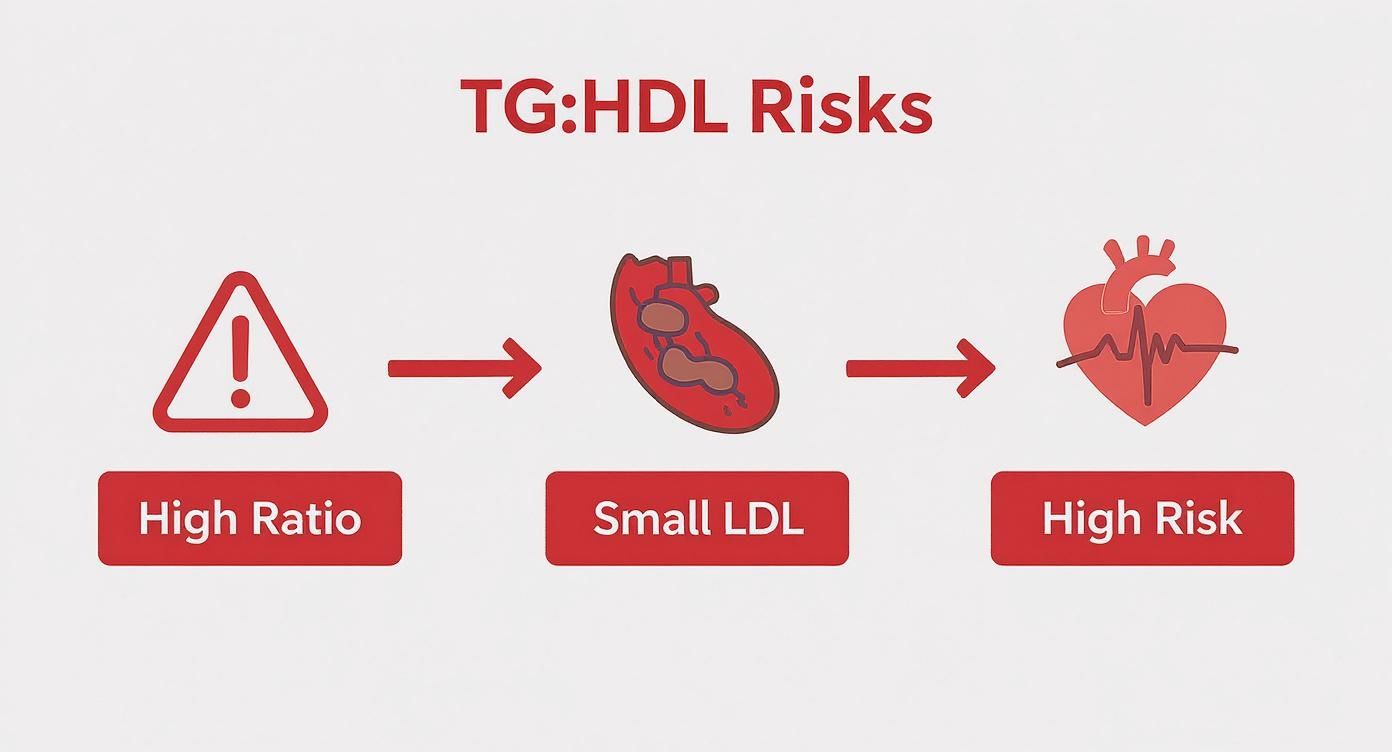
As you can see, a high ratio is a strong indicator of small, dense LDL particles—the kind that are particularly good at building up plaque in your arteries and raising your risk of heart disease.
From Data To Actionable Insights
Getting your lab results is just the starting line. The real win is transforming those numbers into a practical, personalised longevity strategy. Modern health platforms like ours deliver your results straight to an app, complete with a review from a qualified doctor who can explain what your ratio means for you.
Your lab report is more than just data; it's a dynamic feedback loop. It tells you how your body is responding to your current lifestyle and provides the specific insights needed to make targeted improvements for a longer, healthier life.
By tracking your ratio over time, you can directly see how your efforts in diet, training, and recovery are paying off. To get a better handle on your nutrition, using a food diary app for easy nutrition tracking can be a game-changer. This shifts you from being a passive observer of your health to an active, empowered participant in your own longevity.
Actionable Steps to Improve Your Ratio

Knowing your TG:HDL ratio is one thing; doing something about it is another. The good news is that this ratio is highly modifiable. Improving your numbers comes down to making targeted, evidence-based tweaks to how you eat, move, and live—the very same habits that promote a long and healthy life.
Think of it as fine-tuning your metabolic engine for longevity. Each small, consistent adjustment sends a powerful signal to your body, encouraging it to process fuel more efficiently and keep your cardiovascular system in top condition. The aim is to create a lifestyle where a healthy lipid profile—and a low TG:HDL ratio—becomes your body’s default setting.
Fine-Tune Your Nutrition
Of all the levers you can pull, your diet has the most immediate and profound impact on your triglyceride levels. When you eat more calories than you burn, particularly from refined carbs and sugar, your liver gets to work converting the excess into triglycerides. That makes your nutritional strategy the single most powerful tool you have for improving this ratio.
The core principle is to shift away from processed foods and build your diet around whole, nutrient-dense options. This naturally helps regulate your blood sugar, which in turn reduces the signal for your liver to pump out triglycerides. At the same time, you’ll be giving your body the raw materials it needs to build healthy HDL particles.
Here are the most effective nutritional changes you can make for longevity:
- Prioritise Healthy Fats: Not all fats are bad news. Monounsaturated fats—the kind you find in olive oil, avocados, and nuts—are your allies. So are polyunsaturated fats, especially the omega-3s in oily fish like salmon and mackerel. These fats can actively help lower triglycerides and raise your HDL.
- Increase Soluble Fibre: Think of foods like oats, beans, apples, and barley as sponges for your digestive system. The soluble fibre they contain binds to fats and cholesterol, helping to escort them out of your body before they can hit your bloodstream.
- Cut Back on Refined Carbs and Added Sugars: This is the big one. White bread, pastries, sugary drinks, and sweets trigger a rapid spike in blood sugar and insulin. This is a direct command for your liver to ramp up triglyceride production. Swapping these for complex carbohydrates that release energy slowly is absolutely key for metabolic health.
It’s a common misconception that dietary cholesterol is the main villain. In reality, only about 20% of the cholesterol in your bloodstream comes directly from food. The other 80% is made by your body. This is why managing the signals you send your body—like cutting sugar to reduce triglyceride production—is often far more effective.
For a closer look at specific food swaps, check out our guide to cholesterol-lowering foods approved by the NHS.
Optimise Your Exercise Regimen
Physical activity is another powerful tool for getting your ratio in check. Exercise makes your body more sensitive to insulin, meaning it can manage blood sugar more effectively with less of the hormone. Lower insulin levels mean less triglyceride production from the liver.
Exercise also has a two-pronged effect: it encourages your muscles to burn triglycerides for fuel, clearing them from your blood, and it stimulates enzymes that help ferry cholesterol back to the liver for disposal, which can give your HDL levels a boost.
A balanced fitness plan is your best bet.
- Aerobic Exercise: Activities like running, cycling, swimming, and even brisk walking are fantastic for torching calories and triglycerides. The official recommendation from the American Heart Association is at least 150 minutes of moderate-intensity aerobic activity each week.
- Resistance Training: Lifting weights or doing bodyweight exercises builds muscle. The more muscle you have, the bigger and more efficient your body's engine for burning glucose and fat becomes—even when you’re resting. This improves your overall metabolic function and insulin sensitivity, which is crucial for healthy ageing.
The secret ingredient is consistency. Find a routine that mixes both cardio and strength work that you can actually stick with for the long haul.
Master Your Lifestyle Factors
What you do outside of the kitchen and the gym matters, too. Chronic stress, poor sleep, and too much alcohol can all throw your metabolic health out of whack and nudge your TG:HDL ratio in the wrong direction, undermining your longevity goals.
Getting these foundational habits dialled in can have a surprisingly direct and positive effect on your numbers. They create the bedrock that makes your diet and exercise efforts even more effective.
Sleep Quality: Skimping on sleep is non-negotiable for metabolic health. Poor or insufficient sleep messes with the hormones that control your appetite and metabolism, which can lead to insulin resistance and higher triglycerides. Aim for 7-9 hours of quality sleep a night.
Stress Management: When you're constantly stressed, your body pumps out cortisol. This hormone can increase your blood sugar and, you guessed it, your triglycerides. Finding a way to decompress—whether it's through mindfulness, meditation, or just a regular walk in the park—helps regulate this physiological response.
Alcohol Consumption: Your liver processes alcohol, and this process can significantly ramp up triglyceride production. If your ratio is high, cutting back or eliminating alcohol is one of the fastest ways to see an improvement. When you do have a drink, be mindful of how much you're having and steer clear of sugary mixers.
Advanced Strategies and When to See a Doctor
https://www.youtube.com/embed/T84tfrMyCxA
While the core lifestyle changes we've covered are the foundation for a healthy TG:HDL ratio, sometimes they aren't quite enough. For those who've put in the work with diet and exercise but still aren't seeing the numbers shift, or for individuals aiming for peak metabolic performance as part of a longevity strategy, it might be time to look at some more advanced tactics.
These aren't replacements for the fundamentals; think of them as powerful amplifiers for the healthy habits you've already built.
Strategic Supplementation
One of the most well-researched tools for managing lipids is high-quality omega-3 fatty acids. You're looking for supplements rich in EPA and DHA, the kind you find in good fish oil.
Omega-3s work by telling your liver to ease up on producing triglycerides. Picture it as turning down the tap on TG synthesis. Consistent use has been shown to cause a significant drop in triglyceride levels, which can directly and dramatically improve your TG:HDL ratio. This makes it a go-to for anyone serious about getting their cardiovascular risk profile in order.
Of course, before you start taking anything, quality and dosage are key. Not all omega-3 supplements are the same, and the amount needed to really impact your lipids is often much higher than the general-health dose listed on the bottle. It's always a good idea to chat with a healthcare professional to figure out what's right for you.
Beyond omega-3s, a few other supplements might support your metabolic health:
- Niacin (Vitamin B3): This can be very effective at lowering triglycerides and raising HDL. However, it absolutely must be used under medical supervision because of potential side effects like skin flushing and its impact on the liver.
- Fibre Supplements: Soluble fibre, like psyllium husk, doesn't just help with digestion. It can also help lower cholesterol and support a healthier lipid profile by improving your overall gut and metabolic function.
Just remember, these are precision tools, not magic pills. They deliver the best results when they're part of a solid, consistent plan of good nutrition and regular activity.
Recognising the Red Flags: When to Consult a Doctor
Taking control of your health with lifestyle changes is incredibly empowering, but it's just as important to know when to bring in an expert. Your blood test results are a conversation about what's happening inside your body, and sometimes, they point to an issue that needs a doctor's input.
If your TG:HDL ratio stays high despite genuine and consistent efforts with diet and exercise, that’s a clear signal to seek professional medical advice. It suggests there could be other factors at play that lifestyle changes alone can't fix, potentially impacting your long-term health goals.
Working with a doctor becomes crucial in a few specific scenarios. They can help you dig deeper, look into potential genetic factors, and, if needed, introduce medical treatments to get your risk factors under control.
Key Indicators to See Your Doctor
Don't hesitate to book a consultation if any of these situations sound familiar. When it comes to long-term health, catching things early is always the best approach.
- A Stubbornly High Ratio: If you’ve dedicated three to six months to making real, consistent lifestyle changes but your TG:HDL ratio is still elevated, it’s time for a professional opinion.
- A Strong Family History: If your parents or siblings had heart disease at a young age (before 55 for men or 65 for women), you might have a genetic predisposition. This means you need to be extra vigilant, and medical intervention might be considered sooner as part of your longevity plan.
- Co-existing Conditions: If you're already managing other risk factors like high blood pressure, type 2 diabetes, or have been diagnosed with cardiovascular disease, getting your lipid profile right becomes a critical medical priority.
- Extremely High Triglycerides: A triglyceride level that is consistently above 5.6 mmol/L (500 mg/dL) puts you at a much higher risk of pancreatitis. This is a painful and serious inflammation of the pancreas that requires immediate medical attention.
In these cases, your doctor might suggest more tests to find the root cause. They may also talk to you about medications, such as statins or fibrates. These can be highly effective at lowering triglycerides and reducing your overall cardiovascular risk when lifestyle changes just aren't cutting it. This partnership ensures you have a complete and safe strategy for a long, healthy life.
Frequently Asked Questions About the TG to HDL Ratio
Got questions? We've got clear, straightforward answers. Here, we'll tackle some of the most common queries about the TG/HDL ratio, helping you get a solid grip on this vital piece of your longevity puzzle.
How Quickly Can I Improve My TG to HDL Ratio?
This is one of the best things about this particular health marker—it can change, and often quite quickly. Unlike some numbers that feel stuck no matter what you do, the TG/HDL ratio is highly responsive to lifestyle adjustments.
Triglycerides, in particular, can drop surprisingly fast. Slash your intake of sugar and refined carbs, and you could see those TG numbers fall within just a few weeks. HDL cholesterol tends to be a slower mover, but consistent exercise and better fat sources in your diet will gradually nudge it upwards. For most people, a dedicated effort over three to six months is a realistic timeframe to see a real, meaningful improvement in their ratio.
Is Morning the Best Time for a Blood Test?
Traditionally, the advice has always been to fast for 8-12 hours before a blood test for cholesterol and triglycerides. The main reason for this was to get a clean reading of your triglycerides, which can shoot up temporarily after a meal.
While modern guidelines often suggest that a non-fasting test is fine for assessing overall cardiovascular risk, there's a key detail to consider. If your main goal is to get the most accurate TG/HDL ratio possible, especially if you have known issues like insulin resistance or previously high triglycerides, then fasting is still the way to go. A fasted, morning blood test gives the clearest, most stable snapshot of your baseline metabolic health.
Longevity Tip: Consistency is king. Whether you decide to fast or not, try to do it the same way every time you test. This ensures you’re comparing apples with apples, giving you a much more accurate picture of how your lifestyle changes are actually working over time.
How Does This Ratio Compare to LDL Cholesterol?
We've all heard about LDL, the so-called "bad" cholesterol. It's an important number, no doubt, but it doesn't paint the full picture. A standard lipid panel tells you the total amount of LDL, but it doesn't tell you about its quality or size.
This is precisely where the TG/HDL ratio is so valuable. It serves as a brilliant proxy for the type of LDL particles floating around in your bloodstream. A high ratio is a strong indicator that you have more of the small, dense, and far more dangerous LDL particles—the kind that are much more likely to lodge in your artery walls and cause problems. In that sense, the ratio gives you a more sophisticated and arguably more predictive insight into your heart health than your LDL number alone, making it a superior tool for managing long-term risk.
Ready to get a clear picture of your metabolic health? Lola brings the lab to you with at-home phlebotomy. Your sample is analysed at a top UKAS-accredited lab, and you get your results—plus a doctor’s review—sent straight to our app. Start tracking your TG to HDL ratio and other key biomarkers today.