


The triglyceride-to-HDL ratio is one of the most underrated yet powerful numbers on your blood test. It’s a simple calculation, but it gives you a surprisingly clear window into your metabolic health and, by extension, your potential for a long and healthy life.
This isn’t just another data point to glance over. Think of it as a vital scorecard for your longevity strategy, often revealing more about your future healthspan than some of the more commonly discussed cholesterol numbers.
Why This Ratio Matters for Your Long-Term Health
Let's cut through the medical jargon. The best way to think about your triglyceride:HDL ratio is as a sign of your body's long-term resilience. It tells a story about how well you handle energy from food and provides a sneak peek into your metabolic health, often flagging future risks better than LDL cholesterol can on its own.
To really grasp its importance for longevity, let's use a simple analogy. Picture your bloodstream as a busy motorway.
- Triglycerides are like the delivery lorries. They're responsible for transporting unused energy (calories) to be stored as fat. A few are necessary, but too many can cause serious traffic jams, clogging up the essential routes that keep your body running smoothly for decades.
- HDL cholesterol, often called the "good" cholesterol, is like the motorway maintenance crew. These particles are constantly working to clear away excess cholesterol, preventing the build-ups that can disrupt traffic flow and lead to the arterial blockages that shorten lifespans.
So, a high triglyceride-to-HDL ratio points to a system in trouble: too many lorries on the road and not enough maintenance crew to keep things moving. This imbalance is a big red flag that your body is overwhelmed, raising the risk of "traffic jams" in your arteries—a condition we know as atherosclerosis, a key driver of age-related disease.
A Powerful Predictor of Your Healthspan
This ratio is far more than just a neat concept; it's a clinically proven predictor of your future health. For anyone focused on longevity, it's a key performance indicator (KPI) for your body's resilience and metabolic function. Keeping an eye on it gives you direct, actionable feedback on how your daily choices are impacting your risk of chronic disease and your potential for a long life.
An elevated triglyceride:HDL ratio is a significant and independent predictor of future cardiovascular issues. It acts as an early warning system, often highlighting metabolic dysfunction years before other markers become abnormal, giving you precious time to act.
This isn't just a theory. A huge amount of research backs this up. For example, a major analysis of 403,335 people from the UK Biobank revealed a direct and undeniable link between this metric and heart health.
The study found that individuals with the highest triglyceride:HDL ratio had a 29% greater risk of having a cardiovascular event compared to those with the lowest ratio. You can dig deeper into these findings on the predictive value of the TG/HDL-C ratio.
This kind of data cements the ratio's place as an essential tool for anyone aiming to extend their healthspan. By understanding and actively managing this number, you’re taking a truly proactive step toward a longer, healthier life.
How to Interpret Your Triglyceride HDL Ratio
Think of your lab results as more than just a list of numbers. When you learn to interpret your Triglyceride:HDL (TG:HDL) ratio, you’re decoding a critical message about your body's metabolic health and its trajectory for aging. It’s a simple calculation that cuts through the noise and gives you a powerful, actionable insight into where you stand on the longevity spectrum.
At its heart, this ratio is a snapshot of your insulin sensitivity and potential cardiovascular risk. These numbers, which are part of a standard lipid panel test, allow you to see beyond the usual cholesterol story and into the core of your metabolic function.
A great way to picture this is to think of triglycerides as cargo ships delivering fat energy, and HDL cholesterol as the cleanup crew.
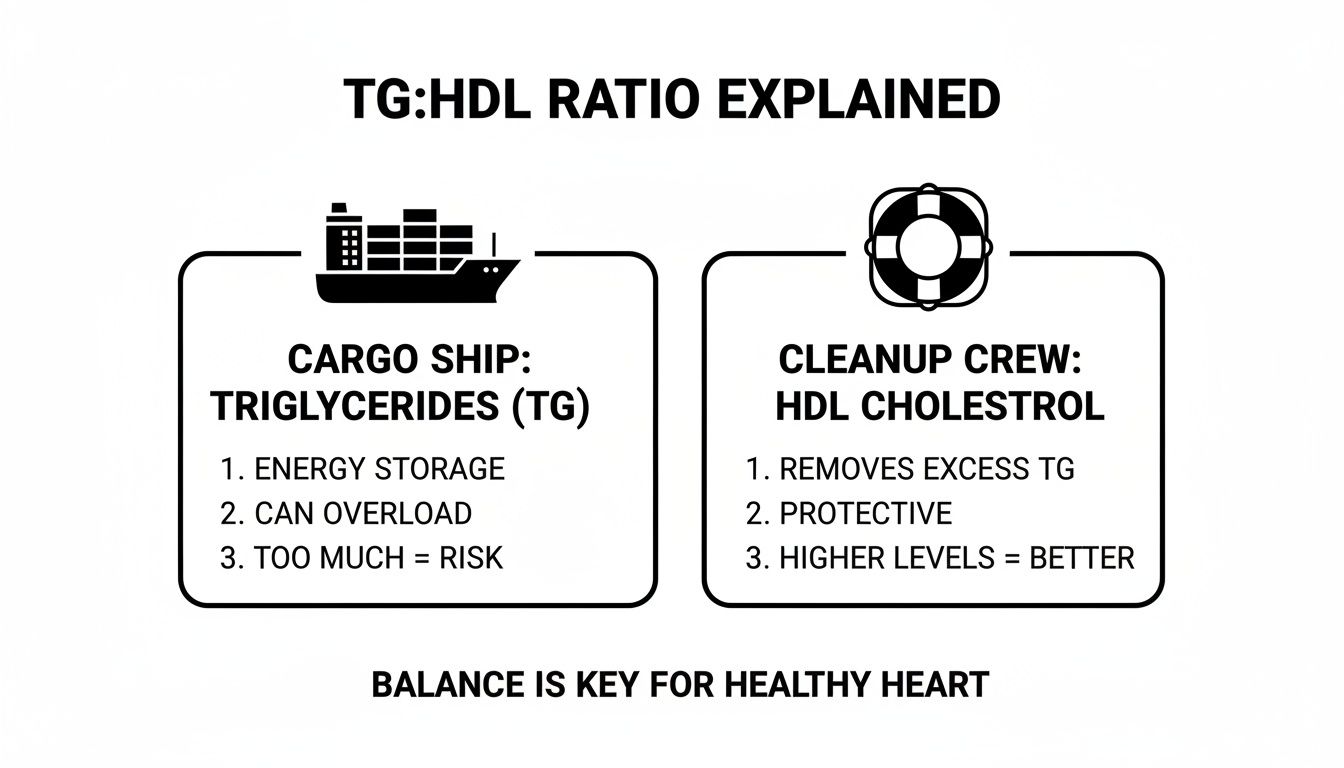
As the image shows, you need a healthy balance. Too much cargo (triglycerides) and not enough cleanup crew (HDL) can lead to traffic jams in your arteries, creating a risk for blockages that directly impact lifespan.
Understanding the Numbers for Longevity
To find your ratio, you just need simple division: take your triglyceride number and divide it by your HDL number. The figure you get slots into a risk category, giving you a clear signal about your health. Just be sure both values are in the same units, either mg/dL or mmol/L.
For those of us focused on healthspan and longevity, here are the thresholds to watch:
- Optimal for Longevity: A ratio below 2.0 (if using mg/dL) or 0.87 (if using mmol/L) is the goal. This indicates excellent insulin sensitivity and a very low risk of age-related cardiovascular issues.
- A Call to Action: Ratios between 2.0–4.0 (mg/dL) or 0.87–1.74 (mmol/L) act as a yellow flag. This is a critical warning that your metabolic health is declining and an opportunity to intervene before long-term damage occurs.
- Accelerated Aging Risk: Anything above 4.0 (mg/dL) or 1.74 (mmol/L) is a red flag. It strongly suggests significant insulin resistance, a state that accelerates aging and dramatically increases the risk of heart disease and other chronic conditions.
A "borderline" result should never be seen as acceptable for longevity. If you’re serious about optimising your health, this is the prime time to make proactive changes before the risk becomes cemented.
Even if you hit that optimal zone, the goal is continuous improvement. Pushing that number even lower through refined diet and lifestyle choices further fortifies your metabolic health for the decades ahead. The idea is to stop being a passive observer of your lab results and start using this data to build a truly proactive longevity strategy.
The Science Connecting This Ratio to Health Risks
It’s one thing to know that a high triglyceride:HDL ratio is a red flag, but it’s another to understand why it’s such a powerful predictor of your future health. This isn't just about cholesterol; it’s a direct window into your body's energy efficiency. At its core, the ratio serves as a remarkably accurate stand-in for a condition that fuels many diseases of aging: insulin resistance.
So what is insulin resistance? It’s when your body’s cells start to ignore the signals from insulin, the hormone that manages blood sugar. Your pancreas has to work overtime, pumping out more and more insulin to get the job done. This state, known as hyperinsulinemia, kicks off a cascade of events that directly wrecks your lipid profile.
This metabolic chaos specifically triggers your liver to churn out an excess of triglycerides into your bloodstream. At the very same time, it puts the breakdown of your protective HDL cholesterol into overdrive. You’re left with the worst of both worlds—sky-high triglycerides and rock-bottom HDL—a perfect storm that your ratio captures with simple maths.
The Problem of Small Dense LDL Particles
This imbalance doesn't just mess with your numbers; it changes the very nature of your cholesterol particles. A high triglyceride:HDL ratio is tightly linked with a surge in what are known as small, dense LDL (sdLDL) particles.
It helps to think of LDL particles as vehicles on a motorway. Large, fluffy LDL particles are like big, slow buses—they tend to cruise along without causing much trouble. Small, dense LDL particles, on the other hand, are like nimble motorbikes weaving recklessly through traffic. They are far more likely to cause accidents.
These sdLDL particles are especially harmful to your long-term health for a few key reasons:
- They are tiny enough to squeeze through the lining of your arteries.
- They hang around in your bloodstream for longer, giving them more time to cause damage.
- They are easily oxidised, a chemical reaction that makes them incredibly inflammatory and harmful to your blood vessels.
This combination makes sdLDL a primary culprit behind atherosclerosis—the slow build-up of plaque in your arteries that ultimately leads to heart attacks and strokes. So, your triglyceride:HDL ratio is more than just a number; it’s a clue about the quality and potential threat of your LDL cholesterol.
A Foundational Metric for Healthspan
Grasping this connection shows why the ratio is a cornerstone metric for anyone serious about their healthspan. It paints a much clearer picture of your metabolic health than many standard markers on their own. It’s entirely possible to have a "normal" LDL cholesterol reading while your body is quietly flooded with these dangerous sdLDL particles.
A high triglyceride:HDL ratio is one of the earliest and most reliable signs that your metabolic health is heading in the wrong direction. It signals that foundational processes are breaking down, often long before your blood sugar levels start to look abnormal.
You can think of this ratio as your metabolic early-warning system. It flags underlying insulin resistance, a major driver of not just cardiovascular disease, but also type 2 diabetes, fatty liver disease, and even some cancers. If you want to dig deeper, our guide explains in detail how to check for insulin resistance and what you can do about it. Getting this ratio under control is a central strategy for side-stepping these conditions and adding more healthy, vibrant years to your life.
How to Accurately Measure and Track Your Ratio
Any meaningful improvement in your health has to start with reliable data. To get a real handle on your triglyceride:HDL ratio and what it means for your long-term health, you need a clear and consistent way to measure it. The good news? This powerful number is usually hiding in plain sight on your standard blood test results.
It all starts with a lipid panel, the routine blood test that measures your key cholesterol and triglyceride levels. For the most accurate reading, you'll need to do this test while fasted. This typically means no food or drink (except water) for 9 to 12 hours beforehand, which ensures the number you see is your true baseline, not just a temporary spike from your last meal.
Calculating Your Ratio Manually
Once you have your lab report, working out the ratio yourself is incredibly simple. This puts you in the driver's seat, allowing you to analyse not just your latest results but also any previous tests you might have lying around.
- Find Your Triglyceride (TG) Value: Look for the triglyceride reading on your report.
- Find Your HDL Cholesterol (HDL-C) Value: Now, find the result for your high-density lipoprotein cholesterol.
- Divide TG by HDL: Just make sure both numbers are in the same units (like mg/dL or mmol/L) and divide your triglyceride value by your HDL value.
So, for example, if your triglycerides are 120 mg/dL and your HDL is 60 mg/dL, your ratio is a straightforward 2.0. This simple bit of maths turns two separate data points into one of the most powerful indicators of your metabolic health. For a deeper dive into getting your lipids checked, our guide on cholesterol testing at home has more information.
Modern Tracking for Longevity
While you can always do the maths yourself, modern health services like Lola make tracking this vital metric even easier. This is especially helpful for busy professionals who need clear, quick insights without having to dig through old lab reports. These platforms offer convenient testing and present your results in an easy-to-read dashboard.
The real power isn't in a single measurement, but in seeing the trend over time. Watching your ratio drop after you’ve made positive lifestyle changes is incredibly motivating and proves your hard work is building a more resilient you.
Instead of just looking at a static number on a PDF, you get to see your health journey unfold visually.
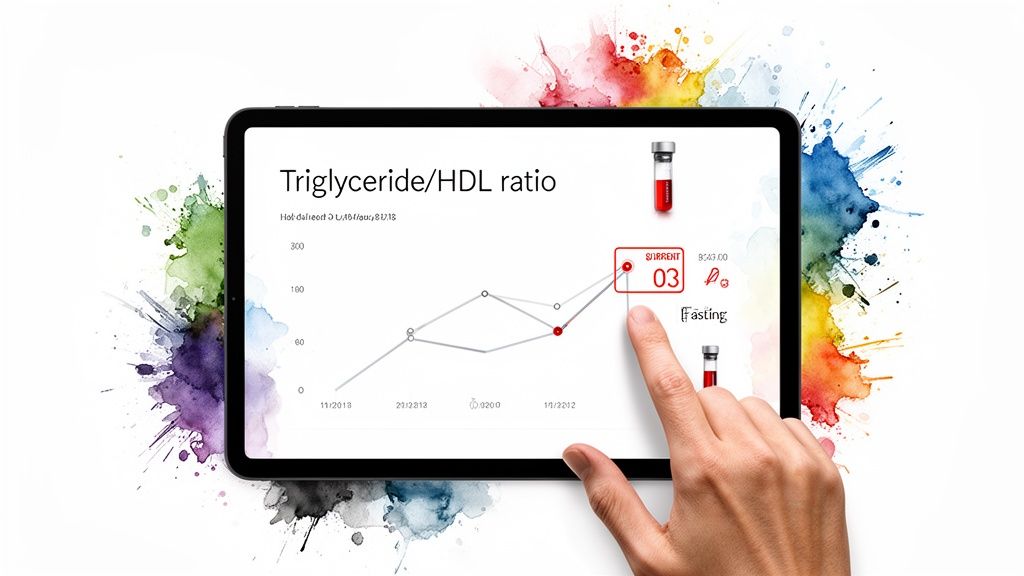
The clear downward trend you see in a graph like this is a direct reflection of successful lifestyle changes improving metabolic health. Shifting from one-off data points to dynamic trend analysis is a game-changer for anyone serious about optimising their healthspan.
Lifestyle Strategies to Improve Your Ratio
Knowing your triglyceride:HDL ratio is one thing; taking decisive action to improve it is where the real longevity work begins. This is your game plan for taking control, boosting your metabolic health, and building a foundation for a long life. We’re not just tweaking numbers on a lab report—we're implementing powerful, evidence-based changes to lower triglycerides and raise HDL.

Think of these strategies as building a more resilient metabolic system from the ground up. Let's dive into the key areas where you can make the biggest impact.
Master Your Nutrition
What you eat has the most direct and immediate effect on your triglyceride levels. The plan is simple: eat less of the stuff your body quickly turns into triglycerides and more of the foods that support a healthy lipid profile and long-term health.
The two biggest levers here are sugar and refined carbohydrates. Fizzy drinks, sweets, white bread, and pasta cause a rapid spike in blood sugar. Your liver responds to this overload by converting the excess sugar into triglycerides for storage.
One of the most effective dietary shifts you can make is to adopt smart strategies to reduce saturated fat intake, swapping them out for healthier fats. This simple change, combined with a focus on whole foods, can make a world of difference.
Here are the high-impact foods to center your diet around:
- Omega-3 Rich Fish: Aim to get salmon, mackerel, or sardines on your plate at least twice a week. Omega-3s are incredibly effective at lowering triglyceride levels.
- Healthy Fats: Avocados, nuts, seeds, and good-quality olive oil are your friends. They help improve insulin sensitivity and can give your HDL cholesterol a much-needed boost.
- High-Fibre Foods: Load up on vegetables, legumes, and whole grains like oats and quinoa. Fibre slows down digestion, which helps prevent those sharp blood sugar spikes that trigger triglyceride production.
Small swaps can lead to big results. Choosing sparkling water over a sugary drink or grabbing a handful of berries instead of a biscuit are simple, repeatable actions that dramatically lower your triglyceride output without you feeling deprived.
Optimise Your Exercise Routine
While nutrition is your primary tool for lowering triglycerides, exercise is the undisputed champion for raising your protective HDL cholesterol. The best approach for longevity is a smart combination of cardio and strength training, which work together to enhance your entire metabolic profile.
Cardiovascular exercise—think brisk walking, running, cycling—improves how efficiently your muscles use glucose for energy, meaning less of it gets stored as fat. Aim for at least 150 minutes of moderate-intensity activity each week.
But don’t neglect strength training. Building more muscle is like creating bigger fuel tanks for glucose in your body, preventing it from overwhelming your system. This makes your body more insulin-sensitive over time, which is a huge win for long-term metabolic health.
Prioritise Recovery and Stress Management
True health and longevity aren't just built in the kitchen and the gym; they're solidified during recovery. Chronic stress and poor sleep can absolutely sabotage your metabolic health by throwing key hormones like cortisol and insulin out of balance, accelerating the aging process.
When you're constantly stressed, your body pumps out cortisol, which raises blood sugar and, you guessed it, triglycerides. A lack of quality sleep does something similar, impairing your body's ability to manage blood sugar effectively.
Start weaving these recovery practices into your weekly routine:
- Lock in Your Sleep: Aim for 7-9 hours of quality sleep per night. Keeping a consistent schedule, even on weekends, helps regulate your circadian rhythm and supports hormonal balance.
- Practice Active De-Stressing: This could be meditation, deep breathing exercises, or even just a quiet walk without your phone. These activities help lower cortisol and blunt the metabolic impact of a stressful day.
- Schedule Your Downtime: Be intentional. Block out time in your calendar for things you enjoy that have nothing to do with work. This is crucial for preventing burnout and keeping stress hormones from running rampant.
Lifestyle Interventions for an Optimal TG:HDL Ratio
To give you a clearer picture, let's break down how different lifestyle changes specifically target triglycerides and HDL. Some interventions are better at one than the other, but the real magic happens when you combine them for a powerful, pro-longevity effect.
| Intervention | Primary Impact on Triglycerides (TG) | Primary Impact on HDL |
|---|---|---|
| Reduce Sugar & Refined Carbs | Very High Impact. Directly lowers the raw material for TG production. | Low Impact. Minimal direct effect on HDL. |
| Increase Omega-3 Intake | Very High Impact. Omega-3s are proven to reduce TG levels. | Low Impact. Small to negligible effect. |
| Increase Healthy Fats | Moderate Impact. Helps improve insulin sensitivity, indirectly lowering TGs. | Moderate Impact. Can help raise HDL levels. |
| Cardiovascular Exercise | Moderate Impact. Improves glucose uptake in muscles, reducing TGs. | High Impact. A primary driver for increasing HDL. |
| Strength Training | Moderate Impact. Increases muscle mass, improving insulin sensitivity. | Moderate Impact. Contributes to raising HDL. |
| Improve Sleep Quality | Moderate Impact. Better hormonal regulation reduces TG production. | Low Impact. Indirectly supports HDL through better health. |
| Manage Stress | Moderate Impact. Lowering cortisol helps control blood sugar and TGs. | Low Impact. Indirect benefits to overall lipid profile. |
As you can see, a holistic approach is far more effective than focusing on just one area. By combining smart nutrition with consistent exercise and dedicated recovery, you create a powerful, synergistic effect that not only improves your triglyceride:HDL ratio but also builds a strong foundation for a longer, healthier life.
Your Questions Answered
Looking at your health data can sometimes feel like trying to solve a puzzle. You’ve got all the pieces, but how do they fit together? Let’s clear up some of the most common questions about the triglyceride:HDL ratio so you can feel confident in your longevity strategy.
Think of this as your practical guide to turning knowledge into action.
How Often Should I Check My Triglyceride:HDL Ratio?
The best testing schedule really depends on where you are in your health journey. Consistency is key for tracking what’s working and ensuring you stay on the path to a long healthspan.
If you’re actively working to improve your metabolic health—perhaps you've completely changed your diet or kicked off a new fitness plan—checking in every three to six months is ideal. It’s the perfect timeframe to see the results of your hard work, which can be a huge motivator to keep going.
On the other hand, if your ratio is already in the optimal longevity zone, a yearly check-up should be plenty to make sure you're maintaining that excellent baseline.
Can My Ratio Be High Even if My LDL Cholesterol Looks Normal?
Absolutely. And this is precisely why the triglyceride:HDL ratio is such a crucial longevity metric. It's a common trap to see a "normal" LDL cholesterol reading and assume all is well with your cardiovascular health.
A healthy-looking LDL number can sometimes mask deeper metabolic issues brewing under the surface. Your ratio often acts like an early warning system, picking up on the first whispers of insulin resistance long before other markers, like your blood sugar, start to raise red flags.
This ratio gives you a much richer, more accurate story about your actual cardiovascular risk. It's less about the sheer quantity of your cholesterol particles and more about their quality and behaviour.
Is a Super-Low Triglyceride:HDL Ratio Always a Good Thing?
For the most part, a lower ratio signals excellent metabolic health and is highly desirable for longevity. However, it’s not a race to the absolute bottom.
For anyone focused on long-term health, the sweet spot is a ratio under 2.0 (if you're using mg/dL) or under 0.87 (for mmol/L). Getting a result that’s exceptionally low—say, below 0.5 (mg/dL)—is pretty unusual. If you see a number like that, it's worth a conversation with your doctor to ensure it's viewed within the full context of your health.
What's the One Change That Makes the Biggest Difference to the Ratio?
While everyone's biology is slightly different, one change almost always delivers the biggest and fastest improvement: slashing your intake of sugar and refined carbohydrates. Think of these foods as the primary raw material your liver uses to churn out triglycerides.
When you drastically cut back on things like sugary drinks, sweets, white bread, and pasta, you're essentially cutting off the supply line for triglyceride production. It’s a single, powerful move that can cause your triglyceride levels to plummet, directly improving your ratio and giving your metabolic health a serious boost on your journey to a longer, healthier life.
Take the guesswork out of your health journey. With Lola, you get convenient, at-home blood testing and clear, actionable insights delivered straight to your app. Understand your triglyceride:HDL ratio and other key longevity markers to build a proactive health strategy. Start tracking your health with Lola today.