


You've probably had your cholesterol checked before. The doctor usually points to your total cholesterol or maybe your LDL, the so-called "bad" cholesterol. But what if a more powerful predictor of your long-term health is hiding in plain sight on that same report?
It's the triglyceride to HDL ratio, and it’s one of the most revealing yet often overlooked indicators of your metabolic health. You calculate it by simply dividing your triglyceride level by your high-density lipoprotein (HDL) level. This simple calculation gives you a important glimpse into your risk of insulin resistance, a key driver of ageing, and your potential for a long, healthy life.
Why This Hidden Health Score Matters for Longevity
Think of your standard lipid panel. It’s easy to fixate on the headline figures like LDL. While they have their place, they don't paint the whole picture of your healthspan. The TG/HDL ratio, on the other hand, acts like a metabolic scorecard, revealing how well your body is managing energy and cellular health - foundations for a long and vibrant life.
Let's break it down with an analogy. Picture your bloodstream as a busy motorway network.
- Triglycerides are the lorries, carrying packages of unused energy. When you eat more calories than you burn, your body packages the excess into these triglycerides for storage. Too many lorries on the road, and you get metabolic traffic jams.
- HDL cholesterol is the motorway maintenance crew. Often called "good" cholesterol, its job is to clear away excess cholesterol from your arteries, preventing dangerous build-ups that can shorten your life and keeping metabolic traffic flowing freely.
So, it's not just about the number of lorries or the size of the maintenance crew. What really matters for longevity is the balance between them. This is precisely why the triglyceride to HDL ratio is such a critical tool for anyone looking to optimise their healthspan.
A Window into Your Metabolic Health and Ageing
A high ratio – think lots of lorries and a tiny maintenance crew – points directly to metabolic trouble. It’s a strong signal that your body is struggling to respond to insulin, a state known as insulin resistance. This is the underlying issue that paves the way for a host of chronic, age-related diseases and can put the brakes on a long, vibrant life.
On the flip side, a low ratio tells a much happier story. It signifies metabolic harmony, where your maintenance crew is efficiently managing energy deliveries and keeping your arterial motorways clear. This state of efficiency is a cornerstone of a long and healthy lifespan.
Beyond Cholesterol: A UK Perspective
This isn't just theory; the science is solid. A major 2023 analysis of 403,335 participants from the UK Biobank laid bare just how predictive this ratio is for long-term health outcomes. The research was striking.
It found that people with the highest TG/HDL ratio had a 29% greater risk of developing cardiovascular disease compared to those with the lowest ratio. This was true even after the researchers adjusted for other well-known risk factors. If you're interested in the details, you can read the full research on this UK-based study to see the findings for yourself.
This powerful evidence shows why monitoring your triglyceride to HDL ratio isn't just for a clinical check-up. It's a proactive strategy for anyone serious about longevity, turning a standard blood test into an actionable insight for building a healthier future.
Decoding Your Ratio for Optimal Health
Getting your lab results back is one thing, but really understanding what they mean for your longevity is where the power lies. A high triglyceride to HDL ratio isn't just a random number; it's telling you a story about what’s happening deep inside your body, offering a important window into your metabolic health.
Think of this ratio as a powerful stand-in for insulin resistance. When your cells start ignoring insulin’s signals, your body can’t manage blood sugar properly. This pushes your pancreas into overdrive to pump out more insulin, which in turn tells your liver to produce more triglycerides. The result? Your TG/HDL ratio starts to climb, signalling a metabolic state that accelerates ageing.
This simple diagram helps visualise how triglycerides and HDL work together, and how their balance affects your TG/HDL ratio.
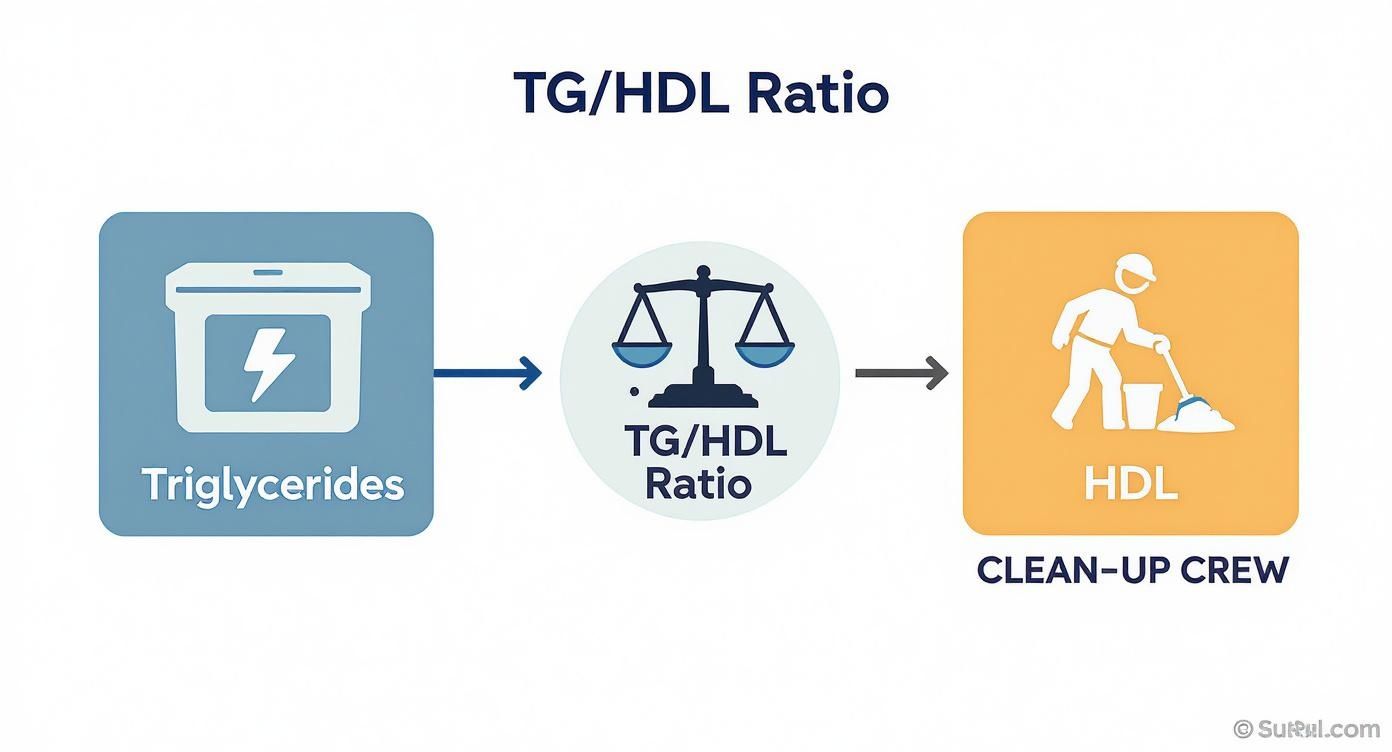
As you can see, a healthy balance is all about having enough HDL, the "clean-up crew", to manage the triglycerides, which are essentially "energy packages." When this system works well, you avoid the metabolic traffic jams that lead to chronic disease.
Interpreting Your TG/HDL Ratio for Longevity
An elevated TG/HDL ratio is also a big red flag for a particularly nasty type of cholesterol particle: small, dense LDL (sdLDL). These are the troublemakers. Because they're smaller and heavier than normal LDL, they can more easily wiggle their way into your artery walls, oxidise, and kickstart the plaque build-up that leads to heart disease. A high ratio is a strong clue that you likely have too many of these harmful particles, posing a direct threat to your long-term cardiovascular health.
If you want to get a better handle on how all these markers are measured in the first place, our guide on what a lipid panel test entails breaks it all down for you.
So, what numbers should you actually be aiming for? Here’s a quick guide to help you interpret your results with longevity in mind.
Triglyceride to HDL Ratio Risk Levels
The table below outlines the clinical significance of different TG/HDL ratio values. It's a useful tool for gauging your metabolic and cardiovascular risk based on your lab work.
| Risk Level | TG/HDL Ratio (mmol/L) | TG/HDL Ratio (mg/dL) | Clinical Implication for Longevity |
|---|---|---|---|
| Optimal | Below 0.9 | Below 2.0 | Indicates excellent insulin sensitivity and a very low risk of age-related disease. |
| Good | 0.9 - 1.7 | 2.0 - 4.0 | Generally good metabolic health, but there's room for optimisation for a longer healthspan. |
| High Risk | Above 1.7 | Above 4.0 | Suggests significant insulin resistance, a key driver of accelerated ageing and chronic disease. |
| Very High Risk | Above 2.6 | Above 6.0 | Indicates severe insulin resistance and a very high risk of future cardiovascular events, shortening healthspan. |
These thresholds give you a clear, evidence-backed framework for understanding where you stand and what your next steps should be to protect your future health.
The Bigger Metabolic Picture
Knowing these numbers means you can have a much more informed chat with your doctor about your longevity strategy. Instead of just glancing at your total cholesterol, you can look at your triglyceride to HDL ratio and discuss what it reveals about your underlying metabolic function.
Your TG/HDL ratio is more than just a number; it’s a dynamic indicator of how your lifestyle choices are affecting your cellular health. Tracking it over time provides direct feedback on whether your diet and exercise strategies are truly working to build a foundation for a long and healthy life.
Of course, this ratio is just one piece of the puzzle. To get the full story, looking at broader tests like a detailed Metabolic Panel can provide invaluable context about your body's overall function. When you put all these markers together, you build a much clearer, more complete picture of your health, paving the way for smarter strategies to enhance your longevity.
Powerful Lifestyle Levers to Improve Your Ratio
Knowing your triglyceride to HDL ratio is one thing, but acting on it is where you can fundamentally change your health trajectory. The good news? This powerful marker of longevity is incredibly responsive to lifestyle changes. By making targeted adjustments to what you eat and how you move, you can directly influence your long-term well-being.
This isn’t about adopting some extreme diet or spending hours in the gym. It’s about making smarter, evidence-backed choices that give you the biggest metabolic return on your investment, securing a healthier future.
Dial In Your Diet to Lower Triglycerides
Your diet is the most powerful lever you can pull to improve your ratio, with an almost immediate impact on triglycerides. The goal is to manage the foods that signal your liver to go into triglyceride-production overdrive, a process that undermines long-term health.
The main offenders are refined carbohydrates and added sugars - think white bread, pastries, fizzy drinks, and most highly processed snacks. When you eat these, your blood sugar spikes, triggering a flood of insulin that essentially tells your liver, "We have an energy surplus - turn the excess into triglycerides for storage!"
Here are a few simple, effective swaps to start rewiring your metabolic health:
- Swap sugary cereals for plain Greek yoghurt with berries. You’ll get a solid hit of protein and fibre instead of a morning sugar rush that contributes to metabolic dysfunction.
- Replace white rice with quinoa or brown rice. These whole grains digest much more slowly, preventing the sharp blood sugar spikes that age your cells.
- Switch from fizzy drinks to sparkling water with a slice of lemon. This move alone cuts out a massive source of liquid sugar, a primary driver of high triglycerides.
By making these kinds of changes consistently, you’re cutting off the primary fuel source for triglyceride production. It’s a foundational step in optimising your triglyceride to HDL ratio for a longer life.
Boost Your HDL with Smart Fats and Fibre
While diet is critical for dropping triglycerides, it’s just as important for raising your "good" HDL cholesterol - the protective component of your ratio. This side of the equation is more about adding the right things in. The two most important players are healthy fats and soluble fibre.
Omega-3 fatty acids, found in fatty fish like salmon, mackerel, and sardines, are brilliant for raising HDL levels. Adding these to your diet two or three times a week can make a noticeable difference in your body's ability to clean up arteries.
If you’re not a fish eater, there are plenty of great plant-based sources of healthy fats:
- Avocados: Fantastic in salads or spread on a slice of whole-grain toast.
- Nuts and Seeds: Almonds, walnuts, chia seeds, and flaxseeds are all packed with healthy fats and fibre.
- Olive Oil: Make extra virgin olive oil your go-to for cooking and salad dressings.
Remember, the goal is not just to lower the "bad" but to actively increase the "good." A diet rich in omega-3s and monounsaturated fats gives your body the raw materials it needs to build more HDL particles - the essential "clean-up crew" for your arteries that is critical for longevity.
Move with Purpose to Optimise Your Ratio
Exercise delivers a fantastic one-two punch for improving your triglyceride to HDL ratio. Different types of movement offer distinct benefits, which is why blending them is the most effective approach for long-term metabolic health.
Aerobic exercise is your best friend for slashing triglycerides. Activities like brisk walking, running, cycling, and swimming encourage your muscles to use triglycerides for fuel, effectively clearing them from your bloodstream. The American Heart Association recommends at least 150 minutes of moderate-intensity aerobic activity each week - a small investment for a significant longevity return.
Resistance training, on the other hand, is particularly good at boosting HDL cholesterol. Lifting weights, using resistance bands, or doing bodyweight exercises like push-ups and squats helps build lean muscle. This not only makes you stronger but also improves your body's overall insulin sensitivity, a cornerstone of healthy ageing, which supports higher HDL levels.
For anyone looking for accessible ways to get more active, it's worth exploring all your options. Resources like Pedal Your Way to Fitness: Top Electric Bikes for Weight Loss After 50 offer great ideas for low-impact exercise that can easily fit into a busy schedule. By combining both cardio and strength training, you create a powerful combined effect that tackles both sides of the TG/HDL equation, building a more resilient body for the years ahead.
Advanced Strategies for Peak Metabolic Health
You’ve already nailed the basics: a smart diet and consistent exercise are the cornerstones of a healthy triglyceride to HDL ratio. But for those of you aiming for peak performance and a long, healthy life, there are a few more levers you can pull.
This is where we move beyond the fundamentals into strategies that fine-tune your biology for longevity. We’ll look at targeted supplements, and unpack the surprising influence that sleep and stress have on your lipids. Think of this as your advanced toolkit for achieving elite metabolic health.
Targeted Supplementation for Your Ratio
While a food-first approach is always the best starting point, a few specific supplements have solid science behind them for improving your lipid profile and supporting long-term health. Think of them as powerful allies to complement your lifestyle efforts.
Three of the most effective supplements for optimising your triglyceride to HDL ratio are:
- High-Dose Omega-3s: The specific fatty acids EPA and DHA, found in fish oil, are fantastic for lowering triglycerides. The key here is the dose. You often need more than you can realistically get from diet alone, typically around 2-4 grams of combined EPA and DHA daily, to see a significant drop in triglycerides.
- Berberine: This plant-based compound is often nicknamed a "metabolic master switch." It activates an enzyme called AMPK, which helps improve insulin sensitivity and encourages your body to burn fat for fuel, directly combating the metabolic dysfunction that drives a poor ratio.
- Niacin (Vitamin B3): When it comes to raising HDL cholesterol, niacin is one of the most powerful tools available. It works by slowing down the liver's breakdown of a key protein in HDL particles (ApoA-I), which helps your good cholesterol levels rise and stick around longer.
It’s always a good idea to chat with a healthcare professional before starting any new supplement, especially niacin, as it can cause side effects like skin flushing at the doses needed to be effective.
The Overlooked Impact of Sleep on Metabolic Health
You can have a perfect diet and a flawless workout plan, but if you're not sleeping well, you’re undermining all your efforts. Chronic sleep deprivation is a direct route to insulin resistance, the main culprit behind a high triglyceride to HDL ratio and a key factor in accelerated ageing.
When you don’t get enough quality sleep, your body’s sensitivity to insulin takes a nosedive. One study even found that just a single night of partial sleep deprivation could trigger insulin resistance in otherwise healthy people. Your cells become stubborn and ignore insulin’s signal, which leaves too much sugar in your blood and tells your liver to start converting it into triglycerides.
Poor sleep isn't just about feeling tired; it's a profound metabolic stressor. Prioritising 7-9 hours of quality sleep per night is one of the most powerful, non-negotiable strategies for maintaining a healthy TG/HDL ratio and supporting long-term health.
This link between sleep and your metabolism underscores just how important it is to spot underlying issues. To look more closely at this critical connection, our guide explains how to check for insulin resistance and what it really means for your health.
Managing Chronic Stress and Cortisol
Just like a bad night’s sleep, chronic stress throws a wrench in your metabolic machinery. When you're constantly under pressure, your body is flooded with the stress hormone cortisol. While it’s useful for short-term "fight or flight" moments, chronically high cortisol levels can wreak havoc on your healthspan.
Cortisol directly fuels insulin resistance and tells your body to store visceral fat - that particularly dangerous fat that wraps around your organs. It also cranks up your appetite, especially for sugary, fatty comfort foods, which only adds more fuel to the triglyceride-producing fire.
Bringing in some solid stress-management techniques is a non-negotiable part of any longevity plan to improve your TG/HDL ratio.
- Mindfulness and Meditation: Even 10-15 minutes a day can lower cortisol levels and help your body better handle stress.
- Regular Physical Activity: Exercise is a fantastic antidote to stress. It helps burn off excess cortisol and gives your mood a natural boost.
- Time in Nature: Simply spending time outdoors has been shown to reduce stress and bring cortisol levels down.
By paying attention to these advanced, and often-neglected, areas, you can build a truly thorough strategy for optimising your metabolic health. It's this all-encompassing approach, blending diet, exercise, targeted supplements, sleep, and stress management, that truly unlocks a long and vibrant life.
Seeing the Ratio in Real-World Scenarios
Numbers on a lab report can feel a bit abstract, can't they? To really grasp the power of the triglyceride to HDL ratio, let's look at how it actually plays out in the lives of real people. These stories show that optimising this important marker is a personal journey toward a longer, healthier life.

We'll look at two very different profiles: a busy executive and a dedicated endurance athlete. Both are facing unique challenges that have knocked their metabolic health off course, proving that a high ratio can affect anyone, regardless of their apparent fitness or professional success.
The Overwhelmed Executive's Journey
First, meet Alex. He's a 45-year-old executive in the thick of a high-pressure corporate world. The long hours, constant deadlines, and endless travel have taken their toll, creating a perfect storm for metabolic problems that were silently chipping away at his healthspan.
His daily routine is a familiar one: breakfast is skipped, a sugary pastry comes with his mid-morning coffee, and lunches and dinners are almost always takeaways. Sleep is an afterthought, often just five or six broken hours a night. The result? His latest blood test showed a TG/HDL ratio of 2.1 (mmol/L), putting him squarely in the high-risk category.
Despite a successful career, Alex's internal health scorecard was failing him. The combination of chronic stress, poor nutrition, and sleep deprivation was sending his triglycerides soaring while suppressing his "good" HDL cholesterol.
Realising something had to give to protect his future, Alex started with a few small, sustainable habits:
- Strategic Meal Prepping: He set aside two hours on Sundays to prepare simple, healthy lunches for the week, like grilled chicken salads and quinoa bowls. No more last-minute food choices.
- Scheduled Movement: He blocked out 30 minutes in his calendar every day for a brisk walk, treating it with the same importance as a client meeting.
- Prioritised Sleep: He established a strict cut-off for work emails in the evening and created a wind-down routine to improve his sleep quality.
After just three months, the change was remarkable. Alex's follow-up test showed his triglyceride to HDL ratio had dropped to 1.1 (mmol/L), moving him from a danger zone to a much healthier place. His story is a powerful reminder that taking control of your metabolic health is an achievable and worthwhile investment in your future.
The “Fit but Unhealthy” Athlete’s Puzzle
Now, let's look at Maya, a 38-year-old endurance cyclist. She trains consistently and, from the outside, appears to be in peak physical condition. So, you can imagine her shock when her routine blood work revealed a less-than-ideal TG/HDL ratio of 1.8 (mmol/L). How could a dedicated athlete have a borderline-high ratio?
The culprit was hiding in her fuelling strategy. To power her long rides, Maya had become heavily reliant on high-glycaemic index carbohydrates. Her diet was packed with sports gels, sugary energy drinks, white pasta, and bread made from refined grains.
While these carbs are great for immediate performance, a constant flood of simple sugars can overwhelm the body's ability to process glucose. When this happens, the liver gets to work converting the excess into triglycerides, pumping them into the bloodstream – even in someone who is incredibly active. This state can silently undermine long-term health.
Maya's case is a classic example of being "fit but metabolically unhealthy." Her cycling performance was top-notch, but her internal biochemistry was telling a completely different story about her long-term health prospects.
Working with a sports nutritionist, Maya made a important shift. She didn't have to eliminate carbs, but she did need to be smarter about their type and timing to improve her metabolic flexibility.
- She swapped simple carbs for complex sources like sweet potatoes, oats, and whole grains in her day-to-day meals.
- She began incorporating healthy fats from avocado, nuts, and olive oil, training her body to become more efficient at using fat for fuel on longer, less intense rides.
- She reserved the high-sugar gels and drinks strictly for high-intensity race efforts, not for every single training session.
These tweaks helped her body become much better at switching between fuel sources. Her next test confirmed it: her triglyceride to HDL ratio fell to a fantastic 0.8 (mmol/L), all without harming her competitive edge. Maya's journey proves that optimal nutrition is fundamental to long-term health, even for elite athletes.
Tracking Your Progress for Long-Term Success
You can't manage what you don't measure. Getting your triglyceride to HDL ratio into an optimal range isn't a one-and-done deal; it's a dynamic process of managing your health for the long haul. The key to turning your hard work into lasting longevity benefits is to create a solid feedback loop through regular testing.
Think of it less like chasing a single perfect number and more like understanding the bigger picture. Your metabolic health is a story that unfolds over time, and regular monitoring lets you read that story - and become the author of a much healthier future.
Establishing Your Testing Rhythm
So, how often should you check in on your numbers? For most people actively making lifestyle changes, testing your lipids every three to six months is the sweet spot. It’s frequent enough to track real change but not so often that you get caught up in normal, day-to-day fluctuations.
This gives your body enough time to respond to new habits. Triglycerides can drop quite quickly—sometimes in a matter of weeks. HDL cholesterol, on the other hand, often takes several months of consistent effort to nudge upwards. A quarterly or semi-annual check gives you a realistic snapshot of your long-term progress.
Interpreting Trends, Not Just Data Points
When you get your results, the real insight comes from seeing the trend, not fixating on a single number. A slightly higher reading one month could be down to anything from a celebratory meal to a stressful week. What truly matters for your longevity is the direction your ratio is heading over time.
Your goal is to see a consistent downward trend in your TG/HDL ratio over several tests. This pattern is the ultimate confirmation that your strategies are working—improving your insulin sensitivity and lowering your long-term cardiovascular risk, paving the way for a longer healthspan.
Are you moving from a high-risk zone towards an optimal one? That’s the win. Plotting your results on an app can be incredibly helpful here, turning abstract numbers into a simple, motivating graph that clearly shows your hard work is paying off. And for a truly seamless experience, you can learn more about cholesterol testing at home to stay on top of your numbers with ease.
Taking Ownership of Your Health Data
Ultimately, tracking your triglyceride to HDL ratio is about empowerment. It shifts you from being a passive recipient of health advice to an active driver of your own longevity. Each test is a piece of valuable feedback that allows you to:
- Validate your efforts: Seeing your numbers improve is one of the best motivators to stick with it.
- Identify what works for you: You’ll discover which dietary changes or exercise routines move the needle most for your body.
- Course-correct when needed: If your ratio stalls or goes the wrong way, you have the data to make an informed change.
This proactive approach turns your lab results into a personalised roadmap, guiding you towards a longer, healthier life with confidence. It’s how you make sustainable, data-driven improvements that compound over time.
Your Questions Answered
When you start digging into the details of metabolic health, it’s natural for questions to pop up. Let’s tackle some of the most common ones about the triglyceride-to-HDL ratio, with clear answers to help you feel confident on your health goals.
How Quickly Can I Actually Improve My Ratio?
This is a great question, and the answer has two parts. Your triglyceride levels can change remarkably quickly. Cut back on sugar and refined carbs, and you could see a significant drop in just a few weeks. They're very responsive to your diet.
HDL cholesterol, on the other hand, is a bit more stubborn. It takes time and consistency to nudge it upwards, usually several months of regular exercise and a diet rich in healthy fats. So, while you might see positive shifts in your triglyceride-to-HDL ratio within a month or two, the most meaningful improvements often show up after three to six months of sticking with it.
Is a Good Ratio a Guarantee That I'm in the Clear?
Not necessarily. Think of the TG/HDL ratio as a powerful signal, but it’s still just one part of your overall health picture. It’s an excellent indicator of insulin sensitivity and heart disease risk, but it doesn't tell the whole story on its own.
To get a complete view of your longevity risk, you need to look at it alongside other key markers. A truly thorough assessment would also include:
- ApoB: This tells you the number of potentially harmful cholesterol particles.
- hs-CRP: A important measure of underlying inflammation.
- Fasting glucose and blood pressure.
Should I Aim for the Lowest Ratio Possible?
While a lower ratio is generally better, the goal isn't to chase an extreme number. A healthy target is typically below 0.9 (if measured in mmol/L) or 2.0 (if in mg/dL).
The real aim is to land in a healthy, sustainable range through smart lifestyle choices, not through drastic or unhealthy measures. In rare cases, extremely low triglycerides (under 0.5 mmol/L or 45 mg/dL) could even point to other problems like malnutrition.
The best approach is always to find a healthy balance that reflects genuine, long-term metabolic wellbeing.
Ready to see where you stand? Take control of your metabolic health with Lola. Our at-home blood tests make it simple to track your triglyceride-to-HDL ratio and other vital health data. You’ll get personalised insights and doctor-reviewed results delivered right to our app. Start your path to optimised health today.
At-Home Blood Testing
Check your levels from home
Professional phlebotomist visit. Doctor-reviewed results in 2-5 days. Track your health with comprehensive blood panels.
→45-70 biomarkers tested · Venous blood draw · From £130