


Vitamin levels might sound like a minor detail in your health check, but they hold massive influence over how your body and mind function every single day. Now picture this. A single deficiency in certain vitamins can lead to problems with energy, mood, and even memory—sometimes before any obvious symptoms appear. Most people worry about not getting enough, but what really surprises is how dangerous excesses can be, causing just as many issues as shortages if left unchecked.
Table of Contents
- What Are Vitamin Levels And Their Importance?
- Why Measuring Vitamin Levels Is Essential For Health?
- How Vitamin Levels Affect Your Body And Mind
- Understanding The Impact Of Deficiencies And Excesses
- The Role Of Testing In Personalised Health Management
Quick Summary
| Takeaway | Explanation |
|---|---|
| Regular vitamin testing is important. | Assessing vitamin levels helps detect deficiencies or excesses before they lead to serious health issues. |
| Vitamin levels affect overall health. | Balanced vitamin concentrations are essential for immune function, metabolism, and mental health. |
| Deficiencies and excesses both harm health. | Lack of nutrients can lead to health issues, while excess intake can cause toxicity and organ strain. |
| Personalised health management is key. | Tailored health strategies based on blood tests helps individuals to make informed dietary choices and lifestyle changes. |
| Vitamin levels influence mood and cognition. | Adequate micronutrient levels are vital for memory, emotional regulation, and overall mental well-being. |
What Are Vitamin Levels and Their Importance?
Vitamin levels represent the concentration of essential micronutrients circulating in your bloodstream, serving as critical indicators of your overall health and metabolic functioning. According to the NHS, these microscopic compounds play key roles in numerous physiological processes, ranging from immune system regulation to cellular energy production.
Understanding Vitamin Concentration
Vitamin levels are scientifically measured through blood tests that determine the precise quantity of specific vitamins present in your body. These measurements provide healthcare professionals with thorough insights into potential nutritional deficiencies or imbalances that might impact your health. The concentration is typically expressed in nanomoles per litre (nmol/L) or micrograms per decilitre (µg/dL), depending on the specific vitamin being assessed.
Significance of Balanced Vitamin Levels
Maintaining optimal vitamin levels is fundamental to preventing various health complications. Deficiencies can manifest through multiple symptoms, affecting different bodily systems. Key areas impacted by vitamin imbalances include:
- Immune system functionality
- Metabolic processes
- Neurological performance
- Cellular regeneration
- Hormonal regulation
By understanding and monitoring your vitamin deficiency status, you can proactively address potential health risks and optimize your overall wellness. Blood testing provides a precise mechanism for tracking these critical micronutrient levels, enabling targeted nutritional interventions and personalised health strategies.
Why Measuring Vitamin Levels Is Essential for Health?
According to NHS clinical guidelines, measuring vitamin levels provides critical insights into an individual’s overall health status, enabling proactive medical interventions and personalised nutritional strategies. Regular vitamin level assessments help identify potential deficiencies or excesses that could compromise physiological functioning before they develop into more serious health conditions.
Early Detection of Nutritional Imbalances
thorough vitamin level testing serves as an advanced diagnostic tool that allows healthcare professionals to detect subtle nutritional imbalances. These assessments reveal how efficiently your body is processing and utilising essential micronutrients. By identifying potential deficiencies early, individuals can implement targeted dietary modifications or supplementation strategies to prevent long-term health complications.
thorough Health Monitoring
Vitamin level measurements extend beyond simple nutritional tracking. They provide a sophisticated window into multiple bodily systems, offering insights into metabolic health, immune function, and potential underlying medical conditions. Key areas that vitamin level assessments can illuminate include:
- Metabolic efficiency and energy production
- Potential inflammatory responses
- Hormonal balance and regulation
- Neurological functioning
- Immune system resilience
Through advanced vitamin deficiency testing, individuals gain a detailed understanding of their physiological state. This proactive approach transforms healthcare from a reactive model to a preventative strategy, helping people to make informed decisions about their nutritional intake and overall wellness.
How Vitamin Levels Affect Your Body and Mind
According to British Dietetic Association research, vitamin levels profoundly influence both physiological and psychological functioning, acting as critical regulators of complex bodily processes. These microscopic nutrients serve as essential biochemical catalysts that impact everything from cellular metabolism to neural communication, demonstrating their intricate role in maintaining holistic human health.
The table below summarises how vitamin levels affect major body systems and functions, offering a concise overview of their broad health implications as detailed in the article.
| Body System/Function | Effect of Adequate Vitamin Levels | Effect of Imbalanced Levels |
|---|---|---|
| Immune System | strong response to pathogens, resilience | Increased susceptibility to infections |
| Metabolism | Efficient energy production | Fatigue, slowed metabolic processes |
| Neurological Health | Sharp cognition, stable mood | Memory issues, mood disturbances |
| Cellular Regeneration | Optimal tissue repair, healthy growth | Poor healing, cellular damage |
| Hormonal Regulation | Balanced hormone levels | Irregularities, potential endocrine problems |
Physiological Impact of Vitamin Variations
Vitamin levels directly modulate fundamental biological mechanisms, influencing energy production, immune response, and cellular repair. Different vitamins trigger specific metabolic pathways, enabling or restricting critical physiological functions. For instance, vitamin D is important in calcium absorption and bone density, while B-complex vitamins are instrumental in converting food into cellular energy and supporting neurological processes.
Neurological and Psychological Connections
The relationship between vitamin levels and mental health is increasingly recognised by medical professionals. Nutritional deficiencies can significantly impact cognitive performance, emotional regulation, and psychological resilience. Key neurological areas influenced by vitamin levels include:
- Neurotransmitter synthesis
- Brain cell communication
- Stress response mechanisms
- Memory formation and retention
- Mood stabilisation
By exploring detailed vitamin level insights, individuals can understand how these microscopic nutrients contribute to their overall mental and physical wellbeing. thorough testing provides a detailed view of how vitamin concentrations interact with complex bodily systems, enabling more targeted and personalised health strategies.
Understanding the Impact of Deficiencies and Excesses
According to clinical research from the NHS, vitamin imbalances can significantly disrupt bodily functions, creating a complex interplay between nutritional status and overall health. Both deficiencies and excesses represent critical metabolic challenges that can trigger cascading physiological responses with potentially serious health consequences.
To clarify the differences between vitamin deficiencies and excesses discussed the following table compares their key characteristics and health impacts.
| Aspect | Vitamin Deficiency | Vitamin Excess (Toxicity) |
|---|---|---|
| Definition | Insufficient intake or absorption of essential vitamins | Overconsumption or accumulation of certain vitamins beyond healthy levels |
| Common Effects | Fatigue, immune dysfunction, poor metabolic efficiency, impaired regeneration | Toxicity, organ strain, hormonal disruption, oxidative stress |
| Impacted Systems | Immune, neurological, metabolic, skeletal | Liver, kidneys, neurological, endocrine |
| Long-term Risks | Osteoporosis, neurological impairments, chronic illness | Organ damage, mineral imbalances, metabolic disturbances |
| Prevalence | Result of inadequate diet or absorption issues | Often due to excessive supplementation or metabolic disorders |
| Example Symptoms | Poor bone density, memory problems, low energy | Nausea, liver strain, hormonal imbalance |
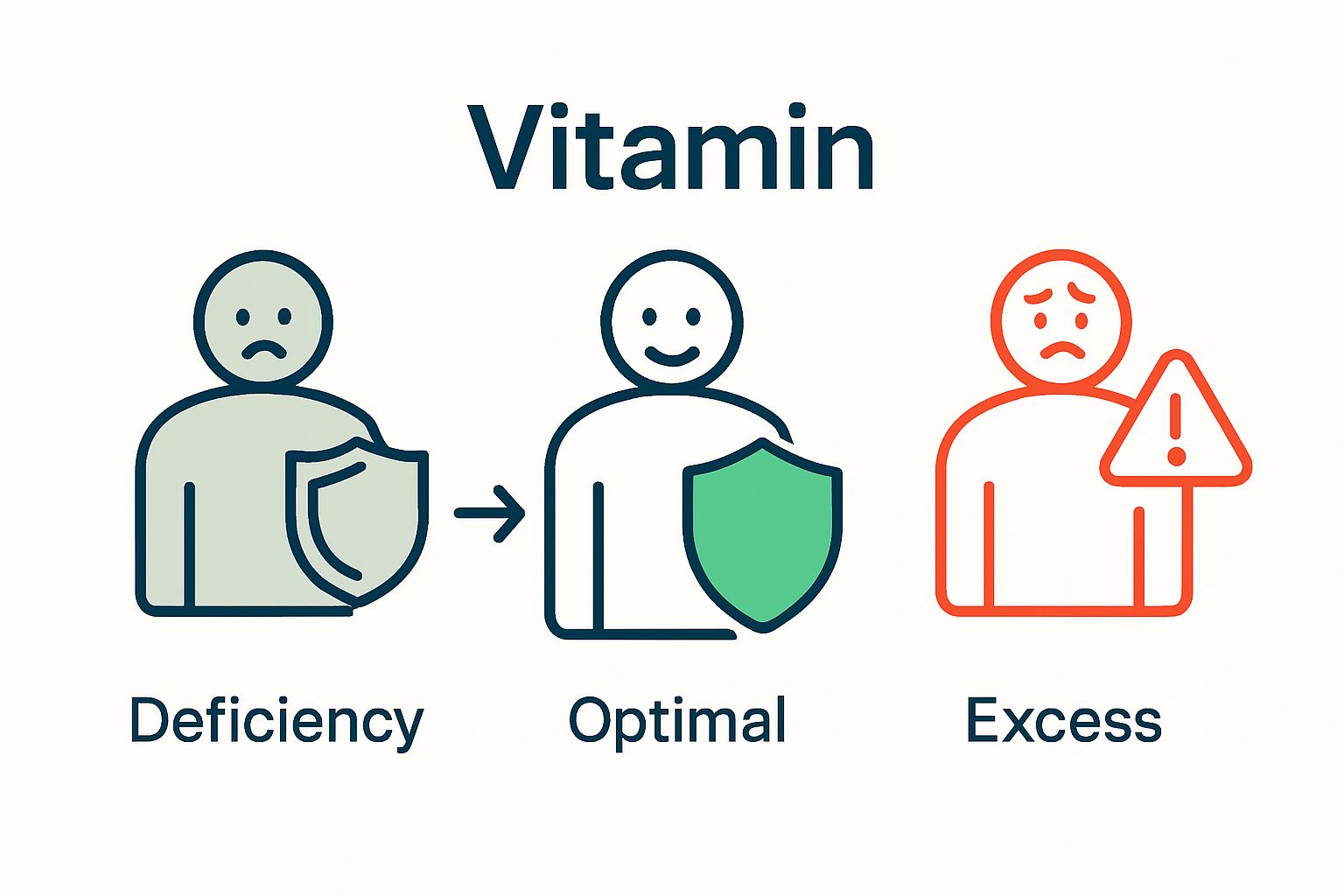
Consequences of Vitamin Deficiencies
Nutritional deficiencies represent a profound metabolic disruption where the body lacks sufficient quantities of essential micronutrients. These shortages can manifest through diverse symptomatic expressions, impacting multiple physiological systems. For instance, insufficient vitamin levels can compromise immune function, reduce metabolic efficiency, and impede cellular regeneration processes. Chronic deficiencies may lead to more serious long-term health complications, including compromised bone density, neurological impairments, and weakened cardiovascular resilience.
Risks of Vitamin Excesses
Contrary to common perception, excessive vitamin intake can be equally problematic as deficiencies. Overconsumption of certain vitamins can trigger toxic metabolic responses, potentially causing:
-
Cellular oxidative stress
-
Kidney and liver strain
-
Disrupted hormonal signalling
-
Potential neurological interference
-
Compromised mineral absorption
By understanding low iron level implications, individuals can appreciate the delicate balance required for optimal nutritional health. Precise, targeted testing enables a detailed understanding of individual metabolic requirements, transforming nutritional management from a generic approach to a personalised, data-driven strategy.
The Role of Testing in Personalised Health Management
According to clinical guidelines from NICE, personalised health management represents a sophisticated approach to preventative healthcare that utilises precise diagnostic tools to develop targeted interventions. Blood testing emerges as a cornerstone technology, transforming generic health recommendations into individually tailored strategies that address unique physiological requirements.
Precision Diagnostics and Individual Insights
Personalised health management transcends traditional medical approaches by recognising that each individual’s biochemical landscape is unique. thorough blood testing provides granular insights into metabolic functioning, nutritional status, and potential health risks. By analysing multiple biomarkers simultaneously, healthcare professionals can construct a detailed understanding of an individual’s physiological condition, enabling proactive and preventative health strategies.
Strategic Health Intervention Framework
Blood testing facilitates a strategic approach to health management by revealing critical information about an individual’s current physiological state. Key advantages of this precision-driven methodology include:
-
Early detection of potential health risks
-
Identification of subtle nutritional imbalances
-
Personalised dietary and lifestyle recommendations
-
Targeted supplementation strategies
-
Continuous health monitoring and optimisation
By exploring advanced at-home blood testing options, individuals can access sophisticated diagnostic tools that transform health management from a reactive to a proactive model. This approach helps people to make informed decisions about their wellness, using data-driven insights to optimise their long-term health trajectory.

Take Control of Your Vitamin Health With Lola Health
If you are unsure about your vitamin levels or worry about the silent impact of nutritional imbalances, you are not alone. As discussed deficiencies or excesses in key vitamins can lead to fatigue, poor immune health and long-term complications. Routine blood testing is the only way to gain a clear picture, but getting accurate results should not be stressful or time-consuming.
Explore our Nutrition test collection for thorough, at-home vitamin panels designed to address your unique goals. Each sample is processed in UKAS-accredited labs and reviewed by medical doctors, so you get reliable answers fast. Results include insights into vitamin and mineral status, metabolic health and more, helping you to make targeted improvements right away.

It has never been easier to understand your health. Order your test online at Lola Health today or browse our Nutrition tests to start building a healthier tomorrow. If you want a full picture, discover our Full 360 pre-diabetes panel for even broader insights. Book now and step confidently towards better wellbeing.
Frequently Asked Questions
What are vitamin levels and why are they important for health?
Vitamin levels refer to the concentration of essential micronutrients in your bloodstream, which are critical for various bodily functions. They play key roles in metabolic processes, immune system regulation, and overall health, making it important to monitor and maintain balanced vitamin levels.
How are vitamin levels measured?
Vitamin levels are typically measured through blood tests that determine the concentration of specific vitamins in your body. These levels are expressed in units such as nanomoles per litre (nmol/L) or micrograms per decilitre (µg/dL), allowing for effective assessment of nutritional status.
What are the consequences of vitamin deficiencies?
Vitamin deficiencies can lead to numerous health complications, including compromised immune function, reduced metabolic efficiency, and impaired cellular regeneration. Chronic deficiencies can result in serious long-term health issues, such as weakened bone density and neurological impairments.
How can testing vitamin levels contribute to personalised health management?
Testing vitamin levels allows healthcare professionals to gain precise insights into an individual’s nutritional status and metabolic functioning. This information enables the development of tailored dietary recommendations and targeted supplementation strategies, building a proactive approach to health management.
Recommended
- How to Test Vitamin Deficiency for Optimal Longevity – Lola Health
- Vitamin D Deficiency Testing for Longevity – Lola Health
- Blood Test for Vitamin and Mineral Deficiency | A Longevity Guide – Lola Health
- Normal Vitamin D Levels UK: A Key to Healthy Longevity – Lola Health
- Vitamine bloedtest: Hoe jouw tekorten te ontdekken - Mijn Voedsel Intolerantie Test
Test This Biomarker at Home
This biomarker is included in our ALT Test and Liver & Kidney Function — results in 2-3 working days with GP-reviewed insights.
At-Home Blood Testing
Check your levels from home
Professional phlebotomist visit. Doctor-reviewed results in 2-5 days. Track your health with comprehensive blood panels.
→45-70 biomarkers tested · Venous blood draw · From £130