


Blood tests give us a direct, scientific look at the actual levels of vitamins and minerals circulating in your body. By analysing a small blood sample, we can see precisely where you stand—whether your levels are optimal for longevity, merely sufficient for today, or running on empty. It's the most accurate snapshot you can get of your internal nutritional world, providing the data you need to build a long-term health strategy.
Why Micronutrient Blood Tests Are Key to Your Longevity Strategy
Think of your body like a high-performance engine designed to last a lifetime. While the calories you eat are the fuel, it’s the micronutrients—the vitamins and minerals—that act as the high-grade engine oil and specialised coolants. They’re absolutely vital for everything from producing cellular energy and repairing DNA to keeping your immune system resilient.
If any of these critical components run low, the engine starts to wear down prematurely. This is where a blood test becomes your personal diagnostic tool, taking you beyond guesswork and generic health advice. It provides hard data on what your body actually needs to perform optimally, not just for today, but for decades to come.
From Just Surviving to Truly Thriving for a Lifetime
For a long time, nutrition was mostly about preventing severe deficiencies—think scurvy from a lack of vitamin C or rickets from low vitamin D. But the conversation has shifted. Today, the goal isn't just to avoid getting sick; it's to optimise our healthspan—the number of years we spend in vibrant, functional health.
Low-grade, long-term nutrient shortfalls can fly under the radar for years, quietly fuelling the processes of aging, such as chronic inflammation, cellular damage, and cognitive decline. These aren't dramatic, sudden illnesses. They're the slow-burn issues that chip away at your vitality and shorten your healthspan.
The Growing Need for a Clearer Picture
This proactive approach has never been more relevant. Over the last 20 years, UK-wide blood testing for vitamin and mineral deficiencies has uncovered a worrying trend: key nutrient levels are falling across the population. Data from the National Diet and Nutrition Survey (NDNS) shows that more and more of us are falling below the Lower Reference Nutrient Intake (LRNI) for essential vitamins and minerals. To give you one example, between 2008 and 2018, the number of young children with insufficient vitamin A almost doubled. You can read more about these UK nutrient trends to see the bigger picture.
Getting a clear view of your personal nutritional status is the foundational step in building a longevity strategy that’s genuinely tailored to you. Vague symptoms like persistent tiredness or poor concentration could be the first whispers of a micronutrient imbalance that a specific blood test can pinpoint.
By using precise blood testing, you can spot these gaps long before they contribute to age-related decline. This empowers you to make targeted changes to your diet or supplementation, fine-tuning your body’s engine for peak performance and long-term resilience. It’s the difference between waiting for a warning light to flash on the dashboard and carrying out smart, regular maintenance to keep everything running perfectly for the long haul.
The Most Important Vitamin and Mineral Blood Tests Explained
Trying to figure out which blood tests for vitamin and mineral deficiencies actually matter for longevity can feel like navigating a maze. The best approach is to cut through the noise and focus on the handful of micronutrients that genuinely move the needle on your daily energy, cellular health, and long-term vitality.
Think of it like a car's dashboard. You don't need to monitor every single sensor, but you absolutely want to keep an eye on the fuel gauge, oil level, and engine temperature. For your body, the most critical indicators are Vitamin D, B12, Folate, Iron, and Magnesium. Optimising these lays a powerful foundation for a longer, healthier life.
This model shows how staying on top of your health is a continuous cycle: you test to gain insights, and those insights drive meaningful action that compounds over time.
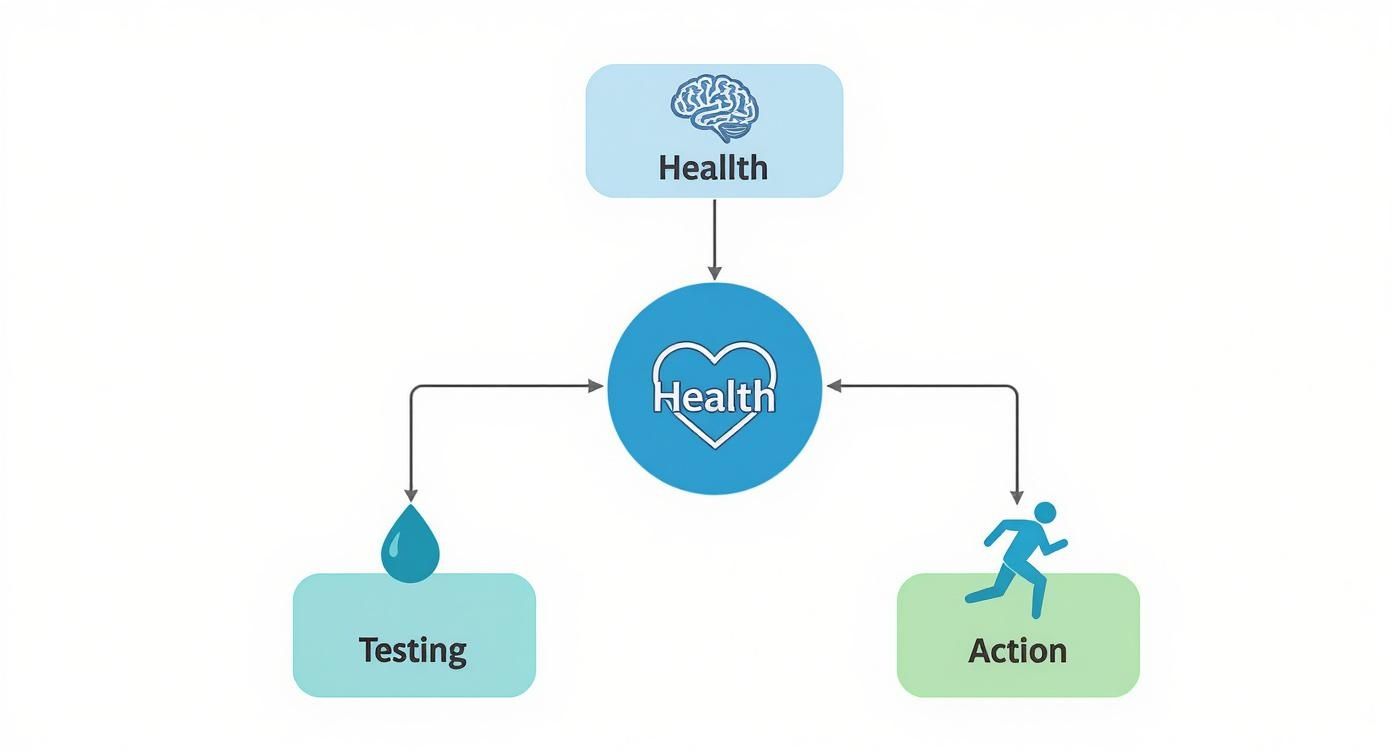
The key takeaway is simple: data from testing is the catalyst. It kicks off a positive feedback loop that helps you make smarter, more effective health decisions for your future self.
To help you get started, here's a quick overview of the essential tests and why they are so important for a longevity-focused strategy.
Key Blood Tests for Micronutrient Status
| Nutrient | Biomarker Measured | Importance for Health & Longevity | Common Deficiency Symptoms |
|---|---|---|---|
| Vitamin D | 25-hydroxyvitamin D | Immune resilience, bone density, mood, inflammation control. | Frequent illness, fatigue, low mood, bone pain. |
| Vitamin B12 | Serum B12, Active B12 | Nerve protection, energy metabolism, DNA synthesis. | Fatigue, brain fog, tingling in hands/feet, weakness. |
| Folate (B9) | Serum Folate, RBC Folate | Cellular repair, DNA maintenance, red blood cell formation. | Tiredness, weakness, irritability, shortness of breath. |
| Iron | Ferritin, Serum Iron | Oxygen transport, cellular energy, cognitive function. | Extreme fatigue, poor concentration, pale skin, hair loss. |
| Magnesium | Serum Magnesium | Muscle function, nerve signalling, DNA stability, blood sugar control. | Muscle cramps, poor sleep, anxiety, twitching. |
Now, let's explore what each of these tests tells you in more detail.
Vitamin D: The Sunshine Vitamin
Vitamin D is far more than just a "bone vitamin"; it’s a powerful hormone that helps regulate your immune system and guides cellular growth. When you're running low, it can lead to a weaker immune response, low mood, and over time, an increased risk of chronic, age-related diseases.
The standard blood test looks for a form called 25-hydroxyvitamin D. Many labs flag anything above 50 nmol/L as "sufficient," but for a true longevity strategy, you should be aiming for a higher, optimal range.
When we're talking about longevity, just "not being deficient" isn't the goal. Keeping your Vitamin D levels in an optimal range is a proactive strategy to bolster your immune system and keep chronic inflammation in check, especially through the darker months.
Low levels are incredibly common here in the UK, particularly from autumn through to spring. Knowing your number lets you take targeted action, whether that’s through safe sun exposure or the right level of supplementation. If you want to dive deeper into the numbers, check out our guide on understanding normal Vitamin D levels in the UK.
Vitamin B12: The Energy and Nerve Protector
Vitamin B12 is absolutely critical for making red blood cells, protecting your nervous system, and synthesising DNA. A shortfall can quickly lead to persistent fatigue and brain fog. If left unchecked, it can cause irreversible nerve damage—a serious blow to your long-term health.
The go-to test measures serum B12, but this can sometimes be a bit misleading. A more advanced test for Active B12 (holotranscobalamin) is much more insightful, as it measures the portion of B12 that your cells can actually use to support healthy aging.
Because B12 is found almost exclusively in animal products, anyone following a plant-based diet is at a much higher risk of deficiency. Catching it early with a blood test is key to preventing long-term neurological issues.
Folate (Vitamin B9): The Cellular Builder
Folate and Vitamin B12 are a team. Folate's main job is to support cell growth and division, which makes it essential for everything from building new blood cells to repairing your DNA.
A blood test will measure serum folate or, for a more accurate long-term picture, red blood cell folate. Low levels can cause a specific type of anaemia that leaves you feeling tired and weak. For long-term health, maintaining optimal folate is non-negotiable for supporting your body's constant cycle of cellular regeneration and repair.
Iron and Ferritin: The Oxygen Movers
Iron is the heart of haemoglobin, the protein in your red blood cells responsible for carrying oxygen from your lungs to every cell in your body. Without enough iron, your cells are starved of oxygen, which translates into deep fatigue, an inability to focus, and a drop in physical performance.
A proper iron panel looks at a few things:
- Serum Iron: This measures how much iron is currently circulating in your blood.
- Ferritin: This is the one to watch. It measures your body's stored iron—your reserve tank. Low ferritin is the very first warning sign of iron deficiency.
Even a slight dip in your ferritin levels can hit your energy and cognitive function hard, long before you'd be diagnosed with full-blown anaemia. For anyone active, maintaining optimal ferritin is vital for performance, recovery, and long-term vitality.
Magnesium: The Master Mineral
Magnesium is a true workhorse, involved in over 300 different enzymatic processes in the body. It plays a central role in how your muscles and nerves function, helps control your blood sugar, and is crucial for DNA repair and stability.
A serum magnesium test is the standard, but it's important to know it only reflects about 1% of your body's total magnesium stores. Despite this limitation, if your serum level is low, it’s a clear sign of a significant deficiency. Chronic low magnesium is linked to numerous age-related conditions, making it a critical mineral to monitor for longevity.
Who Should Get Tested and How Often?
There’s no single, universal answer to how often you should check your vitamin and mineral levels. It’s not about following a rigid calendar; it’s about being smart and proactive, aligning your testing schedule with your unique lifestyle, age, and longevity goals. Instead of waiting for symptoms of a deficiency to show up, strategic testing helps you stay one step ahead, making sure your body is always primed for optimal performance and long-term health.
For most people, a good starting point is to get a comprehensive test every one to two years to establish a solid baseline. Think of it as a nutritional snapshot – it gives you a clear picture of where you stand and helps you spot any minor shortfalls before they snowball into bigger problems. That said, certain life stages and lifestyles place far greater demands on your body, meaning more frequent check-ins are essential for a robust longevity plan.
Pinpointing Who Benefits Most from Regular Testing
While everyone can gain from knowing their micronutrient levels, some people should consider testing more regularly. Why? Because their diet, physical demands, or underlying health conditions put them at a much higher risk of coming up short, accelerating age-related decline if left unchecked.
See if you fit into any of these groups:
- People on Plant-Based Diets: Key nutrients like Vitamin B12 and iron are most abundant in animal products. If you’re vegetarian or vegan, you have to be extra diligent to ensure your levels are optimal for long-term health.
- Older Adults: As we get older, our body’s ability to absorb certain nutrients, especially Vitamin B12 and magnesium, naturally starts to wane. Regular checks are a simple way to stay on top of these age-related shifts.
- Women of Reproductive Age: Menstruation significantly increases the body's iron requirements, making iron deficiency a common struggle. Pregnancy and breastfeeding also ramp up the need for vital nutrients like folate and iron.
- Anyone with a Chronic Health Condition: If you have a condition that affects your gut, like Crohn's or coeliac disease, your ability to absorb nutrients can be seriously compromised. Here, regular blood tests become a non-negotiable part of managing your long-term health.
One group that often gets overlooked is young women. You might be surprised to learn that recent UK data has uncovered a high rate of Vitamin B12 deficiency in this demographic. A 2022 analysis revealed that an astonishing 55% of women under 29 were deficient in B12, compared to just 40% of men in the same age group. It’s a stark reminder of how diet and physiology can create a very real risk, and it really drives home the need for targeted testing. You can explore more of these findings in these UK vitamin deficiency statistics.
A Special Note for Athletes
If you're an athlete or just serious about your fitness, your micronutrient status isn't just a matter of general wellbeing—it's directly linked to your performance, recovery, and athletic longevity. Intense physical training puts immense stress on the body, burning through key vitamins and minerals at a much faster rate.
Picture your body as a high-performance engine on race day. It’s running hotter and faster, consuming fuel and fluids at a blistering pace. In the same way, hard exercise dials up your demand for:
- Iron: This is fundamental for transporting oxygen to your muscles. Even a small dip in your ferritin (your body’s iron storage) can bring on fatigue much faster and cause a noticeable drop in your endurance.
- Magnesium: It’s a workhorse mineral involved in everything from muscle contraction to relaxation. You lose a lot of it through sweat, and low levels can lead to cramps, poor sleep, and sluggish recovery.
- Vitamin D: A key player in both bone health and immune function. Keeping it topped up is crucial for staying injury-free and fighting off bugs during tough training blocks.
For an athlete aiming for a long and successful career, ‘optimal’ isn’t a luxury—it’s a necessity. Monitoring these markers every 3-6 months, especially during peak season, gives you the data you need to fine-tune your nutrition and gain a genuine competitive edge.
Finding Your Personal Testing Rhythm
So, what's the right frequency for you? It all comes down to your personal circumstances. If you’re generally healthy and simply want to get a baseline for your longevity plan, an annual test is a great place to start.
But if you’re in a higher-risk group, an athlete pushing your limits, or actively trying to correct a known deficiency, testing every three to six months makes far more sense. This allows you to track your progress in near real-time and make smart adjustments. It transforms testing from a reactive chore into a powerful, proactive tool for your long-term health and vitality.
How to Ensure Your Test Results Are Accurate
When you decide to get a blood test for vitamin and mineral deficiencies, you're making a serious investment in your long-term health. The results will guide your diet, supplements, and lifestyle choices, so you need to be confident in the numbers. The data is only as good as the process behind it.

Think of it like getting a high-resolution photo of your internal health. A cheap, disposable camera might give you a blurry, indistinct image, while a professional camera captures every detail with pinpoint clarity. Making important health decisions based on a low-quality test is like navigating with a blurry map – you’re bound to go wrong.
The Gold Standard of Sample Collection
The first piece of the accuracy puzzle is how your blood sample is collected. While finger-prick tests are convenient, they can sometimes be less reliable. The tiny sample size and the risk of contamination from skin cells can easily skew the results for certain markers.
This is exactly why venipuncture—a blood draw from a vein, done by a trained professional—is considered the gold standard. It provides a larger, cleaner sample that gives the lab a much more stable and accurate picture of what's really going on inside your body.
For foundational health decisions aimed at longevity, precision is everything. A professionally collected venous sample provides the high-resolution data needed to confidently track your progress and fine-tune your health strategy over time.
Opting for venipuncture simply removes the guesswork and potential errors that can creep in with self-collection. It guarantees the lab has the best possible starting point for analysis, which is the first step toward getting results you can trust.
Why Lab Quality Is Paramount
Once collected, your sample is off to the lab. This is where the real analysis happens, but it’s also where things can go wrong if the standards aren't high enough. A lab’s equipment, processes, and quality control measures are what ultimately determine how reliable your results will be.
So, how can you be sure you're getting the best analysis? Look for two key stamps of quality:
- UKAS Accreditation: The United Kingdom Accreditation Service (UKAS) is the only national body the government recognises for assessing testing labs. A UKAS-accredited lab has been through the wringer, proving it meets the highest international standards for skill, impartiality, and performance.
- NHS Standards: Labs that meet NHS standards are held to incredibly strict quality protocols. Their processes are solid, their results are consistent, and their methods are validated against the best in the UK’s healthcare system.
Using a lab with both these credentials means your sample is in the best possible hands. This level of rigour is non-negotiable when you’re measuring minuscule amounts of vitamins and minerals. Even a small slip-up in a lab’s process can lead to a big inaccuracy in your report, sending you down the completely wrong path with your health plan. By insisting on quality every step of the way—from the draw to the analysis—you’re ensuring the insights you get are ones you can truly build your future health on.
Turning Your Test Results into an Action Plan
Getting your blood test results back is where the real work—and the real progress—begins. This isn't just about spotting red flags. It’s about learning to read the subtle signals your body is sending and building a smart, personalised plan for the long haul. The true value of any test is what you do with the information.
https://www.youtube.com/embed/yKWQ_oLSXI8
When you look at your report, you'll see your results measured against a "normal" reference range. This is great for flagging serious deficiencies, but if longevity is your goal, we need to look a little deeper. The aim isn't just to be "in range"; it's to be optimal. That’s the sweet spot where you find better energy, sharper focus, and robust cellular health.
Moving from “In Range” to “Optimal”
Think of the standard reference range as the bare minimum to stay out of trouble. It's the passing grade. Optimal levels, on the other hand, are where you truly start to thrive. This is the zone where your body has all the resources it needs to not just function, but to repair itself, defend against stressors, and perform at its best for years to come.
Interpreting your blood test results is all about context. An 'acceptable' level for a sedentary person might be a huge performance-limiter for an athlete. Your own longevity goals are what turn a generic number into a meaningful target.
Grasping this difference is fundamental. It’s the shift from a reactive mindset of fixing problems as they arise to a proactive one of building a more resilient you. This is where a detailed report becomes your roadmap, showing you exactly where to fine-tune your nutrition and lifestyle for the biggest long-term impact. For a closer look at the details, our guide on how to get your blood test results explained in the UK breaks it all down.
What Happens Next: Practical Scenarios
Okay, you’ve got your results. Now what? The next step is to create a clear, simple action plan. Let's walk through a couple of common scenarios to see what this looks like in practice.
Scenario 1: Low Vitamin D
Your results show your Vitamin D level is below the optimal range. This is incredibly common in the UK, especially outside of summer.
- Dietary Adjustments: Start by adding more Vitamin D-rich foods to your diet. Think oily fish like salmon and mackerel, red meat, liver, and egg yolks. Fortified foods like certain breakfast cereals and plant-based milks are also easy wins.
- Sensible Sun Exposure: From late March to the end of September, try to get short bursts of daily sun on your forearms, hands, or lower legs without sunscreen. For lighter skin tones, 10-15 minutes is often enough—just be careful never to burn.
- Supplementation: For most of us in the UK, supplementation is essential from October to March for maintaining optimal levels. Depending on how low your levels are, a healthcare professional can suggest the right dose to get you into that optimal zone.
Scenario 2: Low Ferritin (Iron Stores)
Your report flags that your ferritin levels are on the low side of normal. This is often the very first sign of an iron issue and can explain why you feel tired or can't concentrate, even if your other iron markers look fine.
- Iron-Rich Foods: Focus on bringing in both heme iron (from animal sources like red meat and poultry) and non-heme iron (from plants like lentils, spinach, and tofu).
- Boost Absorption with Vitamin C: This is the game-changer. Vitamin C massively improves how well your body absorbs non-heme iron. So, pair your iron-rich meals with foods high in Vitamin C—think bell peppers, broccoli, citrus fruits, or strawberries. Even a glass of orange juice with your fortified cereal makes a genuine difference.
- Avoid Blockers: Tea and coffee contain tannins, compounds that get in the way of iron absorption. Try to have them an hour or so before or after your iron-rich meals, not with them.
Knowing When to Speak to a Professional
Your blood test results give you incredibly valuable information, putting you in the driver's seat to make smarter daily choices. They tell you the "what," and your action plan gives you the "how."
However, it's vital to know when to call in an expert. If any of your results are significantly out of range, or if you’re still dealing with symptoms despite making changes, you absolutely should discuss your findings with your doctor or another qualified healthcare professional. They can rule out any underlying conditions and help create a more structured plan for long-term health. Think of it as a partnership—one that ensures you're taking the safest and most effective steps on your health journey.
A Step-by-Step Guide to the Testing Process
Getting a blood test for vitamin and mineral levels might sound complicated, but it’s actually a straightforward path from curiosity to actionable insights for your longevity. Think of it as a clear-cut way to take charge of your health. When you know what to expect, the whole experience feels less like a medical procedure and more like a positive step in your wellness journey.
It all starts online. You simply choose the test panel that fits your goals, whether that's fine-tuning your nutrition for athletic performance or just getting a solid baseline for your long-term health. Once you’ve picked your test, booking the blood draw is easy. You can arrange for a professional phlebotomist to come to your home, or book a slot at a clinic near you – often in just a few days.
Your Sample Collection Appointment
When it's time for your appointment, a trained professional will take a small blood sample from a vein in your arm. This is called venipuncture, and it's the gold standard for getting an accurate and reliable sample. If you’ve never had it done before, don’t worry – we have a great guide on how to prepare for phlebotomy that walks you through everything you need to know to feel comfortable and prepared.
From there, your sample is sent straight to a UKAS-accredited lab that operates to the same high standards as the NHS. It's here that your blood is carefully analysed, turning that small vial into precise, reliable data about what's going on inside your body.
Receiving and Understanding Your Results
In just a few days, you’ll get a notification that your results are ready. But you won’t be sent a confusing PDF full of medical jargon. Instead, your results are loaded into a user-friendly digital dashboard, where we translate the raw numbers into insights that actually make sense for your healthspan goals.
Here’s a glimpse of what that looks like in the app.

The dashboard uses simple, colour-coded indicators – usually green for optimal, amber for borderline, and red for deficient – so you can see exactly where you stand at a glance. Every result comes with a clear explanation of what that specific biomarker means for your long-term health and why it matters. This helps bridge the gap between seeing the data and truly understanding what to do with it, turning a simple test into a genuinely powerful tool for your health.
Got Questions? We’ve Got Answers.
When it comes to understanding your body through blood tests, it's natural to have a few questions. Let's clear up some of the most common ones we hear, so you can feel totally confident in the steps you're taking towards a longer, healthier life.
How Often Should I Be Testing My Levels?
For most healthy adults, a comprehensive check-up every 1-2 years is a brilliant way to stay on top of things as part of a long-term health strategy. Think of it as a nutritional MOT – it gives you a clear baseline and helps you spot any small issues before they become bigger problems.
However, some of us need to keep a closer eye on our levels. If you’re an athlete, over 60, follow a specific diet like veganism, or are managing a known deficiency, more regular testing is key. In these situations, your doctor might suggest a check-in every 3-6 months to make sure your plan is working and to adjust things as needed.
Can I Just Eat Better to Fix a Deficiency?
It’s a great question, and the answer is: it depends. For minor dips in certain nutrients, absolutely. If your iron is a little low, for example, consciously adding more iron-rich foods and pairing them with vitamin C can often get you back on track. A food-first approach is always the best foundation for lifelong health.
But for more serious shortfalls, like very low Vitamin D or B12, diet alone often isn't enough to restore your levels to an optimal range quickly. This is where targeted supplementation becomes essential. It’s crucial to chat with a healthcare professional first, though, to make sure you’re taking the right dose and form for your body.
When you're playing the long game with your health, the aim isn't just to patch up problems. It's about maintaining your body in its optimal state. The winning strategy is usually a smart combination of a nutrient-packed diet and targeted supplements, all guided by regular testing.
Are Finger-Prick Tests as Accurate as a Proper Blood Draw?
Finger-prick tests are convenient, no doubt about it. But when it comes to getting the most accurate and reliable results to inform your longevity plan, nothing beats a venous blood draw (venipuncture). It's the gold standard for a reason.
A sample taken from a vein by a trained professional provides a much larger and cleaner specimen, which means there’s less risk of contamination or clotting that can skew the results. For decisions that will shape your long-term health, you want the most precise data you can get. That's what a professional blood draw delivers, giving you results you can truly trust.
Ready to stop guessing and get a true picture of your nutritional health? With Lola, you can book a professional blood test at home or a clinic near you. We deliver clear, actionable insights straight to our app, helping you build a health strategy that’s genuinely yours. Take control of your health today.