


True longevity isn't just about adding years to your life; it's about adding life to your years. And some of the most powerful clues for achieving this are flowing through your bloodstream. Think of blood tests for vitamin and mineral deficiency as your personal blueprint for healthy ageing, giving you a look under the bonnet to see exactly what’s needed for long-term performance. This guide is your first step in turning that hidden data into an actionable strategy for a longer, more vital life.
Your Proactive Path to Longevity Starts Within
It’s easy to get caught in a cycle of reacting to health problems as they arise. But a true longevity mindset is proactive—it's about fine-tuning your body's systems before issues take hold.
Imagine your body is a high-performance engine designed for the long haul. To keep it running smoothly for decades, it needs the right fuel—vitamins and minerals—in precisely the right amounts. Even a subtle shortfall in one key nutrient can create a cascading effect, impacting everything from your daily energy levels to your cellular resilience against age-related decline.
Even with a healthy lifestyle, modern life can create 'nutritional blind spots'. High-pressure jobs, demanding schedules, or a rigorous fitness regime can place extra demands on your body, depleting certain micronutrients faster than you can replace them. Trying to guess what you need based on symptoms alone is like navigating without a map—you might be heading in the wrong direction, compromising your long-term health goals.
Beyond Guesswork to Data-Driven Longevity
This is precisely where a targeted blood test becomes an essential tool for longevity. It cuts through the guesswork and provides hard data, revealing the subtle nutritional gaps that could be quietly undermining your long-term health. Catching a deficiency early allows you to make specific, targeted changes, preventing a minor issue from becoming a chronic problem that could shorten your healthspan.
By measuring key biomarkers, you replace assumptions with facts. This data-driven approach puts you in control, ensuring your body has the fundamental building blocks it needs not just to function, but to thrive for decades to come.
Understanding your unique nutritional status is the cornerstone of any effective longevity strategy. It allows you to:
- Optimise Cellular Health: Providing your cells with the exact nutrients they need enhances their ability to produce energy and repair damage—two fundamental processes for slowing the ageing process.
- Sharpen Your Mind and Body: Correcting a deficiency can lead to a noticeable boost in cognitive function, mood, and physical stamina. It’s a direct investment in your quality of life, both now and in the future.
- Build Long-Term Resilience: A properly nourished body is far better equipped to manage stress, fight off illness, and recover efficiently. This resilience is a key factor in living a longer, healthier life.
Ultimately, investigating your vitamin and mineral levels is about a crucial shift: from reacting to problems to proactively building a foundation for a long and healthy life. It’s the first, most critical step in creating a health strategy that’s engineered for you, ensuring you have the energy and vitality to pursue your goals for years to come.
Decoding the Most Important Blood Tests
Think of specific blood tests as your body's 'internal MOT'—a detailed inspection that goes under the bonnet to make sure every system has the fuel it needs for the long haul. Instead of guessing why you feel a bit off, these tests give you hard data, pinpointing subtle deficiencies that could be quietly draining your energy and impacting your long-term health. Understanding what they measure is the first step to taking back control.
This is all about shifting from a reactive mindset to a proactive one. You're no longer just waiting for problems to appear; you're actively managing your wellness to prevent them in the first place.
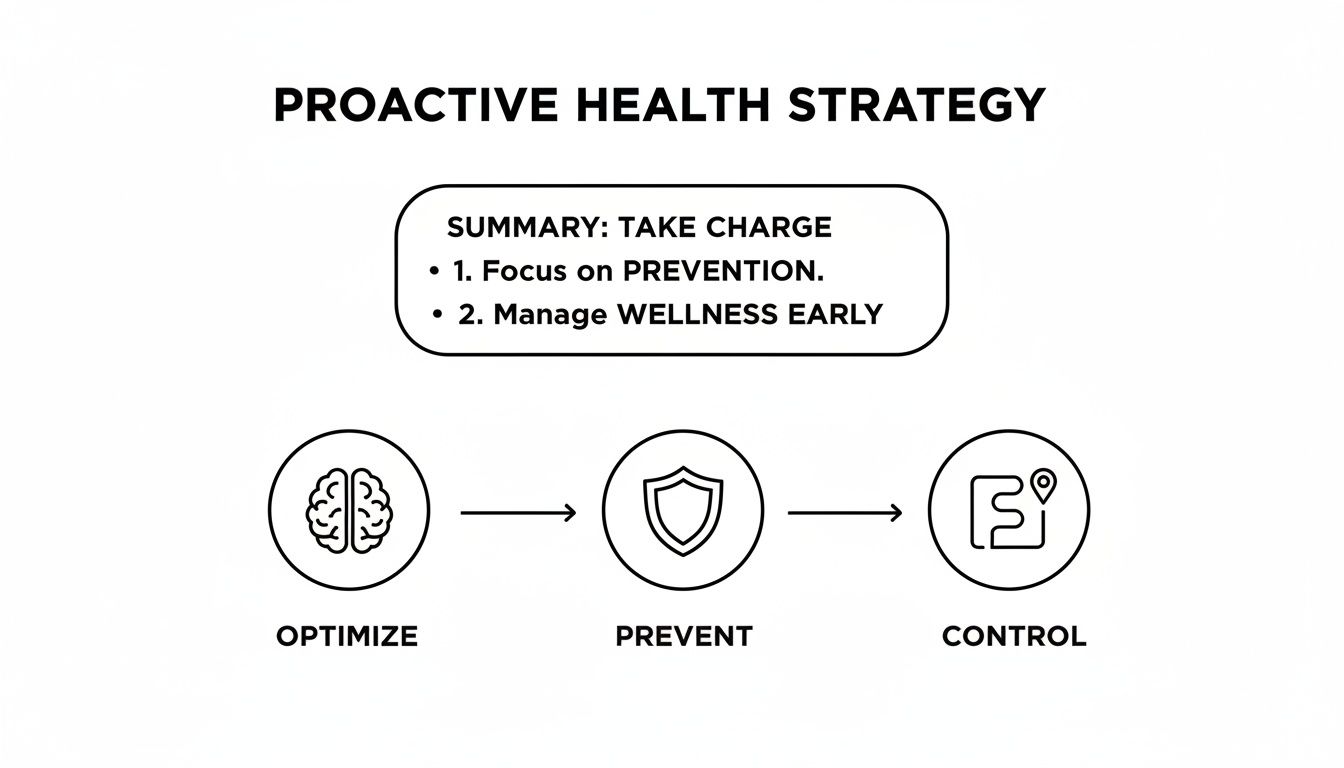
The idea is simple: when you optimise how your body functions at a cellular level, you build a strong defence against future health issues, giving you far greater control. To really get a handle on your results, it helps to understand the difference between what are macronutrients and micronutrients and the distinct roles they play.
To help you make sense of it all, here's a quick rundown of the essential blood tests that give you a clear window into your health and longevity.
Key Blood Tests for Longevity and What They Reveal
This table summarises the most critical blood tests for long-term health, what they measure, and why they're so important for keeping you at your best.
| Nutrient | Blood Test Marker | Why It Matters for Longevity | Common Deficiency Symptoms |
|---|---|---|---|
| Vitamin D | 25-hydroxyvitamin D | Crucial for immune function, mood regulation, and reducing chronic inflammation. | Frequent illness, low mood, bone aches, persistent fatigue. |
| Vitamin B12 | Serum Vitamin B12 | Essential for nerve health, red blood cell production, and protecting cognitive function. | Brain fog, tingling in hands/feet, memory issues, extreme tiredness. |
| Folate (B9) | Serum Folate | Works with B12 for DNA repair and cellular health, vital for brain and heart function. | Fatigue, irritability, mouth sores, poor concentration. |
| Iron | Ferritin | Measures iron stores, which are needed for oxygen transport and energy production. | Unexplained fatigue, shortness of breath, pale skin, poor workout recovery. |
| Magnesium | Serum Magnesium | Involved in over 300 bodily processes, supporting muscle, nerve, and heart health. | Muscle cramps or twitches, anxiety, poor sleep, irregular heartbeat. |
| Zinc | Serum Zinc | A powerhouse for the immune system, wound healing, and cellular growth. | Frequent colds, slow-healing wounds, hair loss, loss of taste or smell. |
These tests aren't just numbers on a page; they're actionable insights that empower you to fine-tune your diet and lifestyle for peak performance and healthy ageing.
Vitamin D: The Sunshine Vitamin
Known as the "sunshine vitamin," Vitamin D does far more than just keep bones strong. It acts more like a hormone, playing a massive role in everything from your immune response and mood to how your cells grow and repair. Keeping your Vitamin D levels topped up is fundamental for fending off inflammation and maintaining a resilient immune system—two cornerstones of healthy ageing.
A simple blood test measures your 25-hydroxyvitamin D, giving you a clear picture of your levels. While anything over 50 nmol/L is often considered "normal," many health experts now agree that the optimal range for peak wellness is between 75 and 100 nmol/L. If you're dealing with frequent colds, low mood, or a constant feeling of fatigue, it’s worth getting checked.
This is a huge issue here in the UK. Thanks to our famously grey skies, a huge chunk of the population is deficient. A 2023 analysis revealed that a staggering 20% of Brits have a clinical vitamin D deficiency, and around 60% have insufficient levels. The national average is just 76.8 nmol/L, which is barely scraping into the optimal zone.
Vitamin B12 and Folate: The Energy and Brain Duo
Vitamin B12 and Folate (also known as B9) are a dynamic duo. They work hand-in-hand to fuel your energy metabolism, build red blood cells, and maintain a healthy nervous system. For long-term health, keeping these levels right is non-negotiable for protecting your nerve cells and preserving sharp cognitive function as you get older.
Blood tests for this pair typically measure:
- Serum Vitamin B12: This checks the total amount of B12 floating around in your blood.
- Serum Folate: This shows how much folate is readily available for your body to use.
The tricky thing is that deficiency symptoms can be vague—think brain fog, a pins-and-needles feeling in your hands or feet, or just feeling wiped out all the time. Because these signs overlap with so many other conditions, a blood test is the only reliable way to know for sure.
Iron: The Oxygen Carrier
Iron is absolutely fundamental to life. Its main job is to help create haemoglobin, the protein in your red blood cells that acts like a taxi service, carrying oxygen from your lungs to every single cell in your body. When iron is low, your cells are starved of oxygen, which directly hits your energy, focus, and physical stamina.
The most telling test isn’t actually for iron itself, but for ferritin. Ferritin is the protein that stores your iron. So, a ferritin test is like checking the level in your body’s fuel reserve tank, not just what's in the fuel line. It gives you an early warning that your stores are dropping, long before you develop full-blown anaemia. That unexplained fatigue, getting breathless during a workout, or slow recovery? Classic signs that your ferritin might be low.
Magnesium: The Master Mineral
Magnesium is the unsung hero of the mineral world. It’s involved in over 300 different processes in the body, from muscle and nerve function to controlling your blood sugar and blood pressure. For long-term health, it's a key player in keeping your heart strong and your bones dense.
A serum magnesium test measures the amount in your blood. But here’s the catch: less than 1% of your body's total magnesium is actually in your bloodstream. So, a blood test might not always tell the whole story about your total body stores.
Even so, it’s a valuable starting point. If you’re experiencing things like muscle cramps, twitching eyelids, anxiety, or restless nights, a magnesium test is a smart move.
Zinc: The Immune Defender
Zinc is another powerhouse mineral that’s crucial for a robust immune system, wound healing, and building proteins. A healthy immune system is your first line of defence against illness, and keeping it in fighting shape is key to healthy ageing. Zinc makes sure that system responds quickly and effectively when needed.
A serum zinc test can give you a good idea of your current status. Your body doesn't store zinc, so you need a steady supply from your diet. Tell-tale signs you might be running low include cuts that take forever to heal, catching every cold that goes around, or even hair loss. Checking your zinc is a simple, proactive step to keeping your defences strong for years to come.
Why Iron Deficiency Is a Growing UK Health Concern
Iron deficiency isn't just a footnote in a health textbook; it's fast becoming one of the most significant nutritional problems we face here in the UK. It quietly undermines the long-term health and daily performance of millions, and its effects are often dismissed as just the burnout of a busy modern life.
The scale of the problem is bigger than most of us think. Staggering data from the NHS really brings this home. In 2023-24 alone, England saw 191,927 hospital admissions related to iron deficiency. That's a huge 11% jump from the year before and almost ten times higher than it was back in the late 1990s.

That persistent fatigue, brain fog, or slow recovery you're blaming on your workload or training schedule? It could well be your body telling you its iron stores are running dangerously low.
Understanding Iron Deficiency Versus Anaemia
It’s really important to get the distinction between iron deficiency and iron deficiency anaemia. I often explain it by thinking about the fuel tank in your car.
- Iron Deficiency: This is when your body's iron stores—the reserve tank—start to dwindle. Your car is still running just fine, but you've got no backup fuel left.
- Iron Deficiency Anaemia: This is the next stage. The reserve tank is completely empty, and now you don't have enough iron to make the haemoglobin your red blood cells need. The engine starts to sputter.
This is exactly why the ferritin test is so crucial. It acts as an early warning system by measuring your stored iron levels. Catching a downward trend in your ferritin means you can act before it spirals into full-blown anaemia, which carries far more serious health risks. If you'd like to explore this further, you can learn more about what causes low iron levels in our detailed guide.
Who Is Most at Risk?
While anyone can become iron deficient, some people are far more vulnerable, often due to a perfect storm of physiological demands and dietary choices.
Realising you might be in an at-risk group isn’t about creating worry. It’s about arming yourself with the knowledge to be proactive about your health and longevity.
Here are a few of the key groups who should really consider regular iron checks:
- Active Women: Menstruation means regular blood loss, which naturally increases iron needs. For female athletes and keen gym-goers, the demand is even greater due to higher red blood cell production and iron lost through sweat.
- Individuals on Plant-Based Diets: Plants do contain iron, but it's a type called 'non-haem' iron. Our bodies find this form much harder to absorb compared to the 'haem' iron from animal sources, so careful dietary planning and monitoring are key.
- Endurance Athletes: Anyone doing intense, prolonged exercise needs more oxygen transported around their body. This puts a huge demand on iron stores to keep performance and recovery on track.
For these groups, a blood test for vitamins and minerals isn't just a routine check. It’s a vital tool for performance and long-term health, giving you the data needed to adjust your nutrition, sidestep burnout, and make sure your body is truly set up to thrive.
Why You Shouldn't Ignore B12 and Folate
It's easy to overlook vitamin B12 and folate (B9). While iron and vitamin D often steal the spotlight, this duo acts as the quiet support crew for your body’s long-term health. Think of them as essential maintenance workers for your most vital functions: they help build healthy DNA, keep your energy production efficient, and protect your entire nervous system. They are absolutely fundamental to healthy ageing.
The problem is that the signs of a deficiency are often subtle and insidious. You might attribute lingering fatigue to a demanding work week, or dismiss brain fog and low mood as just 'one of those things'. Because these symptoms are so easy to brush off, many people live with suboptimal levels for years, unknowingly compromising their long-term cognitive health.
This is precisely why a blood test for vitamin and mineral deficiency is so critical. It moves beyond guesswork, providing a clear, objective view of your internal health long before a minor issue can escalate into a serious concern.
A Growing Problem We Can't Afford to Miss
In the UK, B12 and folate deficiencies are no longer a niche issue; they're a growing public health concern. NHS data shows a startling rise in hospital admissions for anaemia linked directly to a lack of these vitamins. The number hit 3,490 in 2023-24—that's a fourfold jump since the late 90s. If you're curious about the bigger picture, this detailed analysis by Vitall breaks down the UK-wide statistics.
Catching this early is everything. While you can reverse many of the effects of low B12 and folate with the right approach, a long-term deficiency can cause neurological damage that may be irreversible—affecting your memory, balance, and nerve function.
Staying on top of your levels isn't just about feeling better today. It's a powerful strategy for protecting your cognitive health for the decades ahead.
Are You at Higher Risk?
Some of us are simply more prone to low B12 and folate levels, which makes proactive testing a non-negotiable part of any longevity plan.
- Older Adults: Our ability to absorb B12 from food naturally declines as we age, putting anyone over 60 at a much higher risk.
- Vegans and Vegetarians: Vitamin B12 is found almost exclusively in animal-based foods. If you're on a plant-based diet, a blood test is the only way to be sure your fortified foods or supplements are actually doing their job.
- Anyone with a Gut Condition: If you have something like Crohn's disease or coeliac disease, your gut's ability to absorb both B12 and folate can be seriously impaired.
For these groups, a blood test is more than just a check-up. It's an essential tool for ensuring your body is getting what it needs to maintain energy, protect your brain, and support your health for the long run.
Turning Your Test Results into a Concrete Action Plan
Getting your blood test results back is a fantastic first step, but the numbers are just that—numbers. The real power comes from turning that data into tangible changes that boost your health and energy for the long haul. Let’s walk through how to go from insight to action.
Your report will show where your levels sit within a 'normal' range. But for those of us focused on peak performance and longevity, 'normal' isn't the goal—'optimal' is. Think of it like this: you don't just want your car's engine to run; you want it tuned to perfection for the best possible performance.

Getting to grips with the details is crucial. Our in-depth guide explains how blood test results are explained in the UK and can give you a much richer understanding. Armed with this knowledge, you can build a personal action plan that truly works for you.
Your Three-Tiered Response Strategy
The key is to start with the simplest, most sustainable changes first. By taking a methodical approach, you can build a solid foundation of good habits before moving on to more specific interventions if they’re needed. This helps you build a resilient health strategy instead of just chasing numbers.
A structured plan also helps you avoid feeling overwhelmed and makes it much easier to see what’s working.
-
Tier One: Food First
This is always the best place to begin. Before you even think about supplements, look at your plate. If your ferritin is a bit low, for instance, focus on adding haem iron from sources like red meat or dark poultry. For a plant-based alternative, try pairing lentils and spinach with a source of vitamin C, like red peppers, to seriously boost iron absorption. -
Tier Two: Smart Supplementation
Let's be realistic—sometimes diet alone can’t correct a significant shortfall. This is especially true for nutrients like Vitamin D during a UK winter or B12 if you follow a vegan diet. This is where targeted supplementation comes in. We’re not talking about a generic multivitamin, but a specific nutrient at a therapeutic dose to nudge your levels back into that optimal zone. For example, if low magnesium is a concern, you might find an in-depth guide to Magnesium supplements for heart health very useful. -
Tier Three: Professional Guidance
If your results flag a critical deficiency, or if you’ve made changes and aren’t seeing any improvement, it’s time to call in a professional. Your GP or a registered dietitian can offer a clinical diagnosis, check for any underlying health issues, and create a supervised plan. This might involve higher-dose supplements or further tests to get to the root of the problem.
Knowing When and How to Re-Test
Making changes without checking the results is just guesswork. Re-testing is the vital step that closes the loop, showing you whether your new habits are actually making a difference.
Re-testing validates your efforts and allows you to fine-tune your approach. It transforms your health plan from a static set of rules into a dynamic, responsive strategy that adapts to your body's needs over time.
So, when should you re-test? It really depends on the specific deficiency and the changes you’ve made. As a general rule of thumb, after starting a new diet or supplement plan, a follow-up test in 3-6 months is a sensible timeframe to track your progress. Once your levels are stable and in that optimal range, you can switch to annual testing just to keep things on track.
Your Action Plan After Getting Blood Test Results
Here’s a quick-glance table to help you map out your next steps based on what your report says.
| Result Level | Immediate Action | Long-Term Strategy | When to Re-Test |
|---|---|---|---|
| Deficient | Discuss results with a GP or registered dietitian immediately. | Follow professional advice, which may include high-dose supplements and dietary overhaul. | As advised by your healthcare professional, likely within 3 months. |
| Low | Start Tier 1 (Food First) and Tier 2 (Smart Supplementation) interventions. | Focus on consistently including nutrient-dense foods and targeted supplements in your routine. | After 3-4 months to check if your new habits are working effectively. |
| Optimal | Great job! No immediate changes are needed. | Maintain your current healthy diet and lifestyle to keep your levels in this ideal range. | Annually, as part of your proactive health monitoring. |
| High | Stop taking any related supplements and consult your GP to investigate the cause. | Identify and remove dietary sources causing the high levels under medical supervision. | As advised by your GP, to ensure levels are returning to a safe range. |
Ultimately, this cycle of testing, acting, and re-testing is what empowers you to take genuine control of your health. It’s about making informed, proactive choices that contribute to your long-term vitality.
How to Get Your Vitamin and Mineral Levels Tested in the UK
Taking charge of your health and getting a blood test to check for vitamin and mineral deficiencies is thankfully much easier than it used to be. You no longer have to wait weeks for a GP appointment. Modern services have made the whole process faster and more convenient, putting you in control of your long-term wellness.
The traditional route has always been through your GP. While this is crucial if you have clear clinical symptoms, it can be a slow path, particularly if you’re just trying to be proactive about your health. The good news is, there are now more direct options that fit around a busy professional or athletic lifestyle.
Your Testing Options Compared
When you're deciding how to get tested, it really boils down to convenience versus the type of sample needed. Each method has its pros and cons, and the right choice depends on your specific needs.
- At-Home Finger-Prick Tests: These kits are incredibly easy to use. You collect a small blood sample from your fingertip at home and send it off. They’re fine for tracking certain stable markers like Vitamin D, but the tiny sample size can sometimes clot or not be enough for a full analysis, which might compromise accuracy.
- Clinic Appointments: This involves booking a slot at a private clinic where a professional will draw your blood. You’re guaranteed a high-quality sample, but it does mean travelling and fitting an appointment into your already packed schedule.
- At-Home Phlebotomy: This is the best of both worlds. A qualified phlebotomist comes to your home or office at a time that works for you to perform a proper venous blood draw from your arm. This is the gold standard for accuracy, giving you a lab-ready sample without any of the travel or waiting room hassle.
What Makes a Good Testing Service?
To get results you can actually trust and act on, it's essential to pick a reputable provider. Always look for services that use UKAS-accredited labs—this is the same high standard the NHS relies on. It’s your guarantee that the analysis is performed with the utmost accuracy and quality control.
Choosing a service that pairs a gold-standard venous blood draw with an accredited lab means your results aren't just numbers. They are reliable insights you can use to confidently support your health and longevity goals.
The whole experience should be smooth and straightforward. A high-quality service like Lola manages everything for you, from booking the phlebotomist to delivering your results through a secure app, complete with a doctor's review.
If you’re unsure how to talk to your own doctor about this, our guide on how you can request a blood test offers some helpful advice. It's all about empowering you to take that first step, easily and reliably.
Got Questions? We’ve Got Answers
Stepping into the world of vitamin and mineral testing can feel a bit daunting. Let's clear up some of the most common questions we hear, so you can feel confident about taking control of your health.
How Often Should I Get Tested?
If you’re generally healthy and just being proactive, checking your key vitamin and mineral levels every one to two years is a great starting point. This gives you a solid baseline and lets you see how things are trending over time—a smart move for long-term health.
However, you might need to test more frequently. If you're over 60, follow a plant-based diet, or are managing a long-term health issue, you're in a higher-risk group. For these situations, or if you're already working to fix a known deficiency, re-testing every three to six months is a good idea until your levels are back where they should be.
Is a Daily Multivitamin Enough?
Think of a daily multivitamin as a bit of a nutritional safety net. It can be helpful for general wellness, but it's not the right tool for fixing a real deficiency. The doses are usually too low to correct a significant shortfall. It’s a bit like topping up your car’s windscreen washer fluid when what you really need is a full oil change.
A blood test cuts through the guesswork. It gives you the hard data to move from a generic, one-size-fits-all approach to a strategy that’s actually built for you. Pinpointing your exact needs allows for precise supplementation that gets real results, which is far more effective and safer in the long run.
Do I Need to Fast Before My Test?
For most individual vitamin and mineral tests—like Vitamin D, B12, or ferritin—fasting isn’t necessary. The levels of these markers in your blood don't really change after you've eaten.
But here’s the catch: many comprehensive health checks bundle these tests with others that do require fasting, such as glucose or cholesterol tests. To be safe, always read the specific instructions from your testing service. If you're ever unsure, fasting for 8 to 12 hours beforehand is the best way to ensure all your results are spot on.
Are At-Home Finger-Prick Tests Accurate?
The latest finger-prick tests from accredited labs have come a long way and can be surprisingly reliable, especially for stable markers like Vitamin D. Their convenience is a huge plus for keeping an eye on your levels regularly.
That said, a venous blood draw from your arm is still the gold standard. It provides a bigger, cleaner sample, which reduces the risk of clotting or contamination that can sometimes throw off the results from a tiny finger-prick sample. For your first comprehensive test or for tracking more sensitive markers, a venous draw is still the top choice for total accuracy.
Stop guessing and start knowing. Get the data you need to live a longer, healthier life. With Lola, you can book a professional phlebotomist to come to your home for a gold-standard venous blood test. You’ll get your results and a doctor's review sent straight to your app. Book your test today at https://lolahealth.com.