


An estrogen blood test isn't just another lab result; it's a powerful tool for longevity, measuring key hormones like estradiol, estrone, and estriol. This test provides a precise snapshot of your hormonal health, offering crucial insights that extend well beyond fertility. For anyone serious about extending their healthspan, it’s a non-negotiable part of a proactive strategy for a longer, healthier life.
Why Estrogen Testing Is a Cornerstone of Modern Longevity
We all know diet, exercise, and sleep are foundational for a long, healthy life. But that's only part of the story. Think of hormones, especially estrogen, as the invisible conductors of your body's orchestra, influencing everything from your energy and mood to your cellular health and cognitive function. An estrogen test isn't just for diagnosing problems—it's a strategic tool for fine-tuning your biological performance and extending your healthspan.
Imagine your body is a high-performance engine. You wouldn't wait for it to break down before checking the oil. It's the same with your hormones. Monitoring your estrogen levels allows you to make small, precise adjustments before a minor imbalance snowballs into a major issue that impacts your long-term vitality. This proactive approach is the essence of modern longevity science.
Beyond Basic Health Checks
Conventional medicine often waits for symptoms to appear before acting. A longevity-focused approach, however, uses data to get ahead of the curve and support your body’s systems pre-emptively. For example, we know that balanced estrogen is crucial for maintaining bone density and preventing osteoporosis later in life. It's also a key player in cardiovascular health, helping to regulate cholesterol and maintain blood vessel flexibility, both critical factors for a long life.
By getting a clear picture of your unique hormonal baseline, you can take targeted, meaningful action to build a resilient foundation for the decades to come. It’s a complete shift from passively managing your health to actively optimising it for longevity. The data you get from a comprehensive female hormone blood test is invaluable for creating a wellness plan that truly supports your long-term goals.
For high-achievers, hormonal balance is a non-negotiable asset for long-term success. Properly regulated estrogen supports sustained energy, mental sharpness, and emotional resilience—key components for performing at your peak over a lifetime.
Actionable Insights for a Longer, Healthier Life
An estrogen blood test gives you more than just numbers; it provides a roadmap for actionable, long-term change. The results can finally explain those subtle but persistent issues that might be holding you back—things like nagging fatigue, brain fog, or weight gain that could be early indicators of deeper imbalances.
Armed with this knowledge, you and your doctor can develop targeted strategies for longevity:
- Nutritional adjustments to support hormone production and healthy aging.
- Specific exercise protocols that optimise hormonal health and build resilience.
- Stress management techniques to buffer the negative impact of cortisol on estrogen, a key factor in cellular aging.
- Informed conversations about Hormone Replacement Therapy (HRT) as a potential tool for long-term health.
Ultimately, regular monitoring puts you in the driver's seat of your healthspan. You stop guessing what your body needs and start knowing. That level of precision is fundamental to any serious longevity plan, turning routine blood work into a powerful tool for your future.
Decoding the Three Key Estrogen Hormones
When you get an estrogen blood test, you're not just measuring a single hormone. You're looking at a dynamic trio, where each player has a specific job influencing your daily energy and long-term cellular health. Understanding their roles is a huge step towards taking control of your longevity journey.
Think of them as a specialised executive team. Each member has a distinct role, but they all need to work in sync for the whole operation—your body—to thrive for decades. A good test looks at this interplay, giving you a much richer, more detailed picture of your long-term health prospects.
The Powerhouse: Estradiol (E2)
Estradiol, or E2, is the most powerful and prominent estrogen during your reproductive years, but its influence on longevity is profound. While it regulates the menstrual cycle, its reach extends far beyond reproduction, making it a critical biomarker for healthspan.
Estradiol plays a huge part in long-term health systems:
- Bone Health: It manages bone turnover, keeping your skeleton strong and significantly lowering the risk of osteoporosis, a major factor in age-related decline.
- Cognitive Function: E2 is neuroprotective, supporting healthy blood flow to the brain, which in turn preserves memory and cognitive sharpness as you age.
- Cardiovascular Health: It helps keep blood vessels flexible and plays a role in managing cholesterol, contributing directly to a healthier heart and a longer life.
When your E2 levels are optimised, you feel energetic, focused, and resilient. An imbalance can accelerate feelings of aging through fatigue and brain fog. For this reason, tracking E2 is a cornerstone of any proactive longevity strategy.
This diagram shows how tracking your estrogen levels is directly linked to the pillars of longevity—your energy, bone health, and metabolism.
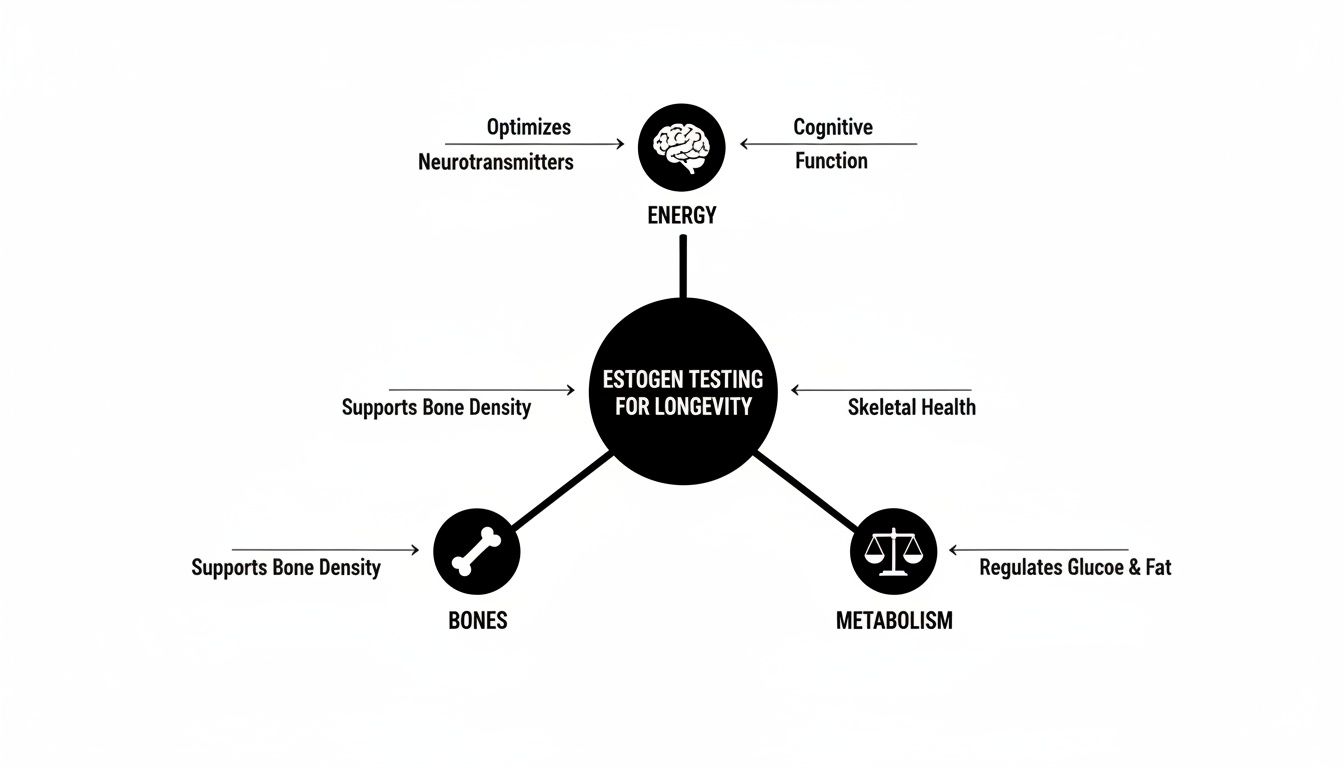
It’s clear that optimal estrogen levels aren't just for reproduction; they form the very foundation for vitality and a long, healthy life.
The Successor: Estrone (E1)
Next up is estrone, or E1. This is the weaker, secondary estrogen that becomes the main player after menopause. Your body primarily produces E1 in fat tissue and the adrenal glands.
Monitoring E1 becomes crucial for longevity during the perimenopause transition and beyond. While some E1 is normal, excessively high levels relative to other protective hormones can be a red flag for age-related health issues. It provides critical data for managing your health after menopause to support a longer healthspan.
Understanding the shift from estradiol to estrone dominance is key to navigating menopause as a longevity opportunity. This transition is a critical window where proactive monitoring can manage symptoms and support long-term health, ensuring vitality is maintained for decades to come.
The Specialist: Estriol (E3)
Finally, there’s estriol, E3, the specialist hormone that appears in significant amounts almost exclusively during pregnancy. Produced by the placenta, it's essential for a healthy pregnancy, but its levels are normally very low at all other times.
While E3 isn't a primary focus for most longevity plans, understanding it completes the picture of your body's complex hormonal ecosystem. A standard estrogen test will mainly focus on estradiol, but a grasp of E1 and E3 helps you appreciate how targeted hormonal optimisation truly is.
The Three Key Estrogens and Their Roles
To help you keep track, here's a quick reference guide to the different types of estrogen and their main functions for long-term health.
| Estrogen Type | Primary Role | Key Life Stage |
|---|---|---|
| Estradiol (E2) | Most potent estrogen; crucial for bone, brain, and heart health for longevity. | Reproductive years |
| Estrone (E1) | Becomes the main estrogen post-menopause; its balance is key for healthy aging. | Post-menopause |
| Estriol (E3) | The "pregnancy" estrogen; supports uterine growth and foetal development. | Pregnancy |
By decoding these three hormones, you move beyond surface-level health. You start to see how their delicate balance supports all of your body's systems, making a regular estrogen blood test an indispensable tool for anyone committed to a long and healthy life.
Who Really Needs an Estrogen Blood Test?
When we talk about an estrogen blood test, many people think of fertility or menopause. While true, seeing it only as a diagnostic tool misses the bigger picture for longevity. For anyone striving for peak performance and long-term health, it’s a strategic asset.
Think of it as getting a look under the bonnet. It’s not just about spotting problems; it’s about proactive tuning to extend your healthspan. It’s about building a solid foundation for your energy and vitality for years to come. From managing life’s transitions to optimising daily performance, understanding your estrogen levels unlocks a new level of control over your biology.
Navigating Key Life Transitions
Hormones are the conductors of life’s major phases, and an estrogen test provides a clear roadmap for optimising your health through each one.
- Fertility Planning: For anyone trying to conceive, tracking estradiol offers crucial insights into ovarian function and ovulation timing. It helps you move from guesswork to a data-driven strategy.
- Managing Perimenopause: This stage can feel like a rollercoaster. An estrogen test provides clarity, explaining why you feel the way you do and guiding you toward effective strategies to manage symptoms and set the stage for healthy aging.
- Monitoring Hormone Replacement Therapy (HRT): If you're on HRT, regular testing is essential. It ensures your dose is perfectly calibrated to relieve symptoms while protecting your long-term bone and heart health—a cornerstone of a longevity plan.
Getting this right matters. UK data on nearly two million women revealed that only 19.2% receive HRT. The numbers are even starker for certain groups, with lower rates in London (11.7%), non-white ethnic groups (15-8% lower), and deprived areas (11.0% compared to 24.4% in affluent postcodes). The British Menopause Society is clear: monitoring estradiol is key for getting symptoms under control. This highlights how vital accessible testing is for proactive, long-term health management.
The Strategic Edge for Athletes
In competitive sport, longevity means a longer, more successful career. Your biology is the ultimate playing field, and estrogen is a quiet but incredibly powerful player in sustained performance.
For an athlete, an estrogen blood test delivers actionable data that can directly impact their career longevity:
- Energy Metabolism: Balanced estrogen helps your body efficiently use fuel. This has a direct effect on endurance, keeping you performing at your peak for longer.
- Bone Strength: Estradiol is vital for maintaining bone density. For athletes, keeping estrogen in an optimal range is a core strategy for preventing career-threatening stress fractures.
- Recovery and Injury Prevention: Estrogen has anti-inflammatory properties that aid muscle recovery. Balanced levels mean less inflammation and a lower risk of injuries that can shorten a career.
By monitoring their levels, athletes can tweak their training and nutrition to work with their body's natural rhythms, building a more resilient and durable athletic career.
For a dedicated athlete, hormonal balance isn't an afterthought—it's a core component of their longevity strategy. Understanding estrogen levels is as fundamental as analysing gait or measuring VO2 max.
Optimising Performance for Professionals
In the high-stakes world of business, career longevity depends on cognitive sharpness, emotional resilience, and relentless energy. Hormones, especially estrogen, are the invisible architects behind these traits. For ambitious professionals, optimising hormonal health is a direct investment in a long and successful career.
When estrogen is balanced, it directly supports:
- Cognitive Sharpness: Estradiol is linked to neurotransmitter function, which underpins memory, focus, and mental clarity. Avoiding the "brain fog" from hormonal dips provides a significant professional edge over the long term.
- Stress Resilience: Estrogen helps regulate cortisol. With stable levels, you’re better equipped to handle high-pressure environments for years without burning out.
- Mood Stability: By influencing chemicals like serotonin, estrogen is a major player in emotional regulation. A stable mood supports better leadership and decision-making throughout your career.
For both men and women in demanding roles, an estrogen test offers a rare glimpse into their biological toolkit. It’s a way to move beyond just surviving stress and start proactively optimising the very systems that drive long-term success.
How to Prepare for Your Test and Get Accurate Results
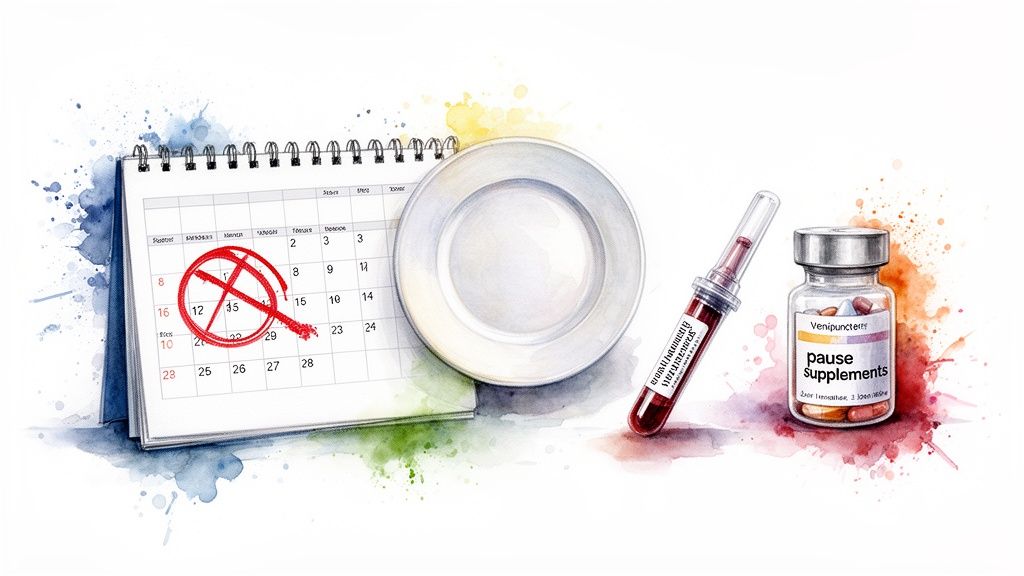
An estrogen blood test can provide phenomenal data for your longevity plan, but the quality of that data hinges on how you prepare. To get a truly accurate snapshot of your hormonal health, there are a few simple but crucial steps to take.
These preparations aren’t just box-ticking; they ensure the results reflect your genuine hormonal baseline, which is essential for making informed decisions about your long-term health.
Timing Your Test for Precision
For women who are still menstruating, timing is everything. Your estrogen levels fluctuate dramatically throughout your cycle. Testing on a random day gives you a number without the necessary context for long-term tracking.
To get the most meaningful data, the best time to test is during the early follicular phase. This is typically between days 2 and 4 of your cycle, with day one being the first day of your period. This is when your estrogen is at its lowest and most stable, providing a reliable baseline for comparison over time.
If you have irregular cycles or are post-menopausal, you can schedule your test for any day. The key then becomes consistency for any future tests to establish a reliable trend for your longevity plan.
Practical Steps Before Your Appointment
Beyond timing, a few other factors can influence your results. A little preparation in the 24-48 hours before your blood draw can make a huge difference to the accuracy of your long-term health data.
Here’s a straightforward checklist:
- Fasting: You’ll usually be asked to fast for 8-12 hours before your test (water is fine). This prevents food from temporarily altering metabolic markers that can interact with hormone readings.
- Pause Certain Supplements: Some supplements, especially biotin (Vitamin B7) or phytoestrogens, can interfere with laboratory assays. Stop taking these for at least 48 hours before your test.
- Manage Your Stress: High levels of cortisol, the stress hormone, can suppress estrogen production. Try to schedule your test on a relatively calm day and consider some deep breathing exercises beforehand to get a true baseline.
On top of preparing for this specific test, it's always helpful to understand general health testing principles to get the most out of any health investigation.
Why Venipuncture is the Gold Standard
How your blood is collected matters for accurate longevity planning. While finger-prick tests are convenient, they are more prone to contamination and can give less reliable results. For decisions that affect your long-term health, you need the most accurate data possible.
This is why venipuncture—a blood draw from a vein by a trained phlebotomist—is the undisputed gold standard. It provides a pure, stable sample of your circulating hormones, ensuring the results are precise and clinically valid. It's the superior method we use for Lola's at-home and in-clinic services. You can learn more about what to expect in our guide on how to prepare for phlebotomy.
A pivotal ICR London study confirmed that a single, properly collected estrogen blood test can reliably predict long-term oestradiol levels. This is especially vital for assessing long-term health risks in post-menopausal women. With a reliable venipuncture sample processed by UKAS-accredited labs, you can be confident your results truly represent your ongoing hormonal status, giving you a solid foundation for your longevity strategy.
Translating Your Test Results into Actionable Health Insights
Getting your lab report is a big moment, but the real power of your estrogen blood test comes from turning that raw data into a concrete plan for your health and longevity. Knowing your levels is the first step; understanding what they mean for your long-term wellness is where the real work begins.
This is where you shift from simply tracking health to actively optimising it. Think of your results as a personal roadmap, highlighting specific areas where lifestyle adjustments can make a huge difference to your energy, mood, and long-term cellular health. It's about taking control of your biological future.
Decoding Your Estradiol Levels
Estradiol (E2) is the most powerful form of estrogen and the key biomarker for hormonal health. While "normal" ranges can vary between labs, understanding the typical values provides vital context for your longevity journey. These numbers tell a story about where you are in life and how well your body is set up for healthy aging.
Before we dive in, if you want a complete masterclass on reading your lab reports, check out our guide on how to make sense of your blood test results explained for a UK audience.
Now, let's look at what's considered a typical range for estradiol.
Typical Estradiol (E2) Reference Ranges (pmol/L)
This table offers a guide to understanding normal estradiol levels across different life stages for both men and women. It's important to remember that these ranges can vary slightly between labs, so always view them as a helpful starting point for a conversation with your doctor.
| Individual | Phase / Condition | Typical Range (pmol/L) |
|---|---|---|
| Premenopausal Women | Follicular Phase (Days 2-4) | 70 - 530 |
| Premenopausal Women | Ovulation Phase | 230 - 1300 |
| Premenopausal Women | Luteal Phase | 120 - 900 |
| Postmenopausal Women | Not on HRT | < 100 |
| Men | N/A | < 150 |
These numbers provide a solid baseline, helping you and your healthcare provider interpret where your own levels sit within the broader picture of hormonal health and longevity.
What High or Low Estrogen Means for You
Your estrogen level is more than a figure on a page; it’s a direct reflection of your body's internal environment, influencing how you feel today and how well you will age.
High estrogen can manifest as bloating, mood swings, or stubborn weight gain. In the long run, chronically high estrogen can be a concern for your metabolic health.
On the other hand, low estrogen often shows up as fatigue, brain fog, hot flushes, and poor sleep. This is particularly crucial from a longevity perspective, as low estrogen is a major risk factor for reduced bone density and adverse changes to your cardiovascular health, both of which can shorten your healthspan.
This level of detailed insight is also reshaping preventative medicine. Groundbreaking UK research from Manchester University NHS Foundation Trust (MFT) has shown a highly sensitive estrogen blood test can identify which post-menopausal women at high risk of breast cancer will not benefit from the preventative drug anastrozole. The study found up to 25% of these women have low serum oestrogen levels, meaning they could avoid five years of unnecessary treatment. This drives home the critical role of precise estrogen testing in personalising long-term health strategies.
Actionable Steps for Hormonal Balance and Longevity
Armed with insights from your estrogen blood test, you can make targeted changes to support your body's natural rhythm and promote longevity. The goal is not drastic overhauls, but rather creating an internal environment where your hormones can thrive for years to come.
Here are practical steps focusing on the core pillars of longevity:
-
Targeted Nutritional Strategies: Fill your plate with fibre-rich foods like fruits, vegetables, and whole grains to help your body excrete excess estrogen. Cruciferous vegetables like broccoli and kale contain compounds that support liver detoxification pathways, essential for processing hormones and promoting cellular health.
-
Intelligent Exercise Protocols: Regular, moderate exercise helps maintain a healthy body composition, which is key because excess body fat can produce and store estrogen. A mix of strength training, cardio, and flexibility work is ideal for balancing hormones and building a resilient body for the long term.
-
Proactive Stress Reduction: Chronic stress and high cortisol levels disrupt your sex hormones and accelerate aging. Build daily stress-management practices into your routine, such as meditation, deep breathing, or time in nature. This helps regulate cortisol and supports healthy estrogen levels.
Think of your test results as your personal biological feedback. They aren't a final grade but rather a starting point for intelligent, targeted adjustments that compound over time to build a foundation for a longer, healthier life.
By translating these numbers into consistent daily actions, you harness the true power of your health data, turning insights into lasting wellness and peak performance for a lifetime.
Integrating Hormone Monitoring into Your Longevity Plan
A one-off estrogen blood test provides a valuable snapshot, but its real power for longevity comes from tracking it over time. Think of your hormonal health as a dynamic system, not a static picture. This mindset is key—it moves you from reacting to symptoms to proactively steering your health for the long haul.
It’s like managing a long-term investment. A single statement is useful, but it’s the trend over years that truly shapes your strategy. Regular hormone testing establishes your personal baseline and reveals patterns, letting you and your doctor make smart, precise tweaks to your wellness plan before a small imbalance becomes a bigger problem, thereby extending your healthspan.
This is the core of a modern longevity strategy: moving from a single test to a long-term partnership with your own health data. You're building a detailed biological story over time.
From Data Points to a Lifelong Strategy
When you monitor consistently, the numbers on a lab report transform into a powerful, personal feedback loop. Seeing how your estradiol levels shift in response to changes in diet, exercise, or stress gives you an incredible degree of control over your biology and your future health.
Taking this proactive stance allows you to:
- Spot Trends Early: Catch subtle hormonal drifts long before they turn into symptoms that impact your quality of life.
- Personalise Your Approach: See exactly how your body responds to lifestyle changes, helping you double down on what truly works for you.
- Make Smarter Decisions: Enter your doctor's office with rich data, making conversations about nutrition, supplements, or HRT far more productive and focused on long-term outcomes.
The ultimate aim is to weave this data seamlessly into your life, making health optimisation an intuitive and continuous part of your longevity plan.
Proactive hormone monitoring is the ultimate form of bio-individuality. It replaces generic health advice with a personalised roadmap based on your unique physiology, empowering you to build a resilient foundation for a longer, healthier life.
The Modern Approach to Consistent Testing
For this to become a sustainable habit, the process must be simple and reliable. Modern services have removed the old barriers to regular blood work. Gone are the days of rigid clinic schedules or long waits for referrals.
With Lola, you can book a professional phlebotomist to collect your sample at a time and place that suits you. The sample is analysed at a UKAS-accredited lab, guaranteeing the highest accuracy. Your results are delivered to an easy-to-use app, where you can track trends over time and read insights from a qualified doctor, empowering your longevity journey.
Alongside tracking key hormones, some people interested in longevity also look into specific peptides known for their potential to support healthy ageing. While these are no substitute for solid health fundamentals, the option to explore specific longevity peptides like Epitalon represents another layer of personalised health strategy. By combining consistent, data-driven insights from an estrogen blood test with targeted lifestyle choices, you’re putting yourself in the driver's seat of your own health, ready to live a longer, more optimised life.
Got Questions About Estrogen Testing? We’ve Got Answers
Thinking about hormone testing can feel overwhelming. Let's clear up some of the most common questions about using an estrogen blood test as a tool for long-term health and longevity.
How Often Should I Check My Estrogen Levels?
For a general longevity check-up, testing once a year is a great way to establish your baseline and track trends over time.
However, if you're managing specific symptoms, are on Hormone Replacement Therapy (HRT), or are an athlete optimising for career longevity, more frequent testing is beneficial. Your doctor might recommend a check every three to six months to ensure your strategy is effectively supporting your long-term health goals.
Do Men Really Need to Test Their Estrogen?
Yes, absolutely. While known as a 'female' hormone, estrogen is incredibly important for men's long-term health, playing a key role in sex drive, bone density, and cardiovascular wellness.
An imbalance where estrogen is too high relative to testosterone can hinder health goals and impact long-term vitality. A full hormone panel is therefore essential for any man serious about optimising his health for the long run.
When it comes to getting an accurate hormone reading, nothing beats a proper blood test taken from a vein. It’s the gold standard for a reason – it measures what’s actually circulating in your system, giving you and your doctor a reliable snapshot to work from.
Is a Blood Test Really Better Than Saliva or Urine Kits?
For making important decisions about your long-term health, a blood test is by far the most reliable choice. It directly measures the hormones circulating in your bloodstream, providing a precise and stable picture of your internal environment.
Saliva and urine tests can offer some information, but their results fluctuate significantly and are generally not considered accurate enough for clinical decisions, especially when optimising a longevity plan or managing HRT. For a clear, dependable strategy, you need the most accurate data you can get.
Ready to stop guessing and start knowing? Take control of your health with a precise, convenient estrogen blood test from Lola. We can send a professional phlebotomist to your home or you can visit a nearby clinic. You’ll get doctor-reviewed results you can truly trust. Start your journey to optimised health today.