


When you think about tracking your health, what comes to mind? Maybe it’s your weight, blood pressure, or a daily step count. But one of the most powerful metrics for understanding your long-term health, HbA1c, often flies under the radar.
So, what exactly is it? Formally known as glycated haemoglobin, HbA1c gives you a panoramic view of your average blood sugar levels over the last two to three months. It’s not just for managing diabetes; it's a vital sign for anyone serious about optimising their performance and longevity. Think of it as your body's metabolic report card.
Your Three-Month Blood Sugar Report Card
Trying to gauge your overall metabolic health from a single finger-prick glucose test is like trying to understand a novel by reading just one page. It gives you a snapshot - a useful, but fleeting, moment in time. You see where your blood sugar is right now, but you miss the bigger story.
The HbA1c test, on the other hand, is like reading the whole book. It reveals the complete narrative of your blood sugar control over the past few months. This gives you a far more reliable and meaningful picture of how your body is handling the sugar from your diet and lifestyle.
What Is Glycated Haemoglobin?
Let's break down the science in simple terms. Haemoglobin is a protein that lives inside your red blood cells, and its main job is to ferry oxygen around your body.
As these red blood cells travel through your bloodstream, sugar (glucose) naturally latches onto them. This process is called glycation. The more sugar circulating in your blood over time, the more of it will stick to your haemoglobin. The HbA1c test simply measures the percentage of your haemoglobin that has become "sugar-coated."
Because red blood cells live for about three months, this measurement provides a stable, long-term average.
An HbA1c result reflects your average blood glucose over the past 90 days, making it an incredibly useful measure for understanding long-term metabolic trends rather than short-term fluctuations.
This is precisely why HbA1c is a significant advantage for longevity. It cuts through the daily noise, the temporary blood sugar spikes from a meal or dips after a workout, to reveal the real, cumulative impact of your diet, exercise, stress, and sleep habits on your cellular ageing.
For a clearer picture, let's compare HbA1c with a standard glucose test.
Understanding Your Blood Sugar Metrics
| Metric | What It Measures | Timeframe |
|---|---|---|
| HbA1c | The percentage of haemoglobin coated in sugar. | A long-term average over the last 2-3 months. |
| Blood Glucose | The amount of sugar in your blood at a single moment. | A snapshot of the here and now. |
This table highlights the key difference: one gives you the immediate headline, while the other provides the in-depth feature story.
Why This Long-Term View Matters for Longevity
For busy professionals and athletes pushing for peak performance, knowing your HbA1c is non-negotiable. It’s a direct indicator of your metabolic efficiency and cellular health. Keeping your HbA1c in an optimal range is an actionable strategy for a longer, healthier life, with tangible benefits:
- Stable Energy Levels: When you understand your long-term glucose patterns, you can adjust your nutrition to sidestep those draining energy crashes and maintain focus all day long. This is a foundational step towards sustainable vitality.
- Reduced Inflammation: Persistently high blood sugar is a major trigger for chronic inflammation, a process that accelerates ageing and lays the groundwork for disease. Controlling your HbA1c is a direct way to combat this.
- Improved Cellular Health: By controlling glycation, you help protect your body’s cells and tissues from sugar-related damage, preserving their function and promoting longevity from the inside out.
Ultimately, your HbA1c isn't just a number to watch if you're worried about disease. It's a proactive tool that help you to make smarter, more sustainable lifestyle choices. It gives you the insight you need to build a solid foundation for vitality and turn your health data into a clear strategy for a longer, healthier life.
Decoding Your UK HbA1c Results for Longevity
Getting your HbA1c result back is an important moment, but just having the number isn’t the full story. The real value comes from understanding what it means for your long-term health and vitality, especially within the UK, where results are measured in millimoles per mole (mmol/mol).
This isn’t just about ticking a box to say you don’t have diabetes. Think of your HbA1c as a powerful insight into how your body is ageing on a cellular level. It transforms a simple data point into a roadmap for steering your healthspan.
The image below shows perfectly why HbA1c gives you that important long-term view, unlike a one-off glucose test.
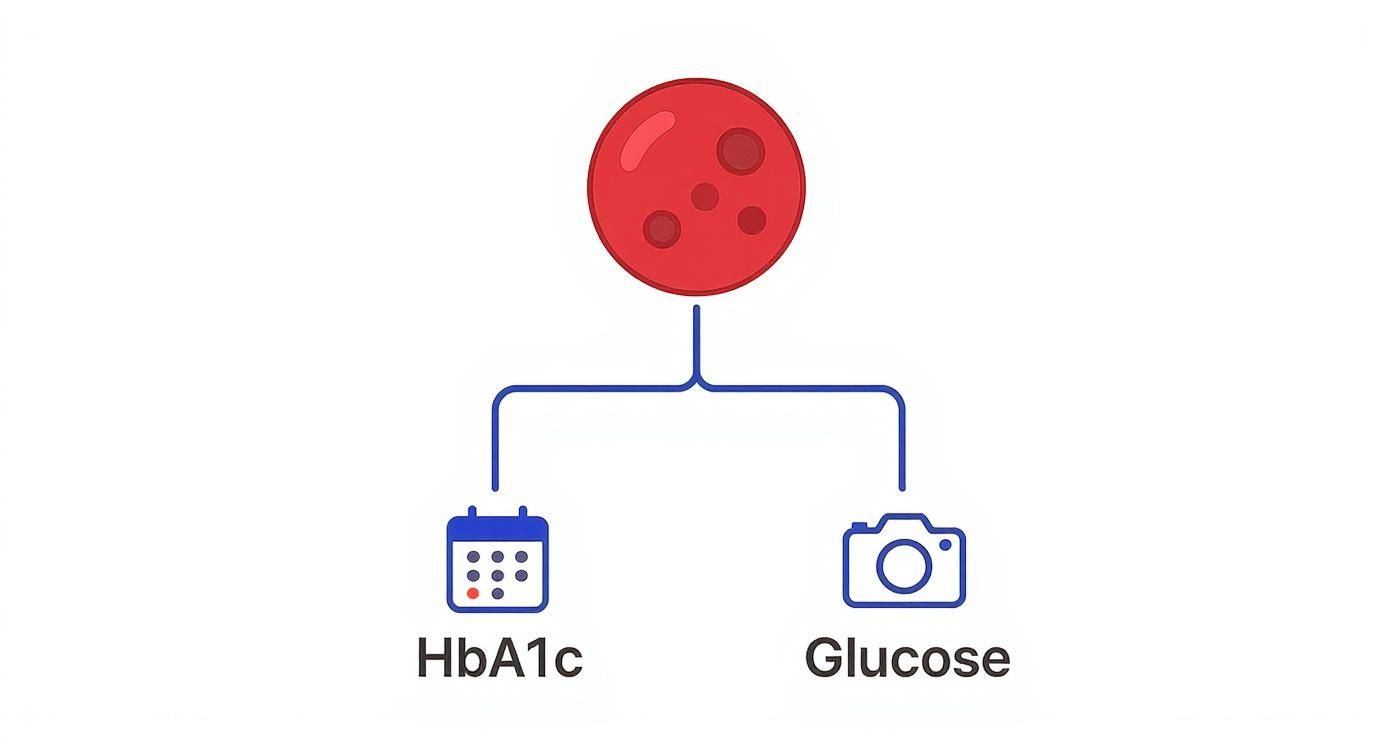
As you can see, a standard glucose test is just a snapshot in time. HbA1c, on the other hand, is more like a calendar, giving you a reliable average of your blood sugar over the past few months.
Interpreting the UK HbA1c Ranges
Here in the UK, HbA1c results fall into specific brackets. Knowing where you land is the first step, but if your goal is longevity, you need to look beyond the official labels.
Your HbA1c is more than a diagnostic tool - it’s a direct reflection of the cumulative metabolic stress on your body. Lowering it isn't just about managing risk; it's about preserving cellular function for a longer, healthier life.
The table below breaks down the standard classifications and, more importantly, what they mean for your long-term wellbeing.
UK HbA1c Levels and Longevity Implications
This table gives a clear breakdown of the UK HbA1c ranges and what they signify for your diabetes risk and overall long-term health.
| HbA1c Level (mmol/mol) | Official Classification | Impact on Long-Term Health |
|---|---|---|
| Below 34 | Optimal | Indicates minimal cellular damage from glycation, low inflammation, and an efficient metabolism. This is the sweet spot for longevity. |
| 34–41 | Normal | While considered healthy, the high end (41 mmol/mol) can be a yellow flag for creeping insulin resistance. A sign to optimise. |
| 42–47 | Pre-diabetes | A critical warning. Your body is struggling to manage blood sugar, which increases systemic inflammation and accelerates ageing. |
| 48 and above | Diabetes | Signals significant metabolic dysfunction and a much higher risk of long-term complications affecting your organs and healthspan. |
Looking at these ranges, it's clear that your result is a powerful piece of information you can act on.
To put this into perspective, for adults with type 1 diabetes in the UK, the ideal target is 48 mmol/mol or below. However, data from the National Diabetes Audit shows many adults have levels above 58 mmol/mol, signalling a much higher risk of complications.
Why Optimal Is Better Than Normal
The key takeaway for anyone serious about longevity is that ‘normal’ isn’t always optimal. A result at the top end of the normal range suggests your body is already dealing with a degree of metabolic strain, even if it hasn’t crossed an official diagnostic line.
This subtle but persistent rise in average blood sugar contributes to chronic, low-grade inflammation and oxidative stress. These are two of the fundamental drivers of ageing, affecting everything from your skin and cognitive function to your joint health and heart.
Aiming for the lower end of the normal range is a proactive strategy. By optimising your HbA1c, you’re making a direct investment in your future self - preserving your cells, protecting your organs, and maintaining the energy you need to perform at your best. To get a broader perspective, you can learn more from our complete guide to understanding your UK blood test results.
Lifestyle Strategies to Lower Your HbA1c
So, you’ve got your HbA1c number. What now? Knowing the score is one thing; changing it is another. Think of lowering your HbA1c not just as a way to dodge disease, but as a direct investment in your long-term vitality, cognitive sharpness, and physical performance. This is your playbook for taking control with specific, evidence-backed lifestyle changes that really move the needle.
The image below sums up the core pillars perfectly: smart nutrition, effective exercise, and quality sleep.

Forget the generic advice. We're diving into actionable tactics that deliver real results, helping you build a solid foundation for a longer, healthier life.
Master Your Plate for Metabolic Health
Your diet is easily the most powerful lever you can pull to influence your HbA1c. But this isn't about waging a war on sugar. A smarter, more sustainable approach focuses on the quality, makeup, and even the timing of your meals to keep your blood glucose stable.
A great starting point is to manage your carbohydrate intake intelligently. Instead of total elimination, prioritise complex, high-fibre carbs like leafy greens, legumes, and wholegrains. These foods act like a slow-release fuel, preventing the sharp glucose spikes that drive glycation and push up your HbA1c.
Of course, carbs are only part of the story. Pay close attention to what else is on your plate.
- Prioritise High-Quality Protein: Getting enough protein from sources like lean meat, fish, eggs, and tofu is vital for building and keeping muscle. Your muscles are your body's main storage unit for glucose, acting like a sponge that soaks up any excess from your bloodstream.
- use Dietary Fibre: The soluble fibre found in oats, beans, apples, and nuts is a significant advantage. It forms a gel-like substance in your gut that dramatically slows down sugar absorption after meals, providing a powerful buffer against glycation.
- Embrace Healthy Fats: Don't fear fat! Avocados, olive oil, and nuts help you feel full and have almost no impact on your blood sugar, making them an essential part of any metabolically healthy diet.
When you start structuring your meals around these principles, you create an internal environment that supports steady energy levels and minimises the metabolic stress that accelerates ageing.
Train Smart to Lower Blood Sugar
Exercise is non-negotiable for metabolic health, but how you train makes all the difference. Different kinds of movement offer unique benefits for taming your HbA1c, and combining a few key approaches will give you the best bang for your buck.
Resistance training is especially powerful. When you lift weights or do bodyweight exercises, you’re essentially building more "glucose sinks." Your muscles are the biggest consumer of glucose in your body, so the more muscle you have, the more efficient you become at clearing sugar from your blood.
Every single workout that builds muscle is an investment in your long-term blood sugar control. Stronger muscles create a bigger reservoir for glucose, taking the pressure off your system and directly lowering your HbA1c.
Beyond strength training, certain types of cardio are incredibly useful.
- Zone 2 Cardio: This is any sustained, low-to-moderate intensity activity where you can still hold a conversation - think brisk walking, jogging, or cycling. Training in Zone 2 improves your mitochondrial efficiency, basically upgrading your cells' ability to burn fat for fuel instead of relying only on glucose. This makes you more metabolically flexible.
- High-Intensity Interval Training (HIIT): Short, all-out bursts of effort followed by recovery periods can rapidly improve your insulin sensitivity. This means your cells get much better at listening to insulin's signal to take up glucose from the blood.
A balanced routine that includes two to three resistance training sessions and two to three Zone 2 cardio sessions each week is a potent formula for optimising your metabolic health and bringing that HbA1c down.
The Overlooked Drivers: Sleep and Stress
You can have the perfect diet and a brilliant exercise plan, but if you ignore sleep and stress, your HbA1c will show it. These two factors are often the hidden culprits behind stubbornly high blood sugar, and getting them under control is a must for anyone serious about longevity.
Poor sleep throws your metabolic health into chaos. Even a single night of bad rest can cause temporary insulin resistance the next day, making your body less effective at handling blood sugar. Over time, chronic sleep deprivation is a major contributor to a higher HbA1c.
Chronic stress is just as bad. When you're stressed, your body pumps out the hormone cortisol. Cortisol’s job is to get you ready for "fight or flight" by flooding your bloodstream with glucose for a quick energy boost. But in our modern world, where stress is often psychological and ongoing, this leads to constantly elevated blood sugar, which directly increases glycation and your HbA1c.
Managing these factors isn't a luxury; it's a necessity. Simple habits like a consistent sleep schedule, a relaxing bedtime routine, and a few minutes of mindfulness or meditation can have a massive impact on your cortisol levels and, in turn, your long-term metabolic health.
Hidden Factors That Can Influence Your HbA1c
You’ve dialled in your diet, your exercise is consistent, and you’re prioritising sleep - but your HbA1c result still comes back as a surprise. If the number doesn't seem to reflect all the hard work you're putting in, it’s worth knowing that other factors can be quietly influencing the result.
Understanding these variables is important. It help you to have a much more productive conversation with your doctor and helps you build a health strategy that’s genuinely tailored to your unique biology, not just a generic plan.
Beyond Lifestyle: The Under-The-Radar Influencers
Sometimes, what's happening inside your body can skew your HbA1c, giving you a reading that's either falsely high or low. These aren't a reflection of your lifestyle choices, but they’re critical for interpreting your results correctly.
For instance, any medical condition that changes the normal lifespan of your red blood cells can distort the measurement entirely.
An HbA1c result is only as accurate as the red blood cells it's measured on. Conditions affecting red blood cell turnover or haemoglobin structure can give you a misleading picture of your true average blood sugar.
This is why looking at the full health picture is so important. Here are a few key biological factors that can throw off your HbA1c:
- Anaemia: With iron deficiency anaemia, your body tends to hold onto red blood cells for longer than usual. This extended lifespan gives them more time to accumulate glucose, potentially leading to a falsely elevated HbA1c.
- Kidney or Liver Issues: Significant kidney or liver disease can disrupt the production and survival of red blood cells, which can easily lead to an inaccurate result.
- Haemoglobin Variants: Certain genetic traits, like sickle cell trait, are known as haemoglobinopathies. These can directly interfere with some HbA1c testing methods, making the readings unreliable.
The Impact of Medications and Ageing
It’s not just underlying health conditions. The medications you take, and even the natural process of getting older, can shift how your body handles sugar and, in turn, affect your HbA1c.
Medications such as corticosteroids or certain antipsychotics, for example, are well-known for causing sharp rises in blood glucose. If you’re taking one of these, a higher HbA1c might be more about the medication’s side effects than your lifestyle.
Ageing also plays a big part. UK-based research has uncovered clear patterns in HbA1c levels across different age groups. One major study found that younger adults (18–30 years) with newly diagnosed type 2 diabetes had a high average HbA1c of 62 mmol/mol, which even worsened slightly over five years. In contrast, those aged 80 and above started with lower levels (52 mmol/mol) that actually improved over time. It’s a fascinating insight into how our glucose control changes throughout our lives. You can read the full research on these age-related HbA1c trends.
All this complexity really highlights why a holistic view is non-negotiable. An unexpected HbA1c reading might not mean your diet isn't working; it could be a subtle sign of creeping insulin resistance, where your body’s cells just aren't responding to insulin as they should. Getting to grips with this is a vital first step, which you can explore further in our guide on how to check for insulin resistance. By looking at the bigger picture, you and your doctor can get to the root cause and make the right adjustments to your long-term health strategy.
How to Accurately Monitor Your Metabolic Health
For professionals and athletes serious about optimising their health for the long haul, guesswork just won't cut it. Vague estimates and patchy data are useless when you’re trying to fine-tune performance or build a solid foundation for vitality. To really take control, you need precise, reliable information about what’s happening inside your body—and that starts with how you measure your HbA1c.
The image below shows the kind of clinical setting where precision is paramount, setting the gold standard for accurate health data.
This level of accuracy isn't just for diagnosing a condition; it's essential for anyone who genuinely wants to track their progress and make truly informed decisions about their health.
The Gold Standard: Venipuncture vs Finger Prick
When it comes to measuring HbA1c, not all tests are created equal. You’re probably familiar with the simple finger-prick tests. They're convenient, sure, but they can sometimes lack the pinpoint accuracy needed for true health optimisation. They give you a quick snapshot, but are prone to issues like sample contamination or simple user error, which can throw off the results.
For the most dependable and actionable data, a venipuncture blood draw is the undisputed gold standard. This is the method used in hospitals and clinics, where a trained phlebotomist draws blood directly from a vein.
This professional approach guarantees a larger, cleaner sample that’s then analysed in a UKAS-accredited laboratory. The process strips away the variables that can skew a finger-prick test, ensuring the number you get is a true reflection of your average blood sugar over the last three months.
When your goal is longevity, precision matters. A venipuncture test gives you the confidence that your data is accurate, allowing you to trust the insights you gain and measure the true impact of your lifestyle changes.
This distinction is important. Relying on less accurate data is like trying to navigate with a faulty compass—you might be putting in the effort, but you won't know if you're actually heading in the right direction. For anyone investing time and energy into their diet, exercise, and sleep, using the best testing method available is simply non-negotiable.
Turning Monitoring into a Proactive Strategy
Consistent, accurate monitoring transforms your HbA1c from a passive number into an active tool for steering your health goals. When you track your levels with high-quality testing, you create a powerful feedback loop that help you to make smarter, more effective decisions.
This proactive approach means you can see the direct results of your hard work. For instance, you can measure exactly how introducing resistance training or adjusting your carb timing has impacted your average blood sugar.
Here’s how regular, precise tracking supports your longevity goals:
- Identifies What Works: See tangible proof of which lifestyle changes are successfully lowering your HbA1c, allowing you to double down on what’s effective.
- Flags Early Warnings: Catch upward trends in your HbA1c early on, long before they creep into the pre-diabetic range, giving you plenty of time to make adjustments.
- Fine-Tunes Your Approach: Use the data to make small, targeted tweaks to your routine for maximum benefit, rather than making drastic changes based on guesswork.
By embracing this data-driven mindset, you shift from simply reacting to health issues to proactively building a future of sustained energy and vitality. This is where modern health solutions come in, and you can learn more about getting precise insights from home in our guide to at-home health testing.
Beyond HbA1c, keeping an eye on metrics like your Body Mass Index can offer a broader view of your metabolic health. You can easily check your BMI using a BMI calculator. in practice, combining accurate HbA1c data with other key health indicators gives you a complete picture, turning monitoring into a clear, actionable plan for a longer, more vibrant life.
Your Action Plan for Long-Term Wellness
This isn't just about dodging a diagnosis. It’s about building a solid foundation for a vibrant, high-performance future. The question "what is HbA1c?" becomes less of a clinical query and more of a useful measure for self-improvement. Truthfully, your HbA1c is one of the most direct biomarkers you can track for a long and healthy life.
It neatly bundles months of your lifestyle choices, what you eat, how you move, your sleep quality, and even how you handle stress, into a single, powerful number. Getting to grips with this metric gives you a clear window into how your daily habits are shaping your health at a cellular level. It takes the guesswork out of the equation and puts data-driven decisions in your hands.
Building Your Longevity Strategy
The path forward is clear: commit to precise, regular monitoring to figure out your personal baseline and track your progress with real accuracy. This is what allows you to make targeted, sustainable changes to your lifestyle and actually see the results.
Managing your HbA1c is a direct investment in your future self. It impacts everything from your daily energy and cognitive clarity to your body's resilience against age-related decline.
Think of it like this: every positive step you take is a deposit into your long-term wellness account. Here’s what you need to focus on:
- Know Your Numbers: Commit to regular, high-precision venipuncture testing to get a true picture of your metabolic health.
- Make Targeted Changes: Focus on smart nutrition, consistent exercise, and restorative sleep to directly influence your results.
- Monitor and Adjust: Use your trend data to see what's working and fine-tune your approach for continuous improvement.
in the end, this is about empowerment. You have a direct hand in how you age. your path to optimised health and sustained performance starts with one simple, yet profound, first step: knowing your baseline HbA1c.
Your HbA1c Questions Answered
Getting to grips with HbA1c is a significant advantage for long-term health. Let's break down some common questions about this key biomarker and what it means for your personal health strategy.
How Often Should I Test My HbA1c for Longevity?
For a general health check and to establish your personal baseline, testing your HbA1c once or twice a year is a sensible approach. This gives you a clear, long-range view of your metabolic health without overdoing it.
However, if you're actively making big lifestyle changes, like overhauling your diet or starting a new fitness routine, you might want to test more often. Checking in every three to six months can provide brilliant feedback, showing you exactly how your hard work is paying off by influencing your average blood sugar.
Can My HbA1c Be High Even If I Feel Healthy?
Yes, and this is a important point. High blood sugar often flies under the radar with no obvious symptoms in the early stages. All the while, it can be silently causing inflammation and damaging cells.
This is precisely why proactive testing is so important for prevention. By the time you start noticing symptoms, the underlying problems are usually well-established. Regular monitoring lets you spot and reverse negative trends early, long before they escalate.
Does HbA1c Affect Athletic Performance?
Absolutely. For any athlete, from weekend warriors to elite competitors, stable blood sugar is fundamental to performance. A healthy HbA1c is a direct reflection of that stability.
When your blood sugar is consistent, you get a steady supply of energy, which helps you avoid those performance-killing crashes during a workout or event. It also supports faster recovery and dials down the systemic inflammation that can contribute to injury and burnout. Put simply, managing your blood sugar is a core strategy for revealing your athletic potential.
If you're keen to learn more about health topics like this, exploring comprehensive patient education resources can offer deeper insights. For instance, in the UK, HbA1c is a vital measure for children with type 1 diabetes. The median HbA1c for this group has encouragingly improved to 60 mmol/mol in 2023/24, down from a peak of 69 mmol/mol a decade ago, as highlighted in these insights about diabetes management.
Ready to take control of your metabolic health? With Lola, you can book a professional venipuncture blood test at home or a nearby clinic for a precise, reliable HbA1c measurement. Get the accurate data you need to build a powerful longevity strategy by visiting https://lolahealth.com.
Test This Biomarker at Home
This biomarker is included in our HbA1c Test and Core Health 45 — results in 2-3 working days with GP-reviewed insights.
At-Home Blood Testing
Check your levels from home
Professional phlebotomist visit. Doctor-reviewed results in 2-5 days. Track your health with comprehensive blood panels.
→45-70 biomarkers tested · Venous blood draw · From £130