


Tackling stress at work is about so much more than just feeling better in the moment. It’s a fundamental part of looking after your long-term health and, frankly, your longevity. The endless cycle of deadlines, high-pressure meetings, and constant demands isn't just mentally draining; it sets off a chain of physical reactions that can genuinely speed up the ageing process.
Being proactive isn't just an option; it's a core strategy for a longer, healthier life.
Why Workplace Stress is a Serious Threat to Your Longevity
Let's get past the usual advice that stress is simply "bad for you" and look at what's actually happening inside your body. When you're constantly under pressure, your system is flooded with stress hormones like cortisol. This isn't just a fleeting feeling of being frazzled; it's a biological state that, when chronic, poses a direct threat to your lifespan and healthspan.
This constant state of high alert triggers a cascade of negative effects that directly impact your longevity.
- Hormonal Chaos: Persistent stress keeps your cortisol levels abnormally high, which can wreak havoc on your sleep, metabolism, and immune system. We take a deeper look at the signs and effects of this in our guide on what is high cortisol.
- Chronic Inflammation: The body’s stress response can lead to a low-grade, simmering inflammation throughout your body. This is now understood to be a key driver behind many age-related diseases.
- Accelerated Ageing: Chronic stress shortens telomeres - the protective caps on the ends of our chromosomes. Shorter telomeres are a well-established biomarker of faster biological ageing, meaning stress literally makes your cells older.
The Scale of the Problem in the UK
This isn't just a personal battle; it's a massive issue across the country. The Health and Safety Executive (HSE) recently reported a staggering 964,000 cases of ill health in the UK directly linked to work-related stress, depression, or anxiety.
This crisis leads to millions of lost working days every single year. It’s a clear sign that unmanaged stress is a mainstream risk, not just to our individual health but to the economy as a whole.
The real shift happens when you stop seeing stress management as a 'soft skill' and start treating it as a core part of your longevity strategy - just as vital as nutrition or exercise. To fight back against its long-term damage, you need a proactive, data-informed approach. That’s how you move from just coping with stress to actively preventing the biological harm it causes.
Discovering Your Personal Stress Signature
To truly manage workplace stress for longevity, you have to look beyond just feeling tired or "burnt out." The key is to understand how stress specifically impacts your body's biology. We're talking about getting an objective picture of what that pressure at work is actually doing inside you - what we can call your personal Stress Signature.
Think of this signature as a detailed map of your body’s internal reaction to workplace demands, revealed through measurable biomarkers in your blood. These markers tell the true story happening beneath the surface, giving you concrete insights to protect your long-term health and slow down the ageing process.
This diagram shows just how far-reaching the effects of stress can be, impacting everything from your hormones and inflammation levels to the very speed at which your cells age.
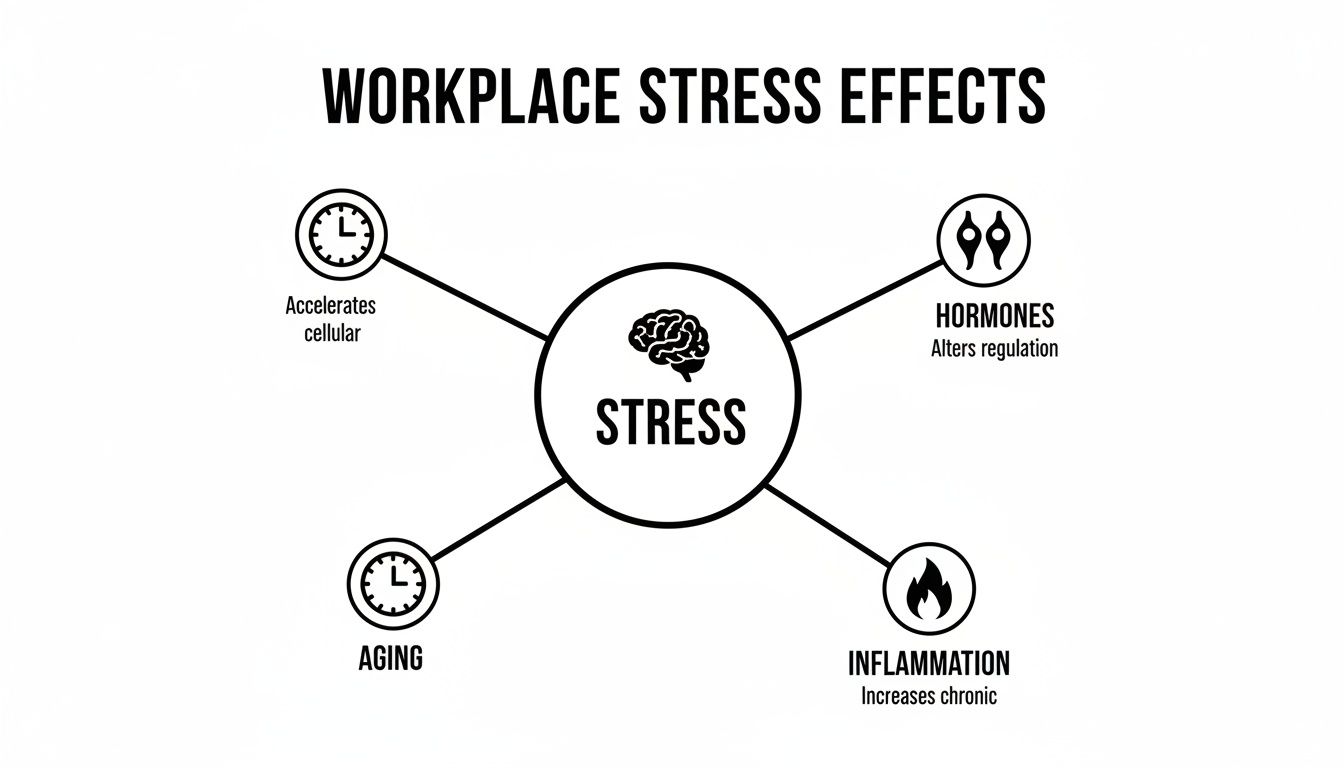
As you can see, stress isn't just one problem. It’s a trigger that sets off a domino effect of systemic issues, all of which can seriously compromise your healthspan.
Key Markers in Your Stress Signature
So, where do you start? Understanding your signature means looking at the right data points. While a full panel gives the most complete picture, a few key biomarkers offer a powerful snapshot of how your body is coping and its trajectory for long-term health.
- Cortisol: Known as the "stress hormone," cortisol is essential for our fight-or-flight response. When it's chronically elevated due to workplace demands, it accelerates ageing. Tracking your cortisol levels shows whether your body is stuck in a state that is detrimental to longevity.
- hs-CRP (High-Sensitivity C-Reactive Protein): This is one of the best indicators of inflammation in your body. We know that long-term psychological stress fuels low-grade, chronic inflammation—a condition linked to nearly every age-related disease. A high hs-CRP reading is an early warning that stress is causing silent, systemic damage.
- Key Nutrients (e.g., Vitamin D, B12, Magnesium): Stress is a resource hog. It doesn't just add bad things; it also burns through your essential reserves needed for healthy ageing. Magnesium, for instance, is important for calming the nervous system but gets depleted rapidly when you're stressed, impairing cellular repair and recovery.
Translating Data into Longevity Insights
This is where the science of biomarkers really shines. The table below breaks down some of the most important stress-related markers, explaining what they do and why monitoring them is so important for your longevity.
Key Stress Biomarkers and Their Impact
| Biomarker | Function & Impact of Stress | Why It Matters for Longevity |
|---|---|---|
| Cortisol | Regulates stress response, metabolism, and sleep. Chronic stress leads to dysregulation (either too high or too low), disrupting sleep, immunity, and cognitive function. | Sustained high cortisol accelerates cellular ageing and increases the risk of metabolic syndrome and cardiovascular disease. |
| hs-CRP | A sensitive marker for systemic inflammation. Psychological stress is a powerful trigger for chronic, low-grade inflammation. | Chronic inflammation is a root cause of most age-related diseases, including heart disease, diabetes, and neurodegenerative conditions. |
| HbA1c | Measures average blood glucose over 3 months. Stress hormones raise blood sugar, and chronic stress can lead to insulin resistance. | Poor blood sugar control is a direct path to metabolic dysfunction, type 2 diabetes, and accelerated vascular ageing. |
| Magnesium | A vital mineral for muscle relaxation and nervous system regulation. It gets rapidly depleted during periods of high stress. | Low magnesium levels are linked to anxiety, poor sleep, and muscle tension, creating a feedback loop that worsens the stress response over time. |
By testing these markers, you move from guesswork to an evidence-based understanding of your body's status.
Consider a project manager who feels "fine" but is propped up by caffeine. Their bloodwork might reveal chronically high cortisol, elevated hs-CRP, and depleted magnesium. This isn't just a tough month; it's a biological alarm bell, warning of an accelerated path towards burnout and age-related health issues.
By making your invisible stress visible with biomarker data, you fundamentally change your approach from reactive to proactive. You can finally connect your work habits directly to your biological health, arming yourself with the specific information needed to make targeted changes that truly protect your health for the long haul.
Daily Tactics to Immediately Lower Your Stress Response
Knowing your stress signature is the first step. The next is learning to manage your physiology in the heat of the moment. When caught in a high-pressure situation, you need practical, evidence-backed strategies that can calm your nervous system and halt the damaging biological cascade. These daily tactics are designed to build resilience and protect your body over the long term.
The goal is to shift from being constantly reactive to thoughtfully responsive. By weaving small, consistent actions into your day, you build a powerful defence against the slow, creeping damage of chronic stress, protecting not just your performance today, but your healthspan for decades to come.

In-the-Moment Resets for Immediate Relief
When you feel that familiar wave of overwhelm, your heart pounding, thoughts scattering, you have the power to intervene. Specific breathing techniques are incredibly effective because they send a direct signal to your brain to exit the "fight-or-flight" state, immediately lowering cortisol.
Here are a couple of my go-to methods:
-
The Physiological Sigh: This is a powerful, science-backed tool. It’s two quick inhales through your nose followed by a long, slow exhale through your mouth. This simple action is one of the fastest ways to offload carbon dioxide and physically slow your heart rate, stopping the stress response in its tracks.
-
Box Breathing: A classic for a reason, and a favourite of elite performers. Inhale for a count of four, hold for four, exhale for four, and hold again for four. It forces a deliberate rhythm onto your breathing, grounding you and pulling your focus away from the stressor. Mastering this is a huge step in protecting your brain and body from daily wear and tear.
Building Daily De-Stressing Habits
While quick resets are lifesavers, long-term stress management is all about building resilience through daily habits. These are small, non-negotiable routines that compound over time, creating a solid buffer against workplace pressure and its long-term health consequences.
A great place to start is with a dedicated "shutdown ritual" to create a clear boundary between work and home. It can be as simple as closing all your work tabs, spending two minutes tidying your desk, and jotting down your top three priorities for tomorrow. This small act tells your brain the workday is done, helping to lower evening cortisol levels, which is important for restorative sleep.
These practices are more urgent than ever. A recent Mental Health UK Burnout Report revealed that 91% of adults had experienced high or extreme stress in the last year. Even more concerning, about a third of them felt this pressure “always” or “often.”
Strategic Breaks and Recovery Practices
Your brain wasn't built for eight hours of non-stop focus. Strategic micro-breaks are essential for preventing the cumulative build-up of stress hormones.
The Pomodoro Technique is a brilliant way to structure this: work in focused 25-minute sprints, then take a five-minute break. The key is to completely step away from your screen. Get up, stretch, look out a window—anything that allows your nervous system a moment of recovery.
Beyond quick breaks, integrating deeper recovery methods can make a massive difference to your longevity. For instance, practices like regular sauna use for stress relief and recovery can significantly lower inflammation and help regulate your nervous system. These practices build a more strong foundation, making you better equipped to handle daily pressures without the long-term biological cost.
Designing a Workday That Works for You
While coping techniques are useful, they are reactive. A true longevity-focused approach is proactive. It means redesigning your workday to prevent stress from accumulating in the first place.
It's about shifting from being constantly on the defence to proactively creating a work environment that supports your health. Individual coping skills can only do so much if your daily schedule is the source of the chronic pressure. Taking back control starts with being deliberate about how you manage your time, energy, and communication.
Taming Your Time and Attention
One of the biggest modern stressors is the never-ending stream of notifications. Those constant pings from Slack, Teams, and email keep your nervous system in a state of high alert, making deep, focused work impossible and contributing to chronically elevated cortisol.
The best way to fight back is to embrace asynchronous communication. This simply means you create dedicated chunks of time for checking messages instead of letting them run your day. Try setting aside two or three specific slots to deal with your inbox and DMs, and for the rest of the day, keep those apps closed.
This one small change is a powerful longevity tool. It allows for uninterrupted periods of 'deep work,' reducing cognitive load and the associated stress. When you block out these sessions in your calendar, you're not just organising your day; you're actively protecting your brain health.
Taking Back Your Calendar
Endless meetings are another huge energy drain. A calendar crammed with back-to-back calls leaves zero time for actual work, forcing you to catch up late at night and sacrificing important recovery time.
Before you click 'accept', ask yourself: "Does this meeting have a clear agenda, a specific purpose, and are all the right people there?" If the answer isn't a firm yes, it's completely okay to politely decline or suggest an email thread instead.
Learning to say a graceful "no" is one of the most important skills for a sustainable, long career. It’s about protecting your time and energy to prevent the burnout that can take years off your life. For anyone who struggles with this, a comprehensive guide to overcoming burnout at work offers some fantastic, practical frameworks.
Setting Rock-Solid Professional Boundaries
With remote and hybrid work blurring the lines between work and personal life, firm boundaries are non-negotiable for long-term health. A low-stress workday depends on your ability to set and maintain clear limits on your availability.
Here are a few simple but effective ways to start:
- Define Your "On" Hours: Make your working hours crystal clear in your email signature and chat status.
- Truly Log Off: When the workday is done, log out of all work apps on your phone and computer to allow your nervous system to fully switch off.
- Communicate Your Limits: Let your manager and team know your boundaries professionally. For instance, tell them you won't be checking emails after 6 p.m. to protect your personal recovery time.
These aren't moves to get out of work; they're strategies for sustainable performance. By building this structure, you create a buffer against the chronic stress that accelerates ageing. Of course, employers play a huge role here too. For ideas on how they can contribute, these workplace wellness program ideas are a great place to start.
The Three Pillars of Stress Resilience
Tweaking your workday is a fantastic start, but to build true, lasting resilience, we need to look beyond the office. The choices you make every day, how you sleep, what you eat, and how you move, form the bedrock of your ability to handle pressure without sacrificing your long-term health.
Think of sleep, nutrition, and exercise not as chores, but as the three core pillars supporting your longevity. These directly influence your body’s internal chemistry, including the very stress hormones that drive ageing. Getting them right means you're building a physiological fortress against stress.
Pillar 1: Reclaiming Your Sleep
Quality sleep is arguably the most useful measure for stress management and longevity. While you're asleep, your brain clears out metabolic waste and, critically, regulates your cortisol levels for the day ahead. Poor sleep means you start the day with a biological disadvantage.
Aiming for eight hours isn’t the full story; the real magic is in the quality and consistency.
To get there, create a non-negotiable wind-down routine. About an hour before you plan to sleep, dim the lights and put all screens away. This signals to your brain that it's time to ramp up melatonin production, the sleep hormone that acts as a natural counterbalance to cortisol, promoting cellular repair.
Pillar 2: Fuelling Your Body, Not Your Stress
The food on your plate can either fuel the stress response or help dismantle it. A diet loaded with processed foods, sugar, and refined carbs can send your cortisol levels soaring and drive up inflammation, accelerating the ageing process.
Conversely, an anti-inflammatory diet stabilises your mood and provides the raw materials your body needs for resilience. Focus on incorporating these key elements for a long, healthy life:
- Omega-3 Fatty Acids: Find them in oily fish like salmon and mackerel. These healthy fats are proven to reduce both anxiety and inflammation.
- Magnesium-Rich Foods: Think leafy greens, nuts, and seeds. Magnesium is a brilliant mineral for calming the nervous system, but it gets depleted fast when you’re under stress.
- Complex Carbohydrates: Foods like oats and sweet potatoes provide a slow, steady supply of energy, preventing the blood sugar crashes that exacerbate the stress response.
By making conscious nutritional choices, you're directly supporting your body’s ability to maintain hormonal balance. When we see a client’s inflammation markers (like hs-CRP) drop, it's almost always a direct reflection of improvements in diet and sleep, showing a real reduction in their biological age.
Pillar 3: Moving With Purpose
Exercise is an incredibly effective way to metabolise excess stress hormones like adrenaline and cortisol, essentially "burning off" their damaging effects. Different types of movement offer different longevity benefits.
A high-intensity workout is fantastic for discharging tension after a high-pressure day. But restorative practices like yoga or a gentle walk in nature are equally important. These activities activate your parasympathetic nervous system, guiding your body into a state of "rest and digest," which is essential for long-term recovery and cellular repair.
The key is to listen to your body and choose the movement that serves your recovery needs on any given day.
Evidence from UK workplace surveys shows that while our individual actions are powerful, they’re most effective when backed by organisational change. Frustratingly, only about 32% of working adults say their workplace has clear plans in place to help prevent burnout.
This underscores the need for a two-pronged approach. You must pair these personal health strategies with proactive monitoring, using blood tests to track markers of ageing, energy, and recovery, so you can adjust your lifestyle before stress causes irreversible damage. You can learn more about how to identify the signs of work-related stress on livecareer.co.uk.
Got Questions About Tackling Workplace Stress?
It’s one thing to read about managing stress, but putting it into practice for long-term health is another story. You're bound to have questions. Let's dig into some of the most common ones.
How Long Until I Actually Feel Less Stressed?
You can get a quick win almost immediately. Techniques like the physiological sigh can bring a sense of calm in moments. But for the deep, biological changes that protect your longevity, you need to play the long game.
After a week of consistent effort, you might notice you're less reactive. The real magic, however, happens over months. From a biological standpoint, it can take 3-6 months of consistent habits for your bloodwork to show positive changes, like lower cortisol and reduced inflammation. This isn't a quick fix; it's about building a sustainable lifestyle that promotes a longer healthspan.
But What If My Job Is Just… Stressful?
Many high-performance jobs are inherently pressure-cookers. You can’t just eliminate the pressure. So, what is the longevity-focused strategy?
You shift your focus from eliminating stress to mastering recovery. You can’t control an urgent client demand, but you can control your bedtime, your nutrition, and whether you take a proper break. Think like a professional athlete: they don't avoid intense training; they get incredibly strategic about their recovery to prevent injury and extend their careers. Your career is no different.
The goal isn't a stress-free career, which is a fantasy for most ambitious people. The real goal is to become an expert at managing your body’s response to stress so it doesn't silently sabotage your health and shorten your life.
Can I Really Make a Difference Without My Manager's Help?
Absolutely. While a supportive boss is a huge plus, you have more power over your longevity than you think. The foundational pillars of your resilience, your sleep, nutrition, and exercise, are entirely within your control. You don’t need permission to time-block your day, turn off notifications, or protect your lunch break.
Start with what you can control. By building these personal habits, you create a powerful buffer against external chaos. It makes you far less vulnerable to a toxic work environment and puts you in the driver's seat of your own healthspan, regardless of your manager.
Stress-Tracking Apps or Blood Tests: Which Is Better?
They serve different purposes. A stress-tracking app is fantastic for day-to-day awareness. It helps you connect a bad night's sleep to a less productive afternoon, which is great for building better habits.
But for an objective look at how stress is affecting your long-term health, nothing beats biomarker testing. Seeing your actual cortisol rhythm, your inflammation levels (hs-CRP), or nutrient deficiencies gives you undeniable data on your biological age. It takes you from thinking you’re handling the pressure to knowing how your body is responding. That's the information you need to make changes that genuinely protect your future.
Ready to stop guessing and start measuring? At Lola, we provide a clear, scientific picture of your body's response to stress. With at-home blood testing and personalised insights, you can finally connect your work life to your long-term health. Take control of your wellbeing today.
At-Home Blood Testing
Check your levels from home
Professional phlebotomist visit. Doctor-reviewed results in 2-5 days. Track your health with comprehensive blood panels.
→45-70 biomarkers tested · Venous blood draw · From £130