


Vitamin and mineral deficiency tests are blood tests that measure the levels of essential micronutrients in your system. They provide a scientific snapshot of your nutritional status, helping you identify specific shortfalls before they can compromise your long-term health and accelerate the ageing process.
Why Micronutrients Are Your Longevity Blueprint
When we talk about health, it's easy to get caught up in the big picture—diet, exercise, sleep. But the real secret to long-term wellness and longevity is happening at a microscopic level, in the world of vitamins and minerals. Think of these micronutrients as the essential architects and engineers working tirelessly to maintain your body's most critical functions for a longer, healthier life.
Imagine your body is a high-performance car. Proteins and fats are the fuel that makes it go, but micronutrients are the specialised oils, fluids, and spark plugs keeping the engine in pristine condition for the long haul. Without them, performance dips, and the engine starts to wear down much faster. This is precisely why vitamin and mineral deficiency tests are such a powerful tool in your longevity arsenal.
Moving Beyond Preventing Sickness to Promoting Healthspan
For a long time, deficiency tests were seen mainly as a way to diagnose illness. Now, we see them as a proactive tool to map out your unique biochemical needs for optimal ageing. The goal has shifted from just avoiding disease to achieving peak performance for a longer, healthier life. Even subtle imbalances, often too small to trigger obvious symptoms, can quietly disrupt the vital processes that dictate how well you age.
These tests help you switch from reactive healthcare to proactive self-care. Instead of waiting for a problem to pop up, you can find and fix slight imbalances now, building up your body's resilience for the years ahead.
These behind-the-scenes processes are absolutely fundamental to healthy ageing:
- DNA Repair: Certain vitamins are crucial partners for the enzymes that mend daily damage to our genetic code, protecting your blueprint for life.
- Cellular Energy: Minerals like magnesium are non-negotiable for producing ATP, the energy that powers every single cell and slows age-related fatigue.
- Inflammation Control: Nutrients such as Vitamin D help keep your immune system in check, taming the chronic inflammation that accelerates ageing.
Take Vitamin D, for example. Deficiency is a huge issue here in the UK. Official data suggests that around 20% of the UK population is deficient, with levels taking a nosedive during the winter months. A lack of Vitamin D isn't just about weaker bones; it directly impacts immune function and inflammation. By identifying a gap like this through targeted blood testing for nutrition, you can take simple, effective steps to get your levels where they need to be and bolster your long-term health.
Decoding Different Types of Deficiency Tests
To truly take control of your long-term health, it’s crucial to understand what the various vitamin and mineral deficiency tests are actually telling you. They aren't all the same, and picking the right one is the key to getting a clear, actionable picture of your body's nutritional status—a cornerstone of any longevity strategy.
Think of it like this: a standard serum blood test is like checking the delivery lorries on the motorway. It shows you which nutrients are currently zipping around in your bloodstream, giving you a snapshot of what you’ve eaten or supplemented very recently. It’s useful, but it’s just a momentary glimpse.
For a much deeper, more meaningful insight into your long-term reserves, we need to look inside the body's 'warehouse'. This is where more advanced tests, like a red blood cell (RBC) test, come into play. An RBC test measures the nutrient levels stored inside your cells over the past few months. This gives a far more stable and accurate view of your body's true reserves, which is what really matters for healthy ageing.
Serum vs Intracellular: A Clearer Picture for Longevity
Grasping this difference is critical for effective health planning. For example, a serum test might show your magnesium levels are perfectly fine simply because you had a magnesium-rich meal yesterday. But an RBC test could reveal that your cellular stores—where magnesium does its most critical work for energy and DNA stability—are actually running on empty. This is the kind of actionable insight that can genuinely shape your longevity strategy.
Knowing the difference between a short-term snapshot and a long-term storage level empowers you to have more informed conversations with healthcare providers. It helps you choose the right tests to build a health plan based on your body's genuine needs, not just recent dietary noise.
This infographic shows just how vital these micronutrients are for the foundational pillars of a long, healthy life, from repairing DNA to keeping inflammation in check.
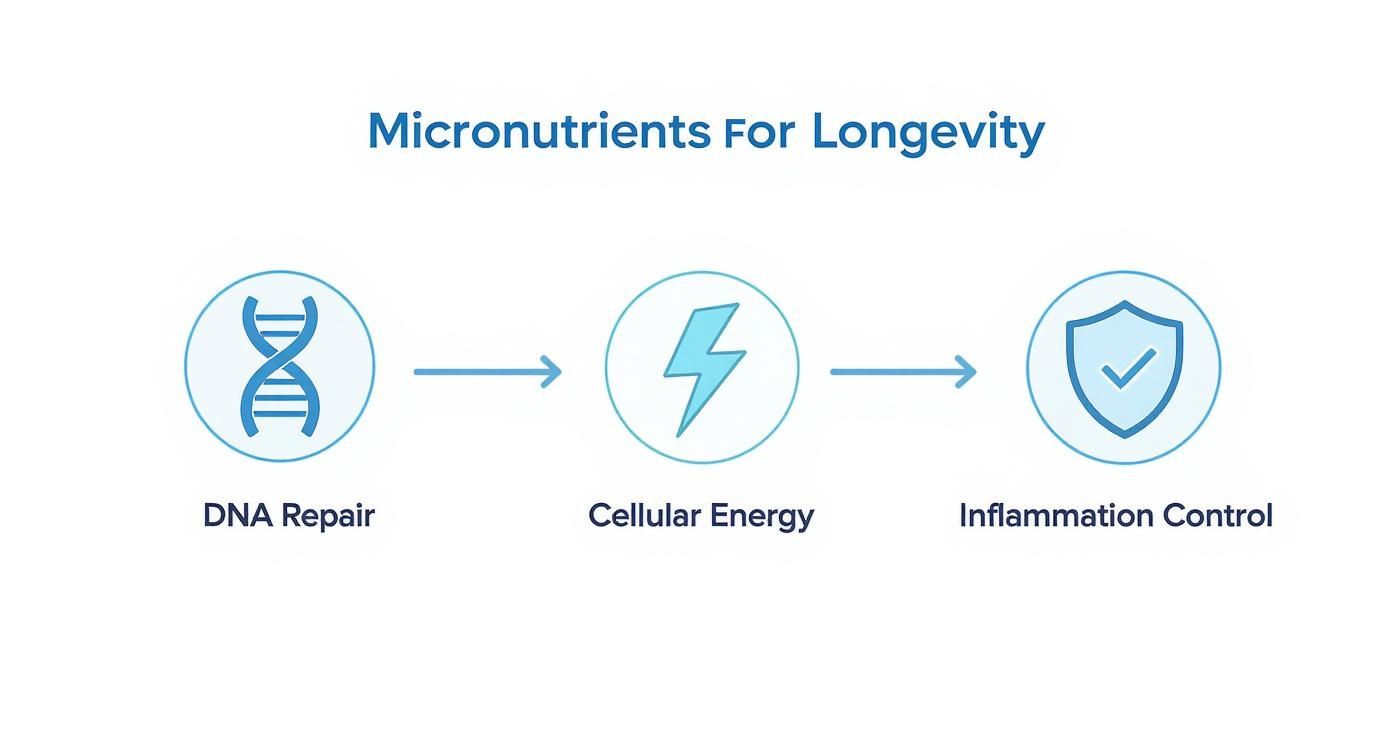
As you can see, there’s a direct line from maintaining genetic integrity to powering your cells and defending against chronic inflammation—and all of these processes depend on having the right micronutrient levels.
To help you get a better sense of the available options, here’s a quick comparison of the most common testing methods.
Comparing Common Vitamin and Mineral Tests
| Test Type | What It Measures | Best For Assessing | Example Nutrient |
|---|---|---|---|
| Serum Test | Nutrients freely circulating in the blood plasma. | Short-term status and very recent dietary intake. | Vitamin C |
| RBC Test | Nutrient levels inside red blood cells. | Longer-term (2-3 months) nutritional status. | Magnesium |
| Urine Test | Excess nutrients and metabolic byproducts excreted by the kidneys. | Water-soluble vitamin status and exposure to heavy metals. | B Vitamins |
| Hair Analysis | Mineral content deposited in hair over several months. | Long-term exposure to toxic heavy metals and certain mineral imbalances. | Mercury |
Each test offers a unique window into your health. While serum tests are great for a quick check-in, RBC tests provide a more reliable look at your foundational nutritional health, which is what we’re really interested in for longevity.
Broader Health Assessments
While micronutrient testing is a cornerstone of any good longevity plan, other assessments can give you an even fuller picture. Since cognitive decline is a major concern as we age, it’s also worth understanding what cognitive assessment entails. Taking a wider view like this helps you build a more complete and holistic understanding of your well-being. By pulling together data from different tests, you can craft a truly personalised and effective strategy for a longer, healthier life.
Key Nutrients to Test for Optimal Ageing
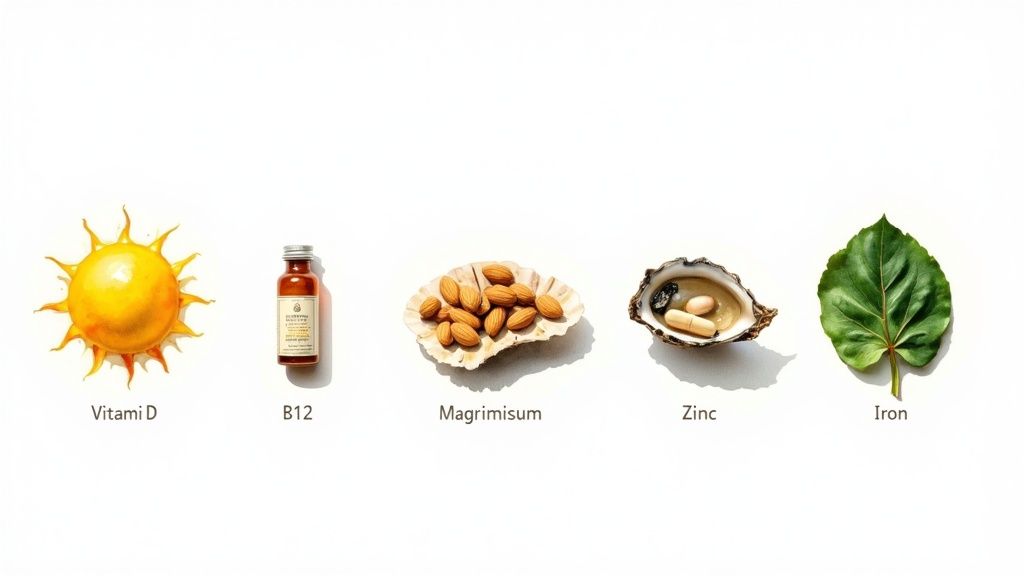
While we all know a balanced diet is crucial, some micronutrients play a much bigger role in how we age. Think of them as the master regulators of your long-term health. Pinpointing any shortfalls in these key players through targeted vitamin and mineral deficiency tests is a game-changer. It takes you from guessing what your body needs to knowing exactly what to do to enhance your healthspan.
It’s easy to dismiss things like nagging fatigue, brain fog, or slow recovery from exercise as just part of ‘getting older’. In reality, these can be early warnings that you’re running low on something important. Proactive testing helps you connect the dots between how you feel day-to-day and what’s really going on inside, giving you a chance to step in early and make targeted improvements.
So, let's dive into the essential nutrients that have the biggest impact on ageing well.
The Longevity Power Players
When it comes to healthy ageing, not all nutrients are created equal. A select few are absolutely critical for keeping your cellular processes running smoothly, which is what keeps you feeling vibrant and resilient. Focusing your testing here is the quickest way to get valuable, actionable insights.
Here are the top-tier nutrients you should prioritise testing for longevity:
- Vitamin D: We call it the 'sunshine vitamin', but its job goes way beyond bone health. It’s a powerful manager for your immune system and helps keep inflammation in check—a major driver of age-related decline. For a deeper look, check out our guide on vitamin D deficiency testing.
- B Vitamins (especially B12 & Folate): These are the workhorses for cellular energy and keeping your DNA in good shape. Vitamin B12 is essential for healthy nerves and fighting that deep-seated fatigue, while Folate (B9) is crucial for repairing and regenerating cells.
- Magnesium: This mineral is a true multi-tasker, involved in over 300 different processes in your body. It's vital for everything from producing energy and keeping muscles working properly to maintaining a steady heartbeat and helping you get deep, restorative sleep.
While Vitamin D gets a lot of attention, other deficiencies are alarmingly common in the UK. For instance, 83% of women aged 16-49 have red blood cell folate levels below what’s recommended to prevent neural tube defects. Iron deficiency is another huge issue, with around 33% of women aged 20–29 not getting the minimum recommended amount.
Essential Minerals for Defence and Repair
Beyond the big-name vitamins, certain minerals act as your body’s frontline defence and repair team. They directly influence how well you hold up against the challenges that come with time.
Think of these minerals as the specialist tools in your body’s repair kit. Without them, critical maintenance work on your cells and immune system simply cannot get done effectively, leading to accelerated wear and tear.
Two of the most important minerals to keep an eye on are:
- Zinc: This is your immune system's command centre. Zinc is absolutely vital for developing and activating T-cells, the white blood cells that are your first line of defence against infection. Healthy zinc levels are directly linked to a stronger immune response, something that naturally tends to weaken as we get older.
- Iron: As the primary transporter of oxygen in your blood, iron is the fuel for every single cell in your body. When iron levels are low, even if you’re not fully anaemic, it can lead to profound fatigue, poor concentration, and a drop in physical performance—all things that directly hit your quality of life as you age.
How to Prepare for Your Nutrient Test
Getting a truly accurate read on your vitamin and mineral levels starts well before you even see a needle. Think of it like a scientist preparing an experiment – you want to control the variables to make sure the results reflect your body’s true state, not just what you had for breakfast.
Proper preparation gives us a clean, reliable baseline to work from. Following a few simple steps can make a world of difference, ensuring the longevity plan you build is based on solid data. It’s not about doing anything complicated; it’s just about being consistent.
Your Pre-Test Checklist for Accurate Results
To get the clearest picture, we need to carefully manage what’s going into your body right before the test. Little things like a big meal, a cup of coffee, or your morning supplements can temporarily shift your blood chemistry, which might hide your actual, long-term nutritional status.
Here’s a straightforward checklist to follow for the best results:
-
Fast as Advised: Most nutrient tests will need you to fast for 8-12 hours before your appointment. This means no food and nothing to drink except for water. Fasting is absolutely vital for getting an accurate measurement of things like iron and B vitamins, as a recent meal can cause their levels to spike temporarily.
-
Stay Consistently Hydrated: While you're fasting, it's a good idea to keep sipping on plain water. Being well-hydrated makes the blood draw process much smoother for everyone involved. For a deep dive into this, you can learn more about how to prepare for phlebotomy and make the whole experience a breeze.
-
Consider Your Supplements: This one is really important. Have a chat with your healthcare provider about your current supplement routine before the test. They will likely ask you to stop taking certain ones for a few days so we can see your body’s genuine reserves, rather than just the echo of a recent pill.
-
Keep the Timing Consistent: If you’re tracking your levels over time, try to get your blood drawn at roughly the same time of day for each test, ideally in the morning. Our nutrient levels can naturally rise and fall throughout the day, so this consistency helps us build a much more reliable picture of your health trends.
Reading Your Results for a Longer Healthspan

Getting a report packed with medical terms and figures can feel a bit daunting at first. But what you’re holding is essentially a personal blueprint for a longer, healthier life. The trick is to see your vitamin and mineral deficiency tests as more than just a way to dodge illness—it's a guide to optimising your healthspan.
This means making a crucial shift in how you think about the results, moving from simply being in the ‘normal’ range to aiming for the ‘optimal’ one. A normal lab range just means you aren't clinically sick. An optimal range, however, signals that your body is firing on all cylinders, equipped with everything it needs for resilience and longevity.
It’s a bit like the tyre pressure on your car. The 'normal' range is broad enough to stop you from getting a flat, but the 'optimal' pressure is a very specific figure that gives you the best performance, handling, and fuel efficiency. For your body, getting to those optimal nutrient levels translates to more energy, a stronger immune system, and better cellular repair.
Distinguishing Normal from Optimal
When you get your results back, you’ll notice a reference range from the lab. This is the 'normal' zone, which is really just an average drawn from a huge group of people—many of whom probably aren't in peak health themselves. A longevity-focused approach, on the other hand, sets the bar higher.
For example, a "normal" Vitamin D level might start at 50 nmol/L, which is fine for preventing bone disease. But for optimal immune function and keeping inflammation in check—both absolutely critical for healthy ageing—many experts recommend aiming for levels closer to 100-150 nmol/L.
This is where the real value of testing comes in. It pinpoints exactly where you can make improvements that aren't just about avoiding a deficiency, but are about actively building a more robust foundation for your future.
Translating Numbers into Actionable Longevity Insights
Your test results are more than just numbers on a page; they're signals about your cellular health. Once you understand what these signals are telling you, you can turn that raw information into a clear, personalised plan of action to improve your healthspan.
Here's how to start looking at key markers through a longevity lens:
-
Look for Patterns: Don't get fixated on a single low result. Try to spot connections. For instance, low levels of both B12 and iron could paint a much clearer picture of why you’re feeling tired and foggy than looking at either one in isolation.
-
Prioritise Key Players: Some nutrients have a massive impact, so pay close attention to them. Magnesium is a great example. It’s involved in over 300 different reactions in your body, from making energy to keeping your DNA stable. Even a result that's just borderline-low is a strong nudge to take action.
-
Think Long-Term: A slightly suboptimal zinc level today probably won’t cause any immediate issues. But fast forward a few years, and it could be a factor in the gradual decline of your immune system. Fixing it now is a direct investment in your future health.
When you start to see your results in this light, they stop being a simple pass-or-fail test. Instead, they become an incredibly useful roadmap, giving you the clear starting point you need to make smart, targeted changes for a longer and more vibrant life.
Creating Your Post-Test Action Plan
The real value of a vitamin and mineral deficiency test isn’t in the numbers on the page—it’s in what you do with them next. Think of your results as a personalised roadmap, showing you exactly where to focus your energy to make the biggest difference to your long-term health and longevity.
This is your chance to move from simply knowing your levels to actively optimising them. For instance, if your results show your magnesium is on the low side of optimal, you have a clear action point. You can build a targeted strategy to correct that shortfall, which in turn supports hundreds of vital processes essential for healthy ageing.
Building Your Personalised Longevity Strategy
A solid action plan is built on three core pillars. Each one is designed to turn your test results into tangible, health-boosting habits that work together to create a sustainable strategy for a more vibrant life.
Your personalised action plan should include:
- Targeted Supplementation: Use your results to fill any specific gaps with high-quality supplements. This isn't about guesswork; it's a precise intervention to get key nutrients into their optimal range.
- Strategic Dietary Shifts: Let your results guide your food choices. A low iron level, for example, is a clear signal to consciously bring more iron-rich foods like spinach, lentils, and lean red meat into your diet.
- Scheduling Follow-Up Tests: Your first test is a baseline. To make sure your new plan is actually working, it's crucial to schedule follow-up tests to track your progress and tweak things as needed.
This structured approach is particularly important when you realise how common these shortfalls are. The UK's National Diet and Nutrition Survey found that 18% of adults have low vitamin D. Other studies show that 40% of adults in their 20s don't get enough selenium, and a third of young women have an insufficient iron intake. It really highlights why combining dietary assessment with testing is so powerful. You can read more about these findings on the UK government website.
By turning your test data into a concrete plan, you transform a single snapshot of your health into a dynamic, ongoing strategy for a longer and healthier life.
Frequently Asked Questions
It's completely normal to have a few questions when you're looking into vitamin and mineral testing. Getting to grips with the details is the best way to use these insights to support your long-term health. Let’s clear up some of the most common queries.
How Often Should I Get Tested for Longevity?
As a general rule for proactive health tracking, getting a comprehensive test once a year is a great starting point. This gives you a solid baseline and lets you see how diet and lifestyle tweaks are affecting your health on a cellular level over time.
However, if you're actively working to correct a specific deficiency or have made major changes to your diet or supplement regimen, it’s a good idea to re-test every 3-6 months. This gives you much quicker feedback, so you can confirm your plan is working and adjust your strategy for maximum benefit.
Can Diet Alone Fix a Deficiency for Optimal Health?
While a nutrient-dense diet is the cornerstone of good health, it's not always enough to fix an existing deficiency on its own, especially when you're focusing on longevity and optimal levels. Modern farming practices have unfortunately depleted the mineral content in our soil, which means the fruit and veg we eat today might not be as nutrient-packed as they were years ago.
For significant shortfalls, targeted supplementation based on your test results is often the quickest and most effective way to get your levels back into the optimal range. Your diet then becomes the perfect tool for keeping them there.
Are At-Home Finger-Prick Tests Reliable Enough?
Finger-prick tests are certainly convenient, but they can sometimes fall short in terms of accuracy compared to a proper venous blood draw done by a professional. A full blood draw provides a larger, cleaner sample, which is crucial for getting a truly comprehensive analysis across a wide range of markers.
For the most dependable data to build your longevity plan on, a professional blood draw is the gold standard. It ensures the precision you need to feel confident in your results and the decisions you make based on them, which is why we insist on it for our clinical-grade vitamin and mineral deficiency tests.
Ready to stop guessing and start knowing? With Lola, you can get a clear, data-driven picture of your nutritional health with professional testing from the comfort of your home. Book your comprehensive analysis today and start building your personalised plan for a longer, healthier life.