


When you're searching for the best supplements for brain fog, it’s easy to get lost. The most effective options, however, aren't the ones with the best marketing - they're the ones that correct your specific biological imbalances. While foundational nutrients like B vitamins, Vitamin D, and omega-3s are sensible starting points, a targeted, data-driven strategy is the only way to build lasting cognitive resilience for the years ahead.
Cutting Through the Mist of Brain Fog
Struggling with focus is more than just a minor annoyance. For high-performers, it’s a critical barrier that can sabotage professional ambitions and derail athletic goals. Brain fog isn't a medical condition on its own; think of it as a clear signal from your body that key systems supporting your long-term health are out of balance.
It shows up as slow thinking, frustrating memory lapses, and a persistent mental sluggishness that no amount of coffee can seem to shift. If you're used to operating at a high level, this mental haze feels like trying to run a race with the brakes on, capping your potential and draining your competitive edge.
The search for a solution often leads down a confusing rabbit hole of one-size-fits-all advice. But the 'best' supplements aren't universal - they are the specific ones your unique biology is crying out for. This guide is about adopting a smarter, data-driven approach to cognitive longevity.
Beyond Generic Advice
Instead of guessing which bottle to pull off the shelf, what if you could use objective data to pinpoint the real root causes of your cognitive slump? This is where understanding your own biology becomes a significant advantage. By identifying your body's specific needs, you’re not just clearing today’s fog; you're making a strategic investment in your long-term brain health and resilience.
This shift towards personalised wellness is already happening. In the UK, interest in supplements for brain fog has shot up alongside a rapidly expanding brain health market. This market generated roughly USD 381.7 million in revenue and is projected to hit USD 725.8 million by 2030. This growth is being driven by a health-literate population hungry for ways to boost cognitive performance and fend off age-related decline. You can explore more about this growing market trend to see just how much data is shaping consumer choices.
Brain fog is a symptom, not a diagnosis. It’s your brain’s check engine light, signalling that it’s time to look under the bonnet at your underlying biology for the sake of your future cognitive health.
By moving past generic advice, we can build a truly personal strategy for mental clarity. This guide will walk you through how to identify your biological needs and choose the right tools for the job, transforming guesswork into a precise action plan for sustained peak performance.
The Hidden Drivers Behind Your Brain Fog
Think of your brain like a high-performance engine. When it starts to sputter and feel sluggish, that’s brain fog, it’s rarely down to a single, obvious problem. More often than not, it's a sign that several interconnected systems are misfiring, disrupting the clean, efficient performance you count on and accelerating cognitive wear and tear.
To really clear the mist for good, we need to understand the underlying physiological glitches. Just as a mechanic runs diagnostics, we need to look under the bonnet to pinpoint what's really holding back your cognitive horsepower. It's about understanding What Causes Brain Fog and Fatigue, as the two often go hand-in-hand.
This concept map breaks down the journey, from spotting the initial symptoms to uncovering the root causes and finding the right solutions.
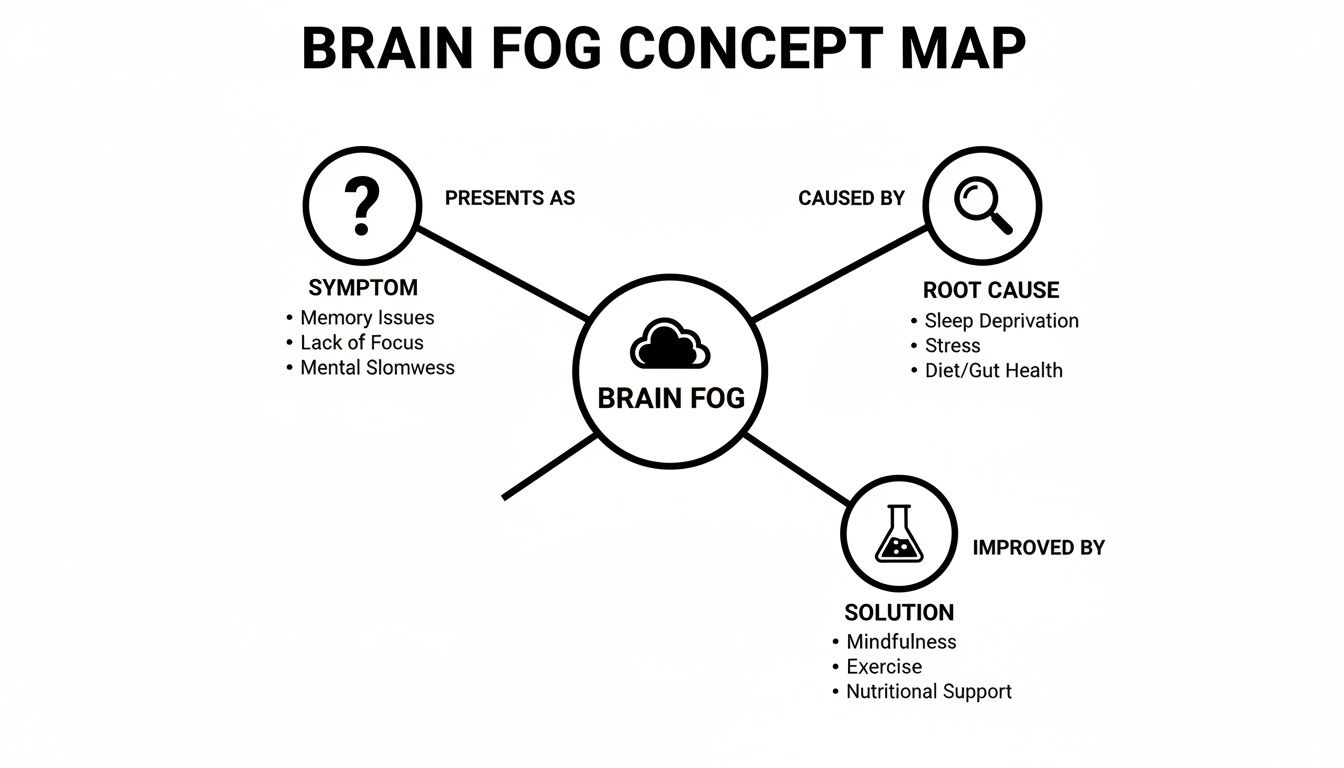
As you can see, simply noticing the symptoms is only the start. Real progress comes from digging deeper to find the root cause before you start throwing solutions at it. It’s a data-driven approach, and it works.
Identifying the Engine's Faulty Parts
Several core biological pathways can get thrown off balance, each one acting like a different kind of engine trouble. From contaminated fuel to faulty wiring, these issues directly hit your brain's ability to perform. Getting to know them is the first step toward fixing the right problem for long-term brain health.
Common culprits include:
- Nutrient Deficiencies: Vitamins and minerals are the high-octane fuel and essential lubricants for your brain. Being low in key players like vitamin B12 or vitamin D is like running your car on cheap petrol - it will struggle to generate power, leading to cognitive slowdowns.
- Hormonal Imbalances: Hormones are your body's internal messaging system. When chronic stress keeps cortisol high, or when thyroid hormones are out of whack, it's like having faulty wiring. Signals get crossed, timing is off, and the whole system suffers.
- Mitochondrial Dysfunction: Your mitochondria are the tiny power plants in every cell, generating the energy (ATP) your brain craves. If they become inefficient, it’s like having a weak battery. This cellular energy decline is a hallmark of ageing and a direct cause of brain fog.
- Chronic Inflammation: Persistent, low-grade inflammation is like sludge clogging up the engine. It creates a toxic environment that gums up the works, impairs communication between neurons, and drains your resources, directly contributing to that foggy feeling and accelerating the ageing process.
Connecting Symptoms to Root Causes
Each of these underlying issues can show up as the classic symptoms of brain fog - poor memory, trouble concentrating, and slow thinking. Unstable blood sugar, for instance, creates energy spikes and crashes that feel like an inconsistent fuel supply, making it nearly impossible to maintain focus.
Brain fog isn’t a personal failing; it’s a biological signal. It’s your engine’s check light telling you that a critical system needs attention before you can get back to high performance.
By learning to link your specific symptoms to these potential root causes, you can move beyond generic fixes. Instead of just pouring in more coffee, a temporary boost at best, you can start investigating whether your engine needs better fuel (nutrients), a wiring check-up (hormones), a new battery (mitochondrial support), or an oil change (reducing inflammation). This diagnostic mindset is the key to building a plan that actually works for you, both now and for decades to come.
Building Your Foundational Supplement Stack

Before we get into advanced compounds that target the pathways of ageing, we have to lay a solid groundwork. Think of it like building a house. You wouldn't start installing smart home tech before the foundation is secure and the walls are up, would you? It’s the same with your brain; it needs a steady supply of essential nutrients to perform its basic functions and resist age-related decline.
Many of the best supplements for brain fog aren’t exotic or complex. They’re the non-negotiable building blocks your brain relies on every single second. When these core nutrients are in short supply, cognitive function is often the first thing to suffer, leading directly to that all-too-familiar feeling of mental sluggishness.
This section covers the "must-haves" - the supplements that form your first line of defence against brain fog and build a foundation for cognitive longevity.
The B Vitamin Complex: The Spark Plugs for Your Brain
The B-vitamin family, especially B12 and Folate (B9), are absolutely critical for neurological health. Think of them as the spark plugs in your brain's engine. They ignite the processes needed for energy production, creating neurotransmitters, and maintaining the protective myelin sheath that insulates your nerve cells.
A dip in either B12 or folate can cause a noticeable drop in mental clarity, with symptoms like memory problems, poor concentration, and relentless fatigue. Because these vitamins are water-soluble, your body doesn't hang onto them for long. This means a consistent intake through your diet or supplements is vital to keep your levels topped up. While B vitamins are important on their own, our guide on the best longevity supplements explores how they fit into a broader strategy for long-term health.
Ensuring you have enough B-vitamins is a foundational step. It's like making sure your high-performance engine has a consistent spark before you even think about upgrading the fuel.
Vitamin D: The Master Regulator
Often called the "sunshine vitamin," Vitamin D actually acts more like a hormone, influencing over 200 genes throughout the body. Many of these are highly active in the brain. It plays a central role in protecting your neurons, calming inflammation, and supporting the production of key neurotransmitters like dopamine and serotonin, which are essential for mood and focus.
Given the notoriously limited sun exposure in the UK for much of the year, deficiency is incredibly common. The cognitive impact can be significant, ranging from a persistently low mood to impaired executive function. Supplementing with Vitamin D is one of the simplest and most effective ways to support your baseline brain health and build resilience against cognitive decline.
Omega-3 Fatty Acids: The Brain's Structural Integrity
Did you know your brain is nearly 60% fat? A huge chunk of that is an omega-3 fatty acid called DHA (docosahexaenoic acid). Omega-3s, including both DHA and EPA (eicosapentaenoic acid), are the literal bricks and mortar of your neural architecture. They form the structure of your brain cell membranes, keeping them fluid and responsive.
These essential fats are also powerfully anti-inflammatory and help ensure smooth communication between brain cells. When your levels are low, cell membranes can become stiff and rigid, which hampers signalling and fuels inflammation - a key driver of brain fog. This is exactly why omega-3s are a cornerstone of any brain health protocol.
Magnesium: The Calming Conductor
Magnesium is a true workhorse, involved in over 300 enzymatic reactions in the body, many of which are vital for brain function. It helps regulate neurotransmitters that promote a sense of calm, aids in energy production within brain cells, and is a key player in neuroplasticity - the brain's amazing ability to form new connections.
Unfortunately, modern diets and chronic stress can easily drain our magnesium stores. This often leads to symptoms like anxiety, poor sleep, and, you guessed it, brain fog. Supplementing with a bioavailable form, such as magnesium L-threonate which can readily cross the blood-brain barrier, can help restore balance. It acts like a calming conductor for your nervous system, ensuring electrical signals fire cleanly and efficiently, which helps preserve mental clarity.
Comparing Foundational Supplements for Brain Fog
To help you see how these core nutrients fit together, here is a quick-reference guide. This table breaks down their primary roles, the common signs of deficiency to watch out for, and the typical dosage ranges you might consider after speaking with your doctor.
| Supplement | Primary Role in Brain Health | Signs of Deficiency | Typical Daily Dosage |
|---|---|---|---|
| B-Complex (B12, B9) | Energy production, neurotransmitter synthesis, myelin sheath maintenance. | Fatigue, memory issues, difficulty concentrating, mood changes. | B12: 250-1,000 mcg, Folate: 400-800 mcg DFE |
| Vitamin D | Gene regulation, neuron protection, reduces inflammation, mood support. | Low mood, brain fog, fatigue, impaired executive function. | 1,000-4,000 IU (25-100 mcg) |
| Omega-3s (DHA/EPA) | Structural component of brain cells, anti-inflammatory, cell communication. | Cognitive decline, poor memory, depression, dry skin. | 1,000-2,000 mg combined EPA/DHA |
| Magnesium | Neurotransmitter regulation, neuroplasticity, energy production. | Anxiety, poor sleep, muscle cramps, brain fog, irritability. | 200-400 mg (elemental) |
This table provides a starting point for understanding how these foundational supplements work. Getting these basics right is the most important step you can take before considering more targeted interventions.
Going Deeper: Longevity and Advanced Cognitive Function
Once you've got your nutritional foundations sorted, you can start thinking bigger. This isn't just about clearing today's mental haze; it's about building a brain that's resilient, efficient, and ready for the long haul. We're moving beyond basic maintenance and into strategic investment - targeting the very biology of ageing itself.
Think of it this way: instead of just topping up the fuel tank, we're now looking to upgrade the engine. This means using specific compounds that bolster cellular energy, defend against daily wear and tear, and build your resilience against the intense demands of modern life.
Let's look at the supplements that bridge the gap between immediate mental clarity and long-term cognitive health.
NMN: Powering Your Cellular Batteries
Deep inside your body, every single cell relies on a molecule called NAD+ (Nicotinamide Adenine Dinucleotide) to function. You can imagine NAD+ as the tiny, rechargeable batteries that power everything you do, especially in your energy-hungry brain. The problem is, as we get older, our natural NAD+ levels drop off a cliff. This decline is a key driver of age-related cognitive slowdown and can leave you feeling like you're constantly running on low-power mode.
This is where NMN (Nicotinamide Mononucleotide) enters the picture. NMN is a direct precursor to NAD+, meaning your body can easily convert it into this vital coenzyme. Taking an NMN supplement is like plugging your cells into a charger, helping to restore NAD+ levels and boosting your brain's ability to produce energy and repair itself. For a deeper look at how this works, our detailed guide explains the full scope of NMN supplement benefits for your long-term health.
While NMN is a newer player on the scene, its rise in popularity signals a major shift towards anti-ageing strategies. The UK brain supplements market, currently valued at around US$ 0.96 billion, is expected to soar to nearly US$ 2.87 billion by 2032. This isn't just about standard memory pills; it's a trend driven by people wanting longevity-focused compounds like NAD+ boosters.
NAC: The Master Antioxidant and Detoxifier
Every moment of every day, your brain is under attack from something called oxidative stress. Think of it as a kind of cellular rust, caused by normal metabolic processes and environmental toxins. This relentless damage is a huge driver of brain fog and, over time, cognitive decline. To fight back, your body has its own master antioxidant: glutathione.
NAC (N-Acetylcysteine) is such a useful supplement because it’s a direct building block for glutathione. By taking NAC, you’re giving your body the exact raw materials it needs to ramp up production of its most important antioxidant defender.
By boosting glutathione, NAC acts like a cellular cleaning crew. It neutralises damaging free radicals and helps detoxify the brain, clearing out the inflammatory "sludge" that can slow down your thinking and protect your brain for the long term.
NAC also has another important job: it helps regulate glutamate, a key neurotransmitter. By keeping glutamate levels in balance, NAC can protect your brain cells from over-excitation, helping you feel calmer and more clear-headed.
Adaptogens: Building Your Resilience to Stress
Nothing fogs up the brain faster than chronic stress. When your body is stuck in a high-alert state, it floods your system with cortisol. This stress hormone can wreck your memory, disrupt your sleep, and keep you in a perpetual state of mental haze. Adaptogens are a unique class of herbs that help your body adapt to and manage stress more effectively, building long-term resilience.
One of the most well-researched adaptogens out there is Ashwagandha. It works by fine-tuning your body's central stress-response system, known as the HPA axis. Think of it as a thermostat for stress; it helps stop your system from constantly overheating.
By helping to lower cortisol levels, Ashwagandha can:
- Sharpen focus and cognitive function, especially when you're under pressure.
- Ease feelings of anxiety and mental tension.
- Improve sleep quality, which is absolutely vital for brain repair and locking in memories.
Using adaptogens isn't about getting rid of stress - that’s impossible. It's about building a more strong system that can handle pressure without burning out. For those looking for a comprehensive formula, specialised products like Immunegy Brain Storm offer blends specifically designed to enhance mental performance. These advanced supplements are a smart investment, not just in how sharp you feel today, but in how sharp you’ll stay for years to come.
Why You Must Test and Not Guess
Taking supplements without any data is like trying to navigate a new city without a map. You might get to where you’re going eventually, but you’re guaranteed to take a few wrong turns, waste time and money, and get seriously frustrated in the process. When it comes to clearing brain fog, this kind of guesswork isn’t just inefficient - it's a massive missed opportunity to build a long-term strategy for cognitive health.
The ‘test, don’t guess’ philosophy is the only direct path to mental clarity. It shifts you from a scattered, trial-and-error game to a precise, personalised strategy. By looking at your own biological data, you ensure every supplement you take is addressing a real, scientifically confirmed need, not just a slick marketing claim.
This isn’t about finding a quick fix for today's sluggishness. It's a proactive investment in your long-term cognitive health, giving you the power to keep your brain performing at its best for years to come.
Your Cognitive Health Dashboard
Certain blood markers give us a direct window into how your brain is functioning. They act like a dashboard for your cognitive health, showing you exactly which systems are running smoothly and which ones need a bit of a tune-up to support your longevity goals.
Think of it as a diagnostics report for your brain's engine. A mechanic wouldn't just start replacing parts at random; they’d plug into the car's computer to read the error codes first. Blood testing gives you those codes for your own biology.
Guessing which supplements to take for brain fog is like throwing darts in the dark. Testing turns on the lights, showing you the exact target you need to hit for lasting results and optimal brain longevity.
Let's break down the most important markers that are directly tied to brain function and mental clarity.
Key Blood Markers for Brain Fog
When we're trying to get to the bottom of brain fog, a few key biomarkers give us the most valuable clues. These metrics paint a clear picture of your nutritional status, inflammation levels, and metabolic health - all of which are absolutely critical for peak cognitive performance and healthy ageing.
-
Vitamin B12: As we've covered, B12 is non-negotiable for nerve health and energy. A blood test can spot a deficiency long before serious symptoms kick in, letting you correct it with targeted support and get your mental sharpness back.
-
Vitamin D: Often called a pro-hormone, vitamin D helps regulate hundreds of genes, many of them in the brain. Testing tells you your exact level, so you can dose precisely to fight the low mood and cognitive slowdown that are so common with deficiency, especially here in the UK.
-
Omega-3 Index: This test measures the percentage of EPA and DHA in your red blood cell membranes, giving a brilliant snapshot of your long-term omega-3 status. An optimal index is consistently linked to better brain function and a lower risk of age-related cognitive decline.
-
hs-CRP (high-sensitivity C-reactive protein): This is a important marker for systemic inflammation. If your hs-CRP is elevated, it means your body is stuck in a state of chronic immune activation, which is a major, and often overlooked, driver of brain fog and accelerated ageing.
-
HbA1c (Glycated Haemoglobin): This marker gives you a three-month average of your blood sugar levels. Wild blood sugar swings create an energy rollercoaster that makes focus feel impossible. A high HbA1c is a clear sign that your metabolic health needs to become a top priority for long-term brain protection.
Looking at these markers together gives you a powerful, personalised roadmap. Instead of just wondering if you need more omega-3s or if inflammation is your problem, you’ll have hard data to work with. To look more closely at spotting specific shortfalls, our complete guide on using a blood test for vitamin and mineral deficiency offers a full overview. This information puts you in the driver's seat, allowing you to build a supplement plan that is truly tailored to your body's unique needs.
Your Action Plan for Lasting Mental Clarity
Alright, we’ve covered a lot of ground. But knowing what might be causing your brain fog is one thing; doing something about it is another entirely. This is where we move from theory to action, putting together a clear, step-by-step plan to get you back to feeling sharp, focused, and in control.
Forget about blindly guessing which supplement to try next. This is about taking a methodical, data-led approach to your own biology. It’s how you go from frustrating mental static to a precise, personalised strategy for peak performance and long-term cognitive health.
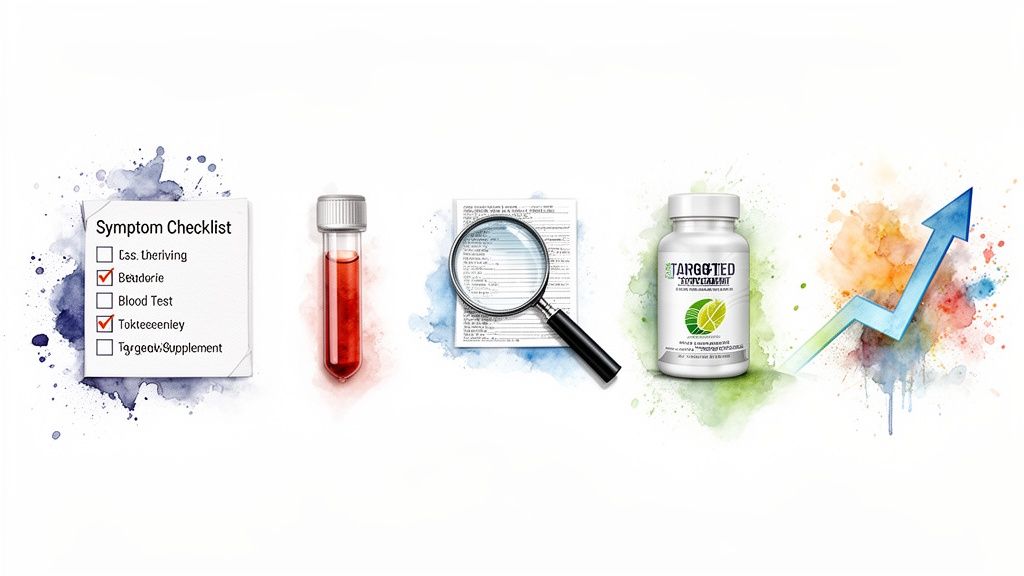
Step 1: Start with a Personal Audit
Before touching a single supplement, let’s start with you. For one week, keep a simple log. Note down your energy levels, how well you slept, what you ate, your stress levels, and, most importantly, when the brain fog hits hardest.
This isn’t about being perfect; it's about spotting patterns. Do you feel fuzzy after a carb-heavy lunch? Does your focus disappear on days with back-to-back meetings? This self-assessment gives you a vital qualitative baseline – the story behind the numbers.
Step 2: Establish Your Biological Baseline
Now for the significant advantage: data. The next step is getting a detailed blood test to measure the key biomarkers we've discussed. This isn't your standard GP check-up; it's a deep look at the specific metrics that directly influence your mental clarity and longevity.
Taking supplements without testing is like navigating without a map. Establishing your baseline with blood work provides the precise coordinates you need to plot the most direct route to mental clarity and protect your brain for the future.
With Lola, this is incredibly straightforward. A professional phlebotomist can visit you at home, or you can pop into a partner clinic. Your sample heads to a UKAS-accredited lab, ensuring you get NHS-standard results you can absolutely trust.
Step 3: Analyse Your Results and Build Your Stack
Once your lab report is ready, you'll find it in the Lola app. Here you'll see your exact levels for critical markers like Vitamin D, B12, the Omega-3 Index, and hs-CRP. Plus, a personalised doctor review is included to help you make sense of what it all means for you.
This is where you build a supplement stack that’s actually targeted.
- Low Vitamin D? You’ll know exactly what dose you need to get back into the optimal zone.
- Subpar Omega-3 Index? You can confidently add a high-quality fish oil supplement to your routine.
- Elevated hs-CRP? This is a clear signal that tackling inflammation needs to be your number one priority for long-term health.
This data-first approach ensures you only take the best supplements for brain fog that your body is genuinely crying out for, which saves you both time and money.
Step 4: Track, Re-Test, and Optimise
Your initial supplement plan isn't the final word—it's your starting point. The most important step is to track how you feel and, importantly, to re-test your key markers after 3-4 months of consistent supplementation.
This is what's known as closing the feedback loop. It provides objective proof of what's working. Have your Vitamin D levels climbed into the optimal range? Is your inflammation marker trending down? This cycle of testing, adjusting, and re-testing is the very heart of a proactive longevity strategy, turning your health from something that just happens into a system you actively manage and optimise.
To bring it all together, here is a quick overview of the entire process.
5-Step Action Plan to Eliminate Brain Fog
This table summarises the strategic steps you can take to move from experiencing brain fog to achieving sustained mental clarity.
| Step | Action | Key Objective |
|---|---|---|
| 1. Personal Audit | Keep a one-week log of symptoms, lifestyle, and diet. | Identify personal triggers and patterns associated with your brain fog. |
| 2. Biological Baseline | Get a thorough blood test for key cognitive markers. | Obtain hard data on your unique nutritional deficiencies and inflammation levels. |
| 3. Analyse & Strategise | Review your lab results with the included doctor's report. | Understand exactly what your body needs and build a targeted supplement stack. |
| 4. Implement | Consistently follow your personalised supplement and lifestyle plan. | Systematically address the root biological causes of your brain fog. |
| 5. Re-Test & Optimise | Re-test your biomarkers after 3-4 months. | Verify progress, refine your strategy, and ensure long-term mental clarity. |
By following this plan, you replace guesswork with certainty, creating a sustainable path to feeling your best.
Your Questions Answered
How Long Until I Feel a Difference?
That's the million-dollar question, isn't it? The honest answer is: it depends. It really comes down to which nutrient we're talking about and your own unique body chemistry.
If you're deficient in a water-soluble vitamin like B12, you could start feeling sharper and more energetic within a few weeks. But for fat-soluble nutrients like Vitamin D or Omega-3s, you need to be a bit more patient. These take longer to build up in your body's tissues, so you're probably looking at 2-3 months of consistent use before you notice a real shift.
The most important thing is consistency. Stick with it, then re-test your levels. This is the only way to know for sure that what you're doing is working and to fine-tune your approach for lasting mental clarity.
Can't I Just Take a Multivitamin?
A daily multivitamin is a decent insurance policy, but it's not a targeted solution for significant brain fog. Think of it like topping up your car's windscreen washer fluid – it’s a good maintenance step, but it won't fix a major engine problem or improve its long-term performance.
If your blood work shows you're seriously low on something like Vitamin D, for instance, you'll need a much higher, therapeutic dose to get your levels back into the optimal range. A standard multi-pill just won't cut it. Testing lets you get specific and supplement with precision, which is what gets real results.
Is It Safe to Mix and Match Brain Supplements?
Yes, you can absolutely combine supplements, but the key is to do it smartly. A data-driven approach based on your blood test results is important here—it takes the guesswork out of the equation and ensures you're only taking what your body genuinely needs.
A good strategy is to start with the essentials your tests have flagged, like Vitamin D or B12. If you want to experiment with more advanced options for performance or longevity, like NMN or adaptogens, introduce them one at a time. This way, you can properly gauge how you feel and see what actually moves the needle for you.
It's always a good idea to chat with your doctor or a qualified healthcare professional before starting any new supplement routine. They can help make sure your plan is safe and tailored specifically to your health and goals.
Ready to stop guessing and start getting answers? Take control of your cognitive health with a data-driven approach. With Lola, you can get professional, at-home blood testing to uncover the root causes of your brain fog. Learn more and book your test at https://lolahealth.com.
At-Home Blood Testing
Check your levels from home
Professional phlebotomist visit. Doctor-reviewed results in 2-5 days. Track your health with comprehensive blood panels.
→45-70 biomarkers tested · Venous blood draw · From £130