


Think of a proactive blood test for health as your body's internal dashboard, providing a clear view of your biological roadmap for longevity. It reveals what's happening under the bonnet long before any warning lights flash, shifting your health from a reactive state, addressing sickness, to a powerful, proactive strategy for optimising performance and extending your healthspan.
Your Ultimate Advantage for a Longer, Healthier Life
Forget waiting for an annual check-up to tell you something is wrong. A proactive blood test is one of the smartest investments you can make in your future health, especially if you’re driven to perform at your peak for decades to come. It’s less like a standard doctor's visit and more like a CEO analysing critical data - it gives you the actionable insights needed to make sharper, more effective decisions for long-term vitality.
This mindset is about moving past being "normal" and aiming for "optimal" for longevity. The standard reference ranges on a lab report are designed to spot acute disease in the average person, not to guide someone aiming for an extended healthspan. A result within the ‘normal’ bracket might still be far from what your body needs to delay age-related decline and function optimally.
From Reactive Sickness to Proactive Longevity
Traditionally, blood tests diagnose problems after symptoms appear. A proactive approach flips that on its head. By regularly tracking key biomarkers associated with ageing, you can spot subtle declines and negative trends well before they become chronic, age-related diseases. This data-first strategy puts you in control, allowing you to:
- Fine-tune your longevity strategy: See exactly how your diet, exercise, and longevity-focused supplements (like NMN or resveratrol) are impacting your body at a cellular level.
- Gain a long-term edge: Optimise your biological age by boosting energy, sharpening focus, and enhancing recovery, correcting imbalances before they accelerate ageing.
- Invest in your healthspan: It's not just about living longer; it's about maximising the number of years you spend feeling fantastic, vibrant, and capable.
When you view blood test results as a dynamic roadmap to your future health, you take control of your ageing process. It’s the difference between navigating with a real-time GPS and a crumpled, decade-old map.
This guide will show you how to use blood testing as a tool for longevity. We’ll look at the specific biomarkers important for a long healthspan, explain how to prepare for a test to get accurate results, and teach you how to turn that data into actionable steps. This isn't just about dodging illness; it's about actively building a more resilient, energetic, and higher-performing you for the long run.
Decoding the Key Blood Panels for Longevity
Looking at blood test results can feel like cracking a secret code. But those numbers are your body’s language, offering a direct window into your current health and your trajectory for the future. Understanding the key panels is the first step for anyone serious about shifting from simply reacting to illness to proactively building a long, healthy life.
Think of your body as a high-performance system you want to maintain for 100+ years. A comprehensive blood test is the full diagnostic readout. It reveals the status of your metabolic engine, the quality of your cellular fuel, and the resilience of your internal systems. This lets you make precise, informed tweaks to slow the ageing process, rather than guessing what your body needs.
The diagram below illustrates this shift - moving from an old-school, sickness-focused model to a proactive strategy that puts you firmly in control of your healthspan.
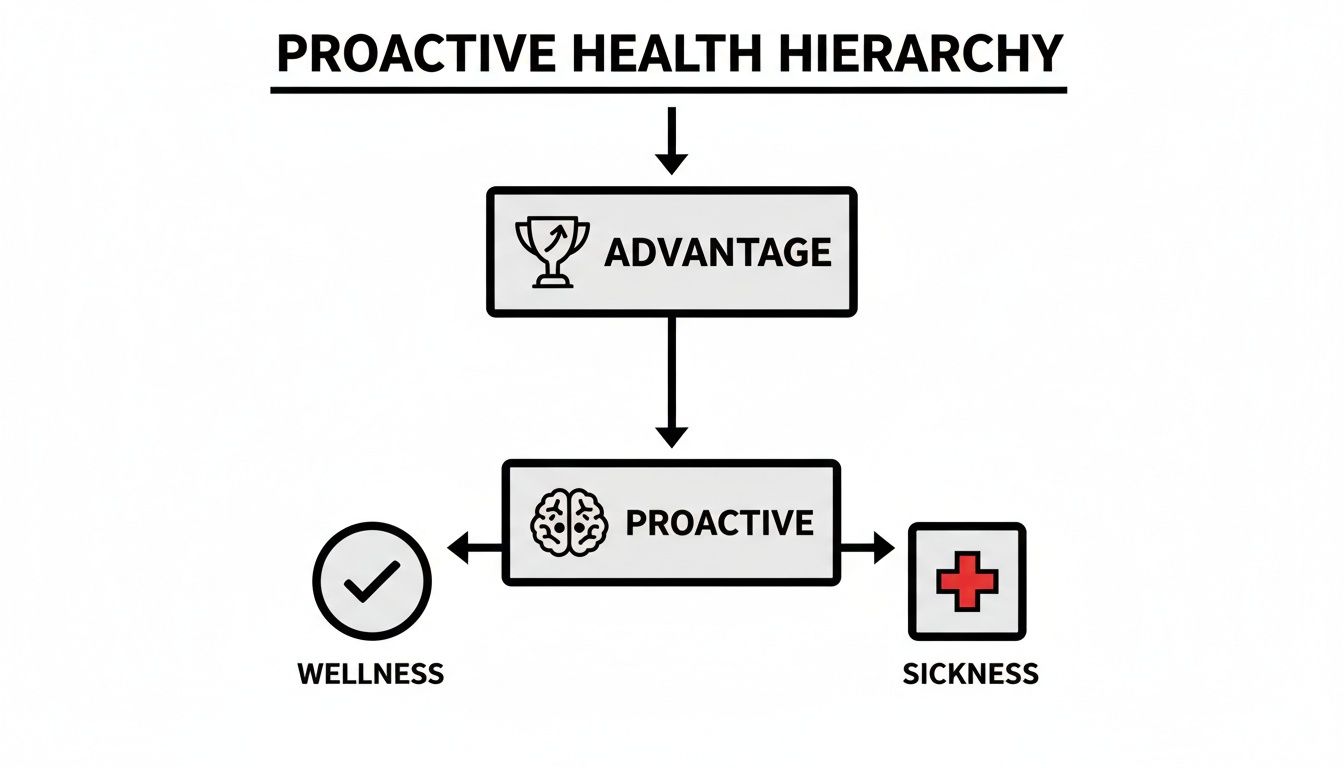
As you can see, being proactive with your health data gives you a massive advantage, allowing you to stay ahead of age-related decline instead of waiting for something to go wrong.
To get truly practical, let's break down the most important markers you should be tracking. These are the non-negotiables for anyone wanting to optimise their healthspan and performance for years to come.
Essential Biomarkers for Longevity and Performance
This table summarises some of the most critical biomarkers. Think of it as your cheat sheet for understanding the data that truly matters for a long and healthy life.
| Biomarker Panel | What It Measures | Why It's Critical for Longevity |
|---|---|---|
| Metabolic Health | HbA1c, Lipids (LDL, HDL, Triglycerides) | This is your energy management system. Poor metabolic health is linked to most age-related diseases. Keeping these markers optimal is fundamental for a long healthspan. |
| Inflammation | hs-CRP (high-sensitivity C-Reactive Protein) | Measures low-grade, chronic inflammation - a silent driver of ageing and disease. Catching it early allows you to address the root cause before real damage occurs. |
| Stress Hormones | Cortisol | Tracks your body's primary stress response. Chronically high levels can wreck sleep, recovery, and cognitive function, accelerating the ageing process. |
| Hormonal Balance | Testosterone (Total & Free), Vitamin D | These are master regulators of energy, mood, muscle mass, and immunity. Imbalances can drastically reduce your quality of life and performance. |
| Nutrient Status | Vitamin B12, Iron, HGB, HCT | These are essential for energy production and oxygen transport. Low levels directly impact your physical and mental performance, causing fatigue and brain fog. |
Each of these panels gives you a piece of the puzzle, and together, they paint a clear picture of your internal health. Let's dig a little deeper into what they mean for you.
Your Metabolic Health Dashboard
Your metabolic health is the engine room of your body, and its efficiency is a primary determinant of your healthspan. The markers in this panel are your early warning system, helping you prevent the long-term problems that shorten healthy lifespans.
- HbA1c (Glycated Haemoglobin): This isn't just a one-off blood sugar reading. It reveals your average glucose levels over the last three months. An optimal HbA1c is a powerful indicator that your body is managing energy efficiently, a cornerstone of metabolic longevity.
- Lipid Panel (Cholesterol & Triglycerides): This panel assesses fats in your blood, including LDL ("bad") cholesterol, HDL ("good") cholesterol, and triglycerides. Keeping these in an optimal range is non-negotiable for protecting your cardiovascular system for decades to come.
Of course, blood markers are just one part of the story. Physical indicators like belly fat are closely tied to metabolic health, and there are many effective strategies for addressing metabolic health concerns that work hand-in-hand with the insights from your blood work.
Gauging Inflammation and Stress
If you're not measuring inflammation and stress, you're missing two of the biggest hidden drivers of premature ageing. These "silent saboteurs" can chip away at your healthspan without you even realising it, but a proactive blood test can bring them into the light.
hs-CRP (high-sensitivity C-Reactive Protein) is a significant advantage for longevity. It measures the low-level, chronic inflammation, often called "inflammageing", simmering in your body. High levels are a sign your system is under stress long before symptoms appear, giving you a important head start to make anti-ageing interventions.
For longevity-focused individuals, Cortisol is another one to watch closely. It's your main stress hormone, and while vital in the short term, chronically high levels are disastrous for long-term health. They accelerate cellular ageing, disrupt sleep, and impair recovery. Tracking cortisol helps you manage stress before it takes a toll on your healthspan.
Think of hs-CRP as the faint smell of smoke that alerts you to a potential fire. By spotting it early with a blood test, you can find the source and put it out before it turns into a blaze that causes serious, long-term damage.
Hormonal Balance and Nutrient Status
Your hormones and nutrient levels are the conductors of your biological orchestra - they regulate everything from your mood and energy to your physical strength. When they decline with age, your quality of life can nosedive.
It's no surprise that people are waking up to this. The demand for clear, actionable health data is skyrocketing. In the UK, the clinical laboratory tests market pulled in USD 2,983.8 million in 2023 and is on track to hit USD 5,967.4 million by 2030. This boom is driven by a growing understanding of just how important it is to monitor markers like HbA1c for metabolic health and HGB/HCT for anaemia and athletic performance.
Here are a few key biomarkers essential for maintaining vitality as you age:
- Testosterone (Total and Free): important for both men and women, testosterone is a major player in muscle mass, energy, cognitive sharpness, and overall drive.
- Vitamin D: More than just for bones, Vitamin D is a pro-hormone vital for a resilient immune system and stable mood. Deficiencies are incredibly common.
- Vitamin B12 & Iron: These are the building blocks for cellular energy and oxygen transport. If you're feeling constantly tired, low levels could be accelerating age-related fatigue.
To get a better idea of all the tests available, you can check out our guide on choosing a detailed blood test in the UK.
For anyone pushing their physical limits, markers like Haemoglobin (HGB) and Haematocrit (HCT) are particularly telling. They're a direct measure of your blood's ability to carry oxygen - a key factor in endurance. Monitoring these allows you to fine-tune your training and nutrition to really maximise what your body is capable of.
How to Prepare for Your Test and Interpret the Results
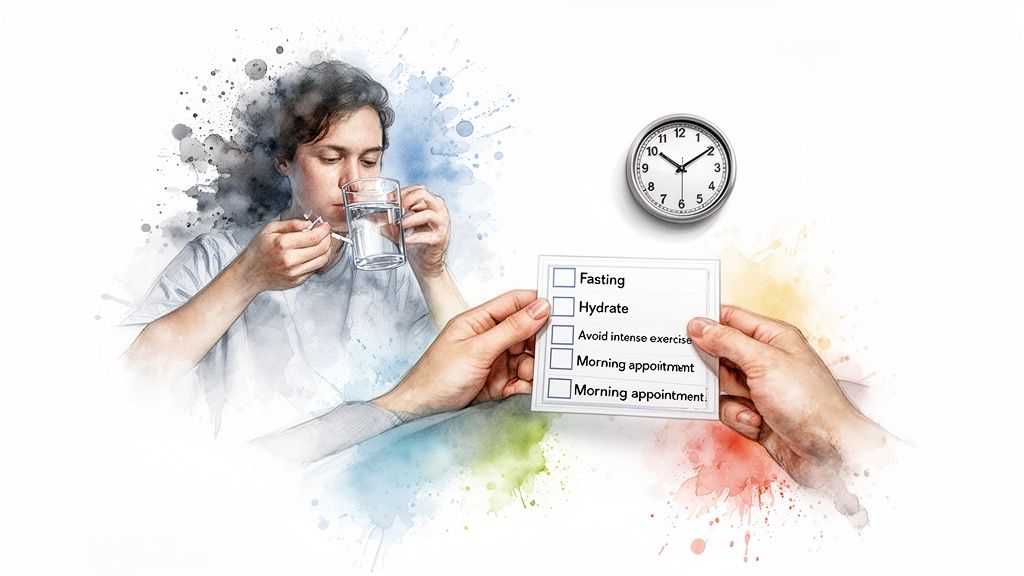
Getting a blood test is simple, but transforming the results into actionable longevity insights requires strategy. To truly use a blood test for health, you need a solid plan for both preparation and interpretation. The data you get back is only as reliable as the conditions under which it was collected.
Think of it like a scientific experiment. The prep work you do directly shapes the outcome. A few simple steps before your test are non-negotiable if you want an accurate snapshot of your internal biology.
Setting the Stage for an Accurate Test
Your body is in a constant state of flux. To get a true baseline reading that reflects your underlying health, not just your last meal or workout, you must control key variables.
A few key actions can make a world of difference:
- Fast Appropriately: Most blood tests focused on longevity, especially those measuring metabolic markers like glucose and lipids, require an 8-12 hour fast. This means consuming nothing but water to establish a stable baseline.
- Stay Hydrated: Drink plenty of water in the 24 hours before your test. Proper hydration makes your veins easier to access and ensures your blood components aren't overly concentrated, which could skew results.
- Time It Right: Always try to schedule your test for the morning. Key hormones for longevity and performance, like cortisol and testosterone, follow a daily rhythm and are typically highest upon waking. A consistent morning test provides reliable data for tracking changes over time.
- Rest Beforehand: Avoid intense exercise for at least 24 hours before your blood draw. A strenuous workout can temporarily elevate inflammatory markers like hs-CRP and affect kidney function indicators, creating a misleading picture of your health.
For a more detailed look at these steps, our guide on how to prepare for phlebotomy breaks it all down with clear, practical advice.
Interpreting Your Results Beyond the 'Normal' Range
Once your report arrives, the real work begins. The biggest mistake is quickly scanning to see if everything is within the ‘normal’ range. This is fine if your only goal is to avoid immediate illness, but it’s completely inadequate if you’re optimising for longevity.
The standard reference range on a lab report is a statistical average designed to catch disease in the general population. For those aiming for peak health and a long healthspan, 'average' is not the goal - 'optimal' is.
This is where you need to shift your mindset. The aim isn't just to stay between the wide goalposts of 'normal'. It’s to pinpoint the specific part of that range that’s associated with the best long-term health outcomes and a lower biological age.
Spotting Trends and Taking Action
A single blood test is a snapshot; multiple tests create a movie. This is how you turn data into a dynamic roadmap for your longevity goals. Instead of fixating on one result, look for trends.
- Example 1: The Creeping Blood Sugar. Your HbA1c is 5.5% - technically 'normal'. But a year ago, it was 5.2%. This upward trend is an early warning that your metabolic health may be declining, giving you a important window to adjust your diet and exercise before it becomes a real problem.
- Example 2: The Declining Vitamin D. Your Vitamin D level is inside the normal range, but it's at the very bottom. This is far from optimal for your immune system and hormonal health. Spotting this allows you to proactively supplement and re-test to confirm you've reached a more protective level.
This is why context is everything. A big part of that is understanding normative data and how these population-based benchmarks are set. By looking for subtle shifts, you can make targeted changes, like adjusting your nutrition or supplement routine, and use your next test to validate your strategy. This cycle of testing, acting, and re-testing is the foundation of a data-driven approach to a longer, healthier life.
We've Made Advanced Blood Testing Simple
For busy professionals and athletes, the old way of getting a blood test doesn't cut it. The process is full of friction - scheduling appointments, wasting time in waiting rooms, and receiving a report that’s hard to understand. The whole experience feels misaligned with a proactive approach to longevity.
The goal isn't just to get a page of numbers; it's to get clear, actionable insights that enable your health strategy, without disrupting your life.
This is where things have completely changed. The process has been reimagined to be seamless, convenient, and genuinely useful. We’ve removed the old barriers, making a regular blood test for health a simple and integrated part of your performance and longevity strategy.
Bringing the Clinic to You
Let's be honest, the biggest hurdle for most people is inconvenience. We solve this by arranging for a professional phlebotomist to visit your home or office. This isn't a DIY test; it’s the gold standard of sample collection, delivered on your terms.
A trained phlebotomist will perform a venipuncture—a proper blood draw from a vein in your arm. This method is critical because it provides the highest quality sample, ensuring a 99.8% accuracy rate. It eliminates the potential errors of finger-prick tests, giving you data you can trust to make long-term health decisions. The collection is quick, professional, and fits into your schedule. Our guide on the benefits of an at-home blood test dives deeper into why this convenience is a significant advantage.
This move towards accessible, high-precision testing is fuelling huge growth. The UK blood collection market, the very foundation of these tests, was valued at USD 229.2 million in 2024 and is expected to hit USD 684.1 million by 2035. This boom is driven by people like you, who want precise, reliable diagnostics without the hassle. You can read more about the UK blood collection market trends on Spherical Insights.
The Digital Experience: From Lab to App
Once collected, your sample is sent directly to a certified, NHS-standard laboratory for analysis. This non-negotiable step guarantees your results are processed with the same rigour as any sample from a hospital, ensuring the data is accurate, consistent, and trustworthy.
But the real breakthrough is what happens next. Instead of getting a confusing printout a few weeks later, your results are delivered straight to our intuitive app, turning raw numbers into meaningful health intelligence.
This digital experience is built for clarity and action. Here's what you get:
- Instant access to your results: No more waiting. Your data appears on your phone the moment it’s ready.
- Visual trend tracking: The app automatically plots your biomarkers over time. These simple graphs let you see the bigger picture at a glance—is your hs-CRP finally trending down, or are your Vitamin D levels climbing toward optimal?
- A personalised doctor’s review: A qualified doctor reviews your results and writes a personalised summary, translating complex medical data into plain English and highlighting what matters for your longevity goals.
This combination of professional at-home service, top-tier lab analysis, and a user-friendly digital platform makes optimising your health genuinely achievable. It transforms the blood test into a powerful, accessible tool for anyone serious about their performance and longevity.
Using Regular Testing to Guide Your Longevity Strategy
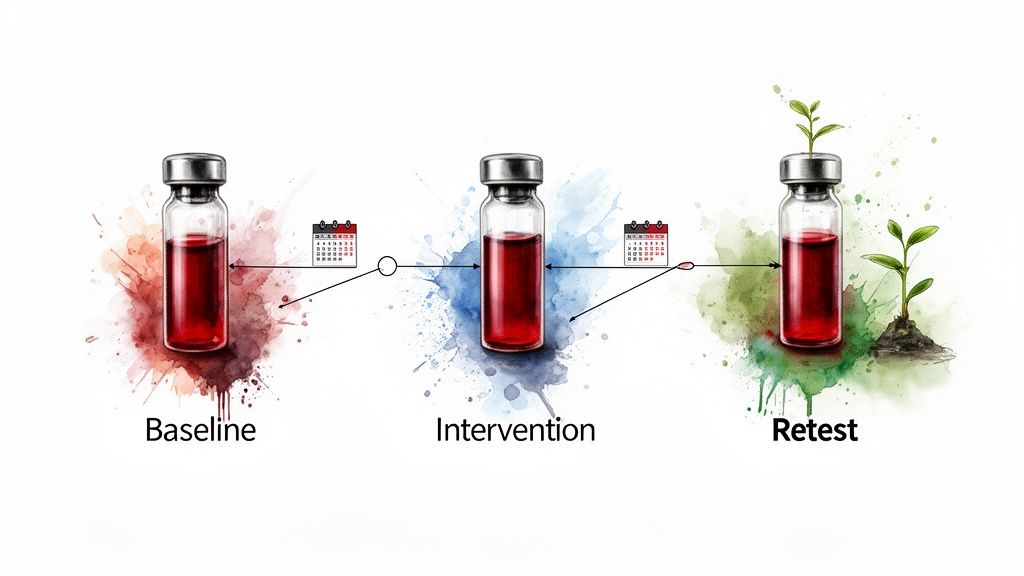
A single blood test offers a valuable snapshot, but regular testing provides the full movie of your health goals. This is the cornerstone of any serious longevity strategy, turning health from a series of disconnected events into a narrative you can direct.
Think of it like a CEO reviewing quarterly performance reports. One report is useful, but the real insight comes from comparing them over time to spot trends, measure the impact of key decisions, and steer the company toward its long-term goals. Your health deserves the same data-driven focus.
This approach is gaining momentum. In the UK, the blood testing market hit USD 1,653.6 million in revenue in 2024 and is expected to climb to USD 2,644.9 million by 2030. This growth is fuelled by driven individuals who are done with guesswork and ready to take control of their healthspan. You can learn more about the UK's expanding blood test market on Grand View Research.
The Power of the Test-Act-Retest Loop
The engine behind any data-backed longevity plan is the test-act-retest loop. It’s a simple but powerful cycle that allows you to move beyond generic advice and focus on what objectively works for your biology. It's a three-step process built for continuous improvement.
- Establish Your Baseline (Test): Your first thorough blood test for health is your personal starting line. This initial data reveals where your key biomarkers stand before you make any changes, giving you a important reference point for your longevity goals.
- Implement a Change (Act): Armed with your baseline data and longevity goals, you take targeted action. This could be anything from adopting an anti-inflammatory diet to lower hs-CRP, starting a new supplement like NMN, or changing your training to improve recovery.
- Measure the Impact (Retest): After a specific period, usually 3 to 6 months, you test again. This second test reveals the biological impact of your changes, providing objective proof of whether your strategy is effectively improving your health markers.
This simple loop provides the feedback you need to stop guessing and start knowing. It answers critical questions with hard data, turning your health goals into a series of smart, calculated steps toward a longer, healthier life.
Putting Your Data into Action
So how does this work in the real world? By testing regularly, you can see the direct biological effects of your lifestyle choices. This lets you double down on what’s working and pivot away from what isn’t.
Here are a few practical examples:
- Tackling Inflammation: Your baseline test shows your hs-CRP is elevated. You decide to try an anti-inflammatory diet, loading up on omega-3s and antioxidants. Three months later, you retest and see a 30% reduction in your hs-CRP levels. That’s clear evidence your new diet is paying off.
- Optimising a Supplement Regimen: You start taking a supplement like NMN to support your cellular health. Your next blood test can track relevant markers to see if you’re getting the biological response you hoped for, making sure your investment is delivering actual results.
- Balancing Training and Recovery: As an athlete, you notice your cortisol levels are consistently high. You start scheduling more structured recovery days and add mindfulness practices. A follow-up test shows your cortisol has come back down, confirming your new approach is working.
Regular testing transforms your health strategy from an art into a science. It provides the objective accountability needed to ensure the effort you put into your diet, fitness, and supplements is delivering a measurable return on investment for your long-term wellbeing.
This continuous feedback loop is what separates an optimised health plan from a shot in the dark. It ensures every action you take is a deliberate step towards a longer, healthier, and more vibrant life.
Your Questions About Health-Focused Blood Tests Answered
Stepping into the world of proactive health testing naturally brings up a few questions. To help you feel completely confident, I’ve put together answers to some of the queries I hear most often from people using blood tests to boost their performance and longevity.
How Often Should I Be Testing My Blood?
For a solid, long-term overview of your health, getting a full panel done every 6 to 12 months is a great rhythm to get into. This gives you a reliable baseline and allows you to spot meaningful trends over time without overdoing it.
That said, if you’re making big changes – say, a complete diet overhaul, a new intense training regime, or adding a powerful supplement to your stack – you’ll want more immediate feedback. In that case, testing every 3 to 4 months is ideal. It shows you exactly how your body is responding, so you can fine-tune your approach and know what’s actually working.
Are At-Home Blood Tests as Good as Going to a Clinic?
Yes, they absolutely can be, as long as they’re done the right way. The quality of any blood test really boils down to two things: how the sample is collected and the lab that analyses it.
Top-tier at-home services have this covered:
- Professional Collection: They send a qualified phlebotomist to you to perform a proper venipuncture (a blood draw from a vein in your arm). This is the gold standard for getting a clean, accurate sample.
- Accredited Labs: Your sample goes to the very same high-spec, accredited labs that hospitals and the NHS rely on.
So, you’re getting the same level of precision you’d expect from a clinic, just without the travel and waiting room.
If I Could Only Track One Thing for Longevity, What Should It Be?
It's a tough question because health is a complete system, but if I had to pick one biomarker that punches above its weight, it would be HbA1c. This marker gives you a picture of your average blood sugar levels over the past three months, offering a important window into your metabolic health.
So much of how we age comes down to our metabolic function. Keeping your HbA1c in the optimal zone is one of the most direct ways you can invest in a long and healthy life. Of course, you still need a full panel to connect all the dots.
Can a Blood Test Really Help with Stress Management?
Definitely. It helps by turning a vague feeling of being "stressed" into concrete data. A blood test can measure your main stress hormone, Cortisol, to see if it’s consistently high, which is a classic sign of heading towards burnout.
It can also flag up deficiencies in key nutrients that stress burns through, like Magnesium and B vitamins. These are essential for keeping your nervous system in check. Spotting these gaps means you can take targeted action with your diet or supplements to build up your body’s natural resilience to stress.
Ready to stop guessing and start making decisions based on your own body's data? At Lola, we bring advanced health insights right to your doorstep. Book your at-home blood test today and get the clear, actionable information you need to feel and perform your best. Start your journey with Lola Health.
Test This Biomarker at Home
This biomarker is included in our ALT Test and Liver & Kidney Function — results in 2-3 working days with GP-reviewed insights.
At-Home Blood Testing
Check your levels from home
Professional phlebotomist visit. Doctor-reviewed results in 2-5 days. Track your health with comprehensive blood panels.
→45-70 biomarkers tested · Venous blood draw · From £130