


When you’re actively pursuing longevity and peak performance, waiting for blood test results feels like a forced pause on progress. Slow results are more than just an inconvenience; they are a critical gap in the data you need to optimise your healthspan. In the UK, the time it takes to get your blood work back can range from a few days to several weeks, depending on the test's complexity and the system you use.
How Long Do Blood Tests Really Take in the UK?
For anyone serious about building a longevity strategy, the difference between reactive healthcare and proactive optimisation is important. One is designed to treat sickness; the other is built to prevent it and extend your healthy years. This difference is starkly visible in blood test turnaround times.
Standard tests provide a basic overview, but they often lack the granular insights needed to map out a genuine longevity plan. To truly get ahead, you need specialised data on hormones, comprehensive vitamin panels, and advanced cardiovascular markers. These are the keys to a proactive approach, yet they are often the tests with the longest delays in the traditional system, hindering your ability to make timely, informed decisions about your health.
NHS vs Private Service Turnaround Comparison
Let's compare the estimated waiting times for blood tests that are vital for tracking and improving long-term health. The difference in speed highlights how a more focused, modern process can get critical longevity data back into your hands much faster, allowing you to act on it immediately.
A quick look at the numbers shows a clear pattern. While the NHS is essential for urgent care, its system isn't optimised for the rapid feedback loop required for proactive health management and longevity.
Typical Blood Test Turnaround Times NHS vs Private Service
| Blood Test Type | Typical NHS Wait Time | Typical Private Wait Time |
|---|---|---|
| Full Blood Count (FBC) | 1-3 Days | 1-2 Days |
| Liver & Kidney Function | 1-3 Days | 1-2 Days |
| HbA1c (Diabetes Marker) | Up to 1 Week | 1-2 Days |
| Vitamin D & B12 | 1-3 Weeks | 2-3 Days |
| Full Hormone Panel | 2-4 Weeks | 3-5 Days |
| Advanced Lipid Panel | 2-3 Weeks | 2-3 Days |
As you can see, for specialised tests that provide a real edge in your longevity strategy, like a full hormone panel or advanced lipid profile, the waiting time shrinks from weeks to mere days.
The Problem with Waiting
This isn't just about impatience; a long wait is a genuine gap in your data-driven longevity goals. Officially, NHS targets aim to get most standard results back within 48 hours. The reality, however, can be quite different for the specific tests important for longevity.
A vitamin D test, for instance, can take up to three weeks. Complex panels might take one or two weeks. You can get a better sense of these timelines by looking into the standard NHS test times. This lag makes it incredibly difficult to make timely, informed decisions about your nutrition, supplements, and lifestyle - the core pillars of any longevity plan.
Ultimately, this waiting period forces you into a reactive cycle where you're always several weeks behind your own biology. For those optimising for a long and healthy life, that delay means lost opportunities to fine-tune your strategy and compound health gains.
What Really Causes Delays in Your Blood Test Results
Ever wondered what happens after your blood sample is taken? That small vial embarks on a complex journey, and understanding each step helps explain why getting your results can sometimes feel like a waiting game. It’s rarely one single factor; a series of interconnected steps can create bottlenecks that slow down your access to important longevity data.
Think of your blood sample as a time-sensitive parcel. Its journey involves multiple hand-offs, each a potential point of delay. The first step is logistics: how quickly does your sample get from the collection point to the lab? In a large, centralised system, this can mean coordinating collections from dozens of clinics, creating a backlog before analysis even begins.
Once it arrives, the specific test becomes the biggest factor. A routine Full Blood Count (FBC) is highly automated and can be processed quickly. But the specialised tests vital for longevity, like detailed hormone panels or inflammatory markers, often require more complex, hands-on analysis. Some are run in batches, so your sample must wait for others to arrive before processing can start.
The Major Bottlenecks in the System
The lab's daily workload is another huge variable. A high volume of samples creates a queue, pushing back analysis time for anything deemed non-urgent. This is especially true for the massive labs that serve entire regions. A sudden spike in demand can have a ripple effect on turnaround times for everyone.
This is where the real difference in timelines between routine, specialised, and private blood tests becomes clear.
The key takeaway is clear: while standard tests can be fast, the specialised markers essential for optimising your healthspan often get stuck in a much slower pipeline within a traditional system.
Finally, some results need a human touch. An abnormal or borderline result gets flagged for manual review by a pathologist or clinical scientist. This is a vital quality control step, but it adds another layer of time to the process.
For anyone serious about their longevity, these delays aren't just an inconvenience. They represent a gap in your ability to make timely, data-driven decisions about your health, training, and nutrition.
Bypassing the Common Hurdles
Modern services are specifically designed to sidestep these hurdles. By using a network of efficient, UKAS-accredited labs and streamlining the entire process, from sample collection to digital delivery, it's possible to slash the waiting time. Understanding why fast turnaround for lab results is so important is the first step toward taking proactive control of your longevity. This efficiency is what transforms blood testing from a slow, reactive chore into a powerful, proactive tool for managing your long-term wellness.
The Hidden Costs of Waiting for Your Health Data
Slow blood test results are a massive missed opportunity for genuine health optimisation. For anyone focused on longevity, waiting weeks for critical health data is like trying to navigate a complex journey without a map. Every day of delay is a day you could have spent making targeted, effective improvements to your healthspan.
The real price of waiting is the prolonged period of suboptimal health. You're left flying blind, sticking to nutrition plans and lifestyle habits that might not be working - or could even be counterproductive. Without timely data, you can only guess about what’s happening inside your body.

Longevity Setbacks in Real Terms
Let's ground this in reality. For someone optimising their metabolic health, a three-week wait for an HbA1c or advanced lipid panel result is a significant delay. That's nearly a month of continuing dietary habits that might be silently increasing long-term disease risk. The opportunity to intervene and correct course is lost.
The consequences are just as real for anyone trying to manage inflammation, a key driver of ageing. Delayed insights into markers like hs-CRP mean weeks of battling unexplained fatigue and low-grade systemic stress. That time could have been spent identifying and removing inflammatory triggers from your diet or lifestyle, directly impacting your long-term health trajectory.
In the pursuit of longevity, time is your most valuable asset. Waiting for health data means losing that asset, allowing small, correctable issues to become chronic problems that actively work against your goals.
The Opportunity Cost of Slow Data
Every day spent waiting is a day you could have been implementing a solution. This "opportunity cost" quickly adds up, creating a significant gap between where you are and where you could be. It's the difference between proactive optimisation and reactive damage control.
Here are a few scenarios that bring this cost to life:
- Nutrient Deficiencies: A two-week delay in spotting a Vitamin D deficiency means two more weeks of a compromised immune system and sluggish cellular function - foundational issues for long-term health.
- Hormonal Imbalances: Waiting a month for testosterone or oestrogen results means you could be operating with suboptimal hormone levels, affecting everything from bone density to cognitive function, which are critical for a long and healthy life.
- Metabolic Health: You could spend weeks on a new diet, only to find out much later that your HbA1c levels were signalling a need for a different nutritional strategy all along.
Getting rapid, actionable data changes everything. It shifts your approach from guesswork to precision. It closes the feedback loop between your lifestyle choices and your biological reality, helping you to make small, consistent adjustments that compound into major long-term gains in healthspan. Faster results give you immediate control, turning insights into action when it truly matters.
How to Get Faster Blood Test Results in the UK
The traditional route for blood tests often feels like a waiting game, a major roadblock for anyone serious about their longevity strategy. Thankfully, a more efficient approach is changing the game, cutting the blood work results time from weeks to days by eliminating the usual bottlenecks.
The biggest shift is bypassing clinic queues and administrative hurdles. Instead of waiting for appointments, you can book a professional phlebotomist to visit you at home or in the office. This single change puts you back in control of the schedule, removing the most frustrating delay right at the start and integrating health tracking smoothly into your life.
Streamlining the Entire Journey
This modernised process is built for speed and precision. It’s not just about convenient sample collection; it’s about what happens next. Your sample is sent directly to a dedicated, UKAS-accredited lab via a priority courier.
These labs are designed for efficiency. Unlike huge, centralised systems juggling enormous workloads, they can start analysing your sample almost as soon as it arrives. This direct-to-lab pathway completely bypasses the logistical logjams that plague traditional testing, ensuring your longevity markers are processed quickly and accurately.
The experience is better all around, not just faster. For example, with a service like Lola, which specialises in full-body analysis, you can book a professional phlebotomist for an at-home visit within just 2-5 days at no extra cost. By using UKAS-accredited labs with a 99.8% venipuncture success rate, Lola gets your results back to you in days, not weeks.
From Raw Data to Actionable Insights
Getting faster results is only half the battle. The real value for longevity is in receiving data you can understand and act upon. Modern services deliver your results through easy-to-use digital platforms, usually via a secure app.
This isn't just a long list of numbers. You get a full suite of tools to build your longevity plan:
- Trend Analysis: See how your biomarkers are changing over time as you implement new lifestyle strategies.
- Clear Explanations: Understand what each marker means for your specific longevity goals.
- Doctor's Review: A qualified doctor provides a personalised summary, highlighting key takeaways and suggesting practical next steps.
This wide-ranging approach provides genuine insights, turning your blood test from a simple check-up into a useful measure for your longevity. If you want to explore this further, you can learn more about arranging private blood tests at home. It closes the loop, turning your biological data into a clear roadmap for optimising your healthspan.
Turning Your Results into Actionable Health Insights
Getting your numbers back quickly is important, but raw data is only half the story. The real value for longevity comes from turning those numbers into a clear, personalised action plan. Think of your results as a highly detailed map of your internal health; a professional review is an expert guide who helps you read it and plot the best route towards a longer healthspan.
This is where you move from just knowing your levels to understanding what they mean for you. It’s the difference between seeing "Vitamin D: 45 nmol/L" and realising this suboptimal level could be impacting your immune function and energy - both vital for long-term health. A professional review connects the dots between your unique biology and your longevity goals.
From Biomarkers to Practical Advice
The power of fast blood work is the ability to make immediate, targeted changes. A proper review translates complex biomarkers into straightforward advice you can start using today, turning abstract data into real-world actions that support your long-term health.
Let's look at a few examples for longevity:
- hs-CRP (High-Sensitivity C-Reactive Protein): This measures low-level inflammation, a key driver of ageing. An elevated result isn't just a number; it's a prompt to reduce inflammatory triggers like processed foods, manage stress, or improve sleep quality.
- HbA1c (Glycated Haemoglobin): This gives a three-month average of your blood sugar. A result creeping towards the higher end of the optimal range is a direct call to action to fine-tune your carbohydrate intake and improve metabolic health, a cornerstone of longevity.
- Key Nutrients (e.g., Vitamin D, B12): Deficiencies here can impact everything from cellular energy to mood. Actionable advice might be, "Your Vitamin D is low. Here's a specific supplement dosage to support your immune system and bone health."
The goal is to move beyond passively looking at your health data. It's about giving you the knowledge to actively steer your biology towards your longevity targets, making precise changes based on what your body is telling you right now.
This is how you build a proactive health strategy. You can take a deeper look at decoding your numbers by reading our guide on how blood test results are explained in the UK. By bridging the gap between data and action, each test becomes another step towards a longer, healthier life.
Building Your Personal Health Dashboard with Regular Testing
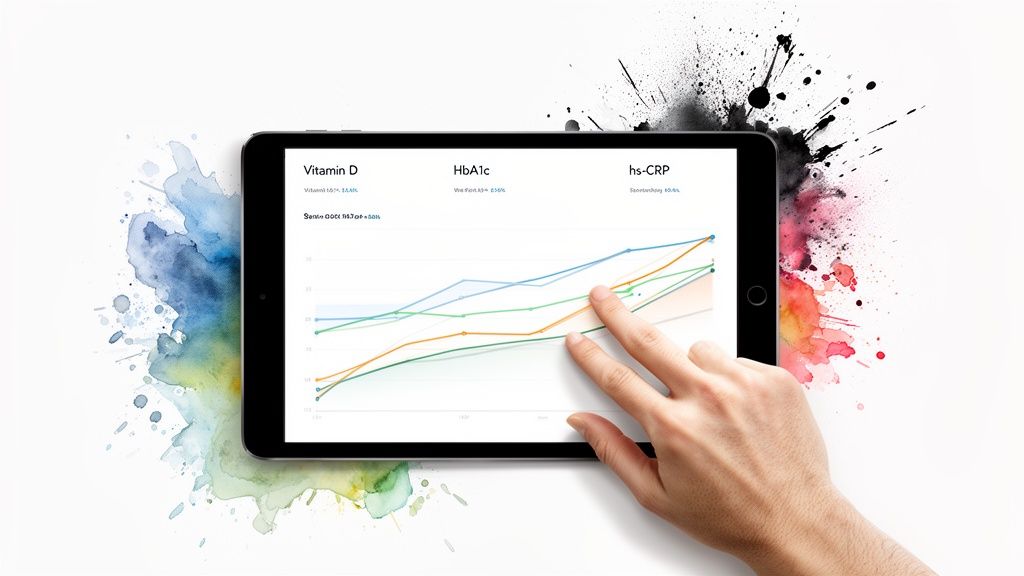
Viewing a blood test as a one-off event is a massive missed opportunity. The real power comes from seeing it as a regular update to your personal health dashboard—a vital part of any serious longevity strategy. Quicker blood work results time makes this practical, shortening the feedback loop between your actions and their biological impact.
This mindset transforms health management from guesswork into a data-driven science. You no longer have to wonder if a new diet, supplement, or recovery protocol is actually working. You can see its direct impact on your biomarkers. Tracking these trends over time provides undeniable proof of what moves the needle for your unique biology, allowing you to double down on what works.
From Reactive Check-Ups to Proactive Optimisation
Think of it like the dashboard in a high-performance car. You constantly monitor key metrics to ensure everything is running at its peak. Your body, the most complex machine you'll ever own, deserves the same attention.
When you regularly track key markers linked to longevity, you can make small, proactive tweaks long before they escalate into significant problems. This is the essence of building a long, high-performing life.
Here’s how this data-first approach puts you in control:
- Objective Progress Tracking: Get tangible proof of how lifestyle changes are affecting your internal health, going far beyond subjective feelings.
- Early Warning System: Spot negative trends in markers for inflammation or metabolic health long before symptoms appear, giving you a important window to correct course.
- Personalised Strategy: Understand your individual responses to nutrition, exercise, and stress, allowing you to build a health plan that’s uniquely yours.
When you take ownership of your health data, you stop being a passenger on your health goals and get firmly into the driver's seat. It gives you the power to make informed, strategic decisions based on real-time biological feedback.
Faster, accessible blood work is the bedrock of this modern approach to health. It provides the steady stream of data you need to build your personal dashboard, experiment with confidence, and systematically optimise for a longer, healthier, and more vibrant life. Your data-driven longevity goals starts with your next test.
Frequently Asked Questions
It’s completely normal to have a few questions when you’re looking into private health testing. Let's clear up some of the most common ones about getting your blood work back and how it all ties into your long-term health and performance.
What Is the Fastest I Can Get Blood Test Results in the UK?
For straightforward tests like a Full Blood Count or kidney function, some private labs can turn results around in as little as 24 hours after they receive the sample.
With a complete service that sends a professional to you for the sample collection, you can realistically expect your full set of results in just 2-3 working days. This speed is a significant advantage for longevity, giving you the power to act on the data and adjust your health strategy right away, rather than waiting weeks.
Are At-Home Blood Tests as Accurate as Clinic Tests?
Absolutely, as long as they’re done properly. The key is using the 'gold standard' venipuncture method—a blood draw from the vein performed by a trained phlebotomist. This is the exact same procedure used in hospitals and by the NHS, guaranteeing a high-quality, pure sample with a success rate of over 99%.
It’s a far cry from finger-prick tests, which can easily be compromised by clotting or sampling errors. When it comes to your health data, you need to be certain the results are clinically accurate.
For anyone serious about tracking longevity markers, the accuracy of venipuncture is non-negotiable. It provides the clean, reliable data needed to make informed decisions about your health.
Which Blood Tests Are Key for Longevity?
To get a truly meaningful picture of your long-term health, a good longevity panel needs to look at several core systems in your body. Think of it as a full diagnostic check-up. You'll want a full test that covers markers for:
- Inflammation (like hs-CRP)
- Metabolic Health (HbA1c)
- Cardiovascular Health (a full lipid panel)
- Liver and Kidney Function
- Key Nutrients like Vitamin D and B12
Starting with a broad analysis like this gives you a solid baseline. From there, an expert review of your results can point you towards any more specific tests you might need, all guided by your personal goals and your own biological data.
Ready to stop guessing and start knowing? Take control of your health data with Lola. Get fast, accurate, and actionable insights with our at-home blood testing service. Book your test today and build your personal health dashboard.
At-Home Blood Testing
Check your levels from home
Professional phlebotomist visit. Doctor-reviewed results in 2-5 days. Track your health with comprehensive blood panels.
→45-70 biomarkers tested · Venous blood draw · From £130