


A folate blood test is a simple but useful measure for anyone serious about longevity, offering a direct window into your cellular health and metabolic efficiency. It's a cornerstone test for optimising long-term vitality, as adequate folate is essential for the very processes that protect your DNA, manage inflammation, and support cognitive function well into old age.
Why a Folate Test Is Your Blueprint for Cellular Health

Think of folate as the master architect for your body's longevity projects. It lays down the essential blueprints needed to build and repair every single cell - from creating fresh red blood cells that ferry oxygen to your brain and muscles, to constructing the very DNA that dictates your healthspan. Without enough folate, your body's most critical regeneration projects grind to a halt.
So, a folate blood test isn't just about spotting a deficiency. It's a proactive look at your body's capacity for self-repair and resilience. For anyone focused on longevity, this marker offers incredibly valuable and actionable insights into your ability to combat age-related decline at a cellular level.
Understanding the Two Types of Folate Tests
When you get a folate test, the lab will measure it in one of two ways. It’s helpful to know the difference, as each gives you a unique perspective on your health:
-
Serum Folate Test: This measures the amount of folate floating around in the liquid part of your blood (the serum). You can think of it as a recent snapshot, reflecting what you've eaten or supplemented with in the last few days. It's useful, but levels can bounce around quite a bit.
-
Red Blood Cell (RBC) Folate Test: This test looks at the folate stored inside your red blood cells. Since red blood cells live for about three months, this gives a much more stable, long-term picture of your body’s actual folate reserves. For longevity planning, the RBC test is the gold standard for understanding your foundational health.
Understanding your folate status is about more than avoiding deficiency; it’s about optimising the very systems that protect your cells, sharpen your mind, and extend your healthspan. It’s a foundational piece of the longevity puzzle.
By looking at your folate levels through this lens, you move from a reactive mindset to a proactive one. Instead of waiting for symptoms like fatigue or brain fog to show up, you can use this data to fine-tune your nutrition and lifestyle, making sure your cellular architect always has the materials it needs to build a more durable you.
This simple test provides the knowledge needed to build a more resilient, high-performing, and long-lasting version of yourself. Monitoring folate is a core part of a data-driven approach to longevity. To learn more, check out our detailed guide on understanding your vitamins and minerals blood tests.
To help you get started, here's a quick summary of what the folate test involves and why it matters.
Folate Blood Test at a Glance
This table breaks down the core components of the folate blood test, explaining what is measured and why it is so critical for both long-term health and daily performance.
| Metric | What It Measures | Importance for Longevity and Performance |
|---|---|---|
| Serum Folate | The amount of folate circulating freely in your blood plasma. Reflects very recent dietary intake. | Provides a short-term snapshot of your folate status. Useful for tracking immediate responses to diet changes or supplementation. |
| RBC Folate | The level of folate stored within your red blood cells over the past 2-3 months. | Offers a reliable, long-term view of your body's folate reserves. important for assessing your risk of age-related decline and optimising foundational cellular health. |
Understanding both markers gives you a comprehensive view, allowing you to make smarter, more informed decisions about your health and nutrition for the long run.
Why Folate Is a Key Player in Your Long-Term Health
When we talk about folate, it’s easy to think of it simply in terms of avoiding deficiency. But for anyone serious about longevity, optimal folate levels are a non-negotiable asset. Folate is a fundamental operator in your body’s most critical systems, influencing everything from how your genes express themselves to your risk of age-related cognitive decline.
Think of it as the project manager for your body's cellular workforce. It oversees countless tasks that are essential for keeping you resilient and mentally sharp for decades to come. When your folate levels are optimal, your body can run its daily maintenance and repair protocols with incredible efficiency, effectively slowing the ageing process.
The Methylation Cycle: Your Body's Internal Software Update
One of folate's most important jobs is to power the methylation cycle. This isn't just some obscure biochemical process; it's like a continuous software update for your body that dictates how your genes behave. This process, called gene expression, happens billions of times per second in every single cell.
What does this mean for your longevity? Healthy methylation, driven by adequate folate, helps your body:
- Repair DNA: It ensures your genetic blueprint stays stable and free from errors that accelerate ageing. This is your first line of defense against cellular breakdown.
- Detoxify Effectively: It helps process and flush out harmful compounds, reducing the toxic load that wears down your cells over time.
- Regulate Inflammation: Proper methylation keeps chronic, low-grade inflammation in check - a key driver of almost every age-related disease.
When folate is low, this entire system slows down. It's like trying to run modern software on an old computer - errors pile up, and cellular performance degrades. This is why a folate blood test is a vital check on your body’s anti-ageing machinery.
When you optimise folate, you are directly influencing how your genes behave. You're not changing your DNA, but you are giving your body the tools to express the healthiest version of your genetic code - a powerful lever for promoting longevity.
Keeping Homocysteine in Check
A direct and immediate consequence of a well-oiled methylation cycle is the regulation of an amino acid called homocysteine. When folate levels are low, homocysteine can climb, and elevated levels are strongly linked to an increased risk of cardiovascular problems and cognitive decline.
Think of homocysteine as metabolic waste. Folate is the key that unlocks the recycling pathway, converting this potentially harmful substance back into something useful. If you don't have enough keys, the waste builds up, creating a toxic environment that damages blood vessels and brain cells. Keeping homocysteine low is a cornerstone of protecting your long-term health.
Fuelling Your Physical and Mental Performance
For those optimising for a long and active life, folate’s impact is direct and tangible. Your ability to perform, both physically and mentally, is closely tied to your folate status.
For Physical Longevity:
Folate is essential for making healthy red blood cells, which deliver oxygen to your muscles and tissues. Suboptimal folate levels mean less efficient oxygen delivery, compromising your endurance, power output, and ability to recover. This directly impacts your capacity to maintain muscle mass and cardiovascular fitness as you age.
For Cognitive Longevity:
Your brain relies on folate to produce key neurotransmitters like serotonin and dopamine, which govern your mood, focus, and resilience. Low folate is a silent barrier to your cognitive potential, contributing to brain fog and increasing the risk of long-term cognitive decline.
A Growing Concern in the UK
Unfortunately, maintaining optimal folate is becoming a real challenge. Recent data reveals a troubling trend of declining folate levels right across the UK. An analysis of NDNS data from 2008 to 2019 showed that among women of reproductive age, the percentage with red blood cell folate below the protective threshold of 748 nmol/L surged from 69% to 89%.
Alarmingly, that means nine out of ten women in this group now have levels below the cut-off considered protective against neural tube defects. This trend highlights a widespread issue, particularly as the UK does not have mandatory food fortification like the US, where folate levels doubled after policy changes were introduced. You can explore the full findings from the Cambridge repository analysis to understand the wider implications of these trends.
How to Interpret Your Folate Blood Test Results
Getting a blood test report back can sometimes feel like you've been handed a set of coordinates without a map. The numbers are right there in black and white, but what do they really mean for your health, performance, and longevity? Let's break it down.
The first thing to understand is that there are two main ways to measure folate, and each tells a very different story.
Think of a serum folate test as a snapshot - it reflects the folate you’ve consumed in just the last few days. A red blood cell (RBC) folate test, on the other hand, is more like a short documentary, revealing your body's stored folate levels over the past two to three months. For anyone serious about long-term health, the RBC test gives a far more stable and reliable picture of your true folate reserves.
From Normal Ranges to Optimal Health
Your lab report will show a "normal" reference range, which is a decent starting point. But for longevity, the goal isn't just to be "not deficient" - it's to be optimal. These standard ranges are based on preventing acute disease in the general population, not on optimising the body for a long and healthy life.
An optimal folate level is your body's insurance policy against age-related decline. It ensures you have more than enough of this important nutrient to handle daily stress, power your brain, and drive cellular repair without ever cutting corners. This is the foundation of true health resilience.
Looking beyond the standard ranges is what allows you to really fine-tune your health strategy. For example, a result that’s on the low end of "normal" might be technically fine, but it could be the very thing holding back an athlete who needs faster muscle recovery or a professional who relies on sharp, sustained focus. You can look more closely at this concept in our guide to understanding your vitamins and minerals blood tests.
This decision tree shows just how fundamental optimal folate is for achieving key health goals, from cognitive function to long-term wellness.
As you can see, optimal folate isn’t just another biomarker to track; it’s a cornerstone that supports the entire structure of long-term health.
What Your Folate Levels Are Really Saying
Let’s translate those numbers into actionable health intelligence. This table contrasts the standard laboratory ranges with the optimal levels you should be aiming for.
Interpreting Folate Levels from Normal to Optimal
| Folate Level (Serum nmol/L) | Standard UK Interpretation | Optimal Range for Performance and Longevity |
|---|---|---|
| Below 7 nmol/L | Deficient. A clear sign of insufficiency that requires immediate attention. Puts you at risk for anaemia and elevated homocysteine. | A critical red flag. This indicates a significant shortfall that is likely accelerating cellular ageing and impairing cognitive function. |
| 7 - 12 nmol/L | Borderline/Low Normal. Clinically acceptable, but leaves no room for error. You may not have obvious symptoms, but you lack a buffer. | Suboptimal. This level acts as a bottleneck for longevity, limiting your body's ability to repair DNA, control inflammation, and maintain mental clarity. |
| Above 12 nmol/L | Normal/Sufficient. Generally considered adequate for the average person to avoid deficiency-related diseases. | The starting point for optimal health. Levels should ideally be in the upper quartile of the normal range, typically >30 nmol/L, to support long-term resilience. |
An optimal level provides the resilience your body needs to thrive, not just survive. It ensures processes like DNA repair and neurotransmitter production are always running at full capacity.
Interpreting Your Results in Context
So, what do these different levels mean in the real world?
- Low Folate Levels: This is a major red flag for your longevity strategy. It’s a sign your body is running on empty, which can manifest as fatigue and brain fog. From a longevity standpoint, it’s linked to higher homocysteine - a risk factor for cardiovascular issues and cognitive decline.
- Borderline Folate Levels: This is the grey zone where premature ageing can accelerate. You might feel fine day-to-day, but your body is operating without a safety net. An intense workout, a stressful week, or a minor illness could deplete your reserves, compromising your performance and long-term resilience.
- High Folate Levels: This is less common, but unusually high levels can sometimes point to a problem with vitamin B12 metabolism. B12 is needed to activate folate, so a B12 deficiency can cause folate to build up in the blood, unused. It can mask the real issue, which is why testing both is important.
Worryingly, recent UK lab data from over 47,000 samples showed that 72.7% of women aged 16-50 had folate levels below the recommended threshold for optimal health. Even among motivated individuals who proactively get tested, people just like ambitious professionals and athletes, suboptimal levels are common. This really highlights why monitoring this nutrient is so critical for anyone living a high-output lifestyle.
How Does the Folate Testing Process Work?
Moving from simply wondering about your folate levels to actually understanding them is a powerful step for your health. Thankfully, getting a folate blood test today is a straightforward process, designed to fit neatly into your life without causing any disruption.
The whole experience is built for convenience, starting with a simple online booking. You're in complete control of your schedule right from the beginning, which makes it far easier to be proactive about your health without the usual hassle of arranging appointments.
Your Test, Your Way: At Home or in a Clinic
We all have different schedules and preferences, so flexibility is key. Once your test is booked online, you get to decide where your sample is collected. It's a world away from the old model of stuffy waiting rooms and rigid appointment times.
- At-Home Phlebotomy: A trained professional can come to your home or even your office. This is a significant advantage for busy professionals who need to manage their health without losing half a day to travel and waiting around.
- Partner Clinic Visit: If you’d rather pop into a clinic, you can easily book a slot at a nearby partner location. It’s all about what works best for you.
This choice removes any logistical barriers that might stop you from getting important health insights. The goal is to make getting a folate blood test feel completely effortless.
The Gold Standard for Accurate Results
The quality of any test result comes down to two things: the sample collection and the lab analysis. That’s why we rely on the venipuncture method, which is a simple blood draw from a vein in your arm. This is the gold standard for accuracy and gives a far more reliable picture of your health than a basic finger-prick test.
From there, your sample is sent directly to a UKAS-accredited laboratory. This is a important seal of quality, showing that the lab meets the highest possible standards for competence and precision - the very same standards the NHS trusts. This ensures your results are not just quick, but exceptionally accurate. To learn more about what makes a good test, check out our guide on how to test for a vitamin deficiency.
A modern blood test is no longer just a one-off data point. It’s an interactive experience, delivering a personalised doctor’s review and trend analysis directly to you, turning raw numbers into a clear plan for your long-term health.
From Data to Actionable Insights
Getting your results is just as smooth. Forget waiting for a letter in the post or playing phone tag. Your results are delivered to a secure, easy-to-use app on your phone, where you can see your current folate level and track it over time.
This trend analysis is what makes the difference for long-term health planning. You can literally see the impact of dietary tweaks or new supplements, helping you figure out what your body truly responds to. Best of all, every result is accompanied by a personalised review from a doctor, who breaks down what your numbers mean for you and your health goals. It turns a simple blood test into a proper health consultation, giving you clear, actionable advice to take control of your well-being.
How to Optimise Your Folate Levels
Getting your folate blood test results back is just the starting point. The real work begins when you turn that data into a solid plan for your long-term health. Reaching an optimal folate level doesn't happen by accident; it's the result of consistent, targeted actions that support your body's most fundamental processes.
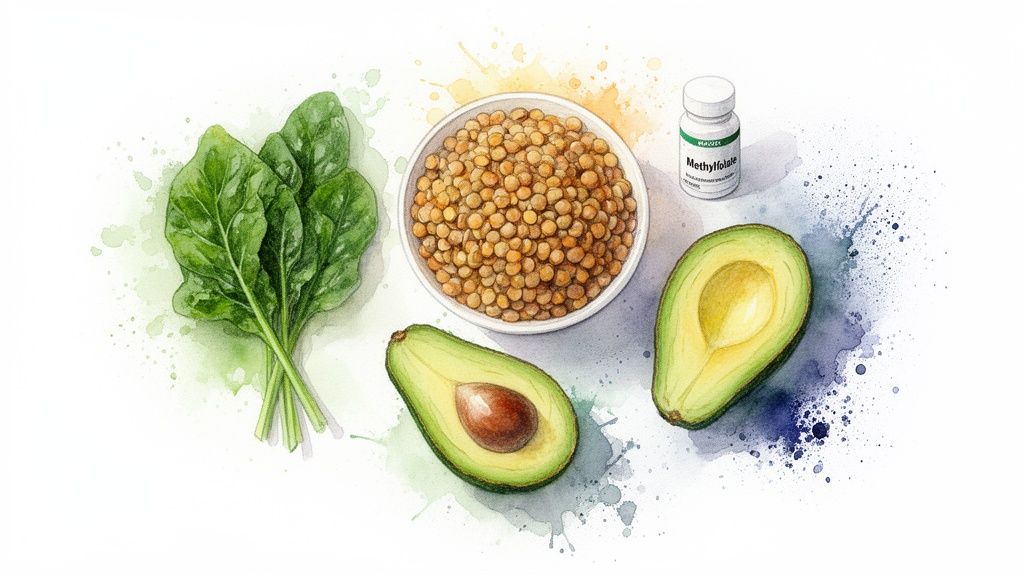
These actionable strategies are designed to help you build a strong foundation for longevity. They are practical, fit into a busy schedule, and will help you support your methylation pathways to keep your cells healthy and resilient for years to come.
Master Your Diet with Folate-Rich Foods
Your first and most powerful action is to optimise your diet. The good news is that plenty of whole foods are naturally packed with this essential nutrient, making it straightforward to boost your levels through your daily meals.
Think of your plate as a toolkit for cellular health. Every folate-rich food you add is another tool your body can use to manage inflammation, protect your DNA, and keep homocysteine levels in check - all key pillars of a longevity strategy.
Here are some of the most powerful dietary sources of folate:
- Leafy Greens: Spinach, kale, and rocket are absolute powerhouses. A simple daily green smoothie or a large side salad can make a huge impact.
- Legumes: Lentils, chickpeas, and black beans are not only loaded with folate but also provide fantastic fibre and plant-based protein.
- Avocado: This versatile fruit is a brilliant source of both folate and healthy fats, making it a perfect addition to toast, salads, or smoothies.
- Cruciferous Vegetables: Broccoli and Brussels sprouts offer a solid dose of folate along with other important compounds for detoxification.
A great tip for preserving folate is to minimise cooking time and heat. Folate is quite delicate, so lightly steaming or stir-frying your vegetables instead of boiling them helps retain much more of the nutrient, ensuring it actually makes it into your system.
Beyond just testing, getting your folate levels right often requires a few dietary tweaks. For detailed nutrition guidance, professional support can make all the difference.
The Importance of Smart Supplementation
While a food-first approach is ideal, supplementation is often a important part of a longevity strategy. This is especially true if you have higher needs, genetic factors that impair folate metabolism, or simply need to correct a suboptimal level efficiently. This is where understanding the different forms of folate becomes critical.
The most common form on the shelves is folic acid, a synthetic version used in fortified foods and many standard multivitamins. While it can raise blood folate levels, it’s not the most efficient form for everyone.
For your body to actually use folic acid, it has to convert it into its active form through a multi-step process. This conversion relies heavily on an enzyme called MTHFR. A significant portion of the population has genetic variations in the MTHFR gene that can slow this process right down, making folic acid far less effective for them.
Why Methylfolate Is Often the Superior Choice
This is exactly where methylfolate (often labelled as L-5-MTHF) comes in. It's the active, body-ready form of folate that your cells can use immediately, completely bypassing that tricky conversion process.
For anyone with an MTHFR variation, or simply for those who want to ensure they're getting the most bioavailable form, methylfolate is the smarter choice. It gives your cells a direct supply of the exact folate they need to power methylation, repair DNA, and produce key neurotransmitters, providing a more reliable and effective way to optimise your levels for longevity.
The Folate Landscape in the UK
The need for these strategies is backed by national data. Revised figures from the UK's National Diet and Nutrition Survey highlighted some worrying trends. In Scotland, for example, a significant 11% of women aged 16-49 had red blood cell folate levels low enough to risk anaemia—a critical issue for professionals and athletes who rely on optimal blood health. The situation in Northern Ireland was even more stark, with 52% of girls aged 11-18 showing low serum folate. You can find more details in the Public Health England report.
Common Questions About Folate Testing
Looking at your health data often brings up more questions, and that’s a good thing. To help you feel more confident and in control, we’ve answered some of the most frequent queries we get about folate testing, especially for those of you focused on long-term health and hitting your peak performance.
How Often Should I Check My Folate Levels?
Think of your first folate blood test as setting your personal baseline—it’s the "you are here" marker on your health map. Once you have that starting point, re-testing every 6 to 12 months is a sensible approach. This lets you track your progress and see how any changes to your diet or supplements are actually working.
This regular monitoring allows you to make proactive, data-driven adjustments to your longevity plan, catching any downward trends early before they can impact your long-term health. Of course, a chat with your doctor can help you fine-tune this schedule based on your own health goals and lifestyle.
Which Is a Better Test: Serum or Red Blood Cell Folate?
This is a great question because it gets right to the heart of what makes data useful. A serum folate test is like a quick snapshot; it shows your folate intake from the last few days. It has its place, but a few folate-rich meals can easily skew the results.
On the other hand, the red blood cell (RBC) test gives you a much more stable and accurate view. It reflects your body's folate stores over the past two to three months, offering a true insight into your long-term status. If you're planning for longevity, the RBC test is undoubtedly the more valuable choice.
Can Low B12 Affect My Folate Results?
Yes, absolutely. Vitamin B12 and folate are a dynamic duo in your body's metabolic engine, working hand-in-hand in a process called methylation. If you’re low on B12, it can essentially "trap" folate in a form your body can't use. This can hide a functional folate deficiency.
What does that mean in practice? Your blood test might come back showing normal folate levels, but on a cellular level, your body is still crying out for the active form it needs.
Because of this close relationship, it's important to look at both B12 and folate at the same time. A thorough panel gives you the complete story, making sure you don't miss a vital piece of your metabolic puzzle.
Do I Need to Fast Before a Folate Blood Test?
Fasting isn't strictly necessary if you're only testing folate, but it’s highly recommended if your test is part of a broader health screen. Many other important markers for longevity, such as glucose and triglycerides, require you to be in a fasted state to get an accurate reading.
To ensure all the results from your blood panel are reliable, it's always best to follow the specific instructions provided with your test. It’s a simple step that guarantees you get the most precise and actionable data possible.
Stop guessing and get a clear picture of your folate status. With Lola, you can book a Full Body Analysis with a simple at-home or in-clinic blood draw, view your results in our intuitive app, and get a personalised review from a doctor. Start your path to optimised health today.
Test This Biomarker at Home
This biomarker is included in our Folate Test and Core Health 45 — results in 2-3 working days with GP-reviewed insights.
At-Home Blood Testing
Check your levels from home
Professional phlebotomist visit. Doctor-reviewed results in 2-5 days. Track your health with comprehensive blood panels.
→45-70 biomarkers tested · Venous blood draw · From £130