


An at-home blood test is a modern way to get a deep look at your health without ever leaving your house. You collect a blood sample, send it off to a lab, and in return, you get a detailed picture of what’s happening inside your body, helping you to make targeted changes for a longer, healthier life.
Think of it as getting a personalised health report. The results give you real, practical insights that can help you make smarter decisions about your diet, fitness, and lifestyle. It’s all about taking a proactive approach to your well-being, using data to inform habits that support longevity.
reveal Your Health Data for a Longer Life

Imagine your body came with a detailed instruction manual, but you’ve never been able to read it. An at-home blood test is the key that unlocks it. This test helps you switch from a reactive mindset, where you wait for symptoms to appear, to a proactive one, where your choices are guided by what your body is actually telling you.
This shift is fundamental for longevity. Instead of guessing what might be good for you, you get solid data. Your blood is full of hundreds of biomarkers - tiny messengers carrying vital information about your organ function, nutrient levels, and risk for chronic diseases. Analysing these markers gives you a clear, scientific baseline of where your health stands right now.
From Data to Actionable Longevity Insights
The real power of an at-home blood test isn't just seeing a list of numbers; it's about translating them into actionable steps for your long-term health. These tests provide the "why" behind your wellness plan, connecting the dots between your daily habits and your internal biology. You get the power to spot potential issues long before they become serious problems.
For instance, your results might reveal actionable insights for longevity:
- Nutritional Gaps: A Vitamin D or B12 deficiency could be the hidden reason for persistent fatigue. The actionable insight? Start a targeted supplementation plan to boost energy and cellular health.
- Metabolic Health Markers: An elevated HbA1c level provides an early warning about insulin resistance. The actionable insight? Reduce processed carbohydrates and increase physical activity to improve metabolic flexibility.
- Inflammation Levels: A high-sensitivity C-reactive protein (hs-CRP) marker can indicate underlying inflammation, a major driver of age-related diseases. The actionable insight? Adopt an anti-inflammatory diet rich in omega-3s to protect your body from within.
The core benefit of at-home testing is empowerment. It provides personalised information to make meaningful, preventative changes that compound over time for a longer, healthier life.
This approach turns health management from a passive experience into an active partnership with your body. The data you get isn't just a curiosity - it's a direct catalyst for action. In fact, a UK survey revealed that 90% of users changed their lifestyle after receiving their results. The most common changes were starting new supplements (57%) and improving their diet (56%), which shows just how motivating these insights can be. You can discover more insights from the study about how people are taking control of their health.
By monitoring your biomarkers regularly, you can track your progress over time and see exactly how your lifestyle adjustments are paying off on the inside. This continuous feedback loop is important for building habits that stick, supporting a longer, healthier life, and putting you firmly in control.
Choosing Your Test: Venous Draw vs Finger Prick
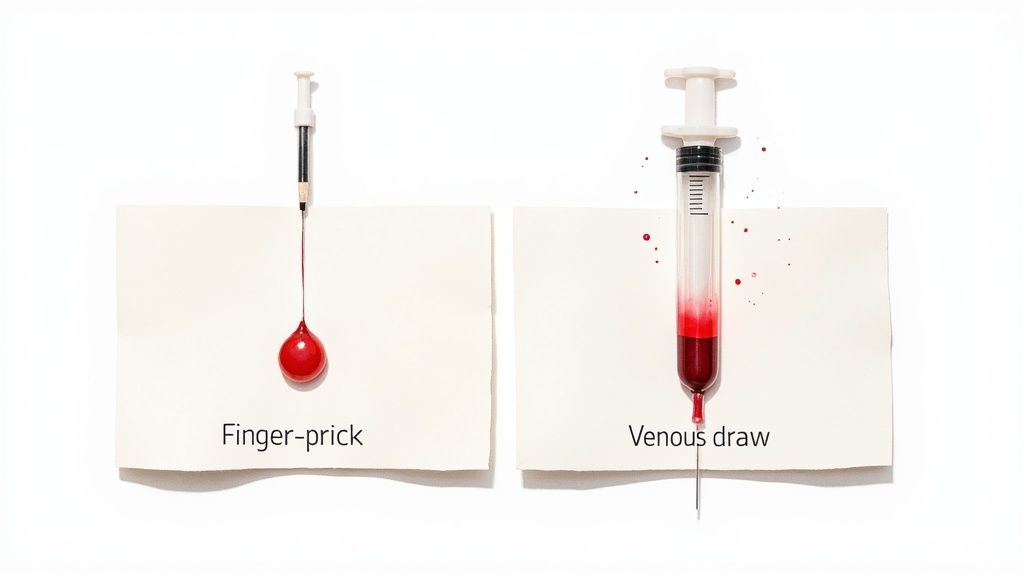
When you decide to get an at‑home blood test, one of the first choices you’ll make is how the sample is taken. It might seem like a small detail, but it’s probably the most important decision you'll make in the whole process. How your blood is collected directly impacts the quality of your longevity insights.
The two main options are a DIY finger-prick kit or a professional venous blood draw. A finger-prick test gives you a blurry snapshot of your health - you get an idea of what's going on, but the details are often fuzzy. A venous draw, on the other hand, is like a high-definition photograph, capturing a precise and comprehensive picture you can confidently use to guide your longevity strategy.
The Limitations of Finger-Prick Tests
The biggest selling point for finger-prick tests is convenience. But that ease of use comes with serious trade-offs, especially when you're tracking the subtle health markers linked to longevity. The tiny sample size is often the root of the problem.
A few drops of blood from a fingertip often isn’t enough for labs to run a wide range of tests, and it leaves no room for a re-run if something goes wrong. Plus, the sample itself is a mix of capillary blood and other tissue fluids, which can dilute the sample and skew your results.
There's also a high risk of user error. Squeezing your finger too hard can damage the red blood cells, a process called haemolysis, which contaminates the sample and often makes it unusable. A failed collection means you either have to try again or give up on the test completely.
For anyone serious about optimising their health for the long term, the risk of getting dodgy or inconclusive results from a finger-prick test is a massive drawback. You need data you can trust to build your longevity plan.
The Gold Standard: Venous Blood Draw
There’s a reason the NHS and clinics everywhere use a venous blood draw. It is, without a doubt, the gold standard for accuracy and reliability. The process involves a trained professional, called a phlebotomist, drawing blood directly from a vein in your arm.
This method gives a much larger, purer sample of whole blood, which is important for several reasons:
- Plenty of Volume: A bigger sample means the lab can run a full panel of tests and still have enough left over for re-testing if any results look unusual.
- Pure and Simple: Venous blood isn't mixed with tissue fluid, so the biomarker levels measured are a true reflection of what’s actually in your system.
- Minimal Error: A trained phlebotomist knows exactly how to collect a sample properly, minimising the risk of haemolysis or contamination that so often ruins finger-prick tests.
Comparing At-Home Blood Collection Methods
To make the choice clearer, here’s a straightforward comparison between a professional venous draw and a DIY finger-prick kit.
| Feature | Venous Collection (Professional Phlebotomist) | Finger-Prick Kit (DIY) |
|---|---|---|
| Sample Quality | High-quality, pure venous blood | Mixed capillary blood and tissue fluid |
| Sample Volume | Large (several ml), enough for wide-ranging panels and re-tests | Very small (a few drops), limits the number of tests |
| Accuracy | Gold standard for clinical testing | Prone to inaccuracies from dilution, contamination, or user error |
| Risk of Sample Rejection | Very low when performed by a professional | Higher risk of haemolysis or insufficient sample, leading to rejection |
| Range of Tests Available | Extensive, suitable for all biomarkers including sensitive ones | Limited, not suitable for all tests |
| Convenience | Professional comes to your home, so no travel needed | Can be done anytime by yourself |
| Best For | Serious health tracking, longevity, complex panels, and reliable data | Basic wellness checks where absolute precision is less critical |
Ultimately, while finger-prick tests have their place, they can’t match the precision of a venous draw. When you're monitoring critical biomarkers for longevity - like Apolipoprotein B (ApoB) for heart health or fasting insulin for metabolic function - you simply can't afford to be working with questionable data.
This is why services offering professional phlebotomy at home are becoming the go-to choice for anyone serious about getting actionable health insights. For a closer look at how it all works, check out our guide to at-home phlebotomy.
How to Ensure Your Test Results Are Accurate
When you’re making decisions about your long-term health based on an at-home blood test, trust is everything. The real value is in the data. The test kit is just a tool for collection; the real science happens inside a highly specialised laboratory.
This is where accreditation comes in. It’s the single most important factor that guarantees your results are more than just numbers on a screen - they're clinically valid data points reflecting what’s really going on inside your body.
The Gold Standard: UKAS Accreditation
In the UK, the ultimate seal of approval for a laboratory is UKAS accreditation. UKAS, or the United Kingdom Accreditation Service, is the only national body the government recognises to assess labs and other testing organisations. Think of it as a rigorous, expert-led inspection that confirms a lab meets the highest possible standards for quality and competence.
A UKAS-accredited lab follows the exact same strict protocols as those used by the NHS. Every single step of the process is scrutinised, from how your sample is handled when it arrives to the precise calibration of the scientific equipment used for the analysis.
When you choose a service that partners with a UKAS-accredited lab, you're getting peace of mind on several fronts:
- Technical Competence: The lab staff are highly trained professionals who follow precise, validated procedures to the letter.
- Equipment Precision: The analysers are state-of-the-art and meticulously maintained to ensure they’re performing perfectly.
- Quality Control: strong checks and balances are built into the system to catch errors and ensure every result is consistent and reliable.
Making sure your provider uses these top-tier labs is the first and most critical step towards getting a trustworthy result. Without this assurance, you’re essentially taking a gamble on your health data.
The Risks of Unaccredited Testing
The at-home health market is booming, but not all services are created equal. Using a non-accredited lab comes with significant risks, which can lead to inaccurate readings and, consequently, misguided health decisions. An incorrect result for a key longevity marker like cholesterol or blood sugar could give you a false sense of security or cause needless worry.
Sadly, many self-tests available directly to consumers just don't meet the required standards. One study looking at 30 different tests sold in the UK found that many came with unclear instructions or had no evidence to back up their accuracy claims. In fact, a shocking 60% were rated 'high risk' because of poor sampling methods or ambiguous results.
The accuracy of your test is only as strong as its weakest link. A perfect sample sent to a subpar lab will still produce a questionable result.
Understanding the tough standards medical products must meet, like the lengthy medical device FDA approval process, shows just how vital these benchmarks are. It's not just about the lab, either; the entire journey your sample takes matters. To learn more about this important aspect, you can read our guide on what a sample collection protocol involves. This ensures your sample is kept stable and viable from the moment it leaves your arm to the second it’s analysed.
Decoding Your Longevity Biomarkers
Getting your results back from an at home blood test is the moment the data starts to tell your personal health story. This is about more than just checking if your numbers fall within a “normal” range; it's about learning to interpret the specific signals your body is sending about its long-term health.
To make sense of it all, we can group the most important longevity biomarkers into four core pillars of health. These markers give you a much deeper insight than a basic health check, offering clues that can inspire small, meaningful changes today to help sidestep bigger health problems decades from now.
Let's break down what these important indicators are and what they really mean for you.
Metabolic Fitness: Your Body’s Energy Engine
Your metabolic health is the bedrock of how your body creates and uses energy. Optimising it is a cornerstone of longevity, helping you avoid chronic conditions like type 2 diabetes and heart disease.
Two of the most insightful biomarkers to monitor are HbA1c and fasting insulin.
-
HbA1c (Glycated Haemoglobin): Think of this as a three-month average of your blood sugar levels. A single glucose reading can swing dramatically, but HbA1c provides a stable, big-picture view. Elevated levels can be an early warning sign of insulin resistance, giving you a clear reason to cut back on processed carbs and sugary foods.
-
Fasting Insulin: This test shows how much insulin is in your blood after you've fasted. If the level is high, it suggests your body is working overtime to manage your blood sugar - a classic sign of developing insulin resistance. Seeing this number could motivate you to add more high-intensity interval training (HIIT) to your routine, which is brilliant for improving insulin sensitivity.
Heart Health: Protecting Your Lifeline
Cardiovascular disease remains a major challenge, but many of its risk factors are silent. Modern blood testing allows us to look beyond traditional cholesterol numbers to more predictive markers, giving you a huge advantage in protecting your heart for the long haul.
-
Apolipoprotein B (ApoB): This is a direct count of the artery-clogging particles in your blood. While LDL ("bad") cholesterol is a useful guide, experts now see ApoB as a more precise predictor of cardiovascular risk. A high result is an actionable signal to increase your intake of soluble fibre from foods like oats, apples, and beans.
-
Lipoprotein(a) or Lp(a): This is a largely genetic risk factor for heart disease. Knowing your Lp(a) number is vital because it doesn't really budge with lifestyle changes. If it's high, it doesn't mean you're doomed; it just means you and your doctor know to be extra vigilant about managing the risk factors you can control, like blood pressure and ApoB.
-
hs-CRP (high-sensitivity C-reactive protein): This marker uncovers low-grade, chronic inflammation simmering away in your body - a major culprit behind the build-up of arterial plaque. A high hs-CRP reading is a powerful nudge to adopt an anti-inflammatory diet rich in omega-3s from oily fish, nuts, and seeds.
The real power of these advanced biomarkers is their ability to shift the conversation from treatment to prevention. By understanding your specific risk profile, you can take precise, targeted actions to safeguard your health.
If you're interested in going deeper, you can learn more about what blood biomarkers show and how they create a complete picture of your health.
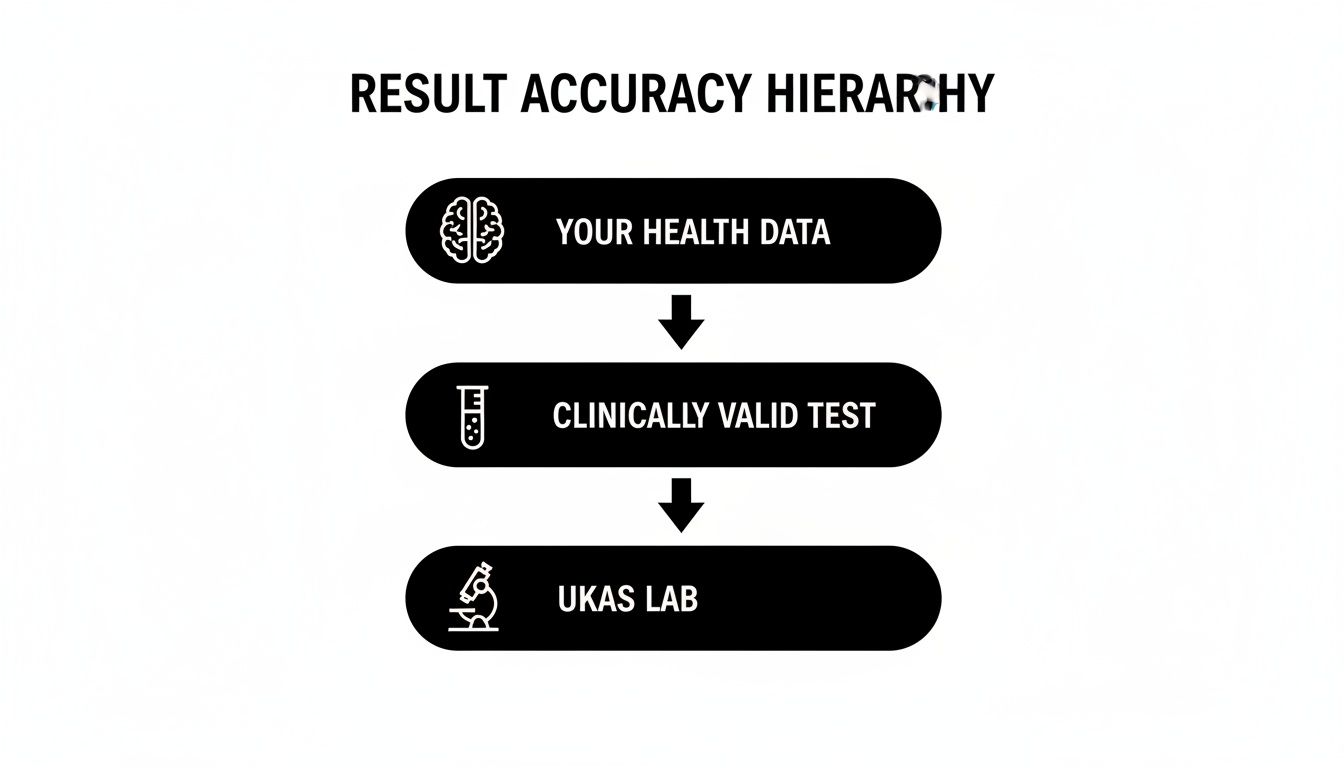
This simple hierarchy shows why lab standards are so important. For your health data to be genuinely useful, it has to come from a clinically reliable test that's been processed by a top-tier, accredited laboratory. It all stacks up.
Nutritional Foundation: The Building Blocks of Health
Your body cannot function optimally without the right raw materials. Micronutrient deficiencies are surprisingly common and can impact your energy, immune function, and overall resilience. An at-home blood test can pinpoint exactly where your nutritional gaps are.
Some of the most important nutritional markers for longevity include:
-
Vitamin D: important for immunity, bone health, and mood. Levels are notoriously low in the UK. Your test result can tell you exactly what dose of supplement you might need to get back on track.
-
Vitamin B12: Essential for nerve function and making red blood cells. A B12 deficiency can lead to serious fatigue and neurological issues, making it a key marker for anyone on a plant-based diet.
-
Ferritin: Measures your body’s iron stores, not just the iron in your blood. Low ferritin is a frequent cause of unexplained tiredness, especially for women. An out-of-range result is a clear signal to add more iron-rich foods to your diet or discuss supplementation.
Hormonal Balance: The Body's Regulators
Hormones are your body's chemical messengers, controlling everything from mood and metabolism to energy levels. As we age, maintaining hormonal balance becomes important for preserving vitality.
A full thyroid panel (including TSH, Free T3, and Free T4) is key for checking your metabolic rate. Likewise, hormones like Testosterone are vital for both men and women when it comes to maintaining muscle mass, bone density, and vitality as we age.
Your results can kickstart a productive conversation with your GP about how to optimise these levels, turning numbers on a screen into direct, positive action for your future health.
What to Expect: Your At-Home Blood Test Journey, Step by Step
Taking your first at-home blood test might feel like a leap into the unknown, but a good service makes the whole thing incredibly straightforward. The process is designed to be smooth and professional, guiding you from simple curiosity to real health insights without you having to upend your schedule. It’s all about removing the hassle of clinic visits and putting you firmly in charge.
Think of it less as a clinical procedure and more as a personalised health MOT, all done from the comfort of your own home. Here’s how it works.

Step 1: Choosing Your Test
Your journey starts online, where you get to decide which biomarkers matter most to you and your health goals. Forget a one-size-fits-all check-up. Instead, you can pick panels that focus on specific areas of longevity, like your metabolic health, cardiovascular risk, or whether you’re getting the right nutrients. This means the results you get back are genuinely relevant to you.
Once you’ve made your choice, you just order your test online. A professional-grade collection kit with everything needed for a proper venous blood draw is then sent straight to your door.
Step 2: Booking Your Phlebotomist Visit
This is where the real convenience of a premium at-home blood test service kicks in. There’s no need to block out half a day for a clinic appointment. You simply book a time slot for a trained and vetted phlebotomist to visit you wherever you are - at home or even at the office.
This flexibility is a complete significant advantage, especially for busy professionals or athletes. Need an early morning slot before work? Or one that fits neatly between meetings? The service works around your schedule, not the other way around.
Step 3: The Professional Sample Collection
When your appointment time arrives, a qualified phlebotomist shows up. Their expertise means the blood draw is quick, comfortable, and, importantly, done to a clinical standard. This professional touch, using a venous sample from your arm, is the gold standard for getting the accurate results needed for sensitive longevity biomarkers.
The entire visit usually takes less than 15 minutes. It’s the exact same quality of care you’d expect in an NHS clinic, but without the travel, the waiting room, or the fuss. The phlebotomist takes care of everything, from preparing the site to securely packaging your sample for the lab.
The whole idea is to bring the clinic to you. This gets rid of common roadblocks like time constraints and appointment anxiety, making proactive health monitoring a simple part of your routine.
Your sample is then immediately sent to the laboratory using a secure, temperature-controlled courier. This is a critical step that protects the sample’s integrity, ensuring the lab analyses a true snapshot of your health at that moment.
Step 4: Lab Analysis and Doctor Review
Once it reaches the lab, your sample is processed at a UKAS-accredited facility. These are the top-tier labs that operate to the highest possible standards, using the same sophisticated equipment and strict protocols as the NHS. This guarantees your results are precise, reliable, and clinically valid.
But it doesn't stop at raw data. A vital part of any high-quality service is the doctor review. A qualified doctor will personally examine your results, looking for any markers that fall outside the optimal range or for patterns that could point to an underlying issue. This adds an essential layer of professional oversight.
Step 5: Getting Your Actionable Results
Finally, your results are delivered securely through a digital platform, usually a mobile app. Instead of being handed a confusing sheet of numbers, you get a clear, easy-to-digest report that explains what each biomarker means for your health.
The best platforms display your data visually, so you can track your progress over time and see how your lifestyle changes are paying off. This turns abstract numbers into a powerful feedback loop, giving you the concrete insights you need to tweak your diet, fitness, and wellness habits for a longer, healthier life.
Why Accessible Testing Is a Public Health significant advantage
An at-home blood test gives you more than just a window into your own health; it marks a massive step forward for public health as a whole. By bringing diagnostics right to your front door, these services are breaking down the very barriers that have historically prevented people from getting the care they need.
Think about the old way of doing things. You had to book time off work, travel to a clinic, and then sit around in a waiting room. For so many of us, those logistical hurdles - not to mention the hassle, distance, or even just a general dislike of clinical settings—are more than enough to put off vital health checks. At-home testing simply wipes those obstacles away.
This isn't just about making life a bit more convenient. It’s a powerful move towards preventative medicine for the entire country. It allows healthcare to finally reach people in underserved communities, making it possible to spot diseases much earlier and stop minor issues from turning into major health crises.
A Real-World Success Story
This isn't just a theory, either. We’ve already seen the huge potential of at-home testing in action, thanks to a hugely successful NHS initiative to tackle hepatitis C. By offering simple, mail-in test kits, they made it incredibly easy for people to get screened from the comfort of their own homes.
The results speak for themselves. Since May 2023, more than 105,998 people have ordered these tests. The most telling part? The programme successfully reached those who might have otherwise fallen through the cracks, with around 70% of positive cases discovered in the most deprived half of the UK population. This kind of early detection is absolutely critical—it means people can get treatment quickly, preventing serious liver disease and in the end saving lives. You can learn more about the NHS initiative's findings and see the impact it’s had.
By making health data more accessible to everyone, at-home testing is becoming a vital part of preventative healthcare, aligning perfectly with national priorities to catch diseases sooner.
The NHS programme proves a simple but powerful point: when you make it easier for people to understand what's going on with their health, they are far more likely to do something about it. This approach bridges the gap between personal wellbeing and the health of the nation, showing that enabling individuals one by one really can lead to a healthier society for us all. It's a fundamental shift in how we look after ourselves, moving away from a reactive system towards one that's proactive and works for everyone.
Your Questions About At Home Blood Tests Answered
Diving into proactive health management with an at-home blood test is a smart move, but it’s natural to have a few questions first. Feeling confident about the process is key, so let's clear up some of the most common queries.
How Much Does an At Home Blood Test Cost in the UK?
The price tag on at-home blood tests can swing quite a bit. It really depends on what you're testing for and the level of service you choose. A simple, single-marker test might only set you back about £30.
But if you’re looking for a detailed panel that gives you a deep look at your metabolic health, cardiovascular risk, and nutritional status, you're looking at a higher price point. For services that include a professional coming to your home for a proper venous blood draw, costs typically range from £150 to over £500. When you're comparing prices, make sure you know what's included. Does it cover the kit, the phlebotomist's visit, all the lab fees, and a doctor's review of your results?
Is an At Home Blood Test as Reliable as One from My GP?
Absolutely, provided you choose a high-quality service. A test that uses a venous blood sample (taken from your arm) collected by a trained phlebotomist and analysed in a UKAS-accredited laboratory is every bit as accurate as one you'd get from the NHS.
The reliability of any blood test hinges on two things: the quality of the sample and the standards of the lab. Where the sample is taken doesn't matter. This is a world away from DIY finger-prick kits, which can be prone to user error and sample contamination. For tracking important health markers, a professional collection is the only way to go.
What Happens if My Results Show a Potential Health Issue?
Any reputable at-home testing company will have a qualified doctor review your results before you ever see them. This clinical oversight is non-negotiable, especially if any of your biomarkers fall outside the optimal range.
If something looks off, the doctor should get in touch with you directly to explain what they’ve found in plain English. They'll give you the context you need and will always advise you to book an appointment with your GP for any formal diagnosis or treatment discussions.
Think of these tests as a useful measure for monitoring your health and gaining personal insights. They aren't for diagnosing conditions. The goal is to give you the information you need to have more productive conversations with your doctor and take control of your long-term health.
Ready to get a clear, actionable picture of your health from the comfort of your home? Lola offers professional, at-home blood testing with doctor-reviewed results to guide your wellness plan. Explore our test panels and book your appointment today.
At-Home Blood Testing
Check your levels from home
Professional phlebotomist visit. Doctor-reviewed results in 2-5 days. Track your health with comprehensive blood panels.
→45-70 biomarkers tested · Venous blood draw · From £130