


You can absolutely lower your LDL cholesterol without immediately reaching for medication. The key lies in a consistent, multi-pronged approach that centres on a diet loaded with soluble fibre and healthy fats, a smart exercise routine, and careful weight management. Think of these as the bedrock for building a better lipid profile and safeguarding your heart for the long haul, directly contributing to your longevity.
Your Longevity Action Plan for Lowering LDL Cholesterol
Let's cut to the chase. If you're looking to bring down your LDL cholesterol, often dubbed the 'bad' cholesterol, you need a practical, sustainable plan. This isn't about extreme diets or punishing workout regimes. It's about making intelligent, evidence-based lifestyle tweaks that support genuine, long-term vitality. Getting a handle on your LDL isn't just about managing a number; it's one of the most powerful things you can do for your cardiovascular health and overall longevity.
To do this effectively, we'll focus on a few core areas:
- Strategic Nutrition: Pinpointing foods that actively lower LDL and support cellular health.
- Targeted Exercise: Using movement to improve your entire cholesterol profile for decades to come.
- Weight Management: The direct link between body composition and long-term lipid health.
- Proactive Monitoring: Using your own health data to see what’s working and optimise for the future.
This simple infographic breaks down the pillars of a successful cholesterol management strategy.
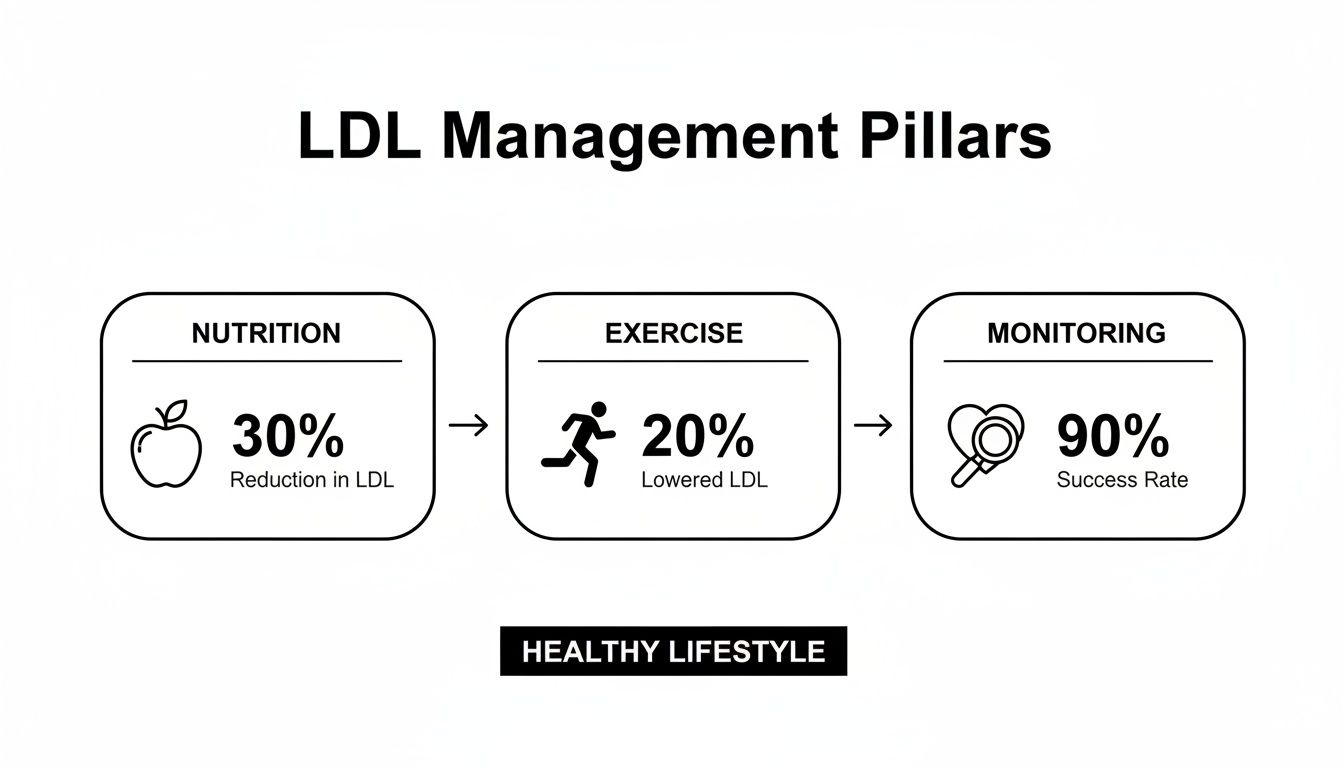
As you can see, it's the combination of what you eat, how you move, and how you track your progress that truly drives results for a longer healthspan.
Why This Is Non-Negotiable for Your Healthspan
So, what’s the big deal with LDL? When levels are too high, this waxy substance contributes to plaque build-up inside your arteries. This condition, known as atherosclerosis, is a silent process that slowly narrows your blood vessels, dramatically increasing your risk for a heart attack or stroke down the line.
Taking control of your LDL now is a direct investment in your future self. It’s about reducing the risk of a serious cardiovascular event and adding more healthy, active years to your life. The first step is always knowing your numbers; you can see where you stand by checking a detailed cholesterol level chart for the UK.
Let's get into some of the most impactful strategies you can implement right away.
Quick Wins for Natural LDL Reduction
For those looking to see tangible changes, focusing on high-impact habits is key. This table outlines the most effective natural strategies and the kind of results you might expect.
| Strategy | Mechanism of Action | Typical LDL Reduction |
|---|---|---|
| Increase Soluble Fibre | Binds to cholesterol in the digestive system, preventing its absorption. | 5-10% reduction. |
| Swap Saturated for Unsaturated Fats | Reduces the liver's production of LDL cholesterol. | 5-15% reduction. |
| Consistent Aerobic Exercise | Improves enzyme activity that removes LDL from the blood. | 5-10% reduction. |
| Introduce Plant Sterols/Stanols | Blocks the body from absorbing cholesterol from food. | Up to 10% reduction. |
| Modest Weight Loss (5-10%) | Decreases overall fat mass, which reduces LDL production. | 5-8% reduction. |
These aren't just theories; they are well-documented methods that, when combined, can produce a significant improvement in your lipid profile, laying a strong foundation for lifelong cardiovascular health.
Building Your Cholesterol-Lowering Diet for Longevity
When it comes to managing your LDL cholesterol, what you eat is easily the most useful measure you have. This isn’t about jumping on a restrictive, short-term fad. The real goal is to build a way of eating that feels completely natural and sustainable for the long haul. It's less about deprivation and more about strategically adding powerful foods that actively work in your favour.
The central idea is surprisingly simple: some foods are brilliant at helping your body get rid of excess cholesterol. By building your meals around these ingredients, you’re not just eating for today; you’re creating an internal environment that supports a healthy heart for years to come, a key pillar of any longevity strategy.
Get More Soluble Fibre into Your Day
One of the most effective weapons in your nutritional arsenal is soluble fibre. Picture it as a kind of sponge that travels through your digestive system. On its way, it latches onto cholesterol and bile acids, stopping them from being absorbed into your bloodstream and making sure they're shown the exit.
Putting this into practice is much easier than it sounds. A few simple swaps can make a huge difference to your daily intake.
- Oats and Barley: Start your morning with a bowl of porridge instead of a sugary cereal. Both oats and barley are packed with a particularly potent type of soluble fibre called beta-glucan.
- Legumes: Try to weave beans, lentils, and chickpeas into your meals throughout the week. They're fantastic in salads, soups, and curries, and they're a great source of plant-based protein.
- Fruits and Veggies: Apples, citrus fruits, carrots, and Brussels sprouts are all excellent sources. Just swapping your usual bag of crisps for an apple is a small change with a surprisingly big impact.
The British Heart Foundation suggests aiming for 30g of fibre daily. Getting enough soluble fibre can reduce cholesterol absorption by up to 10-15%. If you pair this with plant sterols from fortified foods, just 2g daily can lower LDL by another 10%, you can see how effective these dietary tweaks can be.
Switch to Healthier Fats for Long-Term Health
The kind of fat you eat sends a direct signal to your liver, telling it how much cholesterol to produce. This is why swapping out saturated and trans fats for healthier unsaturated fats is a non-negotiable step for anyone serious about their long-term lipid profile.
Saturated fats, which you find in fatty meat, butter, cheese, and a lot of processed snacks, basically give your liver the green light to ramp up LDL production. Unsaturated fats, on the other hand, do the opposite.
Here are a few practical swaps to get you started:
- Use olive oil for cooking and dressings instead of butter or lard.
- Reach for a small handful of almonds or walnuts when you fancy a snack, rather than biscuits.
- Add half an avocado to your salad or on toast for a brilliant dose of heart-healthy monounsaturated fat.
These simple changes help starve your body of the building blocks for 'bad' cholesterol while giving it the good fats it needs to function properly and support vascular health for years.
Bring in Plant Sterols and Stanols
Plant sterols and stanols are natural compounds found in small amounts in things like fruits, vegetables, and nuts. Their structure looks a lot like cholesterol, which is great news for us - it means they can physically block cholesterol from being absorbed in your gut.
While it’s tough to get enough of them from whole foods alone to have a real effect, many products are now fortified with them.
"Integrating foods fortified with plant sterols or stanols is a straightforward and scientifically-backed strategy. Consuming 2 grams per day, often found in specific yoghurts, milks, or spreads, can lead to a significant LDL reduction of up to 10%."
Keep an eye out for these products in the supermarket. Using a fortified spread on your toast or choosing a specific yoghurt drink is a tiny daily habit that can make a measurable difference to your blood test results over time.
Make Smart, Everyday Food Swaps
Knowing what to eat is one thing, but actually doing it during a busy week is another challenge entirely. The secret is to make simple, sustainable swaps that don’t feel like a chore. For tailored guidance, exploring the benefits of a personalized nutrition plan can be incredibly helpful.
Here’s what this can look like in the real world:
| Instead Of This... | Try This... | The Longevity Benefit |
|---|---|---|
| Processed Breakfast Bar | Overnight Oats with Berries & Seeds | Boosts soluble fibre, adds antioxidants, and gives you sustained energy. |
| Crisps for a Mid-day Snack | A Handful of Unsalted Almonds | Swaps saturated fat for monounsaturated fats and helps reduce LDL production. |
| Beef Mince in Bolognese | Half Beef Mince, Half Brown Lentils | Slashes the saturated fat and more than doubles the fibre content of the meal. |
| Creamy Salad Dressing | Olive Oil and Lemon Juice | Replaces unhealthy fats with heart-protective monounsaturated fats. |
By focusing on these small but strategic changes, you create a powerful, cumulative effect on your health. For even more practical tips, have a look at our guide on specific cholesterol-lowering foods recommended by the NHS.
Designing Your Exercise Plan for Lifelong Heart Health
If a nutrient-dense diet is the foundation for lowering LDL cholesterol, then exercise is the catalyst that maintains your body's health for the long run. An effective plan isn’t just about putting in the hours; it’s about a smart, targeted approach to boost your metabolic health and strengthen your heart for decades of active living.
Think of it this way: exercise signals your muscles to pull lipids out of the bloodstream for energy. It also kicks the enzymes responsible for clearing out ‘bad’ LDL cholesterol into high gear, making the whole system run more smoothly and efficiently over your lifetime.
Combining Aerobic and High-Intensity Workouts
Consistent aerobic activity is the bread and butter of any heart-healthy routine. This is your steady, sustained effort - the kind that gets your heart rate up and keeps it there. It's brilliant for gradually reducing LDL levels while also giving your protective HDL cholesterol a much-needed lift.
But if you want to really supercharge your results, weaving in some high-intensity interval training (HIIT) can make a huge difference. HIIT involves short, sharp bursts of maximum effort followed by quick recovery periods. It's a fantastic way to fire up your metabolism and improve how efficiently your body uses fat.
- Your Aerobic Base: Aim for 150 minutes per week of moderate-intensity activity. That could look like a brisk 30-minute walk five days a week, a weekend bike ride, or a few swims at the local pool.
- Adding in HIIT: A couple of times a week, try swapping a steady session for HIIT. On an exercise bike, for instance, you could alternate between 30 seconds of all-out sprinting and 60 seconds of gentle pedalling for about 15–20 minutes.
This combination is a powerful one-two punch. You build endurance with aerobic exercise and then push your metabolic boundaries with HIIT, which can often lead to faster changes in your lipid profile.
Don't Overlook Resistance Training
When we talk about cholesterol, cardio tends to steal the spotlight. But leaving out resistance training means you're missing a massive piece of the longevity puzzle. Lifting weights, using resistance bands, or even doing bodyweight exercises builds lean muscle, and more muscle has a profound, positive impact on your metabolic health.
Essentially, a more muscular body is better at managing blood sugar and insulin. Since poor insulin function can throw your cholesterol production out of whack, building strength makes you far more metabolically resilient for the future.
A well-rounded fitness plan that includes resistance training does so much more than lower LDL. It improves your body composition, strengthens bones, and keeps you active and independent for decades to come - a true cornerstone of longevity.
Try to fit in two or three non-consecutive days of full-body resistance training each week. It’s best to focus on compound movements like squats, lunges, push-ups, and rows. They work multiple muscle groups at once, giving you the most bang for your buck.
Putting Together a Sustainable Weekly Schedule
The real secret to success? Consistency. A plan you can actually stick with is infinitely better than a brutal regimen you'll abandon after two weeks. Here’s a sample schedule you can tweak to fit your own life and fitness level.
| Day | Activity | Focus and Goal |
|---|---|---|
| Monday | Resistance Training (Full Body) | Building lean muscle to improve your metabolic rate. |
| Tuesday | Moderate Aerobic (30-45 mins) | Brisk walking, jogging, or cycling to improve LDL transport. |
| Wednesday | Active Recovery or Rest | A gentle walk or stretching to help muscles repair. |
| Thursday | HIIT Session (15-20 mins) | Short bursts of high-intensity effort to boost fat metabolism. |
| Friday | Resistance Training (Full Body) | Continuing to build strength and improve insulin sensitivity. |
| Saturday | Long Aerobic (60+ mins) | A longer, steady-state hike or cycle to build endurance. |
| Sunday | Rest | Complete physical and mental recovery. |
This schedule provides a great mix of training styles to tackle high LDL from all angles. The most important thing is to find activities you genuinely enjoy. Start where you are, be consistent, and before long, your hard work will start showing up in your blood work.
Strategic Supplements and Lifestyle Adjustments

Once you've dialled in your nutrition and exercise, which really do most of the heavy lifting, a few smart additions and lifestyle tweaks can seriously accelerate your progress towards long-term health.
Think of these as optimisations. You're fine-tuning your body's systems to make healthy cholesterol levels the natural default, not something you have to constantly fight for. This means looking beyond the obvious to pull other powerful levers that influence your cardiovascular health for the long run.
These adjustments don't replace a healthy diet or regular activity. Far from it. They work alongside them, amplifying their effects and helping you hit your targets more efficiently.
Targeted Supplements for Metabolic Support
When chosen wisely, certain natural compounds can offer powerful support for your lipid profile. But it's absolutely important to treat supplements with respect and always chat with a healthcare professional before starting anything new. They can interact with medications and simply aren't right for everyone.
Two compounds, in particular, have gathered a lot of attention for their impact on metabolic health: berberine and red yeast rice.
- Berberine: This plant extract has a fascinating ability to improve insulin sensitivity and influence how the liver produces cholesterol. The result is often a noticeable drop in LDL levels.
- Red Yeast Rice: This supplement naturally contains monacolin K, a compound that's chemically identical to the active ingredient in some statin medications. It works by slowing down an enzyme that's essential for making cholesterol.
It’s also worth keeping an eye on emerging research into compounds like NMN (Nicotinamide Mononucleotide). As a precursor to NAD+, NMN is vital for how our cells produce energy and function metabolically. By supporting healthy NAD+ levels, you may well be contributing to better vascular health and overall metabolic resilience, creating a fantastic backdrop for your cholesterol management efforts.
The Overlooked Impact of Sleep and Stress on Longevity
You can have the most perfect diet and exercise plan on the planet, but if your sleep is a mess and stress is running your life, you're fighting an uphill battle. It's that simple. These two factors have a profound effect on your hormones and inflammation, both of which are directly linked to cholesterol production and heart disease risk.
When you're chronically stressed, your body pumps out cortisol. This hormone can spike blood sugar and, over time, contribute to higher LDL cholesterol. In the same way, poor sleep throws the hormones that regulate your appetite and metabolism completely out of whack, leading to cravings for junk food and a system that just isn't running efficiently.
Neglecting sleep and stress management is like trying to build a house on a shaky foundation. Prioritising them is a non-negotiable part of any serious longevity strategy, directly influencing your hormonal balance and inflammatory responses.
Simple Lifestyle Tweaks with Big Returns
Beyond getting your sleep and stress in check, a couple of other lifestyle choices are mission-critical for protecting your heart for decades to come. Cutting back on alcohol and, most importantly, getting rid of tobacco are two of the most impactful changes anyone can make.
Alcohol can raise triglyceride levels and lead to weight gain—two things that negatively affect your lipid profile. Tobacco, on the other hand, is directly toxic to your blood vessels. It makes LDL cholesterol "stickier" and far more likely to form the dangerous plaques that cause heart attacks and strokes.
For busy professionals and athletes looking for time-efficient ways to lower LDL cholesterol naturally, a few simple hacks can make a world of difference.
Sipping on 3-4 cups of green tea daily has been shown to lower LDL by 5-10%, while a daily handful of almonds can drop it by another 8%. For those who need a bit more of a nudge, natural compounds like berberine (500mg daily) have demonstrated a 20-25% LDL reduction in some UK studies, bridging a important gap before statins might be considered.
Combine these strategies with the 150 minutes of weekly HIIT recommended by UK guidelines to cut LDL by 10%, and you've built a powerful, multi-faceted approach. You can explore more UK-specific cholesterol statistics to understand the bigger picture.
By viewing supplements, sleep, stress, and substance moderation as integral parts of your plan, you shift from just managing cholesterol to truly optimising your health for a long, vibrant life.
Why Proactive Monitoring Is Your Greatest Longevity Advantage
There's an old saying that’s especially true when it comes to long-term health: "you can't manage what you don't measure." Making smart choices with your diet and sticking to a good exercise plan are fantastic starting points. But if you don't know your numbers, you're essentially flying blind.
Regular, precise blood testing is what turns guesswork into a genuinely effective strategy. It’s your personal feedback loop, showing you exactly what impact your hard work is having. This help you to see what’s working and fine-tune your approach, building a clear picture of your cardiovascular health over time.
Moving Beyond a Single Number
When most people hear the word "cholesterol," they immediately think of the total figure. The problem is, that one number barely scratches the surface. To really understand your risk and figure out how to lower LDL cholesterol naturally, you need the full story from a detailed lipid panel.
This means getting to grips with all the key players:
- LDL (Low-Density Lipoprotein): This is the so-called "bad" cholesterol. When levels creep too high, it can contribute to plaque build-up in your arteries, so it's our main target for reduction.
- HDL (High-Density Lipoprotein): Think of this as the "good" cholesterol. It acts like a scavenger, helping to clear excess cholesterol out of your system.
- Triglycerides: Another type of fat in your blood. Elevated levels are an independent risk factor for heart disease.
Looking at these biomarkers individually gives you a much more sophisticated view. For instance, you might find your LDL is a bit stubborn, but your triglycerides drop quickly after you cut back on sugar. That's invaluable insight into how your body works.
"True health optimisation is data-driven. Tracking your complete lipid profile over time is the only way to see the direct consequences of your lifestyle choices, allowing for precise adjustments that yield the best long-term results."
The Power of Convenient and Accurate Testing
Thankfully, the days of spending half your morning at a clinic for a blood test are over. Modern services can bring accredited, high-precision testing right to your doorstep, fitting easily into even the busiest schedule.
This accessibility is a real significant advantage. With professional phlebotomists achieving a 99.8% success rate with blood draws, you can be confident the data you get back is spot-on. The results, often presented in a simple app, let you track your progress visually, making the link between your actions and your numbers impossible to miss. If you want to get into the nitty-gritty, you can learn more about what a lipid panel test actually measures in our detailed guide.
Uncovering Hidden Genetic Risks Early
Proactive monitoring isn't just about tracking your diet and exercise—it’s also a useful measure for catching underlying genetic issues early. One of the most important is Familial Hypercholesterolaemia (FH), a genetic disorder that causes dangerously high LDL cholesterol right from a young age.
Worryingly, it often goes undiagnosed. An NHS England audit revealed that fewer than 8% of the estimated 220,000 people with FH in the UK have been identified. For the vast majority who slip through the net, the natural LDL-lowering tactics in this guide are their first line of defence. Combining HIIT with resistance training, for example, has been shown in UK programmes to lower LDL by 12-18% over just 12 weeks.
Even so, the early red flag from a blood test is critical for proper management. By keeping a regular eye on your biomarkers, you and your doctor are in a much better position to spot issues that might otherwise go unnoticed for years, ensuring you get the support you need when it truly matters.
Got Questions About Lowering LDL Naturally? Let’s Get Them Answered
When you start making changes to lower your LDL cholesterol, it’s only natural to have a few questions. How fast will this work? Am I doing the right things? Knowing what to expect is key to staying on track and making smart choices for your long-term health. Let's tackle some of the most common queries I hear.
How Quickly Can I Actually See My LDL Drop?
This is the big one, and the honest answer is: it depends. Everyone’s body is a bit different, and your starting point, genetics, and how consistently you stick to the plan all play a role. That said, with a solid effort, most people see a measurable difference in their LDL levels within three to six months.
Some changes bring faster results than others. If you really zero in on your diet, especially by boosting soluble fibre and slashing saturated fats, you might see improvements on a blood test in as little as four to six weeks.
The benefits you get from exercise and losing a bit of weight tend to build up more slowly, but they create a really powerful, lasting effect. The most important thing is to keep an eye on your progress with regular blood tests. It’s the only real way to know what’s working for you.
Are There Any "Superfoods" I Should Focus On?
I'd encourage you to think less about a single "superfood" and more about your overall eating pattern. A consistent diet built on whole foods is what really moves the needle for good. Still, some foods are absolute powerhouses when it comes to lowering cholesterol, and they're backed by solid science.
- Oats and Barley: These are packed with a type of soluble fibre called beta-glucan. It’s fantastic at grabbing onto cholesterol in your gut and escorting it out of your body.
- Nuts and Seeds: Think almonds, walnuts, and flaxseeds. They're full of healthy unsaturated fats and plant sterols that help reduce the amount of LDL your body makes.
- Avocados and Olive Oil: As you'd expect, these are staples in any heart-healthy diet. Their monounsaturated fats are brilliant for supporting a better cholesterol profile.
- Legumes: Things like beans, lentils, and chickpeas are fibre champions. They also give you great plant-based protein, making them a win-win for your heart.
Try to weave a variety of these into your meals every day. This approach doesn't just lower your LDL; it floods your body with all sorts of nutrients that are important for staying well in the long run.
Forget the search for a magic bullet. Your goal is to build a strong dietary foundation. A mix of fibre-rich plants, healthy fats, and lean protein works together to create a result that's far more powerful than any single food could ever be.
Can I Really Lower My LDL With These Methods Alone?
For many people with moderately high LDL, the answer is an emphatic yes. If your cholesterol is up mainly because of your diet, a lack of movement, or being overweight, lifestyle changes can often be enough to get your numbers into a healthy, optimal range.
But it’s also important to be realistic. If your LDL is extremely high, or if you have a genetic condition like Familial Hypercholesterolaemia (FH), natural approaches alone might not get you to a safe level. This is where medications, such as statins, can become an essential part of the plan.
The best way to look at it is this: natural methods are the non-negotiable foundation of your heart health strategy. They work incredibly well on their own and can even make medication more effective if it's needed. The key is to work with your doctor, using regular blood tests to see where you stand and make decisions that are right for your specific situation.
At Lola, we believe that knowing your numbers is one of the most powerful tools you have for a long and healthy life. Our convenient at-home and in-clinic blood testing services give you the clear, accurate data you need to track the impact of your efforts and take charge of your cardiovascular health. To understand your numbers and start optimising your health, visit Lola Health today.
At-Home Blood Testing
Check your levels from home
Professional phlebotomist visit. Doctor-reviewed results in 2-5 days. Track your health with comprehensive blood panels.
→45-70 biomarkers tested · Venous blood draw · From £130