


If you're looking to beat muscle soreness and build a foundation for long-term athletic performance, you’ll want a solid game plan. It boils down to a mix of smart warm-ups, gradually making your workouts tougher, and embracing active recovery - think gentle stretching and light movement. This sustainable formula helps your muscles repair themselves efficiently, getting you back in the game faster and building strength that lasts a lifetime.
Understanding Muscle Soreness for Better Performance
That familiar post-workout ache is more than just a badge of honour. It's a sign that your body is busy laying the groundwork for more strength and endurance, a key process for athletic longevity. Getting to grips with what’s actually happening in your muscles is the first real step towards smarter, more sustainable recovery. It’s what helps you know the difference between productive soreness and a red flag that you’ve pushed too far, too fast.
When you challenge your muscles in a new or intense way, you create tiny, microscopic tears in the muscle fibres. Don't worry, this is a natural part of getting stronger. In response, your body kicks off a natural inflammatory process, sending fluid and repair cells to the area to patch things up. This repair job is what causes the stiffness and discomfort we all know as Delayed Onset Muscle Soreness, or DOMS for short.
Far from being a sign of a bad workout, DOMS is actually a thumbs-up from your body. It’s telling you that your muscles are adapting, rebuilding, and getting stronger. Think of it as a positive signal that your training is effective and you're on the right track for long-term gains.
DOMS or Injury? How to Tell the Difference
The real secret to training for the long haul is learning to listen to your body. Is that ache the satisfying burn of DOMS, or is it the sharp, unwelcome twinge of an injury? Knowing which is which is important for deciding whether to gently push through or take a much-needed rest day to protect your long-term health.
DOMS usually feels like a generalised, dull ache in the muscles you trained. It tends to sneak up on you, peaking around 24 to 48 hours after your session.
An injury, on the other hand, often makes its presence known immediately. It's typically a sharp, specific pain that you feel suddenly during a movement. While DOMS fades away after a few days, an injury often hangs around or gets worse when you try to use that muscle again.
This isn't just a minor detail; it’s a vital skill for anyone who wants to stay active for life. The Deep Relief Pain Census Report found that a massive 80% of Brits have dealt with muscle or joint pain, and 34% of them said it was caused by sports or exercise. With over 20 million people in the UK living with musculoskeletal conditions, learning to read your body’s signals is non-negotiable for avoiding setbacks and ensuring you can keep training for years to come. You can read more about how widespread muscle pain is in the UK.
Being able to tell the difference between the ache of adaptation and the pain of damage is a significant advantage for longevity. One builds you up; the other can sideline you for weeks.
Your Guide to Recognising the Signs
It can be tough to tell what's what when you're in the thick of it. Is it just soreness, or did something actually go ping? Knowing the key differences can stop a small niggle from turning into a full-blown injury, keeping you on a sustainable training path.
This table should help you make the right call.
DOMS vs Injury: A Quick Guide
| Symptom | Delayed Onset Muscle Soreness (DOMS) | Potential Injury |
|---|---|---|
| Onset | Gradual, appearing 12-24 hours after exercise. | Often immediate and sudden, during the activity. |
| Sensation | A dull, generalised ache across the entire muscle. | A sharp, stabbing, or localised pain. May include tingling or numbness. |
| Pain Level | A tender ache that feels stiff but manageable. | Can range from sharp and intense to a constant, throbbing pain. |
| Movement | Stiffness that reduces range of motion, but movement is still possible. | May cause swelling, instability, or a sharp pain that prevents normal movement. |
| Duration | Peaks around 24-48 hours and typically resolves within 3-5 days. | Pain that lingers for more than a few days, doesn't improve, or worsens with time. |
By paying attention to these signs, you're no longer just guessing your way through recovery. You’re making smart, informed decisions that work with your body’s natural cycle of stress and repair, setting yourself up for a lifetime of healthy movement.
Preventing Soreness Before It Starts
The best way to deal with crippling muscle ache is to build resilience against it. When you shift your focus to what you do before and during your workouts, not just what you do after, you set yourself up for consistent training, quicker recovery, and a much healthier athletic life long-term.
Think of a proper warm-up as your first line of defence for joint and muscle health. I'm not talking about a few half-hearted static stretches. Your muscles need dynamic movement to prepare them for the work ahead. This kind of warm-up gently raises your heart rate, increases blood flow, and literally warms up the muscle tissue, improving its elasticity and readiness.
Building an Effective Dynamic Warm-Up
A solid dynamic warm-up doesn't need to be an entire workout in itself. Just five to ten minutes of the right kind of movement can completely change how you feel the next day. The idea is simple: mimic the exercises you’re about to do, but at a far lower intensity. This primes the neuromuscular pathways for efficient movement.
For instance, if you're heading out for a run, think leg swings, walking lunges, and high knees. Getting ready to lift? Bodyweight squats, big arm circles, and torso twists will prime your body for those heavy weights. Even cyclists can get in on the action with hip circles and a few minutes of easy pedalling on low resistance.
These movements are designed to wake up the specific muscles you'll be using, ensuring they're ready to fire properly. This not only reduces the chances of that next-day soreness but also dramatically cuts your risk of a strain or injury, which is critical for staying in the game long-term. Even small details, like choosing supportive compression leggings for a class like Pilates, can contribute to preventing muscle fatigue and strain.
A dynamic warm-up is essentially a dress rehearsal for your muscles. It sends a clear signal that it's time to work, improving elasticity and getting your nervous system ready for what's coming next.
This flowchart is a great visual guide for telling the difference between the 'good pain' of DOMS and the red flags of a real injury.
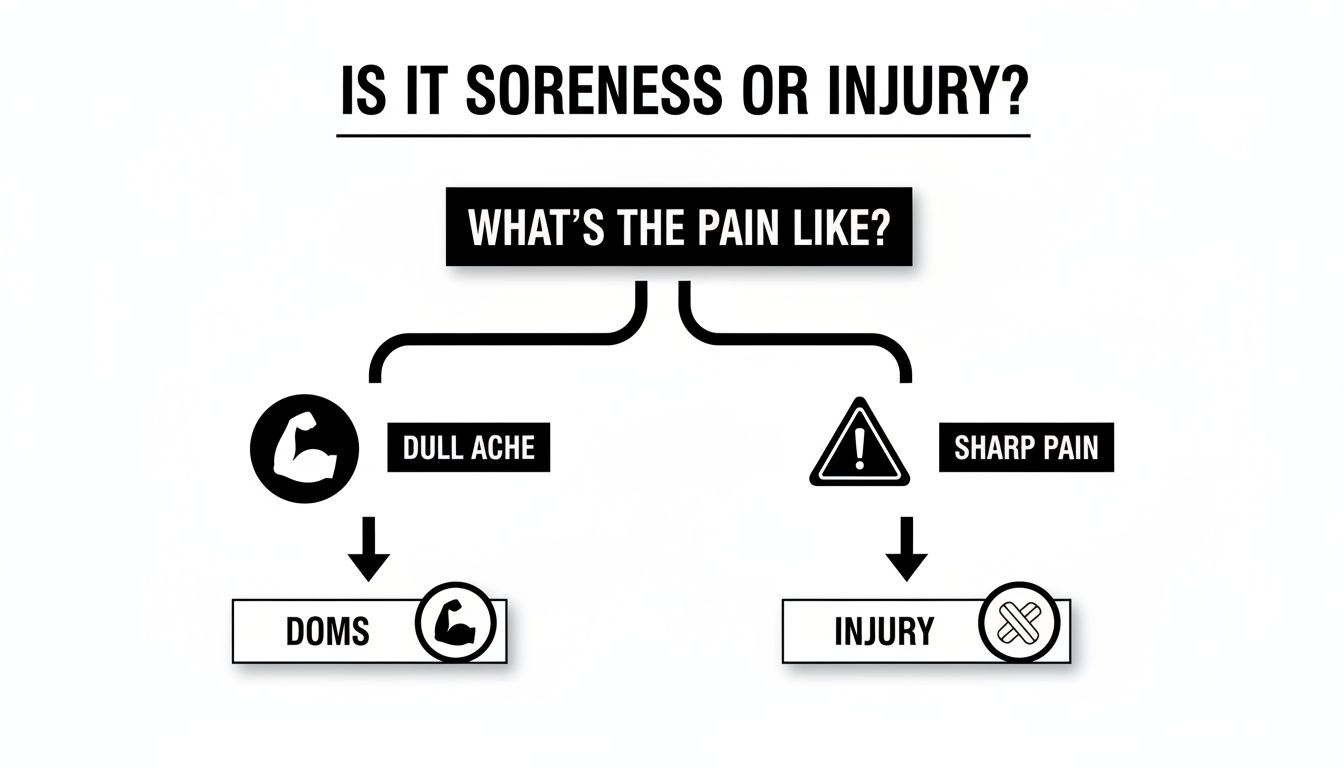
The message here is important: a dull, generalised ache is usually just your body adapting and getting stronger. Sharp, specific pain is your body telling you to stop and pay attention to prevent a long-term setback.
Applying Progressive Overload Safely
Once you’re warmed up, the next piece of the puzzle is managing your training load for sustainable progress. The core principle for getting stronger is progressive overload - the idea that you must gradually increase the stress on your body. But going too hard, too soon is a one-way ticket to agony and injury, derailing your long-term goals.
This is where the '10% rule' comes in handy. It’s a beautifully simple guideline: don't increase your total training volume (be it distance, weight, or time) by more than 10% from one week to the next. Following this rule helps keep soreness manageable and wards off overuse injuries.
Let's see what that looks like in the real world:
- Runners: If you ran a total of 20 kilometres this week, your max for next week should be 22 kilometres.
- Weightlifters: If your total squat volume (sets x reps x weight) was 2,000 kg this week, aim for no more than 2,200 kg next week.
- Cyclists: If your longest ride was 50 kilometres, your next big one should be around 55 kilometres.
This methodical increase gives your muscles, tendons, and all the surrounding connective tissues the time they need to adapt properly. You’re still pushing yourself enough to progress, but you’re not out-pacing your body's ability to recover. By respecting this rule, you can turn muscle soreness from a frustrating setback into a positive sign of steady, sustainable gains.
Using Active Recovery to Accelerate Healing
When you’re aching after a tough workout, the temptation to melt into the sofa and not move for two days is real. I get it. But while rest is absolutely important, being completely stationary often isn't the fastest route back to feeling good. The secret weapon for longevity? Active recovery. It’s all about gentle, low-intensity movement that works with your body’s healing process, not against it.
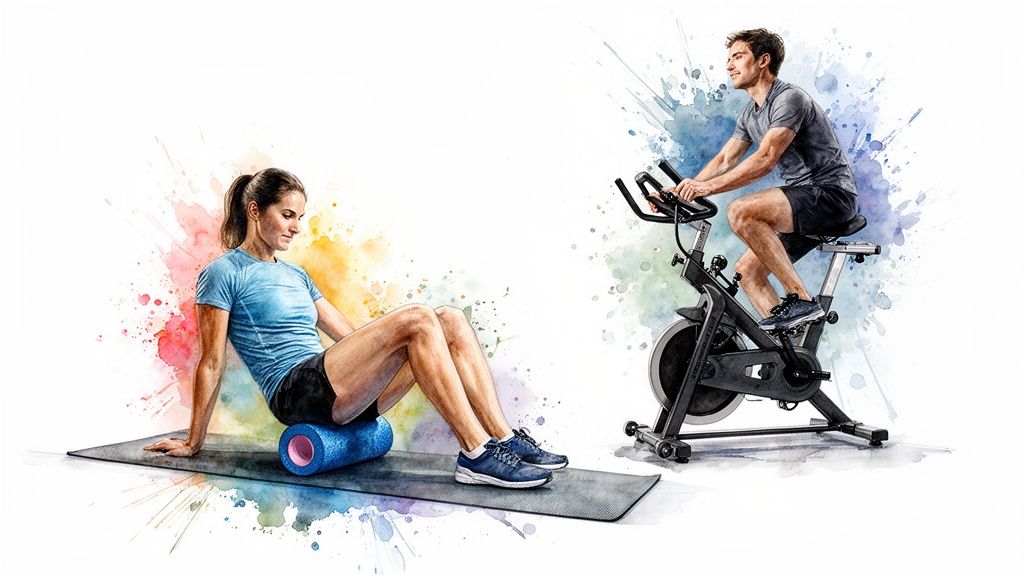
It might sound counterintuitive, moving more to feel less sore, but the science behind it is solid. Light activity gets your blood pumping, which does two brilliant things. First, it delivers a fresh supply of oxygen and essential nutrients to your tired muscles. Second, that increased blood flow helps to flush out all the metabolic junk that contributes to that all-too-familiar stiffness and soreness.
Some UK-based studies have even shown that a good active recovery session can cut down soreness by as much as 30%. Something as simple as a 20-30 minute walk after your main workout can kickstart this process.
What Active Recovery Looks Like in Practice
Let’s be clear: active recovery is not another gruelling workout. It’s about moving your body in a way that feels genuinely restorative. The aim is to get your heart rate up just a little, without putting any new stress on those muscles that are busy repairing themselves.
Some of my go-to options include:
- A brisk walk or a very light jog: Simple, accessible, and incredibly effective.
- Gentle cycling: Hopping on a stationary bike with low resistance is a fantastic, no-impact way to get the legs moving.
- Swimming or water aerobics: The water’s buoyancy is a lifesaver for sore joints, offering gentle resistance without the strain.
- Light yoga or dynamic stretching: Think more about flowing from one movement to the next rather than holding deep, static poses.
The key here is to keep the intensity low. A good rule of thumb is that you should be able to hold a conversation easily. Try to dedicate 20 to 30 minutes to this on your "rest" days. You’ll be surprised at what a difference it makes. For a deeper dive, our guide on how to recover faster from workouts has more detailed protocols.
Think of active recovery as hitting a reset button for your muscles. Instead of letting stiffness set in, you’re actively encouraging your body to clear out the old and bring in the new, speeding up the entire repair cycle.
Targeting Trouble Spots with Foam Rolling and Mobility
Beyond general movement, you can zero in on those particularly tight spots using a foam roller. This is a form of self-myofascial release, a fancy term for giving yourself a deep-tissue massage. By using your body weight to apply pressure to tight muscles and the connective tissue (fascia) around them, you can improve tissue quality and mobility over the long term.
This technique helps break up muscle knots, sometimes called trigger points, which can reduce inflammation and bring back healthy movement. If you're serious about your training, a foam roller should be one of your best friends. There are specific techniques involved, like Myofascial Release and Trigger Points, that directly address this tightness.
Not sure where to start? Try focusing on these common trouble areas after a workout or on a recovery day:
- Quads: Lie face down with the roller positioned under your thighs. Use your arms to gently roll back and forth, from the bottom of your hip to the top of your knee.
- Calves: Sit on the floor with your legs straight, and place the roller under your calves. Lift your hips off the ground and slowly roll from your ankle to just below the knee.
- Upper Back (Thoracic Spine): Lie on your back, placing the roller under your shoulder blades. Cross your arms over your chest to open up the area, and gently roll up and down. Make sure to avoid your neck and lower back.
Spend about 30 to 60 seconds on each tender spot you find. Remember to breathe deeply - it helps the muscle relax into the pressure. It might feel a bit uncomfortable at first (okay, maybe a lot), but consistent foam rolling is a significant advantage for keeping your muscles pliable and primed for whatever you throw at them next.
Fueling Your Body for Muscle Repair
What you eat after a workout is every bit as important as the effort you put into the training session itself. If you're serious about long-term performance and feeling good, you can't treat nutrition as an optional extra - it’s the heart of your recovery plan. Shifting your mindset to see food as the fuel for repair is the first step toward reducing muscle soreness and building a more resilient body.
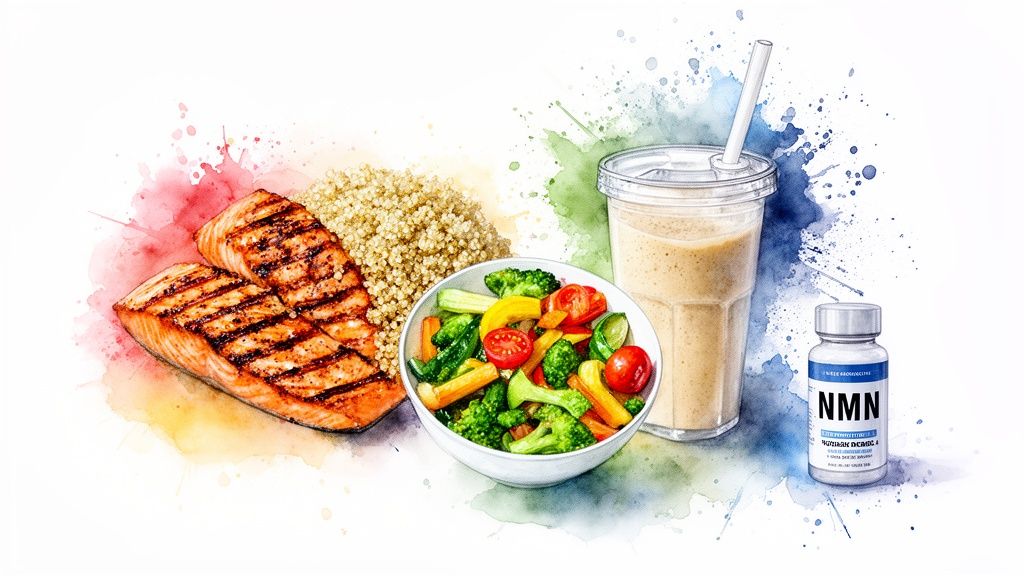
After you train, your muscles are screaming out for two things: protein to mend those microscopic tears and carbohydrates to restock their energy stores. Timing can be a useful measure here. Aim to get a balanced meal or snack in within 60 to 90 minutes after your workout. This gives your body the raw materials it needs right when it's most ready to use them.
This doesn't have to be complicated. A simple plate of grilled chicken and sweet potato, a scoop of whey protein whizzed up with a banana, or even a humble bowl of Greek yoghurt with berries will kickstart the repair process nicely.
The Building Blocks of Muscle Repair
Let's get down to the nutritional cornerstones for a solid recovery. This isn't about following a restrictive diet; it's about making smart, consistent choices that support your body's long-term health and performance.
- Protein is paramount: This is what provides the amino acids your body needs to patch up and rebuild muscle tissue. Think lean sources like chicken, fish, eggs, tofu, or a good-quality protein powder.
- Don't fear carbohydrates: Complex carbs from things like oats, quinoa, and whole-grain bread are important for refilling your glycogen stores - your muscles' main fuel tank. If you skip them, you're essentially leaving your tank empty, which will absolutely stall your recovery.
- Embrace anti-inflammatory foods: A big part of reducing soreness is calming down exercise-induced inflammation. Foods loaded with omega-3 fatty acids, like salmon, walnuts, and chia seeds, are fantastic for this. Likewise, antioxidant-rich foods like berries, leafy greens, and tart cherries can help tackle cellular stress.
Your post-workout meal isn't just about refuelling; it's an instruction to your body. You're telling it to switch from a state of breakdown to a state of repair and growth, a important cycle for long-term progress.
Diving Deeper: Cellular Health and Supplementation
For anyone wanting to really fine-tune their recovery for the long haul, nutrition can go beyond the plate. We can start looking at targeted supplements that support the body at a cellular level, improving the very processes that drive energy and repair. This is a fundamental concept for athletic longevity.
One compound that’s getting a lot of attention is Nicotinamide Mononucleotide (NMN). NMN is a precursor to something called Nicotinamide Adenine Dinucleotide (NAD+), a vital coenzyme found in every single cell in your body. NAD+ is a linchpin for cellular energy and DNA repair, but the catch is that our levels of it naturally drop as we get older.
By supporting your NAD+ levels, you're essentially helping to power up the cellular machinery that repairs muscle damage. Think of it as making sure the workers on your body’s repair crew have all the energy they need to get the job done properly. In fact, trials have shown NMN supplements can boost NAD+ levels by 40%. This is huge, as NAD+ is important for the cellular repair processes that are vital for muscle recovery.
Of course, NMN is just one piece of the puzzle. Other supplements can play a targeted role in an athlete's recovery toolkit. When you're thinking about what might be right for you, it's always worth exploring the science behind the different options. For a closer look, check out our guide on the best supplements for athletes to better understand how various compounds can support your specific performance and recovery goals.
When you combine a solid nutritional foundation with smart, science-backed supplements, you create a powerful combined effect. You're no longer just managing soreness; you're actively investing in your body’s long-term health and ability to perform.
Personalising Recovery with Health Insights
Generic advice on muscle soreness can only get you so far. While things like stretching and foam rolling are fantastic starting points, truly dialling in your recovery and staying healthy long-term means understanding what's happening inside your body. It’s about shifting from guesswork to a data-driven approach that unlocks your real potential for lifelong fitness.
Think about it: instead of just reacting to soreness after it hits, you could be proactive. By getting a window into your body's internal state, you can intelligently adjust your training and recovery based on what your physiology is actually telling you. This is the cornerstone of a sustainable, long-term approach to health and performance.
Beyond Guesswork: Your Internal Dashboard
Certain biological markers, or biomarkers, act like a dashboard for your body. They give you objective feedback on everything from muscle damage to inflammation, painting a much clearer picture of your recovery status than just going by how you feel.
When you really push yourself, your muscles release specific enzymes into your bloodstream. Measuring these gives you a direct look at the true impact of your workouts. This isn't about panicking over high numbers; it's about gathering intelligence to make smarter decisions for your long-term health.
This data allows you to finally connect the dots between your training load, what you eat, and how your body responds on a cellular level. You can see precisely how that brutal leg day or a rough night's sleep affects your internal chemistry.
Understanding your internal data transforms recovery from a game of chance into a precise science. It’s about replacing "I think I'm recovered" with "I know I'm recovered."
With Lola's blood testing services, you can track key biomarkers like creatine kinase (CK), which can spike 200-500% after a tough workout. Our UKAS-accredited labs and doctor-reviewed reports help you see the full picture, monitor inflammation, and truly fine-tune your recovery. In fact, data shows that a staggering 80% of active Brits have experienced muscle or joint pain, highlighting just how important this is.
Key Biomarkers for Monitoring Muscle Recovery
So, what are we actually looking for in the data? A few key biomarkers are particularly telling when it comes to muscle soreness and building a sustainable training plan. They give you powerful insights into your training stress and how well your body is coping.
Here’s a quick overview of some of the most important markers that can guide your recovery strategy.
| Biomarker | What It Measures | Why It's Important for Recovery |
|---|---|---|
| Creatine Kinase (CK) | An enzyme released from damaged muscle tissue. | High levels signal significant muscle breakdown. Tracking your CK helps you gauge a workout's intensity and decide if you need more rest to avoid overtraining. |
| hs-CRP | A marker for general inflammation in the body. | While some inflammation is normal after exercise, chronically high levels can point to overtraining or poor recovery, which gets in the way of muscle repair. |
| Testosterone | A key hormone for muscle growth and repair. | Monitoring your levels helps ensure your body is in an optimal anabolic (muscle-building) state, which is vital for effective recovery and making progress. |
| Cortisol | The body's primary stress hormone. | Chronically elevated cortisol from intense training and life stress can sabotage recovery, break down muscle tissue, and promote inflammation. |
Monitoring these markers gives you a much more complete picture of your body's response to training.
Turning Data into Actionable Longevity Strategies
Having the data is the first step, but the real magic happens when you use it. The goal is to figure out your personal baseline and then watch how those numbers change in response to what you do. This is how you build a truly personalised plan for lifelong athletic health.
For example, you might discover that your Creatine Kinase levels shoot up and stay elevated for days after a heavy squat session, but barely budge after a tough swim. For a deeper dive on this marker, you can learn more about the creatine kinase test in our article.
This kind of personal insight is incredibly powerful. It could be the catalyst for adding an extra active recovery day after leg workouts, or a prompt to increase your protein intake during a particularly demanding training block to better support muscle repair.
Here’s how you can put this into practice:
- Establish Your Baseline: Get a blood test during a normal training week to see where your biomarkers usually sit.
- Test After a Hard Workout: Following a particularly gruelling session, test again 48-72 hours later to see the spike in your CK and hs-CRP levels.
- Analyse and Adjust: Compare these results to your baseline. If your numbers are through the roof or take ages to come back down, it’s a clear signal that your recovery protocol needs a tweak.
- Repeat and Refine: Use this feedback loop over time to learn your unique physiological rhythm, helping you fine-tune everything for sustainable progress.
This methodical approach helps you sidestep the pitfalls of overtraining, which doesn't just cause soreness but can lead to injury and burnout. By listening to your body's internal signals, you're not just managing soreness today - you're building a smarter, more resilient foundation for years of peak performance.
Your Top Questions About Muscle Soreness, Answered
Even when you’ve got your recovery routine dialled in, a few questions about muscle soreness will always pop up. Learning to listen to your body’s daily signals is a massive part of playing the long game with your health. Let’s tackle some of the most common queries with clear, practical advice.
Should I Stretch When My Muscles Are Sore?
The first thing most of us want to do when we feel that familiar ache is to stretch it out. It just feels like the right thing to do, doesn't it? But surprisingly, it’s not always the best move.
When your muscles are really tender from DOMS, aggressive static stretching, where you hold a stretch for 30 seconds or more, can actually do more harm than good. It can potentially aggravate those tiny micro-tears in the muscle fibres, slowing down your recovery.
A much better approach is gentle, dynamic movement. Think light leg swings, slow arm circles, or easy torso twists. This kind of movement boosts blood flow to the sore spots, helping to ease stiffness without putting any extra strain on the healing muscle.
Save the deep, long-hold stretching for days when you're feeling good. That way, you're building long-term flexibility without interfering with the immediate repair work your body needs to do.
How Long Does Muscle Soreness Usually Last?
That classic post-workout ache, or Delayed Onset Muscle Soreness (DOMS), usually shows up about 24 hours after you’ve trained, hitting its peak somewhere between 48 and 72 hours later. Of course, this timeline isn't set in stone; it can shift depending on your fitness level, how hard you pushed yourself, and how seriously you take your recovery.
For most people, the stiffness and aches should start to fade noticeably after about three days.
If you're dealing with pain that's sharp, focused on one specific point, or sticks around for more than a week without getting any better, it’s time to chat with a healthcare professional. Pain that lingers could be a sign of an injury that needs proper attention.
Do Ice Baths Really Help With Soreness?
Ice baths, or cold water immersion, have become a go-to for a lot of athletes, and there's some logic to it. The shock of the cold causes your blood vessels to constrict, which can help reduce inflammation and temporarily numb the area, taking the edge off that soreness.
But while many people swear by them for feeling better faster, the science is still a bit mixed. Some studies point to real benefits, while others suggest that the cold might slightly blunt the muscle-building signals your workout just created.
My take? Think of it as one of many tools in your recovery toolkit, not a magic bullet. An ice bath can be fantastic after a really tough race or a gruelling training session, but it should never take the place of the real cornerstones of recovery, like good nutrition and active recovery.
Is It Okay to Work Out With DOMS?
Yes, you absolutely can—if you’re smart about it. In fact, a bit of light activity, what we call active recovery, is one of the best things you can do for sore muscles. Gentle movement gets the blood flowing, delivering oxygen and nutrients to those aching muscles while helping to clear out metabolic waste.
The trick is to really listen to your body.
If you’re just mildly or moderately sore, a light jog, a gentle swim, or even training a completely different muscle group is a brilliant idea. For example, if your legs are feeling it from squat day, a light upper-body session is perfectly fine.
However, if the soreness is severe, limits your range of motion, or feels sharp rather than achey, your body is sending you a very clear message: it needs a break. In that situation, a proper rest day isn't just sensible—it's the most productive thing you can do for your long-term progress.
Ready to stop guessing and start understanding what your body truly needs to recover? Lola offers convenient at-home and in-clinic blood testing with doctor-reviewed results. Get the personalised insights you need to fine-tune your training, nutrition, and overall health. Take control of your fitness journey today at https://lolahealth.com.
At-Home Blood Testing
Check your levels from home
Professional phlebotomist visit. Doctor-reviewed results in 2-5 days. Track your health with comprehensive blood panels.
→45-70 biomarkers tested · Venous blood draw · From £130