


Biomarkers might sound like mere health buzzwords but they are fast becoming the backbone of modern medicine. Remember this, biomarker analysis can pick up health risks before you ever feel a symptom. Many people think these tests only tell you numbers on a report but the real impact lies in how these molecular clues help personalise prevention, track hidden changes, and shape the future of medicine itself.
Table of Contents
- What Are Test Biomarkers And Their Significance?
- The Science Behind Biomarkers: How They Indicate Health
- Understanding The Context: Interpreting Results In Real Life
- Applications Of Biomarkers In Wellness And Disease Management
- Future Trends In Biomarker Testing And Interpretation
Quick Summary
| Takeaway | Explanation |
|---|---|
| Biomarkers reveal key health insights | These indicators help assess health, detect diseases, and monitor treatment effectiveness. |
| Biomarker testing enables proactive healthcare | Early detection of physiological changes allows timely interventions before symptoms appear. |
| Interpretation requires detailed context | Results depend on genetics, lifestyle, and health history; a holistic approach is vital. |
| Precision medicine personalises treatment plans | Biomarkers guide tailored medical interventions based on individual health profiles. |
| Emerging technologies enhance biomarker analysis | AI and advanced methods improve predictive capabilities and risk assessments for better healthcare outcomes. |
What Are Test Biomarkers and Their Significance?
Biomarkers are measurable indicators of biological processes, health conditions, or responses to medical interventions. Understanding diagnostic biomarkers provides important insights into an individual’s physiological state and potential health risks.
Defining Biomarkers: More Than Just Numbers
Test biomarkers represent specific molecular, genetic, or cellular characteristics that can be objectively measured and evaluated. These molecular signals serve as critical indicators that healthcare professionals use to:
- Assess overall health status
- Detect potential disease processes
- Monitor treatment effectiveness
- Predict potential health risks
For instance, blood cholesterol levels, inflammatory markers, and hormone concentrations are classic examples of biomarkers that provide broad health information.
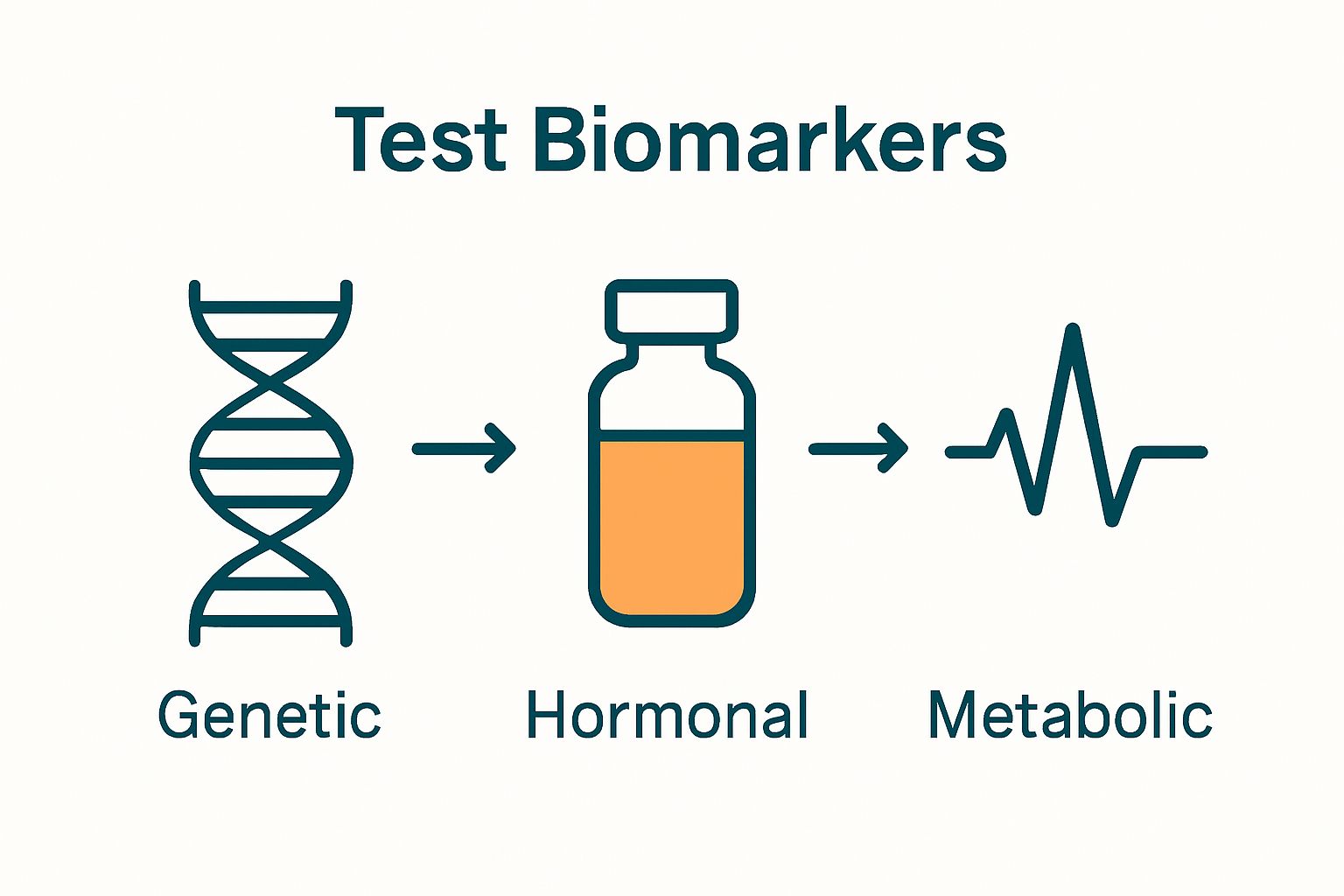 Each biomarker offers a unique window into different biological systems and their functioning.
The Scientific Significance of Biomarker Testing
Biomarker testing transforms healthcare from reactive to proactive approaches. According to research published in Nature Reviews, biomarkers enable early detection of physiological changes before they manifest as visible symptoms. This predictive capability allows individuals to understand their health trajectory and take preventative measures.
The complexity of biomarkers extends beyond simple numerical measurements. They represent intricate molecular signals that reflect interactions between genetics, environment, lifestyle, and individual physiological responses. Wide-ranging biomarker analysis can reveal detailed health insights, helping individuals and healthcare providers make informed decisions about prevention, intervention, and personalised treatment strategies.
The Science Behind Biomarkers: How They Indicate Health
Biomarkers operate as sophisticated molecular messengers, functioning as precise diagnostic tools that translate complex biological processes into measurable data. Home blood tests for longevity offer an accessible pathway to understanding these intricate health indicators.
Molecular Mechanisms of Biomarker Signalling
At their core, biomarkers are biochemical signals produced by cells, tissues, or organs that reflect specific physiological states. These molecular indicators emerge through various biological mechanisms:
- Genetic expression changes
- Protein production variations
- Metabolic pathway alterations
- Cellular stress responses
Each biomarker represents a unique molecular fingerprint, capturing subtle information about an individual’s health status. By measuring concentrations, interactions, and modifications of these molecules, researchers can decode complex physiological narratives.
Precision and Predictive Power of Biomarkers
According to research published in Nature Biotechnology, biomarkers provide unprecedented insights into health trajectories by detecting subtle molecular changes before clinical symptoms manifest. This predictive capability transforms healthcare from reactive treatment to proactive prevention.
The scientific precision of biomarkers lies in their ability to quantify molecular variations with remarkable sensitivity. Sophisticated analytical techniques enable researchers to interpret these molecular signals, translating abstract biochemical data into actionable health intelligence. By tracking specific molecular indicators, healthcare professionals can identify potential risks, monitor disease progression, and personalise treatment strategies with unprecedented accuracy.
Understanding the Context: Interpreting Results in Real Life
Interpreting biomarker results requires fine-grained understanding beyond raw numerical data. Understanding laboratory testing provides essential context for meaningful health insights.
Contextual Factors in Biomarker Interpretation
Biomarker results are not standalone metrics but complex indicators influenced by multiple physiological variables. Critical contextual elements include:
- Individual genetic background
- Age and gender
- Current health status
- Lifestyle and environmental factors
- Specific medical history
These interconnected factors create an in-depth framework for understanding an individual’s unique biochemical field. A single biomarker result might appear abnormal in isolation but could represent normal variation when considered as a whole.
Below is a table summarising key contextual factors influencing biomarker interpretation, highlighting how each element contributes to a meaningful health assessment.
| Contextual Factor | Description |
|---|---|
| Genetic Background | Inherited traits affecting biochemical processes; impacts individual variations in biomarker levels. |
| Age and Gender | Biological differences influence normal reference ranges and interpretation of results. |
| Current Health Status | Existing medical conditions can alter biomarker readings and their relevance. |
| Lifestyle and Environment | Diet, exercise, stress, and exposure to toxins all affect biomarker profiles. |
| Medical History | Past illnesses, treatments, or interventions shape current biomarker significance. |
Beyond Numbers: Full Health Assessment
According to research published in the Journal of Personalized Medicine, effective biomarker interpretation demands a multidimensional approach. Healthcare professionals evaluate results through intricate lenses of:
Temporal Trends: Tracking biomarker changes over time provides more meaningful insights than isolated measurements.
Comparative Analysis: Comparing an individual’s results against population reference ranges helps identify potential health deviations. However, these ranges are statistical tools, not definitive diagnostic criteria.
The ultimate goal of biomarker interpretation is transforming complex molecular data into actionable health strategies, enabling proactive and personalised healthcare management.
Applications of Biomarkers in Wellness and Disease Management
Biomarkers serve as powerful diagnostic and predictive tools across multiple health domains. Understanding wellness panel details illuminates how these molecular indicators transform healthcare strategies.
Preventative Health and Early Detection
In preventative healthcare, biomarkers function as sophisticated early warning systems, identifying potential health risks before clinical symptoms emerge. These molecular indicators enable proactive interventions by highlighting physiological changes associated with:
- Metabolic dysfunction
- Cardiovascular risk
- Inflammatory processes
- Hormonal imbalances
- Cellular aging mechanisms
By detecting subtle molecular variations, healthcare professionals can design targeted lifestyle modifications and preventative strategies tailored to individual biochemical profiles.
Disease Management and Treatment Monitoring
According to research published in Nature Medicine, biomarkers play a critical role in personalising treatment approaches across various medical conditions. Precision medicine relies heavily on these molecular indicators to:
- Track disease progression
- Evaluate treatment effectiveness
- Predict potential complications
- Adjust therapeutic interventions
- Assess individual treatment response
This molecular-level approach transforms traditional medical practice from generalised protocols to highly individualised healthcare strategies, enabling more detailed and effective medical interventions.
The following table compares how biomarkers are applied in preventative health versus disease management, illustrating their diverse role across the healthcare spectrum.
| Application Domain | Purpose | Key Actions Enabled |
|---|---|---|
| Preventative Health | Early detection of risks | Identifying subtle changes, informing lifestyle modifications |
| Disease Management | Ongoing monitoring and intervention | Tracking progression, evaluating treatments, adjusting therapies |
| Personalised Healthcare | Tailoring health strategies | Designing individual prevention or therapeutic plans based on biomarker results |
Future Trends in Biomarker Testing and Interpretation
The field of biomarker research and interpretation is rapidly evolving, driven by technological advancements and sophisticated analytical methodologies. Understanding multiple biomarker testing reveals the transformative potential of emerging diagnostic technologies.
Artificial Intelligence and Machine Learning Integration
Artificial intelligence is transforming biomarker interpretation by enabling complex pattern recognition and predictive modelling. Advanced computational techniques can now:
- Process massive datasets instantaneously
- Identify subtle molecular interactions
- Predict health trajectories with unprecedented accuracy
- Detect intricate biochemical patterns
- Generate personalised risk assessments
These AI-driven approaches transcend traditional statistical analysis, offering a more subtle understanding of individual biochemical profiles.
Personalised and Precision Medicine approaches
According to research published in Cell, emerging biomarker technologies are shifting healthcare towards hyper-personalised diagnostic and therapeutic strategies. Molecular profiling is becoming increasingly granular, enabling:
- Detailed genetic and epigenetic mapping
- Real-time health monitoring
- Targeted therapeutic interventions
- Dynamic risk assessment models
This emerging model represents a fundamental transformation from reactive to predictive healthcare, where individual molecular signatures guide precise, proactive medical strategies.
Get Actionable Health Insights from Your Biomarker Results
Learning to interpret test biomarkers can be overwhelming, especially when you face a sea of numbers and complex biological terms. The article highlights how understanding the context behind your results, like genetic background, lifestyle, and health status, can transform random data into real meaning. But without expert support and reliable lab results, it is easy to feel uncertain about what your biomarkers actually reveal about your wellbeing.
Reveal clarity and confidence with Lola Health. We make it simple to track over 45 biomarkers, including cardiovascular, hormonal, metabolic, and immune health, with broad blood testing panels you can order online. Choose at-home or clinic appointments with certified nurses for maximum convenience, swift turnaround, and results you can trust. Discover the value of a bundle for a complete health overview or treat someone you care about with a gift card for blood testing, as mentioned in the article’s exploration of preventative wellness and proactive monitoring.

Do not wait to turn your scientific curiosity into practical action. Visit Lola Health today and book your blood test. Take control of your health with clear answers and proven science guiding your next steps.
Frequently Asked Questions
What are test biomarkers?
Test biomarkers are measurable indicators of biological processes, health conditions, or responses to medical interventions. To understand their significance, explore different types of biomarkers and their implications for health monitoring.
How can I interpret my biomarker test results?
To interpret biomarker test results, consider your individual genetic background, age, and lifestyle factors. Approach your results as a whole rather than in isolation, possibly consulting a healthcare professional to ensure a wide-ranging understanding.
What role do biomarkers play in preventative health?
Biomarkers serve as early warning systems, identifying potential health risks before symptoms appear. To enhance your preventative health strategy, undergo regular biomarker testing to monitor your body’s changes over time.
How do I track changes in my biomarkers?
Track changes in your biomarkers by scheduling regular tests at consistent intervals, such as every six months. Document your results to help identify trends and make informed lifestyle adjustments based on your health trajectory.
Can biomarker tests help with disease management?
Yes, biomarker tests are vital for personalising treatment plans by tracking disease progression and response to therapies. If you have a chronic condition, consider integrating biomarker testing into your overall disease management strategy for better health outcomes.
What advancements are there in biomarker testing?
Recent advancements include the integration of artificial intelligence, which enhances the accuracy of biomarker analysis. Stay informed about new technologies that can improve your biomarker testing experience and offer deeper health insights.
Check Your Understanding Interpreting Test Biomarkers for Health Insights Levels at Home
The Core Health 45 includes Understanding Interpreting Test Biomarkers for Health Insights testing along with 44 other biomarkers. Results in 2 working days with a free at-home phlebotomist visit.
View Core Health 45 →Recommended
- Understanding What Are Diagnostic Biomarkers – Lola Health
- Understanding Why Choose Laboratory Testing for Health Insights – Lola Health
- Understanding Why Test Multiple Biomarkers for Health Insights – Lola Health
- Optimise Your Biomarker Monitoring Workflow for Health – Lola Health
Test This Biomarker at Home
This biomarker is included in our ALT Test and Liver & Kidney Function — results in 2-3 working days with GP-reviewed insights.
At-Home Blood Testing
Check your levels from home
Professional phlebotomist visit. Doctor-reviewed results in 2-5 days. Track your health with comprehensive blood panels.
→45-70 biomarkers tested · Venous blood draw · From £130