


Diagnostic biomarkers are changing how we look at health. These microscopic markers can be found in blood, tissue, or even saliva, revealing vital details about what is really happening inside your body. But here is the surprising bit. Some biomarkers can detect disease before any symptoms appear, slashing diagnostic delays by weeks or even months. This means the data hidden in a drop of blood could hold the key to catching conditions earlier than ever imagined.
Table of Contents
- Defining Diagnostic Biomarkers: What They Are
- The Importance of Diagnostic Biomarkers in Healthcare
- How Diagnostic Biomarkers Work: Mechanisms Explained
- Key Concepts in Diagnostic Biomarkers: Types and Uses
- Real-World Applications of Diagnostic Biomarkers
Quick Summary
| Takeaway | Explanation |
|---|---|
| Diagnostic biomarkers indicate health conditions. | These molecular indicators reveal normal or abnormal processes in the body, aiding in diagnosis. |
| They enable early disease detection. | Biomarkers can identify health risks before significant symptoms occur, facilitating proactive healthcare. |
| Personalised treatment strategies are possible. | Biomarkers help clinicians tailor interventions based on individual biological profiles, improving treatment outcomes. |
| They improve diagnostic accuracy and speed. | Diagnostic biomarkers enhance the precision of disease identification, reducing unnecessary medical procedures. |
| Molecular signals are measurable and analysable. | Techniques such as immunoassays and genetic sequencing allow for precise detection of molecular patterns associated with health. |
Defining Diagnostic Biomarkers: What They Are
Diagnostic biomarkers represent critical molecular indicators that provide precise insights into an individual’s health status. These biological molecules serve as essential signposts revealing normal or abnormal processes occurring within the human body. According to the National Cancer Institute, diagnostic biomarkers are biological molecules found in blood, other body fluids, or tissues that signal the presence of specific health conditions.
Molecular Signals of Health
At their core, diagnostic biomarkers function as sophisticated molecular messengers. These molecules can be proteins, genes, specific molecules, or metabolic compounds that indicate biological changes. When healthcare professionals analyse these biomarkers, they gain a window into understanding disease progression, potential risks, and individual health trajectories.
Key characteristics of diagnostic biomarkers include:
- Specificity in detecting particular health conditions
- Measurability through blood, tissue, or fluid tests
- Potential for early disease detection
- Ability to track treatment response
Clinical Applications and Significance
Diagnostic biomarkers play a transformative role in modern medicine. Research from medical journals demonstrates their critical importance in personalised healthcare. These molecular indicators enable clinicians to make more accurate diagnoses, understand disease mechanisms, and develop targeted treatment strategies.
By providing detailed insights into an individual’s health space, our detailed biomarker testing workflow allows for proactive health management and precision medicine approaches. Rather than relying solely on traditional diagnostic methods, healthcare professionals can now use these molecular signals to create more detailed, personalised health interventions.
The Importance of Diagnostic Biomarkers in Healthcare
Diagnostic biomarkers are transforming healthcare by providing unprecedented insights into individual health conditions. According to research from Nature, these molecular indicators can dramatically improve the accuracy and speed of disease diagnosis, enabling more targeted and effective medical interventions.
Precision Medicine Revolution
Healthcare is shifting from a one-size-fits-all approach to personalised medicine, with diagnostic biomarkers at the forefront of this transformation. By detecting subtle molecular changes, these indicators allow medical professionals to understand disease mechanisms at a granular level. This precision enables clinicians to develop treatment strategies tailored to an individual’s unique biological profile.
Key advantages of diagnostic biomarkers include:
- Early detection of potential health risks
- Identification of disease subtypes
- Monitoring treatment effectiveness
- Predicting potential treatment responses
Clinical and Economic Impact
Research examining diagnostic strategies demonstrates that diagnostic biomarkers can reduce unnecessary medical procedures by distinguishing between similar clinical presentations. This not only improves patient outcomes but also contributes to more efficient healthcare resource allocation.
This table summarises the key advantages and roles of diagnostic biomarkers in modern healthcare, making it easy to scan their core features and impact in clinical practice.
| Key Feature or Advantage | Description |
|---|---|
| Early detection of health risks | Identifies diseases or risks before major symptoms appear |
| Identification of disease subtypes | Distinguishes between similar conditions to refine diagnosis |
| Monitoring treatment effectiveness | Tracks patient response to therapies through measurable change |
| Predicting potential treatment response | Informs clinicians about expected outcomes for given interventions |
| Reducing unnecessary procedures | Avoids redundant tests by providing accurate differentiation |
By understanding why testing multiple biomarkers provides broad health insights, patients and healthcare providers can make more informed decisions. The ability to detect potential health issues before they become critical represents a significant advancement in preventative healthcare helping individuals to take proactive steps towards maintaining their well-being.
How Diagnostic Biomarkers Work: Mechanisms Explained
Diagnostic biomarkers operate through intricate molecular detection mechanisms that reveal critical health information at the cellular level. According to biomedical research, these molecular indicators function as sophisticated biological sensors, capturing subtle changes within bodily systems.
Molecular Detection and Signal Transmission
At their fundamental level, diagnostic biomarkers work by identifying specific molecular patterns associated with health conditions. These molecular signatures can emerge from proteins, genetic materials, metabolites, or cellular compounds. When a biological change occurs, these biomarkers generate measurable signals that healthcare professionals can interpret.
Key mechanisms of biomarker detection include:
- Recognising specific molecular alterations
- Quantifying biochemical changes
- Tracking cellular metabolic processes
- Identifying potential disease indicators
Biochemical Interaction and Analysis
The process of biomarker detection involves complex biochemical interactions. Sophisticated laboratory techniques such as immunoassays, genetic sequencing, and mass spectrometry enable precise measurement and interpretation of these molecular signals. Our wide-ranging metabolic panel testing demonstrates how advanced technology can translate these intricate molecular interactions into actionable health insights.
By capturing molecular changes at unprecedented levels of sensitivity, diagnostic biomarkers provide a dynamic view of an individual’s health status.
This molecular-level understanding allows healthcare professionals to detect potential health risks before they manifest as clinical symptoms, representing a significant advancement in preventative and personalised medicine.
Key Concepts in Diagnostic Biomarkers: Types and Uses
According to biomedical research, diagnostic biomarkers encompass a diverse range of molecular indicators that provide critical insights into human health. These sophisticated biological signals represent multiple categories of health information, each offering unique perspectives on physiological processes.
Types of Diagnostic Biomarkers
Diagnostic biomarkers can be classified into several distinct categories, each serving specific diagnostic and monitoring purposes. The primary types include molecular, imaging, and physiological biomarkers, each offering unique windows into biological functioning.
The table below organises the main types of diagnostic biomarkers discussed, clarifying their definitions and core examples for easier comparison and understanding.
| Type of Biomarker | Definition | Core Example |
|---|---|---|
| Molecular biomarker | Measures specific molecules, such as DNA, RNA, or proteins, in blood or tissue | Genetic mutation or protein level |
| Imaging biomarker | Utilises radiological techniques to identify disease or abnormality | MRI or X-ray scan finding |
| Physiological biomarker | Involves clinical measurements assessing organ or system function | Blood pressure measurement |
| Cellular biomarker | Detects metabolic or structural cellular changes | Altered cell morphology |
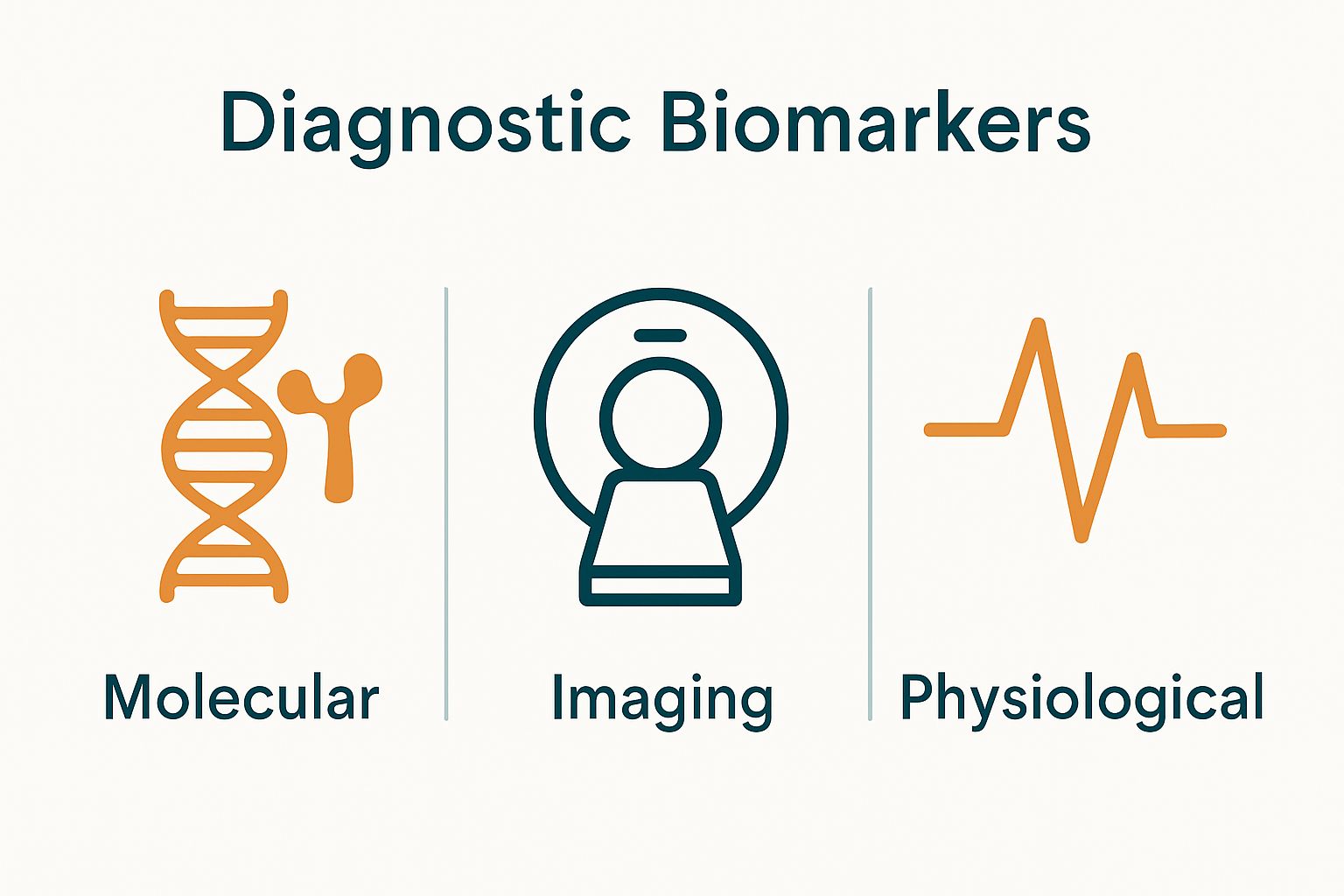
Key categories of diagnostic biomarkers comprise:
- Molecular biomarkers (DNA, RNA, proteins)
- Imaging biomarkers (radiological findings)
- Physiological biomarkers (clinical measurements)
- Cellular biomarkers (metabolic and structural changes)
Clinical Applications and Significance
The versatility of diagnostic biomarkers enables healthcare professionals to address complex medical challenges with unprecedented precision. Understanding how blood tests support clinicians highlights the transformative potential of these molecular indicators. From early disease detection to personalised treatment strategies, diagnostic biomarkers serve multiple critical functions in modern healthcare.
Beyond mere diagnostic tools, these molecular signals provide in-depth insights into an individual’s health trajectory.
 By capturing subtle biochemical changes, diagnostic biomarkers enable medical professionals to develop proactive, personalised healthcare approaches that transcend traditional reactive medical models.
Real-World Applications of Diagnostic Biomarkers
Clinical research demonstrates that diagnostic biomarkers play a transformative role across multiple medical disciplines, offering precise insights into complex health conditions. These molecular indicators have transformed diagnostic approaches by providing fine-grained understanding beyond traditional medical examinations.
Disease Detection and Monitoring
Diagnostic biomarkers are instrumental in identifying and tracking various medical conditions with unprecedented accuracy. In oncology, molecular biomarkers help detect specific cancer types, allowing for early intervention and personalised treatment strategies. Similarly, in cardiovascular medicine, these indicators provide critical information about heart health and potential risks.
Key applications across medical specialties include:
- Early cancer detection and staging
- Cardiovascular risk assessment
- Neurological condition monitoring
- Autoimmune disease progression tracking
- Infectious disease diagnosis
Emergency and Precision Medicine
Understanding blood tests for heart disease highlights the critical role of diagnostic biomarkers in emergency settings. For instance, troponin levels can rapidly indicate myocardial infarction, enabling swift medical interventions. These molecular signals provide healthcare professionals with instantaneous, actionable insights that can potentially save lives.
By translating complex molecular data into clear, interpretable information, diagnostic biomarkers bridge the gap between cellular changes and clinical understanding. They represent a sophisticated approach to personalised healthcare, enabling proactive medical strategies that address individual health risks with remarkable precision.
Ready to Take Control with Full Biomarker Testing?
Understanding diagnostic biomarkers is only the first step. If you have been searching for a way to translate molecular health insights into practical action, Lola Health brings clarity right to your doorstep. Many people struggle with vague symptoms or the uncertainty of waiting for traditional test results. Our clinically thorough blood testing services are designed to bring you quick, reliable answers covering over 45 biomarkers, including those for cardiovascular, metabolic, and immune health. Discover which markers matter most for you by exploring our Lola Bundles, offering panels designed for proactive wellbeing.

Why wait and wonder about your health when you can act today? Experience nurse-led convenience, NHS-standard accuracy, and actionable results in just a few days. Visit Lola Health to find the right health check for your goals. If you are interested in even more targeted insights, see our urinanalysis options for a complete picture of your wellbeing. Book your test online and take confident steps towards a healthier future.
Frequently Asked Questions
What are diagnostic biomarkers?
Diagnostic biomarkers are biological molecules found in blood, tissues, or other body fluids that indicate specific health conditions. They serve as molecular signposts, signalling abnormal or normal bodily processes, and can help in early detection and monitoring of diseases.
How do diagnostic biomarkers help in disease detection?
Diagnostic biomarkers can identify specific molecular changes associated with diseases, allowing for earlier and more accurate diagnoses. To utilise this, discuss with your healthcare professional about tests available that can measure these biomarkers to gain insights into your health status.
What types of diagnostic biomarkers are there?
There are different types of diagnostic biomarkers including molecular (such as DNA and proteins), imaging (like X-ray findings), and physiological biomarkers (clinical measurements). Understanding these categories can help you discuss personalised testing options with your healthcare provider.
How can I ensure accurate results from biomarker tests?
To achieve accurate results from diagnostic biomarker tests, ensure that you follow pre-test instructions closely, which may include fasting or avoiding certain medications. Regularly consult your healthcare provider regarding the timing of your tests to improve accuracy and relevance.
What is the role of biomarkers in personalised medicine?
Biomarkers play a important role in personalised medicine by allowing healthcare providers to tailor treatment strategies based on individual molecular profiles. To take advantage of this approach, actively engage with your healthcare provider about incorporating biomarker testing into your health management plan.
How can diagnostic biomarkers improve treatment monitoring?
Diagnostic biomarkers enable healthcare professionals to track the effectiveness of treatments by providing measurable insights into biological responses. To monitor your treatment progress, ask your doctor about the specific biomarkers they will use and how often they will be tested during your care plan.
Check Your Understanding What Are Diagnostic Biomarkers Levels at Home
The Core Health 45 includes Understanding What Are Diagnostic Biomarkers testing along with 44 other biomarkers. Results in 2 working days with a free at-home phlebotomist visit.
View Core Health 45 →Recommended
- Understanding Why Test Multiple Biomarkers for Health Insights – Lola Health
- Optimise Your Biomarker Monitoring Workflow for Health – Lola Health
- What Are Metabolic Panels? Understanding Their Importance – Lola Health
- Understanding the Role of Metabolic Panels in Wellness – Lola Health
At-Home Blood Testing
Check your levels from home
Professional phlebotomist visit. Doctor-reviewed results in 2-5 days. Track your health with comprehensive blood panels.
→45-70 biomarkers tested · Venous blood draw · From £130