



Doctors rely on the Full Blood Count every day to spot hidden health problems and monitor your wellbeing. The numbers behind this test are bigger than many expect. A typical Full Blood Count measures over 10 different features in a single sample, from red and white blood cell counts to detailed analyses of each one. Most assume it is just another routine check, but this test can flag up issues long before any symptoms show up at all. This quiet routine is often your body’s earliest warning system.
Table of Contents
- What Is A Full Blood Count And Why It Matters
- The Components Of A Full Blood Count And Their Functions
- Interpreting Full Blood Count Results: Key Indicators
- How Full Blood Count Relates To Overall Health Management
Quick Summary
| Takeaway | Explanation |
|---|---|
| Full Blood Count detects health issues early | The FBC acts as a preventative measure, identifying potential health conditions before symptoms arise. |
| Key components include red and white blood cells | Vital measurements evaluate oxygen transport, immune defense, and clotting abilities for overall health assessment. |
| Interpreting results requires context | Understanding FBC values in conjunction with patient history and lifestyle factors helps identify health concerns accurately. |
| Regular FBC monitoring supports health management | Tracking blood cell counts over time assists in assessing treatment effectiveness and detecting potential risks. |
| FBC helps informed health decisions | It provides critical insights that enable both patients and healthcare providers to make proactive health choices. |
What is a Full Blood Count and Why It Matters
A Full Blood Count (FBC) represents a fundamental diagnostic tool that provides comprehensive insights into your overall health by examining the critical components circulating through your bloodstream. When healthcare professionals want to understand your body’s internal functioning at a cellular level, an FBC offers an intricate snapshot of potential health conditions and performance.
Understanding Blood Components
Blood is a complex biological fluid composed of several key elements that work synergistically to maintain bodily functions. An FBC meticulously measures and analyses multiple blood components, including:
- Red Blood Cells: Responsible for oxygen transportation throughout the body
- White Blood Cells: Critical for immune system defence
- Platelets: Essential for blood clotting mechanisms
- Haemoglobin: The protein enabling oxygen carrying capacity
By examining these elements, medical professionals can detect a wide range of potential health issues ranging from anaemia and infections to more complex conditions like leukaemia.
Why FBC Matters for Proactive Health Monitoring
A Full Blood Count serves as an early warning system, providing important insights before symptoms become apparent. According to NHS Wales, this test helps identify potential health concerns by measuring blood cell counts and characteristics.
Healthcare practitioners use FBC results to:
- Diagnose underlying medical conditions
- Monitor existing health treatments
- Assess overall physiological performance
- Screen for potential systemic disorders
The comprehensive nature of an FBC makes it an invaluable tool for preventative healthcare, allowing individuals to understand their bodily functions and address potential health risks proactively. By providing a detailed examination of blood composition, this test enables both patients and healthcare providers with critical information about cellular health and potential medical interventions.

The Components of a Full Blood Count and Their Functions
A Full Blood Count (FBC) represents a sophisticated diagnostic test that provides an intricate analysis of blood composition. By examining multiple cellular components, healthcare professionals gain profound insights into an individual’s physiological health and potential underlying conditions.
Key Blood Cell Measurements
The FBC thoroughly evaluates several critical blood parameters that collectively paint a thorough picture of health. According to Gloucestershire Hospitals NHS Foundation Trust, these measurements include:
- Red Blood Cell Count: Indicates oxygen transportation capacity
- White Blood Cell Count: Reflects immune system functionality
- Platelet Count: Assesses blood clotting potential
- Haemoglobin Levels: Measures oxygen carrying capability
- Haematocrit: Determines blood volume occupied by red blood cells
Each measurement serves a unique purpose in understanding overall physiological performance and detecting potential health anomalies.

To clarify the purpose and significance of each major blood component measured in a Full Blood Count, the following table organises these elements alongside their main functions.
| Blood Component | Main Function | Clinical Relevance |
|---|---|---|
| Red Blood Cells | Transport oxygen throughout the body | Low levels indicate anaemia; high levels may indicate underlying health issues |
| White Blood Cells | Defend against infections and support immune function | Elevated counts often signal infection or inflammation; low counts can indicate immune problems |
| Platelets | Facilitate blood clotting | Abnormal counts can affect bleeding or clotting tendencies |
| Haemoglobin | Carry oxygen within red blood cells | Low levels can result in fatigue and weakness; high levels may reflect other conditions |
| Haematocrit | Indicates proportion of blood made up by red cells | Helps diagnose dehydration, anaemia, or polycythaemia |
Detailed Cellular Analysis
Beyond basic counting, an FBC provides detailed insights into cellular characteristics. Medical professionals examine mean cell volume, mean cell haemoglobin, and mean cell haemoglobin concentration to understand the quality and health of blood cells.
These detailed measurements help identify potential conditions such as:
- Anaemia
- Infections
- Inflammation
- Blood disorders
- Potential immune system challenges
By offering a multi-dimensional view of blood composition, the Full Blood Count transforms simple numeric data into a powerful diagnostic tool that enables proactive healthcare management and early intervention strategies.
Interpreting Full Blood Count Results: Key Indicators
Interpreting Full Blood Count (FBC) results requires a subtle understanding of how different blood components interact and what their values signify about overall health. Rather than viewing numbers in isolation, healthcare professionals analyse these results holistically to understand potential underlying conditions.
Normal Reference Ranges
Each blood component has a specific reference range that indicates optimal health. According to Nursing Times, these ranges help medical professionals quickly identify potential health anomalies. Deviations from these ranges can signal various physiological challenges.
Typical reference ranges include:
The table below outlines general reference ranges for key Full Blood Count indicators, offering a quick guide for interpreting whether results fall within typical parameters.
| Blood Parameter | Reference Range (Men) | Reference Range (Women) | Unit |
|---|---|---|---|
| Red Blood Cells | 4.5–5.5 million | 4.5–5.5 million | cells per microlitre |
| White Blood Cells | 4,500–11,000 | 4,500–11,000 | cells per microlitre |
| Platelets | 150,000–450,000 | 150,000–450,000 | per microlitre |
| Haemoglobin | 13.5–17.5 | 12–15.5 | grams per decilitre |
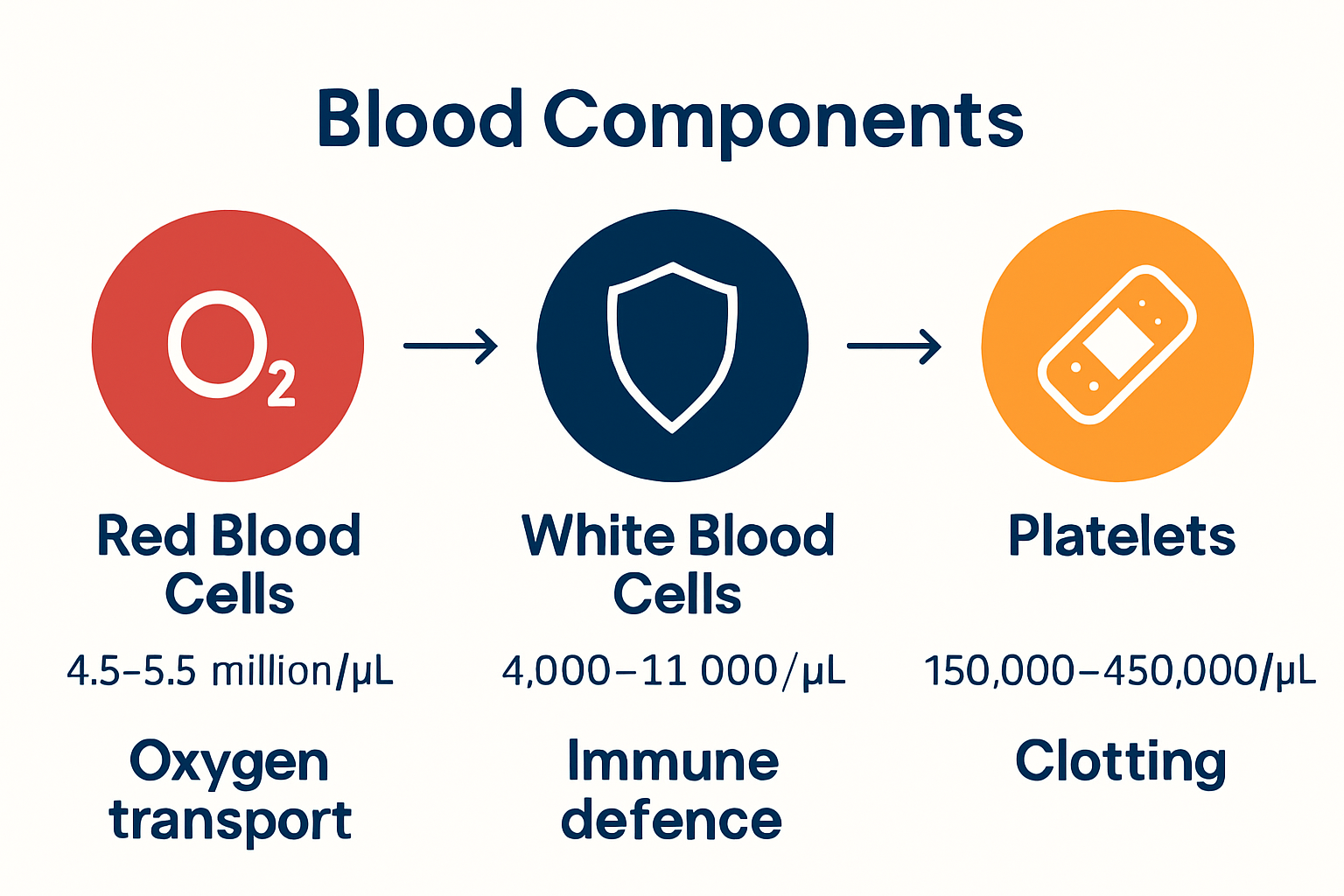
- Red Blood Cells: Typically 4.5-5.5 million cells per microlitre
- White Blood Cells: Generally 4,500-11,000 cells per microlitre
- Platelets: Usually 150,000-450,000 per microlitre
- Haemoglobin: Normally 13.5-17.5 grams per decilitre for men, 12-15.5 for women
Contextual Interpretation of Results
Interpreting FBC results is not about individual numbers but understanding their collective narrative. High or low values can indicate various conditions, from minor temporary states to more significant health concerns. For example, elevated white blood cell counts might suggest ongoing infection, while reduced red blood cell counts could indicate anaemia.
Medical professionals consider multiple factors when analysing results, including:
- Patient medical history
- Current symptoms
- Age and gender
- Lifestyle factors
- Potential environmental influences
Learn more about understanding cardiovascular health through blood tests to gain deeper insights into how these measurements connect with broader health indicators.
How Full Blood Count Relates to Overall Health Management
A Full Blood Count (FBC) serves as a powerful diagnostic tool that extends far beyond simple numeric measurements. It provides a full snapshot of an individual’s physiological health, offering insights that enable proactive and preventative healthcare strategies.

Full-picture Health Evaluation
According to NHS Wales, an FBC helps detect a wide range of potential health disorders by examining multiple blood parameters. The test acts as an early warning system, revealing potential health challenges before they become more serious medical conditions.
Key health aspects evaluated through an FBC include:
- Immune system functionality
- Oxygen transportation efficiency
- Blood cell production and quality
- Potential inflammatory responses
- Metabolic and nutritional status
Preventative Healthcare Insights
Beyond identifying existing conditions, an FBC plays a key role in preventative health management. By tracking blood cell counts and characteristics over time, healthcare professionals can:
- Detect subtle changes in physiological performance
- Monitor the effectiveness of ongoing treatments
- Assess potential nutritional deficiencies
- Evaluate overall systemic health
- Predict potential future health risks
Explore in-depth health screening strategies to understand how detailed blood analysis fits into broader preventative healthcare approaches. The FBC represents more than a simple test it is a critical tool for understanding and managing individual health trajectories, enabling individuals to make informed decisions about their wellbeing.
Take Charge of Your Health With Fast, Trusted Blood Testing
You have just learned how a Full Blood Count reveals essential insights into your wellbeing, from early signs of illness to ongoing monitoring of your immune system and blood quality. Yet, one common struggle remains: accessing timely, accurate tests interpreted by experts, all without the hassle and wait of traditional appointments.

Lola Health provides a solution that brings healthcare closer to you. Our at-home and clinic blood testing services are designed for simplicity and peace of mind. You can book a certified nurse visit, have your blood taken with ease, and receive NHS-standard results reviewed by doctors in just 2–4 business days. Uncover your full range of biomarkers including cardiovascular, metabolic and immune health, and gain rapid clarity on your Full Blood Count.
Why wait to take action? Visit Lola Health today to order your test, book your phlebotomy appointment, and join others already making informed changes for their future wellbeing. Proactive steps today lead to better health for tomorrow.
Frequently Asked Questions
What is a Full Blood Count (FBC)?
A Full Blood Count (FBC) is a fundamental diagnostic test that measures various components of blood, including red blood cells, white blood cells, platelets, haemoglobin levels, and haematocrit, providing insights into your overall health and identifying potential medical conditions.
Why is a Full Blood Count important for health monitoring?
An FBC serves as an early warning system for detecting health issues before they manifest as symptoms. It helps diagnose underlying medical conditions, monitor ongoing treatments, and assess overall physiological performance, supporting proactive healthcare.
What do the different components measured in an FBC tell us?
Each component of an FBC provides valuable information: red blood cells indicate oxygen transport capacity, white blood cells reflect immune function, platelets assess blood clotting ability, and haemoglobin levels measure the blood’s oxygen-carrying capability, which collectively offer insights into one’s health.
How are Full Blood Count results interpreted?
FBC results are interpreted by comparing them against established normal reference ranges. Deviations from these ranges can indicate various health conditions. Medical professionals consider factors such as patient history, symptoms, age, gender, and lifestyle when analysing these results.
Recommended
- Why Blood Tests for Heart Disease Matter Explained Clearly
- What is Complete Health Screening? Understanding Its Importance
- Understanding What Does a Wellness Panel Include
- Lola
- What is Microcirculation? Understanding Its Importance
- Understanding How to Improve Circulation Naturally
At-Home Blood Testing
Check your levels from home
Professional phlebotomist visit. Doctor-reviewed results in 2-5 days. Track your health with comprehensive blood panels.
→45-70 biomarkers tested · Venous blood draw · From £130