


At its core, a cortisol saliva test is a straightforward, non-invasive method for measuring your body’s main stress hormone, cortisol. All it takes is a simple saliva sample, but the insights it provides are incredibly powerful for your long-term health. This test gives you a snapshot of how your system is handling stress throughout the day, which is important information for anyone looking to fine-tune their energy, improve sleep, and ultimately extend their healthspan. It’s especially good at mapping your daily cortisol rhythm, and you can do it all from the comfort of your own home.
What a Cortisol Saliva Test Reveals About You
Think of your body as having an internal clock that keeps you sharp and alert during the day but knows when it's time to power down for deep, cellular repair at night. The cortisol saliva test is one of the best ways we have to read that clock. It opens a direct window into the daily ebb and flow of your stress hormone, revealing data that has a real impact on your daily performance and how well you age.
This one hormone is a master regulator of your vitality. It touches everything, from how energetic you feel when you wake up and the quality of your sleep, to your mental clarity and even how your body processes food. For anyone serious about living a long and healthy life, understanding its pattern isn't just nice to know - it's essential.
Your Daily Performance Curve
Picture your energy over a 24-hour period as a "performance curve." In a healthy person, this curve shoots up in the morning to get you going, gently slopes downward through the afternoon, and bottoms out at night so you can get deep, restorative sleep. This natural cycle is what we call the diurnal cortisol rhythm.
A smooth, predictable rhythm is the bedrock of sustained performance and a long healthspan. But when this pattern gets thrown off - maybe it's too high all the time, flatlines when it should be high, or just bounces around erratically - it’s often an early warning sign of underlying issues that accelerate ageing:
- Energy and Vitality: That big cortisol spike first thing in the morning is what makes you feel awake and ready to face the day. A blunted response means you're starting each day in a deficit, which over time can lead to chronic fatigue.
- Sleep Quality: As evening approaches, cortisol is meant to drop. If it stays high, it interferes with melatonin, robbing you of the deep, restorative sleep needed for cellular repair - a cornerstone of longevity.
- Mental Clarity and Focus: Balanced cortisol supports a steady mood and sharp thinking. Imbalances can lead to brain fog, anxiety, and poor concentration, diminishing your cognitive healthspan.
- Long-Term Health: Chronic dysregulation of cortisol is directly tied to the drivers of ageing, including persistent inflammation, a weaker immune system, and metabolic problems.
By measuring your cortisol at several key moments, the saliva test does more than give you a single number. It actually maps out your entire daily rhythm, and it's this pattern that tells the real story about your biological resilience.
Getting to know your unique cortisol pattern is the first concrete step towards making smarter decisions that promote longevity. It takes you from guessing why you’re so tired to working with objective data. Armed with this information, you can start connecting the dots between your lifestyle and your body's internal clock, giving you the power to take targeted action and optimise your health for the long haul.
Decoding Your Body's Daily Stress Rhythm
Your body runs on an internal clock, a circadian rhythm that does far more than just tell you when to sleep and wake up. It’s a master conductor, orchestrating a complex symphony of hormones that dictates your energy, focus, and long-term health. Cortisol is the lead violin in this orchestra, and its daily rhythm is a powerful indicator of your biological age versus your chronological age.
The most important part of this daily performance happens first thing in the morning. It’s called the Cortisol Awakening Response (CAR), and it’s a sharp, healthy surge of cortisol that kicks in within 30-60 minutes of waking. Think of it as your body's natural ignition switch, firing you up with the alertness and energy you need to get the day started.
A strong CAR is a hallmark of a resilient, youthful stress-response system. It sets the stage for a productive day. After this morning peak, your cortisol levels should gently and steadily fall, reaching their lowest point at night. This dip is important for allowing your body to enter a state of repair and regeneration overnight.
Recognising Healthy vs Dysfunctional Rhythms
When this natural rise-and-fall pattern gets thrown off, it's a sign of accelerated ageing at the hormonal level. A cortisol saliva test is designed specifically to map this daily curve, revealing dysfunctions that might be silently undermining your longevity goals.
Here’s what we look for:
- A Healthy Rhythm: A strong peak right after waking, followed by a smooth decline to a low point before bed. This is the optimal pattern for sustained energy, cellular repair, and a long healthspan.
- A Flat Curve: Cortisol levels are low all day. This often signifies HPA axis dysfunction or "adrenal fatigue," leaving you with no resilience to handle daily stressors, accelerating wear and tear on your body.
- A Reversed Curve: Low cortisol in the morning (making it a struggle to get up) and high levels at night. This pattern severely disrupts sleep, preventing the critical repair processes that fight ageing.
- An Elevated Curve: Cortisol is stuck in high gear all day long. This is a state of chronic stress that drives inflammation, metabolic damage, and speeds up the ageing process across all bodily systems.
This infographic clearly shows how cortisol's rhythm is directly tied to how you feel and function.
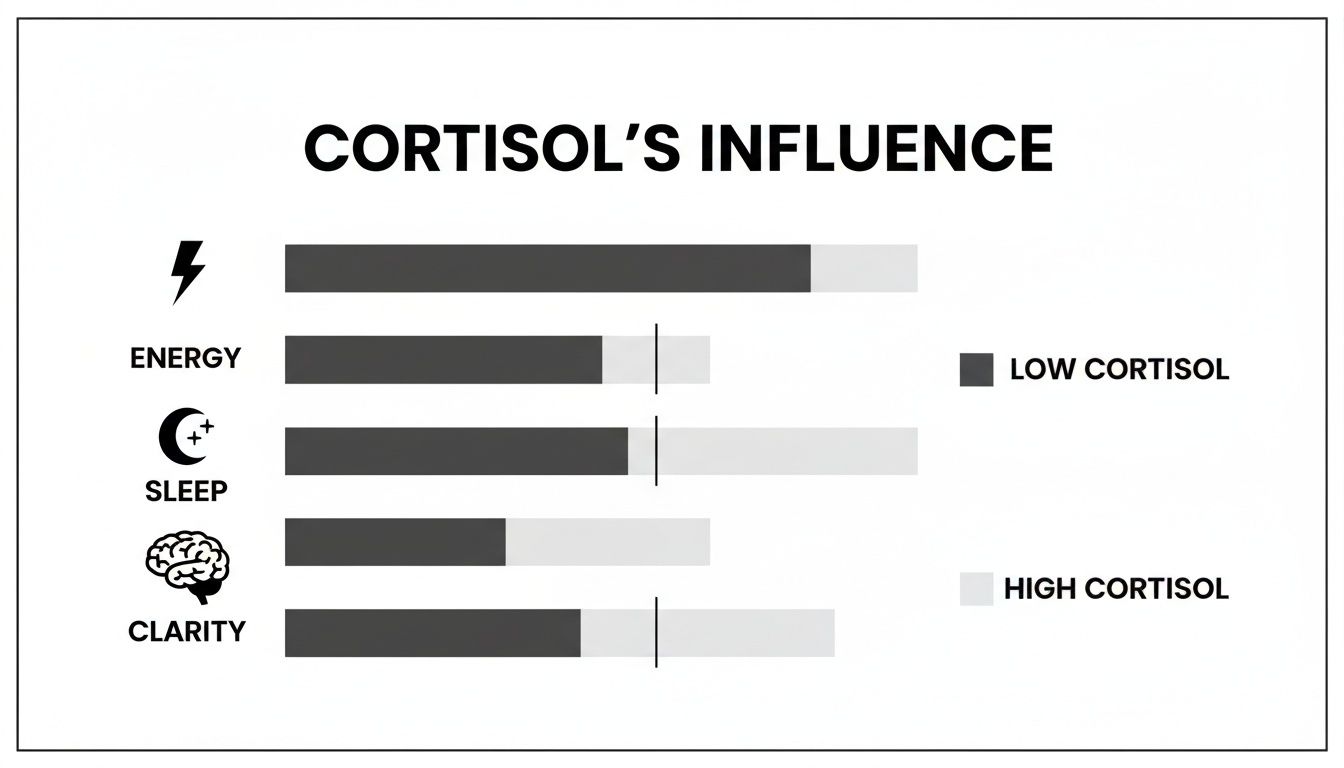
As you can see, getting this curve right is fundamental to feeling your best today and preserving your health for tomorrow.
The Importance of Precise Sample Collection
Because your cortisol levels are constantly changing, timing is everything. A single measurement only gives you a tiny snapshot, but collecting several samples throughout the day tells the whole story of your body's resilience. To get an accurate map of your rhythm, you have to collect your saliva at very specific times.
To illustrate why multi-point collection is so critical, here’s a typical schedule for a cortisol saliva test.
Optimal Cortisol Saliva Sample Collection Times
This schedule illustrates the standard multi-point collection protocol to accurately map the diurnal cortisol curve.
| Sample Point | Time of Day | Purpose of This Measurement |
|---|---|---|
| Sample 1 | Immediately upon waking (within 5 mins) | Establishes your baseline cortisol level before the day's stressors kick in. |
| Sample 2 | 30-60 minutes after waking | Captures the peak of the Cortisol Awakening Response (CAR), a important indicator of adrenal health and stress resilience. |
| Sample 3 | Midday (around 12 PM - 1 PM) | Shows how well your cortisol is declining, reflecting your capacity to manage stress through the day without burnout. |
| Sample 4 | Late Afternoon (around 4 PM - 5 PM) | Checks the continued downward trend, which is important for preventing chronic stress accumulation. |
| Sample 5 | Bedtime (just before sleep) | Confirms that cortisol has reached its lowest point, which is essential for initiating deep, restorative sleep and repair. |
This timed approach ensures the results give a true picture of your physiological rhythm, making them genuinely actionable for improving your longevity. You also need to prepare properly by avoiding things that could skew your results, like intense exercise, certain foods, and even some drinks. For instance, it’s worth understanding exactly how much caffeine is still present in decaffeinated coffee if you drink it regularly.
The good news is that at-home saliva testing for this purpose is far from new; it’s been validated for decades. Landmark research from the Speedwell cohort study in Bristol provided some of the earliest insights into cortisol patterns. Between 1997 and 1999, 854 men successfully provided saliva samples from home, capturing their daily rhythms in a real-world setting.
This foundational study proved just how reliable and convenient saliva testing is, making it the perfect tool for anyone serious about proactively managing their healthspan.
How to Interpret Your Results for Better Longevity
Getting your cortisol saliva test results back is where the data turns into a personalised strategy for a longer, healthier life. This isn't just about spotting a 'high' or 'low' reading; it’s about understanding your body's unique stress signature and what it means for how you age. Think of it as a personalised roadmap, giving you a useful measure to extend your healthspan.
By interpreting the nuances of your daily cortisol rhythm, you can finally connect the dots between how you feel and what’s actually happening inside. It’s a move away from guesswork and towards making targeted, data-driven decisions that can genuinely impact your vitality for years to come.
Connecting Cortisol Patterns to Your Healthspan
Your cortisol curve offers a direct window into your body's resilience. And when we talk about longevity, what we’re really talking about is preserving that resilience right down to the cellular level. Some cortisol patterns are known to put the foot on the accelerator of the ageing process, while a healthy, balanced rhythm acts as a protective shield.
A consistently elevated cortisol curve is a major red flag for longevity. Imagine your body being stuck in a constant state of emergency - that's what this pattern does. It drives chronic inflammation, which lies at the heart of nearly every age-related disease, from heart conditions to cognitive decline. You can learn more about what high cortisol means for your body in our detailed guide.
On the flip side, a blunted or flat curve is just as worrying for your long-term health. This pattern suggests your HPA axis (the command centre for stress) has become dysregulated. When your body can't mount a proper cortisol response, your energy, immunity, and overall vitality suffer, which seriously undermines your ability to thrive as you age.
Your cortisol results are not just numbers on a page; they are a direct reflection of your body's internal environment. A dysfunctional cortisol pattern is an early warning sign, giving you the opportunity to make changes before minor issues become chronic problems that shorten your healthspan.
Catching these patterns early is what help you to take back control.
Translating Imbalances into Actionable Strategies
The real value of a cortisol saliva test is that it points towards specific, personalised actions to promote longevity. Once you understand your unique hormonal signature, you can build a plan to restore balance and support cellular repair - directly contributing to a longer, healthier life.
Here are a few common imbalances and the kind of longevity-focused strategies they point towards:
- Chronically High Cortisol: This pattern demands a focus on down-regulating your stress response. Actionable steps include incorporating mindfulness practices, ensuring adequate intake of magnesium and B vitamins to support your nervous system, and exploring adaptogens that help your body adapt to stress more efficiently.
- Low Morning Cortisol (Poor CAR): A flat morning reading means your priority is resetting your circadian rhythm. This means getting bright light exposure within an hour of waking to signal your internal clock, starting the day with protein to stabilise blood sugar, and avoiding caffeine on an empty stomach.
- High Evening Cortisol: This pattern sabotages the restorative sleep essential for longevity. To tackle this, implement a strict evening wind-down routine, eliminate screen time an hour before bed, and consider supplements like phosphatidylserine, which can help lower evening cortisol and promote deep sleep.
The Reliability of Salivary Testing for Health Monitoring
The good news is that at-home testing is becoming more convenient and scientifically strong, making it easier than ever for people to be proactive about their health. The evidence backing this approach, particularly here in the UK, is growing.
For instance, a pioneering UK trial looked at using salivary cortisone to screen for adrenal insufficiency and showed how it could transform diagnostics. The Health Research Authority study found that a home-based waking saliva sample gave similar diagnostic information to the gold-standard hospital test, with an incredible 96% negative predictive value for ruling out the condition. What's more, 83% of patients said they preferred collecting the sample at home. It’s a powerful validation of salivary testing as a reliable and patient-friendly way to monitor adrenal health.
This kind of evidence shows that a cortisol saliva test isn’t just for flagging major problems. It's a precise tool you can use to fine-tune your well-being and build a solid foundation for a long, vibrant life.
Choosing the Right Cortisol Test for Your Goals
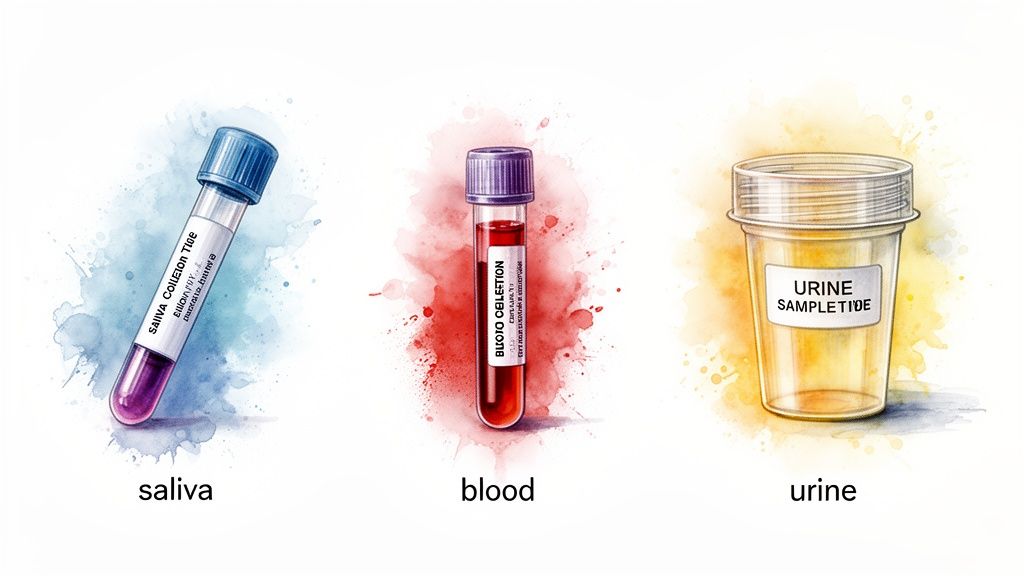
Navigating the world of hormone testing can feel a bit overwhelming, but picking the right method really comes down to one simple question: what do you want to learn? Think of saliva, blood, and urine cortisol tests as different lenses for looking at your body’s stress response. It’s not about one being definitively “best,” but about which one is best suited to your specific health and longevity goals.
Understanding what each method brings to the table is key to getting the most actionable insights. Your choice will hinge on whether you need to map out your daily cortisol rhythm, get a single, precise snapshot, or measure your total output over a full day.
Mapping Your Rhythm with a Cortisol Saliva Test
The real magic of a cortisol saliva test is its ability to measure free, bioavailable cortisol. This is the active form of the hormone that your cells can actually use. Here’s an analogy: if total cortisol is all the money in your bank account, free cortisol is the cash you have in your wallet right now - it’s what’s available to spend and has an immediate effect.
Because it's non-invasive and easy to do from home, a saliva test is perfect for mapping your body's natural daily rhythm. Taking multiple samples lets you build a dynamic picture of your cortisol curve, from that important morning spike, the Cortisol Awakening Response, to its gradual decline before bed.
This detailed map is brilliant for spotting subtle dysfunctions in your stress-response system. It helps you connect the dots between your daily energy levels, sleep quality, and biological resilience with hard data. For anyone focused on longevity, this is vital; it lets you see and correct imbalances long before they escalate into chronic problems.
The Precision of a Blood Test
A blood (or serum) test measures total cortisol, which includes both the free, active cortisol and the cortisol that’s bound to proteins and inactive. While a single blood draw can’t chart your daily rhythm, it gives a highly accurate snapshot of your total cortisol level at a specific moment in time.
This precision is why it’s the gold standard for diagnosing medical conditions like Cushing's syndrome (very high cortisol) or Addison's disease (very low cortisol). When a doctor is investigating a potential underlying disorder, a blood test provides the clear, clinical data they need.
A blood test gives you a precise, static picture of total cortisol, essential for clinical diagnosis. A saliva test provides a dynamic video of your free, active cortisol, perfect for optimising daily performance and long-term wellness.
Understanding Overall Output with a Urine Test
The 24-hour urine test does exactly what it says on the tin: it measures the total amount of cortisol your body gets rid of over a full day. You have to collect every drop of urine over a 24-hour period, which the lab then analyses for a total cortisol output figure.
This method provides a solid average of your cortisol production, but it completely misses the important peaks and troughs of your daily rhythm. It can tell you if your body is making too much or too little cortisol in general, but it can’t tell you when during the day your rhythm might be off, which is key for making lifestyle changes that support longevity.
Comparison of Cortisol Testing Methods
To help you decide, this table breaks down the key differences between each testing method.
| Feature | Saliva Test | Blood (Serum) Test | Urine (24-Hour) Test |
|---|---|---|---|
| What It Measures | Free, bioavailable cortisol | Total cortisol (bound + free) | Total cortisol excreted over 24 hours |
| Best For | Mapping daily rhythm & optimising healthspan | Diagnosing specific medical conditions | Measuring total daily cortisol production |
| Collection Method | Simple, non-invasive home collection | Professional venipuncture at home or clinic | Cumbersome 24-hour home collection |
| Key Insight | Reveals patterns in energy, sleep, and stress | Provides a precise snapshot at one point in time | Shows an average of daily output |
in the end, each test offers a different piece of the puzzle. Choosing the right one depends entirely on the questions you're trying to answer about your health.
The Power of a Combined Approach
For a truly comprehensive look at your health, sometimes the most powerful strategy is to combine insights from different tests. A cortisol saliva test is an excellent place to start for optimising your daily wellness and longevity, giving you that detailed map of your functional patterns.
From there, a professional at-home venous blood test can be a fantastic next step. It can help confirm findings from a saliva test with clinical-grade data, or more importantly, provide a much broader hormonal panel. This allows you to see how cortisol interacts with other key hormones, giving you a complete, doctor-reviewed analysis. For anyone serious about their health, exploring a full hormone level testing at home service offers a path to deeper understanding and more targeted action.
Using Your Cortisol Data to Boost Performance
Getting your cortisol saliva test results is just the first step. The real value comes from turning that data into actionable strategies that enhance not just your daily performance, but your long-term health. Think of your cortisol rhythm as a direct report from your body, showing how it’s coping with life's demands. For driven individuals, this data is a playbook for maximising output while preventing the burnout that can shorten a career and a life.
When you understand your unique stress signature, you can move beyond generic advice. It’s about making precise, targeted adjustments that work with your biology, not against it. This creates a sustainable foundation for both high performance and longevity.
For the Business Professional Preempting Burnout
We’ve all seen it: the leader fighting off brain fog mid-afternoon. A cortisol saliva test might reveal a strong morning peak but a dramatic crash around 2 p.m., followed by an evening spike that ruins sleep. This isn't just "feeling tired" - it's a clear physiological pattern that actively works against your long-term health.
The data points to a smarter approach than just another coffee. By aligning your most demanding work with your natural morning energy peak, you work more efficiently and with less strain. That afternoon slump can be managed proactively with a short walk, a protein-rich snack, or a five-minute mindfulness session to cushion the cortisol drop.
Your cortisol data help you to structure your day for maximum impact. By aligning your high-stakes tasks with your body's natural energy peaks, you can achieve more with less mental strain, directly contributing to career longevity.
This data-driven method shifts you from constantly reacting to stress to proactively managing your energy. It's about finding a sustainable rhythm that fuels both your ambition and your well-being for decades to come.
For the Athlete Optimising Recovery
For any serious athlete, monitoring cortisol is a significant advantage for mastering recovery, which is the secret to athletic longevity. A cortisol curve that stays high all day is a massive red flag. It’s your body signalling that it’s not repairing itself between sessions, putting you at higher risk of injury, illness, and performance plateaus that can cut a career short.
Imagine an athlete's test reveals high evening cortisol, explaining their poor sleep and nagging muscle soreness. The data provides a clear action plan:
- Syncing Training Intensity: After a poor night's sleep, they can swap a high-intensity workout for active recovery, giving the body a chance to rebalance and prevent overtraining.
- Targeted Nutrition: Post-workout nutrition becomes more strategic, focusing on complex carbs and protein to help lower cortisol and replenish glycogen, speeding up repair.
- Prioritising Sleep Hygiene: Implementing a strict "no screens" rule before bed and adding gentle stretching can help lower evening cortisol, revealing deep, restorative sleep.
This kind of precision ensures every training session builds fitness rather than digging a deeper recovery hole. The sensitivity of salivary cortisol is well-established. A 2020 study on UK university students, for example, found their baseline cortisol levels were significantly higher after the first COVID-19 lockdown - a clear sign of heightened stress from environmental shifts. This real-world data, covered in detail in these UK-specific findings on chemistry-europe.onlinelibrary.wiley.com, shows just how responsive our bodies are, making proactive monitoring essential for anyone pushing their limits.
If your own cortisol data points towards a stressed system, exploring supplements like Ashwagandha Plus could be a practical next step. Using your results as your guide, you can make intelligent, informed decisions that reveal new levels of performance and safeguard your health for the long haul.
Taking the Next Step on Your health goals
Getting a handle on your body's stress response with a cortisol saliva test is a brilliant first move towards optimising your health for the long run. You now know how to read your body’s daily rhythm, link it to your performance, and spot imbalances before they turn into bigger problems. This is what proactive health is all about - turning vague feelings of stress or tiredness into solid data you can actually do something with.
But that’s not where the story has to end. While a saliva test gives you a fantastic map of your daily hormone patterns, a professional at-home blood test adds another, even more precise, layer. It can confirm what your saliva test suggests and add a new depth of insight, giving you a much fuller picture of what’s happening inside your body.
Elevating Your Health with Clinical-Grade Data
For anyone truly serious about their long-term performance and vitality, combining these methods is the clearest way forward. An at-home venous blood test offers a level of clinical precision that perfectly complements the dynamic, real-time data you get from a cortisol saliva test.
Think about having a service that provides:
- NHS-Standard Analysis: Your sample is processed in the same UKAS-accredited labs the NHS uses, so you know the results meet the highest clinical standards.
- Near-Perfect Sample Success: With a 99.8% success rate from a professional blood draw, you can have complete confidence in the reliability of your data.
- A Personalised Doctor's Review: Your results are more than just numbers. A qualified doctor personally reviews your data and gives you a summary in plain English, turning complex biomarkers into clear, practical advice.
This combination shifts you from a one-off snapshot to an ongoing partnership for your health. When you integrate your results into a user-friendly app, you can start tracking trends over time. You get to see exactly how lifestyle changes, like a new sleep routine or a mindfulness practice, are making a real, measurable difference to your body.
True health optimisation is a continuous loop of learning and adapting. By tracking your data long-term, you build a feedback system that help you to make smarter, more informed decisions for a longer, healthier life.
This level of detailed, ongoing analysis turns a simple test into a useful measure for longevity. It lets you monitor your progress, fine-tune your approach, and stay one step ahead of potential health issues. To see exactly how this works, you can learn more about Lola's detailed at-home cortisol test and how it fits into a complete health goals. It’s the definitive next step for anyone committed to a long and vibrant life.
Your Questions, Answered
Getting to grips with cortisol saliva testing can feel a bit overwhelming, but it's a fantastic tool for looking after your long-term health. Let's walk through some of the most common questions to clear things up.
How Often Should I Be Testing My Cortisol?
For a general health check-in, think of it like an annual MOT for your stress response system. Testing once or twice a year is a great way to establish a baseline and monitor your resilience over time.
However, if you're actively trying to improve your healthspan - implementing a new diet, starting a stress-management protocol, or optimising your fitness - more frequent testing every 3-6 months provides invaluable feedback. It shows you if your new habits are having the desired physiological effect, allowing you to make targeted adjustments to your longevity strategy.
Can Food, Drinks, or Supplements Skew My Results?
Yes, they absolutely can. What you consume can cause temporary spikes or dips in cortisol, masking your true underlying rhythm. A sugary snack or your morning coffee, for instance, can artificially raise cortisol and give a misleading result.
Certain supplements, such as licorice root or ashwagandha, can also directly influence cortisol levels. It's important to follow the test provider's instructions carefully, which may include avoiding specific items or pausing certain supplements, to ensure the cortisol saliva test captures your genuine baseline rhythm.
An unusual saliva test result isn't a final diagnosis. Think of it as a signpost - a starting point for a deeper conversation about your health that points you toward the right actions for the long run.
What’s the Next Step if My Cortisol Levels Are Abnormal?
First, don't panic. An abnormal result from a cortisol saliva test is an opportunity to take proactive steps for your long-term health. Your first and most important action should be to discuss the findings with a doctor or qualified health professional.
They can put the data into the context of your overall health, lifestyle, and longevity goals. Based on your results, they might suggest further tests, like a thorough blood panel, to get a complete picture. This allows you to build a targeted plan—whether it involves specific lifestyle adjustments, dietary changes, or other support—to restore balance and protect your future health.
At Lola, we’re firm believers that data is power when it comes to your health. Our professional at-home blood tests offer the clinical clarity you need to complement your wellness plan, and every result comes with a doctor’s review to help you understand what to do next. Ready to take control? Find out more about our services at https://lolahealth.com.
Test This Biomarker at Home
This biomarker is included in our Cortisol Test and Peak Insights 70 — results in 2-3 working days with GP-reviewed insights.
At-Home Blood Testing
Check your levels from home
Professional phlebotomist visit. Doctor-reviewed results in 2-5 days. Track your health with comprehensive blood panels.
→45-70 biomarkers tested · Venous blood draw · From £130