


Creatinine levels in the UK, measured in micromoles per litre (μmol/L), are a fundamental biomarker for anyone serious about their long-term health. This simple blood test offers a important window into your kidney efficiency, providing actionable insights into your body's internal health and your potential for a long, vibrant life.
What Your Creatinine Levels Reveal About Your Longevity
Imagine your muscles as the engine powering your life. As they work, they naturally produce a waste product called creatinine. This is a normal, healthy byproduct of an active body.
From your muscles, creatinine enters the bloodstream, where your kidneys, your body's master filtration system, take over. They diligently filter creatinine and other metabolic waste from your blood, which you then excrete through urine. This continuous process is essential for maintaining internal balance and is a cornerstone of your long-term wellness.
The Link Between Creatinine and Kidney Vitality
Monitoring your creatinine levels is a proactive step towards optimising your longevity. When your kidneys are functioning optimally, they maintain a stable, healthy level of creatinine in your blood, reflecting your kidney vitality and its capacity to support you for decades to come.
An efficient filtration system is a critical asset for a longer, healthier life. Your kidneys do far more than just filter waste; they are key players in:
- Regulating your blood pressure
- Balancing your body's fluids
- Producing hormones that support red blood cell creation
Therefore, stable creatinine levels are more than just a number on a lab report. They are a clear signal that a system vital to your overall longevity is functioning as it should be, giving you the power to make informed decisions for your future.
By understanding the story your creatinine levels tell, you gain actionable knowledge about your body's internal health. This isn't just about managing a number; it's about investing in your future and taking strategic control of your longevity goals.
This deep connection to kidney function is precisely why tracking creatinine levels in the UK is so important. It’s a simple marker that offers a glimpse into your body’s efficiency. Just as creatinine is linked to kidney function, other markers like urea also provide important information. You can discover more about how to interpret urea levels in blood to get a fuller picture of your metabolic health.
Ultimately, viewing your creatinine results as a key performance indicator for your body’s most vital filter help you to make proactive choices for a healthier, longer life.
Understanding UK Creatinine Reference Ranges
Receiving a blood test report can feel overwhelming, but understanding your creatinine levels is a powerful step towards owning your health goals. In the UK, these are measured in micromoles per litre (μmol/L), and interpreting them correctly is key to finding insights about your long-term health.
Your creatinine result isn't a simple pass or fail; it's a highly personal metric. While standard reference ranges exist, your optimal baseline is shaped by your unique physiology.
The process is a direct reflection of your body's activity: your muscles produce creatinine as a waste product, it enters your bloodstream, and your kidneys filter it into your urine.
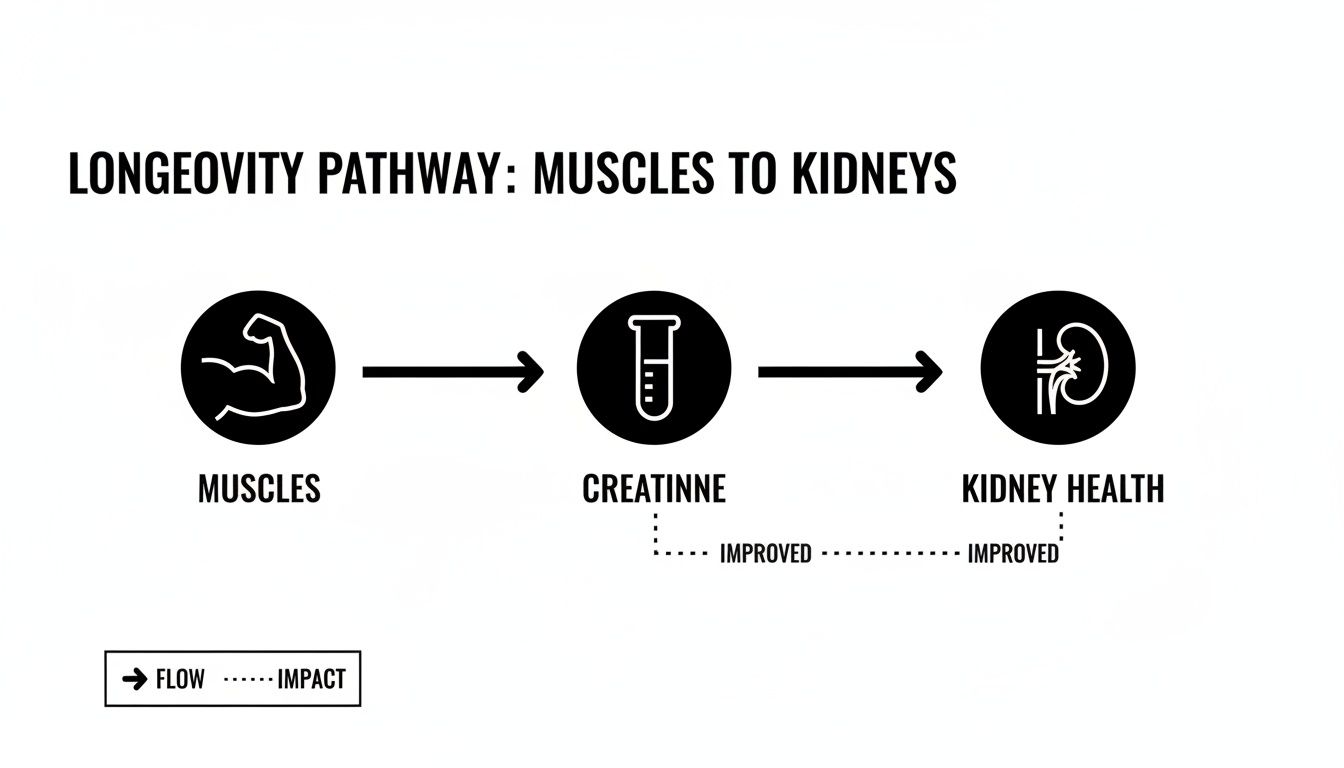
This simple pathway highlights the direct link between your muscle health and kidney function, making it a critical component of your personal longevity strategy.
Why Your Personal Baseline Is So Important
The "normal" range for creatinine isn't a one-size-fits-all figure. A few key personal factors create your unique baseline, which is why it's vital to look beyond a single number and focus on your personal trend over time.
Three of the most significant factors influencing your levels are:
- Muscle Mass: As a byproduct of muscle metabolism, higher muscle mass naturally leads to higher creatinine production. An athlete will have a higher baseline than a sedentary individual of the same age, which is a sign of healthy muscle tissue, not poor kidney function.
- Age: As we age, a natural decline in muscle mass (sarcopenia) can lead to lower creatinine production. Tracking this change is an important part of a longevity strategy, as maintaining muscle mass is key to healthy ageing.
- Biological Sex: On average, men have higher muscle mass than women, which is reflected in different reference ranges.
Typical Creatinine Reference Ranges in the UK
While your GP is the best person to interpret your results in the context of your overall health, knowing the general reference ranges can help you feel more informed.
This table shows the generally accepted reference ranges for serum creatinine in adults in the UK. It's worth remembering that the exact numbers can vary slightly from one laboratory to another.
| Group | Typical Range (μmol/L) |
|---|---|
| Adult Male | 62 - 106 |
| Adult Female | 44 - 80 |
These ranges provide a solid guideline, but they don't tell the whole story.
Ethnicity can also influence what is considered a 'normal' baseline. For instance, large-scale analyses from the UK Biobank found that after adjusting for other factors, participants of Black ethnicity had, on average, 9.36 μmol/L higher serum creatinine than White participants. This is a vital consideration for accurate assessment.
By understanding these nuances, your lab report transforms from a confusing list of numbers into a useful measure for managing your long-term health. It equips you to have a much more meaningful conversation with your doctor, shifting the focus from a single snapshot to the trends over time. This proactive approach is the cornerstone of protecting your kidney health and supporting your longevity.
What High Creatinine Levels Mean for Your Health
Seeing a high creatinine result on a blood test should not be a cause for panic, but rather a valuable signal from your body. It's an invitation to investigate your kidney health more closely, a critical factor in your overall longevity. A high number simply indicates that your kidneys may not be clearing waste as efficiently as they could be.
However, a single high reading doesn’t automatically signal a chronic problem. Many temporary factors can cause a brief spike.
Temporary Spikes vs. Persistent Problems
The first step is to determine if you're dealing with a temporary fluctuation or a more persistent issue that requires attention for your long-term health. Your GP can help you assess the bigger picture, as several common situations can cause a short-term rise in creatinine.
Common causes of a temporary spike include:
- Dehydration: A leading cause. Insufficient water intake concentrates your blood, which can make creatinine levels appear artificially high.
- Intense Exercise: A very strenuous workout can cause temporary muscle breakdown, leading to a short-term increase in creatinine.
- A High-Protein Meal: Consuming a large amount of cooked red meat shortly before a test can slightly elevate your levels.
- Certain Medications: Some drugs, including certain antibiotics or over-the-counter anti-inflammatories, can temporarily affect kidney function or the test itself.
If none of these apply, a consistently high creatinine level might point towards an underlying issue with kidney function. This is when the focus shifts from a fleeting spike to a condition that needs a clear strategy to protect your long-term health.
The Link to Chronic Kidney Disease
When creatinine levels remain persistently high, it often signals that your kidneys are not operating at full capacity. This can be an early warning sign of Chronic Kidney Disease (CKD), a condition where kidney function gradually declines. In the UK, the two primary drivers of CKD are highly manageable conditions.
Diabetes and high blood pressure are the leading causes of chronic kidney disease in the UK. Both conditions can damage the delicate blood vessels in the kidneys, impairing their ability to filter waste and causing creatinine to accumulate in the blood.
This underscores why managing your overall health is one of the most powerful actions you can take for your longevity. By maintaining healthy blood sugar and blood pressure levels, you are actively protecting your kidneys from damage.
Your GP is your primary partner in this. They can arrange follow-up tests to confirm if the reading is consistently high and identify the cause. From there, you can collaborate on an actionable plan, including diet, hydration, and managing related conditions, to safeguard your kidneys and support your health for years to come.
Understanding Your eGFR for a Clearer Picture of Kidney Function
Your creatinine level is a great starting point, but for a truly comprehensive view of your long-term kidney health, you need its partner metric: your eGFR, or estimated Glomerular Filtration Rate. This powerful calculation offers a much clearer insight into your kidneys' true performance.
Think of eGFR as a measure of your kidneys' 'horsepower'. It doesn't just look at the amount of waste in your blood; it estimates how effectively and rapidly your kidneys are filtering that waste. This gives you a direct look at their operational efficiency.

This calculation is critical because it provides a more detailed assessment than creatinine alone. The formula uses your creatinine level but also factors in your age, sex, and sometimes ethnicity to produce a number that better reflects your true kidney function.
What Your eGFR Number Means
On a UK blood test report, eGFR is shown as a number followed by mL/min/1.73m². It’s best to view this as a performance score for your kidneys.
Here’s a general guide to interpreting the numbers for longevity:
- eGFR of 90 or more: Optimal kidney function, a strong asset for long-term health.
- eGFR of 60-89: May indicate a mild decline. This is not a cause for alarm, but an early signal to implement proactive lifestyle strategies.
- eGFR below 60: A result that is consistently below this level for over three months is a key indicator of Chronic Kidney Disease (CKD).
This consistent measurement allows doctors to track and stage CKD. With an estimated 3.25 million adults in the UK living with CKD stages 3–5, understanding and monitoring this metric is a serious and enabling health action. You can read more in the full Kidney Research UK report.
Why eGFR is important for Longevity
Knowing your eGFR is about empowerment. Detecting a drop in kidney function early is a powerful catalyst for making meaningful changes that can protect your healthspan. It enables early intervention, which can dramatically slow, or even halt, the progression of kidney disease.
By grasping what your eGFR signifies, you move from simply reacting to a number to proactively safeguarding your future health. It’s the difference between seeing a warning light on your car's dashboard and understanding exactly what the engine needs to keep running smoothly for years to come.
This knowledge gives you and your GP the opportunity to implement strategies, from dietary adjustments to better blood pressure management, that can preserve your kidney function for the long haul. Tracking your eGFR over time is one of the most effective ways to ensure your body’s essential filtration system remains a pillar of your long-term health.
For anyone looking to proactively monitor this important biomarker, you can learn more about our specific eGFR test and see how it fits into a complete health overview.
How to Proactively Test Your Creatinine Levels in the UK
Taking charge of your longevity means shifting from a reactive to a proactive health mindset. When it comes to your kidneys, understanding how to get your creatinine levels tested in the UK is a important first step, and the process is very straightforward.
The test involves a routine blood draw from a vein in your arm, performed by a nurse or phlebotomist. The sample is sent to a lab to measure creatinine concentration, providing that key insight into your kidney function.
NHS Testing Through Your GP
For most people, a GP is the first port of call. This is the recommended route if you have known risk factors for kidney disease, such as diabetes, high blood pressure, or a family history of kidney problems.
Your doctor can assess your overall health and order a blood test to check your kidney function. Creatinine testing has become a standard part of routine care, increasing by around 40% between 2005 and 2013 in the UK, driven by a greater focus on preventative health for at-risk groups. You can read more about these trends in primary care.
Private and At-Home Testing Options
If you don't have specific risk factors but want to take a proactive approach to your long-term health, private testing is an excellent option. Services like Lola Health offer direct access to blood tests, putting you in complete control of your personal health data.
This approach provides convenience and help you to track your biomarkers over time without needing a GP referral. It's a modern, effective way to build a detailed picture of your internal health—an essential practice for any long-term wellness strategy.
in the end, how you choose to test, whether through your GP or a private service, is less important than the decision to test in the first place. Taking this simple step gives you the data you need to understand your body, spot trends, and make informed choices to protect your health for years to come.
Often, you'll want to look at more than just creatinine. A broader panel can give you a more complete picture, and you can learn more about the U&E blood test, which provides a comprehensive view of your kidney health and electrolyte balance. By making the process clear and accessible, you can confidently take the next step on your longevity goals.
Lifestyle Strategies for Optimal Kidney Health
Knowing your creatinine numbers is the first step; acting on that information is what truly safeguards your long-term health. The great news is that your daily habits have a profound impact on kidney function. Making sustainable, kidney-friendly lifestyle choices is one of the most powerful investments you can make in your longevity.

View these lifestyle adjustments not as restrictions, but as a strategic investment in your future. By nurturing your kidneys, you are protecting one of your body’s most vital systems, paving the way for a longer, healthier life.
Adopt a Kidney-Friendly Diet
Your diet is the cornerstone of kidney protection. This isn't about extreme restrictions but about making smart, consistent choices that reduce the workload on these essential organs.
A key strategy is managing your salt intake. Excess sodium contributes to high blood pressure, a leading cause of kidney damage. Simple swaps can make a huge difference:
- Prioritise whole foods: Choose fresh fruit, vegetables, and lean proteins over processed meals, takeaways, and cured meats.
- Read labels carefully: Be aware of hidden salt in shop-bought sauces, soups, and even bread.
- Cook at home: This gives you complete control over ingredients, including the amount of salt you use.
Protein intake is also worth considering. While essential for muscle health, excessive amounts, particularly from supplements, can increase the strain on your kidneys. For more context, it can be helpful in understanding protein shakes and supplements.
The Critical Role of Hydration and Exercise
Optimal hydration is non-negotiable for kidney health. Water is the medium your kidneys use to flush out waste products like creatinine and urea. Consistent hydration throughout the day ensures this vital system runs smoothly and efficiently.
Regular exercise is equally important for managing weight and blood pressure, both of which support kidney function. The key is balance and sustainability. Activities like brisk walking, cycling, or swimming are excellent for your long-term health. Be mindful that extremely intense workouts can cause a temporary spike in creatinine due to muscle repair.
Longevity is built on consistency, not intensity. The goal is to create a balanced routine that you can maintain for years. Your kidneys will thank you for it.
By actively managing conditions like high blood pressure and integrating these practical habits into your life, you build a strong foundation for decades of good kidney health.
Got Questions About Creatinine? We’ve Got Answers.
Let's address some of the most common questions about creatinine levels in the UK. Clarity on these points can help you to take a more strategic approach to your long-term health.
Is It a Problem if My Creatinine Is Too Low?
It can be a significant signal. While high levels get most of the attention, unusually low creatinine should not be ignored.
Because creatinine is a byproduct of muscle, very low levels can indicate a loss of muscle mass (sarcopenia), a key challenge in healthy ageing. It might also point to malnutrition or, in some cases, severe liver disease. It's an important data point to discuss with your GP to understand the underlying cause.
How Much Does My Diet Really Affect Creatinine?
Your diet has both short-term and long-term effects. A very high-protein meal might cause a small, temporary bump in your next-day creatinine reading. However, the true impact is cumulative.
A diet that supports healthy blood pressure and blood sugar is your most powerful long-term strategy for protecting your kidneys. This, in turn, helps maintain stable creatinine levels for years. Consistent hydration is also a critical dietary factor.
How Often Should I Get My Creatinine Checked?
This depends on your personal health profile. If you have risk factors like diabetes, high blood pressure, or a family history of kidney disease, your GP will likely recommend an annual check.
For those focused on longevity and proactive health, incorporating a creatinine test into a routine health check every one to two years is a smart strategy. It helps you establish your personal baseline and help you to detect and act on any changes early.
Stop guessing and start knowing. With Lola, you can get a clear, accurate picture of your kidney health and other key health markers with a simple, professional test you can do from home. Take control of your long-term wellness at lolahealth.com today.
Test This Biomarker at Home
This biomarker is included in our Creatinine Test and Liver & Kidney Function — results in 2-3 working days with GP-reviewed insights.
At-Home Blood Testing
Check your levels from home
Professional phlebotomist visit. Doctor-reviewed results in 2-5 days. Track your health with comprehensive blood panels.
→45-70 biomarkers tested · Venous blood draw · From £130