


The U&E blood test is a cornerstone of any serious health assessment. It gives us a vital snapshot of your kidney function, hydration status, and the balance of essential minerals floating around in your system. In short, it’s a direct look at your body's internal chemistry - a important dataset for optimising your healthspan.
Your Window into Health and Longevity
Think of a Urea & Electrolytes (U&E) blood test as a quick look under the bonnet of your body’s engine. It’s like checking your 'coolant levels' (that’s your hydration and electrolytes) and the state of your 'oil filter' (your kidneys). For longevity, these aren't just metrics; they're foundational pillars of cellular health and resilience.
In the NHS, the U&E panel is one of the most common blood tests ordered, and for good reason. For instance, large UK studies found it was used in roughly 57% of patients undergoing routine pre-operative checks, highlighting its fundamental importance. For those focused on longevity, this test transitions from a diagnostic tool to a proactive performance tracker, offering actionable data to fine-tune your internal environment for optimal aging.
Understanding the Core Components
So, what exactly are we looking at with Urea and Electrolytes? And why do they matter so much for a long, healthy life?
-
Urea: This is a waste product your body makes when it breaks down protein. Your kidneys have the important job of filtering it out. Tracking urea provides direct feedback on your body's efficiency at clearing metabolic waste - a key process for preventing cellular stress and promoting longevity.
-
Electrolytes: These are essential minerals that carry a tiny electric charge, like sodium, potassium, and chloride. They are critical for cellular function, from firing nerve signals and contracting muscles to maintaining the fluid balance that supports optimal mitochondrial energy production.
Maintaining the balance of these elements is foundational to metabolic health and, by extension, a longer healthspan. A U&E test provides the hard data to see if everything is running smoothly, helping you build a more resilient biological system. While the U&E test is powerful on its own, it’s often included in a wider health MOT. You can see how it fits into the bigger picture in our guide to the detailed metabolic panel.
Decoding Each Marker on Your U&E Panel
Looking at your U&E blood test results is a bit like getting a report card for your body’s internal systems. Each marker tells a story, offering a snapshot of your kidney function, hydration status, and electrolyte balance. Let's break down exactly what these numbers mean for your long-term health strategy.
This diagram shows how the U&E test is essentially split into two key areas of investigation.

As you can see, it gives us a clear look at how well your body is managing metabolic waste (Urea) and how efficiently its cells are communicating and functioning (Electrolytes) - both critical for healthy aging.
Key Components of a U&E Blood Test Panel
To make sense of your results, it helps to see all the components laid out together. This table breaks down what we're measuring, what it does in the body, and what it might mean if your levels are outside the optimal range for longevity.
| Analyte | Primary Function | Typical UK Reference Range | Implications of Abnormal Levels (High/Low) |
|---|---|---|---|
| Sodium (Na) | Regulates fluid balance, nerve signals, and muscle function. | 133–146 mmol/L | High levels often point to dehydration. Low levels can be caused by overhydration or certain medical conditions. |
| Potassium (K) | important for heart rhythm, muscle contractions, and nerve function. | 3.5–5.3 mmol/L | Both high and low levels can seriously affect heart function and require prompt medical evaluation. |
| Urea | Waste product from protein breakdown; filtered by the kidneys. | 2.5–7.8 mmol/L | High levels may indicate kidney issues, dehydration, or a very high-protein diet. Low levels are less common. |
| Creatinine | Waste product from muscle metabolism; a reliable kidney function marker. | Varies by age, sex, and muscle mass | Consistently high levels are a strong indicator of reduced kidney filtration capacity. |
These markers work together to paint a thorough picture. An issue with one can often shed light on another, which is why we look at them as a complete panel.
The Protein Waste Report: Urea
Think of urea as the leftover by-product from processing protein. When you eat, your liver breaks down protein and creates urea, which is then sent to your kidneys to be filtered out into your urine. Efficient waste clearance is vital for preventing the cellular build-up that can accelerate aging.
A urea measurement tells us how well your kidneys are doing their job. If the levels are high, it might mean your kidneys are struggling, but it could also signal dehydration or a very high-protein diet. To get a better handle on this, check out our guide on understanding urea levels in your blood.
Muscle and Kidney Efficiency: Creatinine
Creatinine is another waste product, sourced from the daily wear and tear of your muscles. Since muscle mass and activity are fairly consistent, creatinine gives us a stable and reliable view of kidney function - a critical system for longevity.
If your kidneys aren't filtering blood as efficiently as they should, creatinine starts to accumulate. A result that's consistently high is a clear signal that your kidneys might need support, making it a important marker to track over time to preserve long-term organ health.
Master Electrical Regulators: Sodium and Potassium
Sodium and potassium are the two headline electrolytes in this test. They are the absolute cornerstone of your body's electrical system, managing everything from fluid balance and nerve signals to muscle movements - including the vital rhythm of your heart.
The balance between sodium and potassium is non-negotiable for your cells to function correctly. Even a slight shift can disrupt energy production, cellular communication, and heart stability - all key factors in the aging process.
This is why spotting an imbalance early is so important. These electrolytes keep your internal battery charged and running smoothly. While reference ranges can vary slightly between labs, typical UK hospital values put sodium at ~133–146 mmol/L, potassium at ~3.5–5.3 mmol/L, and urea at ~2.5–7.8 mmol/L.
Translating Your Results into Longevity Insights
Getting a lab report back can feel like you've been handed a document in a foreign language. The key to revealing its value for longevity isn't just checking if your numbers fall inside the 'normal' column. It’s about shifting your focus to what’s optimal for your body and long-term health goals. Think of your U&E results not as a final judgment, but as a dynamic dashboard, giving you real-time data to fine-tune your personal wellness strategy.
The magic isn't in looking at each marker one by one. The real story, the actionable insight, comes from seeing how they relate to each other. It’s the patterns that tell you what’s really going on inside.
Reading Between the Lines of Your U&E Report
One of the most telling relationships on a U&E panel is the one between urea and creatinine. Looking at them together helps us figure out if we're dealing with a simple lifestyle tweak or something that needs a closer look to protect long-term kidney health.
For instance, if your urea is high but your creatinine is sitting comfortably in the normal range, it often points to something other than a kidney problem. This combination could be a flag for:
- Dehydration: Not drinking enough fluid makes urea more concentrated in your blood.
- High Protein Intake: A diet heavy on protein means your body is breaking down more amino acids, which produces more urea as a byproduct.
- Intense Exercise: A really tough workout can cause a temporary bump in urea levels.
On the other hand, if both urea and creatinine are high, that’s a much stronger signal that the kidneys might not be filtering as efficiently as they should. This is the kind of pattern that definitely calls for a more thorough investigation with your doctor.
How Lifestyle Choices Influence Your Numbers
It’s important to remember that your day-to-day habits can make your U&E results bounce around a bit. Grasping this helps you avoid unnecessary panic and gives you clear, actionable levers you can pull to optimize your internal state.
Your U&E results are a direct reflection of your recent lifestyle. Things like high-protein diets, intense physical training, and even certain medications can temporarily shift your numbers. This doesn’t automatically mean something is wrong; it means the test is accurately capturing your body's current state, offering you a chance to adjust.
This is particularly true for athletes and busy professionals. A marathon runner might see a small, temporary spike in creatinine after a gruelling training session - that’s a normal physiological response. Likewise, someone on a strict keto or high-protein diet will naturally have higher urea levels.
When you understand these influences, you can have a much more meaningful conversation with your doctor, distinguishing between a result that’s just a sign of your commitment to training and one that might signal an issue needing attention for your long-term health.
Ultimately, looking at your U&E blood test with an eye on longevity is enabling. It turns a page of numbers into a personalised roadmap. Each test is a fresh chance to check in, make adjustments, and optimise your diet, hydration, and recovery - making sure your internal engine is running smoothly for the long haul. This proactive mindset is the very foundation of building a longer, healthier life.
The U&E Test as Your Body’s Safety Check
Think of a U&E blood test as the body's equivalent of a pre-flight safety check. It's not just about tracking long-term health; it plays a vital role in keeping you safe before many common medical procedures. It acts as a important guardrail, making sure other treatments or scans won't cause unintended harm, especially to your kidneys.
Before making big decisions, doctors need a clear picture of your kidney function and electrolyte balance. This is because many essential medical interventions, from medications to imaging, can put a real strain on these systems.
A Green Light for Safe Medical Care
The U&E test is absolutely fundamental in two key areas: managing medications and preparing for medical imaging. Knowing the state of your kidneys allows your medical team to either proceed with confidence or tweak the plan to protect you.
-
Prescribing Medications: Lots of common drugs are cleared from the body by the kidneys. This includes certain blood pressure tablets (like ACE inhibitors), 'water pills' (diuretics), and some anti-inflammatory drugs. If your kidney function is already struggling, these medications could build up to toxic levels or cause even more damage. A recent U&E result gives your doctor the solid data they need to pick the right drug and the right dose for your specific situation.
-
Preparing for Scans: Have you ever had a CT scan? Sometimes they involve injecting a special 'contrast dye' into your bloodstream to help the images show up more clearly. This dye is filtered out by the kidneys, and if they aren't working at full tilt, the process can be stressful for them. A U&E test confirms your kidneys are up to the task of handling the dye safely.
In UK clinical practice, getting a U&E test isn't just a good idea - it's often a formal requirement. It’s the essential green light doctors need to ensure they're putting patient safety first before starting certain treatments.
This isn't just informal practice; it's embedded in official guidance. NHS England policies, for instance, frequently require up-to-date U&E results before a doctor can prescribe drugs known to carry renal risks or to clear a patient for contrast imaging. It's common to see a requirement for a 'U&E within 3 months' before a planned CT scan, showing just how important it is for managing risk proactively. You can discover more about blood testing optimisation in primary care in this NHS guide.
in practice, seeing your U&E test as a safety check gives you a new appreciation for it. It's more than just a snapshot of your health; it's an active tool that protects you, minimising risks and making sure your entire healthcare journey is as safe and effective as it can be.
Your Guide to Getting a U&E Blood Test
Getting your U&E levels checked is a straightforward process. Knowing exactly what to expect can make it feel even simpler, turning a quick health check into a routine part of your longevity strategy.
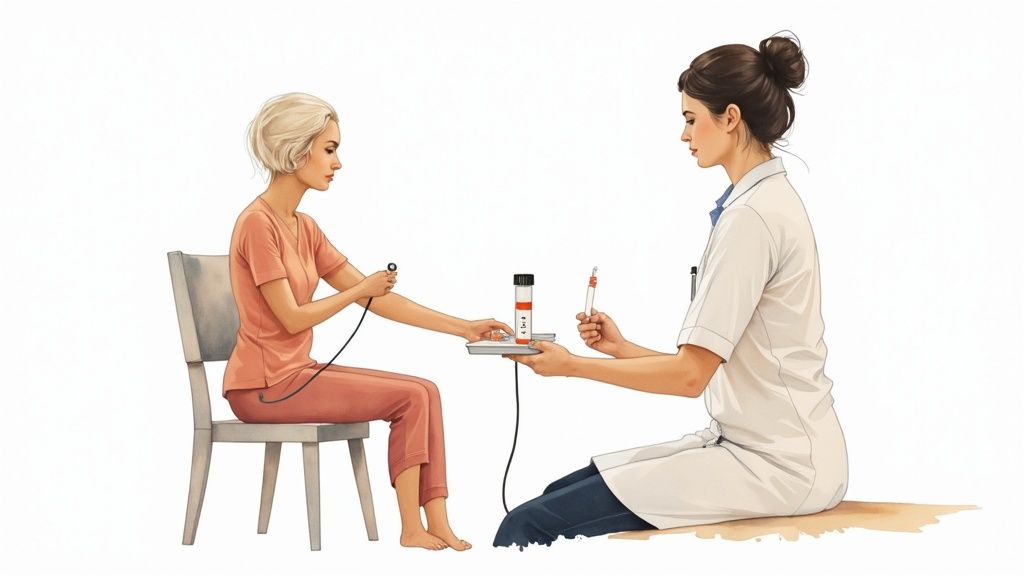
The whole thing is designed to be quick and convenient, giving you powerful insights into your health without disrupting your day.
Preparing for Your Test
Preparation for a U&E blood test is usually minimal, but there are a few things you can do to guarantee the most accurate results possible. A little bit of prep goes a long way in getting a reliable snapshot of your body's internal chemistry.
-
Fasting is usually not required. Unlike some other blood tests, like those for cholesterol or glucose, a U&E panel doesn't typically require you to fast. It’s always best to double-check, though, especially if your U&E test is part of a larger panel.
-
Stay well-hydrated. This is a big one. Drinking plenty of water before your appointment doesn't just give a truer picture of your hydration status - it also makes your veins plumper and easier to find. This makes the blood draw quicker and more comfortable for you.
-
Mention your supplements. Let the phlebotomist know if you're taking any supplements, particularly any containing minerals. They can sometimes influence your results, so it's good for them to have the full picture.
The Blood Draw Procedure
The blood draw itself, a procedure called phlebotomy, is incredibly routine. A trained professional will take a small sample of blood, usually from a vein in your arm, and it's all over in less than five minutes.
If you have any worries about the process, learning how to prepare for phlebotomy can make the experience feel much smoother.
The goal is to make health data accessible and easy to manage. With services like Lola, you can book a professional phlebotomist to visit you at home or a nearby clinic, fitting the test into your life, not the other way around.
Receiving and Interpreting Your Results
After your blood sample is taken, it's sent off to a UKAS-accredited lab for analysis. The turnaround is usually pretty quick, with results often ready in just a few days. These days, you’ll typically get them delivered directly to you through a secure app or online portal.
With Lola, your results pop up in our app in a clear, easy-to-read format that tracks your levels over time. You also have the option to download them as a PDF or CSV file. Most importantly, every result comes with a personalised review from a doctor. They'll explain what your numbers mean for your health and suggest what you might want to do next. This expert oversight is key to turning raw data into meaningful, actionable insights for your longevity.
Taking Action on Your U&E Results
So, your results are in. Think of them as a detailed snapshot of your body's internal chemistry—a personal roadmap you can use to make smart decisions for your long-term health and vitality.

The next step is to translate this data into action. Whether your numbers are optimal or slightly off, there’s always a clear, evidence-based path forward to enhance your healthspan.
Your Path Forward Based on Results
Your U&E results will likely fall into one of three buckets, and each one points towards specific actions you can take to support your longevity goals.
-
If Your Levels Are Optimal: This is brilliant news and valuable feedback that your current strategy is working. The goal now is maintenance and consistency. Keep up the habits that are maintaining this excellent internal balance—like staying properly hydrated, eating a nutrient-rich diet, and sticking to a sensible exercise routine.
-
If Your Levels Are Slightly Off: This is your opportunity to fine-tune. You now have the precise data needed to make targeted adjustments. This could mean tweaking your water intake to correct mild dehydration, moderating protein if urea is high, or focusing on electrolyte-rich foods like bananas, avocados, and leafy greens to rebalance your system.
-
If Your Levels Are Significantly Abnormal: This is a clear signal to investigate further with a healthcare professional. A single u&e blood test is a powerful data point, but it doesn't always tell the whole story. If your results are well outside the normal range, a professional medical opinion is essential to rule out any underlying issues and protect your long-term health.
Your U&E results aren't just numbers on a page; they're a trigger for making informed health decisions. They give you the data you need to either stay the course or make targeted changes with confidence.
in the end, these results put you in the driver's seat of your health. For those with optimal or slightly off results, the power to fine-tune is in your hands. If the numbers are more concerning, they act as an essential prompt to get the expert guidance you need. This proactive, data-driven mindset is what building a long, healthy life is all about.
A Few Common Questions About the U&E Blood Test
Let's clear up a few things you might be wondering about the U&E test.
Do I Need to Fast Before a U&E Test?
For a standard U&E test on its own, fasting usually isn't necessary. You can typically eat and drink as normal.
That said, it’s always a good idea to check with your healthcare provider. Often, a U&E is ordered alongside other tests that do require fasting, so it's best to confirm the instructions for your specific blood draw. Staying well-hydrated with plain water is almost always encouraged.
Can My Diet or a Workout Affect the Results?
Yes, absolutely. What you do in the hours leading up to the test can definitely nudge the numbers. For instance, a very high-protein meal right before your test might temporarily bump up your urea levels. Similarly, a really intense workout can slightly raise creatinine and alter your hydration status.
When you go over your results, be sure to mention your recent diet and exercise habits. This context helps you and your doctor understand what’s a temporary blip versus what might be a longer-term trend.
Realising how your lifestyle affects your U&E test results is key. It helps you distinguish between a one-off fluctuation and a genuine health pattern, giving you more meaningful insight into your body.
How Often Should I Get a U&E Test?
For someone focused on longevity who is generally healthy, getting your U&Es checked every one to two years as part of a routine health screen provides a valuable trend line.
However, if you're managing a condition like high blood pressure, diabetes, or existing kidney issues, your doctor will likely want to check them more often. The same goes if you're on certain medications (like diuretics or some blood pressure drugs). In these cases, annual or even more frequent testing might be recommended to proactively manage your kidney function and overall health.
Take control of your health data with Lola. Get your U&E levels checked at home and receive doctor-reviewed results right in our app. Learn more at https://lolahealth.com.
At-Home Blood Testing
Check your levels from home
Professional phlebotomist visit. Doctor-reviewed results in 2-5 days. Track your health with comprehensive blood panels.
→45-70 biomarkers tested · Venous blood draw · From £130