


Yes, you can check for initial signs of anaemia using a home test, which usually involves a simple finger-prick blood sample to measure your haemoglobin. It’s a good starting point, but think of it as a preliminary screening rather than a full diagnostic tool for your long-term health strategy.
Why Your Peak Performance Feels Out of Reach

Do you ever feel like you're pushing hard but hitting an invisible wall? If you’re a driven professional or a dedicated athlete, that persistent fatigue might feel like burnout, but it could actually be the first whisper of anaemia - a condition that can quietly undermine your long-term health goals.
It's important to realise that anaemia isn't a disease in itself. It’s more of a signal - a red flag from your body that it doesn't have enough healthy red blood cells to ferry oxygen where it's needed most.
Imagine your body is a high-performance engine. Anaemia is like trying to run that engine on low-grade fuel. It’s no wonder your energy, mental clarity, and physical output take a direct hit, impacting not just today's performance but your capacity to thrive for decades to come.
This oxygen shortfall is exactly why the symptoms often pop up when you're demanding the most from your body. You might find your focus drifting during a important presentation or your stamina just vanishes halfway through a run you’d normally breeze through. These aren't just "off days"; they could be early indicators of a deeper issue affecting your healthspan.
The Hidden Impact on Longevity
The immediate dip in performance is frustrating, but the long-term consequences are what really matter for longevity. When your body is constantly low on oxygen, your entire system is under stress. Your heart, in particular, has to pump harder to make up for the deficit.
Over time, this relentless strain can contribute to serious cardiovascular problems, quietly undermining your long-term health and longevity goals.
Anaemia is more than just feeling tired; it’s a systemic issue that compromises your body's ability to operate at its best. Proactively managing your blood health is a fundamental pillar of any serious performance and longevity strategy.
It’s also far more common than many people think. A major 2019 analysis of primary care records revealed that anaemia affected 4.1% of the population in England. The figures were even higher for women, with a prevalence of 5.1% compared to 3.1% in men. You can dig into the full study on anaemia prevalence in the UK to see just how widespread it is.
Beyond Simple Fatigue
The most frequent culprit is iron-deficiency anaemia (IDA). This happens when you don't have enough iron to produce haemoglobin, the vital protein in red blood cells that grabs onto oxygen. For athletes, intense training ramps up iron requirements. For busy professionals, it’s all too easy for a balanced diet to fall by the wayside.
Learning to recognise the signs is the first step to taking back control. Keep an eye out for:
- Persistent exhaustion that a good night's sleep just can't seem to fix.
- Getting breathless during activities that used to feel easy.
- Brain fog or a noticeable drop in your usual mental sharpness.
- Pale skin or feeling colder than everyone else in the room.
By keeping tabs on your blood health, you’re making a important shift from being reactive to proactive. Instead of waiting for your performance to tank, you can catch these issues early and ensure your body has everything it needs to perform today and thrive for years to come.
So, What's the Deal with At-Home Anaemia Tests?
The idea of getting important health insights without leaving your home is incredibly appealing, especially when you're focused on optimising your health and longevity. A quick home test for anaemia sounds like a straightforward way to stay on top of your game. But before you click "buy," it's vital to understand what these tests can really tell you - and, more importantly, what they miss.
Most of the home anaemia tests you'll find online in the UK are simple finger-prick kits. They typically measure just one thing: haemoglobin. Think of haemoglobin as the fleet of tiny trucks that deliver oxygen all around your body. If your haemoglobin level is low, it’s a red flag that your oxygen delivery system is struggling - the classic sign of anaemia.
This initial check can be a useful starting point, for sure. But relying on it alone to understand your health is like trying to judge a forest's health by looking at a single leaf. It gives you a tiny snapshot, but it lacks the depth needed for genuine, proactive health management aimed at longevity.
The Problem with a Single Number
The biggest drawback of a simple haemoglobin test is that it can't see a problem coming. Low haemoglobin is what we call a lagging indicator. By the time it drops low enough to be flagged, your body's iron reserves could have been running on empty for months, quietly affecting your energy, cognitive function, and athletic recovery.
A single haemoglobin reading just can't answer the most important question: "why?" Is your fatigue caused by dwindling iron stores? A vitamin B12 deficiency? Or something else entirely? A basic finger-prick test simply doesn't have the data to tell you.
Relying solely on a haemoglobin test to manage your iron status is like waiting for the fuel warning light to flash before you even think about finding a petrol station. For peak performance and long-term health, you need to know what's in the tank long before it runs dry.
Finger Prick vs. Venous Draw: The Gold Standard
To get a true picture of your body’s iron status, we need to look beyond just haemoglobin. This is where the method of sample collection and analysis makes all the difference. In diagnostics, the undisputed gold standard is a venous blood draw - a sample taken from a vein by a trained professional.
Why does it matter so much?
- Sample Quality and Volume: A finger-prick test gives you a tiny droplet of capillary blood. This sample can easily get mixed with tissue fluid, which can throw off the results. A venous draw, on the other hand, provides a much larger, purer sample of whole blood, ensuring the highest possible accuracy.
- Breadth of Analysis: That larger, cleaner sample from a venous draw allows a lab to run a full panel of tests, giving you a complete, interconnected view of your health instead of just one isolated data point.
To properly assess your iron levels and their impact on longevity, a comprehensive test needs to measure key biomarkers that simple home kits often miss. This is how you start to see the full picture. For a deeper look at the specific markers, exploring an explanation of a full blood count can provide valuable context on what a detailed analysis truly reveals.
Perhaps the most critical of these additional markers is ferritin. Ferritin is a protein that stores iron in your body - think of it as your body's iron reserve tank. Measuring your ferritin level tells you exactly how much iron you have stored away for future use.
A low ferritin level is the earliest warning sign of iron deficiency, often appearing long before your haemoglobin levels drop and full-blown anaemia develops. Catching this early is the key to preventing performance dips and protecting your long-term health.
Comparing Home Anemia Test Methods
To make it clearer, let's break down the key differences between the common at-home finger-prick tests and a professional lab analysis from a venous draw.
| Testing Method | Sample Type | Typical Accuracy | Biomarkers Measured | Best For |
|---|---|---|---|---|
| At-Home Finger-Prick Kit | Capillary blood | Lower | Typically only Haemoglobin | A quick, initial screening if you suspect anaemia. |
| Professional Venous Draw | Venous blood | High (Gold Standard) | Haemoglobin, Ferritin, and a full panel of iron indices | A definitive diagnosis and proactive health monitoring for longevity. |
Ultimately, while a finger-prick test can offer a preliminary clue, it doesn't provide the reliable, full data needed to make informed decisions about your health and performance.
Getting Clinical Accuracy Without the Clinic
The convenience of at-home anaemia tests is a massive plus, but what if you could get the rock-solid answers of a proper lab test without leaving your house? For busy professionals and athletes, time is everything. You don't just want data; you want the right data, gathered efficiently, so you can turn a medical chore into a smooth part of your longevity strategy.
This is where a new approach to at-home testing really shines. It blends the ease of online booking with the gold-standard reliability of a professional blood draw, all done wherever suits you best - your home, your office, you name it.
The Professional Process, On Your Terms
Picture this: you book a time slot online that fits your packed schedule. A trained phlebotomist comes to you and performs a quick, virtually painless venous blood draw from your arm. No waiting rooms, no travel, no hassle. Just a professional service built around your life.
This isn’t just about making things easier; it’s about sidestepping the biggest pitfalls of finger-prick tests. A professional venipuncture has a 99.8% success rate for getting a usable sample on the first try. That means no frustrating do-overs and, importantly, a pure, high-quality blood sample that yields the most accurate results possible.
This diagram breaks down the journey for different anaemia tests, from how the sample is taken to the quality of the data you get back.
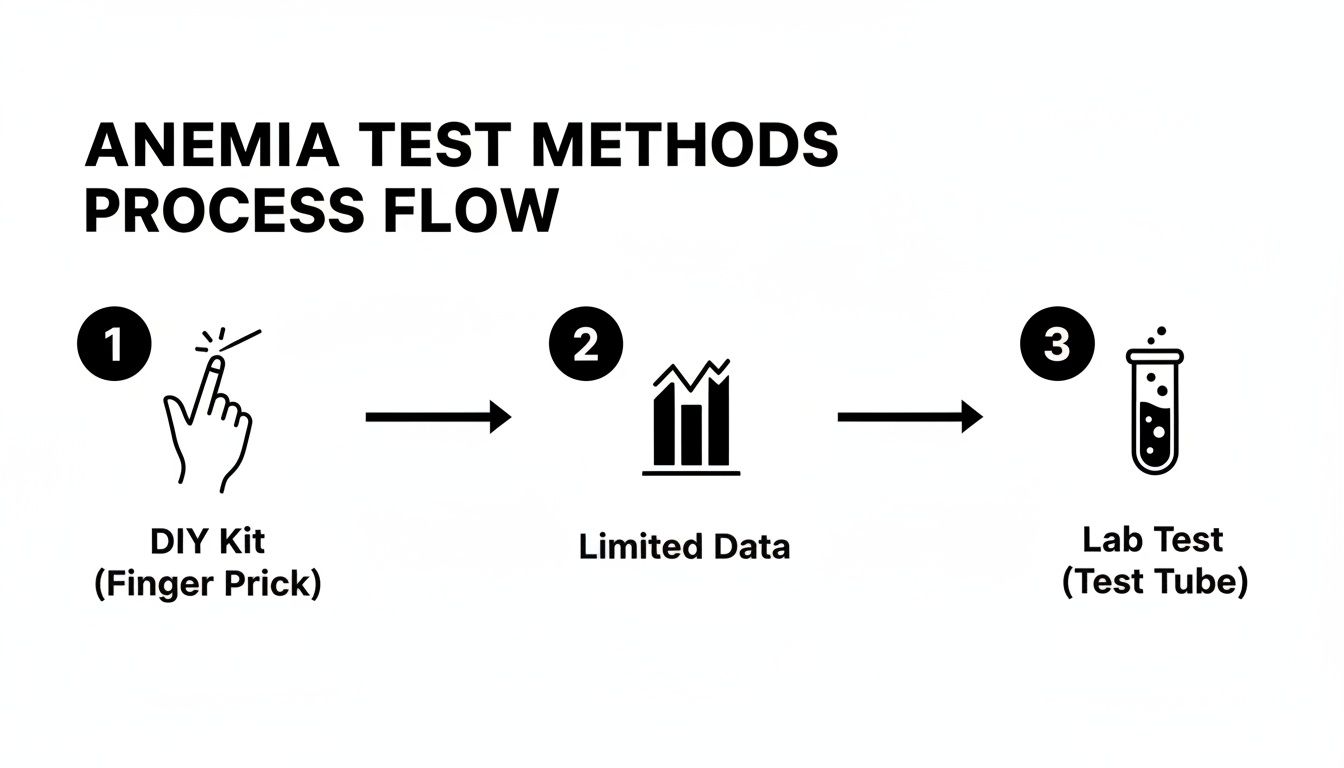
The takeaway is simple. A finger-prick test might give you a clue, but a lab-analysed sample from a vein gives you the full, detailed picture you need to truly understand your health.
Your Sample’s Journey to a UKAS-Accredited Lab
Once collected, your sample is sent directly to a UKAS-accredited laboratory. These are the exact same facilities your GP relies on, so you know your results are held to the highest clinical standards. The level of precision comes from the rigorous processes and advanced equipment found in professional medical testing labs, which turn a simple blood sample into medically reliable insights.
By going this route, you’re not just getting a basic haemoglobin check. You’re revealing a full panel of biomarkers, including critical ones like ferritin, which shows how much iron your body actually has stored away. This is how you spot potential issues long before they start to drag down your performance.
When the phlebotomist comes to you, it completely changes the game. Health monitoring shifts from being a reactive, inconvenient task to an enabling, proactive step in managing your own health and longevity.
This method gives you the best of both worlds: ultimate convenience without sacrificing the clinical accuracy you need to make smart decisions. If you want to dive deeper, our guide on the benefits of an at-home blood test explains how to weave professional-grade testing into your regular wellness routine. It’s all about fitting essential health insights into your life, not the other way around.
Turning Your Test Results into Actionable Insights
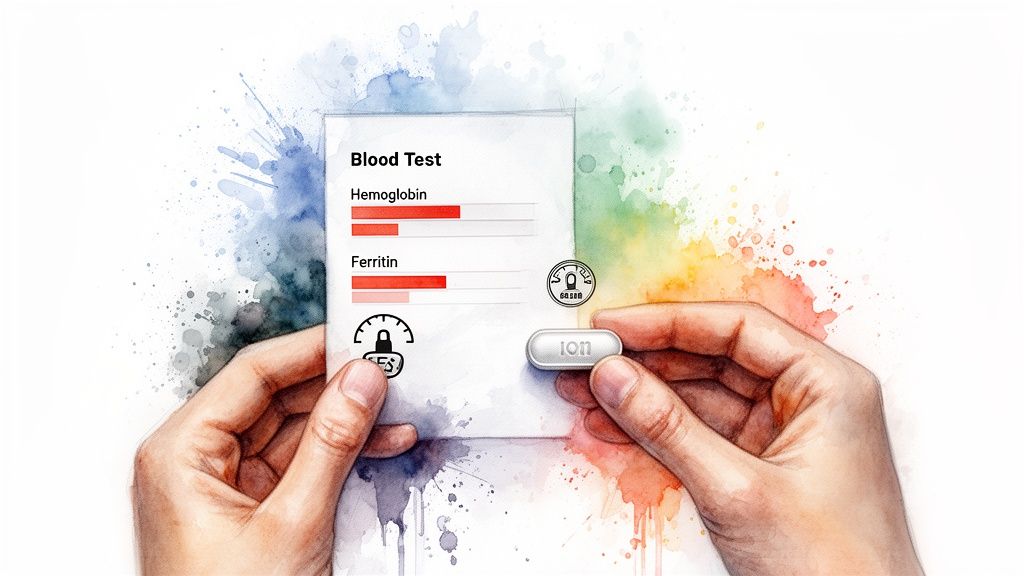
A report full of numbers doesn't mean much on its own. The real value comes from what you do with that information. When you get the results from a detailed home test for anaemia, you’re not just looking at data; you're getting a detailed map of your body's ability to carry oxygen. Learning how to read this map is the key to revealing better performance, faster recovery, and a healthier future.
On this map, two figures stand out: haemoglobin (Hb) and ferritin. While they work together, they tell two very different stories about your iron status and what it means for your long-term health.
Think of your body like a busy logistics company. Haemoglobin is the fleet of delivery trucks, the red blood cells, carrying oxygen to every single tissue and muscle. Ferritin, on the other hand, is the central warehouse where all your iron is stored. A basic test might just count your trucks, but a smart one also checks the inventory in your warehouse.
Decoding Haemoglobin: Your Oxygen Delivery Fleet
Haemoglobin is the here-and-now measurement of your blood's capacity to transport oxygen. When this number drops, that's the classic definition of anaemia. It means your "delivery fleet" is understaffed, which is exactly why you might feel like you've hit a wall during a workout or are struggling with brain fog in an important meeting.
In the UK, the standard reference ranges are a good place to start:
- Men: 130–170 grams per litre (g/L)
- Women: 120–160 grams per litre (g/L)
But here's the thing: for athletes and high-performers, "normal" isn't always optimal. You could be well within that standard range and still feel the drain of suboptimal oxygen delivery. This is why tracking your own personal trends over time is so much more powerful than just comparing yourself to a generic average.
A slow, downward creep in your haemoglobin, even while it's still "normal," can be the first clue that your performance is about to take a nosedive. Spotting this early gives you a chance to make adjustments before it becomes a real problem.
Understanding Ferritin: Your Body’s Iron Reserve Tank
If haemoglobin shows what's happening right now, ferritin reveals your future potential. It is arguably the single most important marker for catching iron deficiency long before it turns into full-blown anaemia. Think of low ferritin as the canary in the coal mine - it’s a clear signal that your iron "warehouse" is running on empty.
What’s tricky is that your haemoglobin levels can look perfectly fine for months while your ferritin stores are plummeting. During this phase, your body is frantically pulling iron from its reserves just to keep the delivery fleet running. It’s a strategy that can’t last.
A low ferritin level is the earliest warning sign that your body is heading towards an energy crisis. Monitoring it is the difference between preventing a problem and reacting to one - a cornerstone of any proactive longevity plan.
Knowing where you stand is important. Official guidance from the UK National Screening Committee helps define iron deficiency anaemia, which can involve a haemoglobin level below 110g/L and a serum ferritin below 15µg/L.
For a really detailed breakdown of what the different ferritin levels mean for your health, our guide on the normal ferritin range in the UK gives a thorough overview.
Turning Insights into Action
Once you've got your results, the next step is to translate them into a concrete plan for boosting your performance and longevity. Your specific numbers will dictate the exact strategy, but these general principles can help guide you.
-
If Ferritin is Low but Hb is Normal: This is the perfect time to act. Your oxygen delivery is still holding up, but your reserves are getting thin. This is your cue to proactively increase your iron intake through diet. Focus on high-quality sources of heme iron (from animal products) and non-heme iron (from plants), and remember to pair them with Vitamin C to improve absorption.
-
If Both Ferritin and Hb are Low: This suggests that iron-deficiency anaemia is already here and is likely affecting your performance. It's time to take this seriously with a more focused approach, which should definitely include a conversation with a healthcare professional.
-
If Results are Optimal: Fantastic news! Your goal now is simply maintenance and continued monitoring. Keep an eye on your levels every few months, especially during periods of intense training or high stress, to make sure you stay in your personal sweet spot.
If your results do point towards potential anaemia, looking into nutritional support is a sensible next step. For example, learning about the benefits of beef organ supplements, including important nutrients like heme iron and B12, could offer a way to support your energy and recovery.
By regularly using a high-quality home anaemia test and tracking these key markers, you turn raw data into a useful measure. You’re no longer guessing about your fatigue—you’re making informed, strategic decisions to build a foundation for sustained peak performance and long-term health.
Creating Your Proactive Health Strategy
Getting your results back is the starting line, not the finish. Now you have clear data, and clear data calls for clear action. This is where you move from simply monitoring your health to actively shaping your longevity.
It’s important to remember that while home tests for anaemia are a fantastic tool for keeping tabs on what’s happening inside your body, they aren’t a substitute for a formal medical diagnosis from your doctor.
Think of your results as a personalised guide. They can tell you when it’s time to chat with a GP or if you just need to fine-tune your nutrition and lifestyle to keep feeling your best. The goal is to turn these numbers into a practical, sustainable plan that supports your vitality for the long haul.
When to Consult a Professional
First things first: let's figure out if any of your results need a doctor's attention. While everyone’s "optimal" can be slightly different, some numbers are clear signals that you should book an appointment to get the full picture and rule out any underlying issues.
You should book a consultation with your GP or a reviewing doctor if your results show:
- Haemoglobin (Hb) below 120 g/L for women or 130 g/L for men. This is a strong sign of anaemia that needs to be looked into.
- Ferritin levels below 30 µg/L. This means your body’s iron stores are running on empty, putting you at a high risk of developing anaemia.
- Any combination of low results alongside persistent symptoms like chronic fatigue, shortness of breath, dizziness, or a racing heart.
This advice is particularly important for some people. The NHS, for example, screens all pregnant women for anaemia because low iron can affect both mother and baby. Likewise, high-achieving female professionals and endurance athletes pushing their bodies to the limit are also at a higher risk of iron-deficiency anaemia, where exhaustion can derail careers and ruin race day. You can learn more about the official UK screening guidelines for anaemia and see why they’re so important.
Building Your Data-Driven Wellness Plan
What if your results are in the healthy range, but not quite where you’d like them to be for your personal goals? This is a brilliant opportunity to optimise for longevity. It’s not about making drastic changes, but about smart, sustainable tweaks based on what your body is actually telling you.
Your strategy should centre on two key areas: nutrition and lifestyle.
Think of this as strategic refuelling for the long haul. You're not just topping up the tank; you're improving the entire supply chain to ensure your body always has what it needs to perform.
Start by looking at the iron-rich foods you eat. There are two main types of iron in our diet, and knowing the difference is the secret to absorbing it well.
- Heme Iron: This is the superstar. It’s found in animal foods like red meat, poultry, and fish. Your body finds it incredibly easy to absorb and use.
- Non-Heme Iron: This type comes from plant-based sources like spinach, lentils, beans, and fortified cereals. It’s still great, but your body needs a bit of help to absorb it efficiently.
To get the most out of your iron intake, especially from plant-based foods, always pair it with a source of Vitamin C. Something as simple as squeezing lemon juice over a spinach salad or adding some sliced bell peppers to your lentil soup can make a huge difference in how much iron your body actually absorbs.
Finally, think about nutrient timing. If you’re an athlete, having an iron-rich meal a few hours before or after a tough session can help restock your stores right when your body is crying out for it. Supplements can be helpful if a doctor recommends them, but a food-first approach is always the best foundation for a lasting health strategy. By turning your results into a real-world plan, you’re setting yourself up for years of peak health and performance.
Your Anaemia Testing Questions, Answered
Thinking about home health testing can bring up a lot of questions. That’s perfectly normal. When you’re looking to get a clear picture of what’s happening inside your body, you need clear answers. Here’s a rundown of the most common queries we hear about home anaemia tests.
How Often Should I Test For Anaemia?
There's no one-size-fits-all answer here. The right frequency really comes down to you—your health goals, your lifestyle, and any specific risk factors you might have. Think of it less like a rigid schedule and more like a personalised tune-up for your body.
For anyone pushing their limits, like endurance athletes or busy professionals juggling high-stress jobs, testing every 3-6 months is a solid strategy. This rhythm helps you keep a close eye on your iron stores and haemoglobin, letting you make small tweaks before a dip starts to affect your energy and performance. It’s all about staying one step ahead.
If you’re more focused on general health and longevity, an annual test is usually a great baseline, especially if it’s part of a broader health check. That said, some situations definitely warrant more frequent testing.
You might want to test more often if you:
- Eat a plant-based or vegetarian diet, as keeping iron levels up can require a bit more attention.
- Are a woman who experiences heavy periods, a very common reason for iron loss.
- Are on the mend from surgery or a major illness.
- Are dealing with ongoing symptoms you can't shake, like fatigue or shortness of breath.
Is a Professional At-Home Blood Draw a Hassle?
Honestly, not at all. The entire service is built around convenience for people who value their time as much as their health. It’s designed to sidestep all the usual frustrations of going to a clinic.
You can book a trained phlebotomist online in a couple of minutes, choosing a time and place that works for you. That could be your kitchen table before work or even your office during a lunch break. The blood draw itself is incredibly quick, typically lasting just a few minutes, and most people say the discomfort is nothing more than a tiny pinprick.
The real significant advantage is how smoothly it fits into your day. No travel, no waiting rooms, and no calendar Tetris trying to fit in an appointment. It makes being proactive about your health feel effortless.
Is My Health Data Secure?
Absolutely. Your privacy is taken extremely seriously, and your data is handled with the same strict confidentiality you’d expect from any NHS clinic. Protecting your personal health information is non-negotiable.
All data is managed in full compliance with UK data protection laws, including GDPR. This means strong encryption is used whenever your information is sent or stored. Your results are shared with you, and only you and the reviewing doctor, through a secure, password-protected portal. At every step, you are in complete control of your health data.
What if My Results Are Normal but I Still Feel Tired?
This is actually a really positive result, not a dead end. When a high-quality test shows that your iron and haemoglobin levels are right where they should be, it gives you incredible clarity. It means you and your doctor can confidently rule out anaemia as the reason you're feeling so drained.
Think of the test as a powerful diagnostic tool. Instead of spending months wondering if low iron is the problem, you now know to focus your attention elsewhere. Fatigue is a tricky symptom with a long list of potential causes, so eliminating one of the most common ones is a huge step forward.
With anaemia off the table, you can investigate other possibilities with more focused testing, such as:
- Vitamin Deficiencies: B12 and Folate are also important for energy, so checking these levels is a logical next step.
- Thyroid Function: An underactive thyroid is another classic culprit behind persistent tiredness.
- Chronic Stress: Looking at cortisol levels can reveal how your body is coping with stress.
By confirming what isn't the problem, your home anaemia test helps sharpen the investigation, saving you time and pointing you towards the real source of your symptoms and a solution that will actually work.
Ready to stop guessing and start knowing? Take control of your health and performance with a clinical-grade blood test from the comfort of your own home. Lola provides the accurate, actionable insights you need to build a powerful longevity strategy. Book your at-home test today and start your path to peak wellness.
At-Home Blood Testing
Check your levels from home
Professional phlebotomist visit. Doctor-reviewed results in 2-5 days. Track your health with comprehensive blood panels.
→45-70 biomarkers tested · Venous blood draw · From £130