


Improving your focus isn't about finding a magic bullet; it's about building solid, sustainable habits that champion your long-term brain health and cognitive longevity. This means making smart, strategic shifts in your lifestyle - everything from what you eat to how you handle stress. Think of it this way: mental clarity today is a direct investment in your cognitive future.
Why Modern Life Is Draining Your Focus

If you feel like your ability to concentrate is constantly under attack, you’re not imagining things. Our world is practically designed to shatter our attention. Between the relentless pings from our phones and the ever-present pressure to multitask at work, our brains are stuck in a state of high alert.
This constant task-switching comes at a steep price. It robs us of the ability to sink into deep work, that elusive state where real creativity and productivity flourish. Instead, we skim the surface, reacting to one notification after another. This isn't just a feeling of being frazzled; it has a real impact on our cognitive performance and, down the line, our brain's resilience as we age.
The True Cost of Lost Attention
This struggle to stay on task is a huge problem, especially at work. One eye-opening study of UK office workers discovered that the average employee is only truly productive for 2 hours and 53 minutes out of an eight-hour day. The rest of that time? It’s eaten up by distractions and the mental exhaustion that comes from constantly shifting gears.
But this loss of focus is about more than just wasted hours. It’s about the cumulative stress it piles onto our minds. When your attention is pulled in a dozen different directions, it can trigger some serious issues:
- Increased Mental Fatigue: Your brain burns a surprising amount of energy switching from one task to another, which is why you feel so wiped out by the end of the day.
- Higher Stress Levels: That constant feeling of being behind or overwhelmed can spike your cortisol levels. Chronically high cortisol is bad news for your health; you can learn more by reading our guide on what is high cortisol.
- Reduced Cognitive Longevity: Over time, chronic distraction can weaken the brain's ability to form strong neural pathways, potentially affecting memory and cognitive sharpness as you age.
Reclaiming your concentration isn't just about ticking more boxes on your to-do list. It’s about protecting your most valuable asset, your mind, for the long haul. When you view focus through the lens of longevity, it stops being a productivity hack and becomes a cornerstone of your health.
It's also essential to recognise the physical toll of our digital lives, like the strain on our eyes from staring at screens all day. Learning about the symptoms of digital eye strain and how to find relief can help you preserve precious mental energy. By understanding these modern challenges, we can finally start to build a strategy to fight back and cultivate the lasting mental clarity we all need.
Build Your Foundation for Lifelong Mental Clarity

Before we even get into specific techniques and 'hacks', we need to talk about the bedrock of mental performance. True, unshakable focus isn't something you can just switch on with an app. It's built from the ground up, on a solid biological foundation that supports your brain for the long haul.
Think of your brain as a high-performance engine. You wouldn’t expect it to run smoothly if you were filling it with poor-quality fuel or never letting it rest. The same goes for your mind. The daily choices you make about food, sleep, exercise, and stress are the inputs that directly dictate your cognitive output - not just today, but for decades to come.
Fuel Your Brain for Peak Performance
What you eat has a profound and surprisingly immediate impact on your ability to concentrate. Certain nutrients aren't just 'nice-to-haves'; they're non-negotiable for protecting your brain cells and supporting the complex signalling needed for deep focus.
Start by making sure you're getting enough omega-3 fatty acids, the kind found in oily fish like salmon and mackerel. These healthy fats are literally building blocks for your brain cell membranes, helping to keep inflammation in check and allowing neurons to communicate effectively. At the same time, load up on antioxidants from things like berries, leafy greens, and colourful vegetables. They act as a personal security detail for your brain, neutralising the damaging free radicals that contribute to cognitive decline.
But it’s not just about what you add - it’s about what you might be missing. Even a subtle deficiency can quietly sabotage your concentration.
- B Vitamins: These are important for energy production in the brain. A shortfall often leads to that familiar feeling of brain fog and fatigue.
- Magnesium: This mineral is a powerhouse for nerve function. It also helps calm the nervous system, which makes it much easier to settle your mind and focus.
- Iron: Absolutely critical for getting oxygen to your brain. If your levels are low, you'll likely struggle with poor concentration and mental sluggishness.
Understanding your unique nutritional status is a complete significant advantage. A balanced diet is the right place to start, but pinpointing your specific shortfalls with testing allows you to stop guessing and start building a targeted strategy for your brain health.
If you suspect a deficiency might be holding you back, it's worth getting some hard data. You can find out exactly how to identify these gaps by exploring the world of nutritional blood testing. This data-driven approach takes the guesswork out of the equation, letting you fine-tune your diet for maximum cognitive benefit.
Prioritise Sleep for Memory and Restoration
I can't stress this enough: sleep isn't a luxury. It's a fundamental biological process that underpins everything from learning and memory to your ability to concentrate the next day. While you're asleep, your brain is incredibly busy - consolidating memories, clearing out metabolic waste, and basically running its nightly repair and maintenance cycle.
The different stages of sleep each have a unique job. Deep sleep is where the heavy lifting of physical restoration and memory consolidation happens. REM (Rapid Eye Movement) sleep, on the other hand, is vital for processing emotions and creative problem-solving. If you skimp on either, you’ll pay for it with a brain that feels slow and an attention span that just won’t stick.
The best way to improve your sleep is to create a consistent, relaxing bedtime routine. This means switching off screens at least an hour before bed, maybe reading a physical book, or taking a warm bath. Make your bedroom a sanctuary, cool, dark, and quiet, to signal to your brain that it's time to power down.
Move Your Body to Sharpen Your Mind
Regular physical activity is one of the most powerful things you can do for your brain, both for immediate focus and long-term health. Exercise isn't just good for your body; it unleashes a potent cocktail of chemicals that directly sharpen your mind.
When you get your heart rate up with some moderate-intensity exercise, your body ramps up the production of brain-derived neurotrophic factor (BDNF). People often call this 'Miracle-Gro for the brain', and for good reason. It helps existing neurons survive and even encourages the growth of new ones, especially in brain regions tied to learning and memory.
On top of that, exercise boosts blood flow to the brain, delivering a fresh supply of oxygen and nutrients where they're needed most. It also helps regulate important neurotransmitters like dopamine and norepinephrine, which are key players in maintaining attention and motivation.
Manage Stress to Protect Your Brain
Chronic stress is the silent killer of focus. When you're constantly on edge, your body is flooded with the stress hormone cortisol. While it's useful in a genuine emergency, persistently high levels of cortisol can actually damage the hippocampus - a part of your brain that's absolutely vital for memory and learning.
This is where mindfulness practices can be incredibly effective. By taking just a few minutes for meditation or some deep breathing exercises, you can actively trigger your body's relaxation response. This helps lower cortisol, quieten that frantic mental chatter, and train your brain to return its attention to the here and now. Even five to ten minutes a day can make a real difference in building your resilience to stress and preserving your focus for the things that truly matter.
Train Your Brain with Strategic Focus Techniques
With a solid biological foundation in place, the next move is to actively train your attention. Think of concentration like a muscle: the more you intentionally work it, the stronger and more reliable it becomes, especially when you need it most.
This section is a toolkit of practical, proven techniques you can start using right away to sharpen your mental edge. These aren't just quick fixes. They're smart methods designed to help you regain control in a world that’s constantly fighting for a piece of your attention. By learning how to structure your time and environment, you create the perfect conditions for deep, high-quality work.
Architect Your Day for Deep Work
The first step is to stop reacting to your day and start designing it. Two incredibly powerful ways to do this are time-blocking and the Pomodoro Technique. Both work by creating structure and imposing deliberate limits - a surprisingly effective defence against the constant pull of distractions.
Time-blocking is exactly what it sounds like: scheduling every part of your day by assigning specific tasks to specific blocks of time. Instead of a messy to-do list, your calendar becomes your roadmap. For a business professional, this might mean blocking out 90 minutes for "Analyse Q3 Sales Data" and treating that appointment with the same respect you'd give a client meeting.
The Pomodoro Technique is a more granular approach that's all about work sprints. You go all-in on a single task for 25 minutes, then take a mandatory five-minute break. After four of these 'Pomodoros,' you earn a longer break of 15-30 minutes. This method is a significant advantage for athletes during training analysis or for professionals tackling a beast of a project because it breaks the work down into manageable, less intimidating chunks.
The point of these techniques isn't to become rigid; it's to be intentional. When you consciously decide what you’re focusing on and when, you reclaim your mental energy from the endless stream of notifications that defines modern work.
Cultivate Digital Minimalism
Creating a focused environment is just as important as managing your time. This means actively curating your digital space to cut out the noise, a practice often called digital minimalism. The constant pings, alerts, and notifications are a massive drain on our cognitive resources.
It’s a bigger problem than you might think. Distractions in the UK workplace are costing an alarming amount of productive time. A staggering 67% of workers report being significantly distracted during their day. Worse still, 7% of UK employees spend about three hours daily being distracted, which adds up to nearly 15 hours a week. You can see the full findings in this research into workplace productivity.
To fight back, start by turning off all non-essential notifications on your phone and computer. For every app, ask yourself: does this alert truly require my immediate attention? Most of the time, the answer is a firm no. For professionals, a great first step is scheduling specific times to check email (say, 11 am and 4 pm) instead of reacting to every single message as it lands.
Strengthen Your Attention Muscle Directly
Beyond structuring your day, you can perform specific exercises to directly train your ability to concentrate. Focused meditation is one of the most effective tools in the arsenal.
The practice itself is simple, but it's not easy. You just sit in a quiet place and put your full attention on the sensation of your breath. When your mind inevitably wanders, and trust me, it will, your only job is to gently, and without judgement, guide it back to your breath. Each time you do this, you’re essentially doing a 'rep' for your attention muscle.
- For Professionals: Kick off your day with just five minutes of focused meditation. It’s a fantastic way to clear the mental clutter and set a calm, focused tone before the chaos begins.
- For Athletes: Use this technique to practice tuning out external distractions - a non-negotiable skill for maintaining peak focus during high-pressure competition. You can even take it a step further by visualising a successful performance while in a meditative state to strengthen the neural pathways linked to that outcome.
To give you a clear overview, here's a quick summary of these cognitive techniques and how they can be applied.
Cognitive Techniques for Enhancing Focus
| Technique | Core Principle | Best For |
|---|---|---|
| Time-Blocking | Intentionally scheduling every part of your day to prevent reactive work and protect deep focus time. | Professionals managing complex projects and multiple responsibilities. |
| Pomodoro Technique | Using short, timed work intervals (25 minutes) with breaks to maintain high energy and prevent burnout. | Creatives, developers, or anyone tackling large, daunting tasks that require sustained effort. |
| Digital Minimalism | Systematically reducing digital noise (notifications, apps) to create a distraction-free environment. | Everyone. Particularly valuable for those working in open-plan offices or from home. |
| Focused Meditation | Directly training the 'attention muscle' by repeatedly bringing focus back to a single point, like the breath. | Athletes needing to block out crowd noise and professionals looking to improve mental clarity. |
Ultimately, these strategies are about building a system that protects your most valuable asset: your focus. For a more comprehensive overview and additional evidence-based strategies, you can explore this excellent guide to improving focus and mastering your attention. By combining intentional time management, a distraction-free environment, and direct attention training, you can build the mental endurance needed to thrive in any field.
reveal Peak Performance with Biomarker Insights
While smart habits and lifestyle changes are fantastic starting points for better focus, they often follow a one-size-fits-all approach. If you really want to sharpen your mental clarity for the long haul, you need to look a bit deeper, under the bonnet, so to speak, at your own unique body chemistry. Generic advice can only take you so far; understanding your personal biology is where real, lasting cognitive enhancement begins.
This is where biomarker analysis comes in. It’s a significant advantage. By measuring specific markers in your blood, you can stop guessing and start making decisions based on solid data about your health. Instead of just hoping your new diet is helping, you can see its precise impact on your nutrient levels and tweak things as you go. It’s all about building a truly personal strategy for peak mental performance.
This data gives you the power to be proactive. You can spot potential deficiencies long before they turn into nagging brain fog or a frustrating dip in concentration, letting you make targeted changes that keep your mind sharp and resilient.
Key Biomarkers for Your Brain
Certain nutrients have an outsized role in how well our brains work. It's surprisingly common to have deficiencies in these areas, and they can quietly sabotage your ability to concentrate, even if you feel like you’re doing everything else right. Here are the big players you should be keeping an eye on.
-
Vitamin B12: This vitamin is absolutely essential for healthy nerve cells and for making the red blood cells that carry oxygen to your brain. Even a mild shortage can lead to fatigue, memory slips, and trouble concentrating. Because B12 is mostly found in animal products, anyone on a plant-based diet should pay close attention to their levels. To learn more, check out our guide on what is the normal range for Vitamin B12.
-
Vitamin D: We call it the "sunshine vitamin," but it really acts more like a hormone, and it has receptors all over the brain. It’s important for mood and cognitive function. Given the famously limited sunlight in the UK for much of the year, it’s no surprise that many of us have less-than-ideal levels, which can contribute to low moods and that feeling of mental sluggishness.
-
Magnesium: Think of this mineral as a workhorse. It’s involved in over 300 different biochemical reactions in the body, and many of them are happening in your brain. It’s vital for nerve transmission and has a natural calming effect, making it easier to manage stress and stay focused.
-
Omega-3 Fatty Acids: These fats are quite literally the building blocks of your brain cells. They help cool inflammation and are critical for healthy cell membranes, ensuring your neurons can communicate smoothly. Low levels have been linked to poor memory and a greater risk of cognitive decline down the road.
Understanding your biomarker data isn't about chasing a "perfect" score. It’s about identifying your personal baseline, spotting trends over time, and using that knowledge to fine-tune your lifestyle for peak mental performance and long-term brain health.
The diagram below shows a simple but incredibly effective process for bringing these focus techniques into your daily routine.
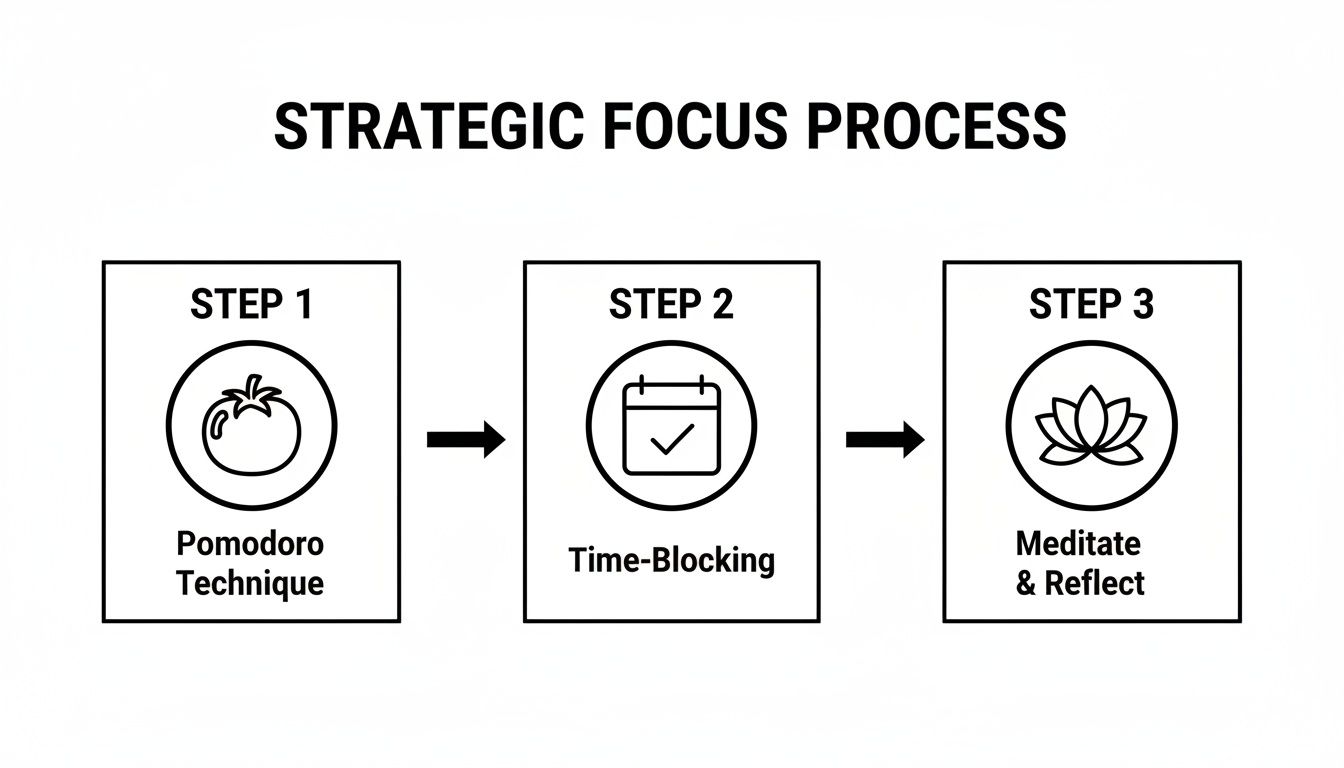
This shows how structured work sessions (Pomodoro), planning your day with intention (Time-block), and giving your mind a chance to recover (Meditate) all work together to create a sustainable rhythm for deep concentration.
How to Interpret Your Results and Take Action
Getting a blood test report back can feel a bit intimidating, but the real insight comes from looking for trends, not just staring at a single number. With Lola, we present your results in our app so you can easily track changes over time as you adjust your diet, exercise, or supplements.
For instance, you might notice your Vitamin D levels consistently drop during the winter. That’s a clear, actionable insight. It’s a signal that it might be time to think about a supplement or make a real effort to get some midday sun when it appears. Or maybe you see that, despite your healthy diet, your magnesium is always hovering at the low end of the normal range. That's a perfect reason to chat with a healthcare professional about whether a good quality supplement could be right for you.
Knowing when to ask for expert advice is key. If any of your results are flagged as well outside the optimal range, or if you’re still struggling with brain fog after making positive changes, it’s time to consult your doctor. Your biomarker data is the ideal starting point for that conversation, giving both you and your doctor objective information to build a plan from. This is how you turn raw data into a powerful, personalised strategy for lifelong mental clarity.
Fine-Tune Your Focus with Advanced Strategies
Once you've got a handle on your unique biology from biomarker data, you can start layering on some more advanced strategies. This is where we go beyond the foundational habits and begin to really fine-tune your approach, using targeted tools to support and sustain your mental performance for the long haul.
Think of yourself as the CEO of your own cognitive health. You’re now equipped to make truly informed decisions that promote lasting focus and brain longevity.
One area that's getting a lot of attention is targeted supplementation. Let’s be clear about one thing: supplements should enhance, not replace, a healthy lifestyle. But when they're used correctly and based on what your body actually needs, they can give your brain's cellular machinery some powerful support. They’re precision tools, not blunt instruments.
The Role of NMN in Cellular Energy
One of the most interesting players in the conversation around cognitive longevity is NMN (Nicotinamide Mononucleotide). In simple terms, NMN is a precursor to NAD+ (Nicotinamide Adenine Dinucleotide), a important coenzyme that exists in every single cell in your body, brain included. NAD+ is absolutely essential for energy metabolism - it’s what helps convert the food you eat into the cellular energy your brain desperately needs to function.
As we get older, our natural NAD+ levels start to drop off, and that can contribute to that feeling of mental fatigue or a slip in cognitive sharpness. By helping to support NAD+ levels, NMN can play a role in maintaining strong cellular energy production, which is a cornerstone of sustained mental clarity and long-term brain health.
Before you even think about trying a supplement like NMN, you absolutely must speak with a healthcare professional. They can look at your individual health profile and help you figure out if it's a good fit for you, as well as guide you on how to use it safely.
For anyone serious about optimising their health responsibly, that professional guidance is non-negotiable.
Creating a Powerful Feedback Loop
The real magic of this data-driven approach is creating a continuous feedback loop. Your first set of biomarker results gives you a baseline—a snapshot of where you are today. The real work begins as you track how those markers respond to the changes you implement, whether that's adjusting your diet, starting a new exercise routine, or carefully introducing a supplement.
Suddenly, you're no longer just guessing. You're in a dynamic, responsive process. With the Lola app, keeping an eye on these trends over time becomes straightforward.
- Observe the Changes: Did adding more oily fish to your diet actually move the needle on your Omega-3 levels after three months?
- Connect the Dots: Do you notice you feel more mentally sharp when your Vitamin D levels are in the optimal range during the winter?
- Make Informed Adjustments: If a change isn't giving you the results you want, in your biomarkers or just in how you feel, you have the objective data you need to pivot your strategy.
This whole process help you to see exactly what works for your body. It’s about taking the general principles of how to improve focus and personalising them with a high degree of precision. This proactive stance is what promoting cognitive longevity is all about, ensuring your brain stays resilient for years to come.
This isn't just a personal quest, either. The need for concentration is reshaping our professional lives. In post-pandemic UK workplaces, 45% of office workers now say that focusing on their work is the main reason they go into the office at all. Concentration is no longer just a soft skill; it's a key factor driving workplace design. You can read more about this shift in workplace priorities on GOV.UK.
in the end, when you combine your personalised data with advanced strategies and consistent tracking, you build a strong system. It's a system that supports your cognitive performance not just for tomorrow's deadline, but for a lifetime of mental clarity.
Common Questions on Sharpening Your Focus
It’s natural to have a few questions when you start a journey to improve your concentration. Knowing what to expect, what's truly necessary, and where to put your energy first can make all the difference.
How Long Does It Realistically Take to Notice Better Focus?
This is a great question, and the honest answer is: it depends on where you start.
Some of the quickest wins come from sorting out the fundamentals. If you start prioritising sleep or cleaning up your diet, you can often feel a difference within days. A brain that's properly rested and fuelled is just going to perform better, full stop.
For things like attention training or daily meditation, think of it like going to the gym for your mind. You'll likely start to feel a real, tangible shift in your ability to hold your attention after a few weeks of consistent practice. The results compound over time.
The most significant, lasting benefits, the kind that support your brain health for years to come, are built through consistency. This isn't a project with a deadline; it's a continuous investment in your most important asset.
Can I Really Improve My Focus Without Fancy Tests or Supplements?
Yes, absolutely. In fact, you should. The lifestyle habits and mental techniques we've covered are the bedrock of better concentration. Getting your sleep, nutrition, exercise, and stress in check will always give you the biggest bang for your buck.
Think of biomarker testing and supplements as the next level of fine-tuning. They help you move from following general good advice to creating a plan that’s precisely matched to your own body's needs.
So, don't feel like you need these advanced tools to get started. Build a solid foundation first. Once those habits are in place, you can use data to sharpen your approach and reveal even better results.
If I Could Only Pick One Habit for Long-Term Brain Health, What Would It Be?
While it’s the combination of habits that builds a truly resilient mind, if I had to pick just one, it would be consistent, high-quality sleep. Nothing else comes close in terms of its wide-ranging impact on cognitive health.
Sleep is your brain’s dedicated maintenance window. It’s when it gets to work clearing out metabolic junk that builds up while you're awake and, importantly, when it consolidates memories, locking in what you've learned.
This nightly reset is the foundation for everything—from your mood and problem-solving skills to your creativity and focus the next day. Skimping on sleep actively works against all your other efforts, making it the non-negotiable cornerstone for a sharp mind, both now and in the future.
Ready to see what's really going on inside your body and how it's affecting your mental performance? Lola brings professional, at-home blood testing to you, giving you the personalised data needed to take your health to the next level. Take control of your cognitive future by visiting Lola Health.
At-Home Blood Testing
Check your levels from home
Professional phlebotomist visit. Doctor-reviewed results in 2-5 days. Track your health with comprehensive blood panels.
→45-70 biomarkers tested · Venous blood draw · From £130