


Getting your blood test results back can feel like you’ve been handed a document in a foreign language. It's just a sea of acronyms, numbers, and flags, but what does it all actually mean for your health and, more importantly, your longevity?
This guide is here to be your translator. We’re going to decode those results, moving beyond the simple "normal" ranges to show you what’s truly optimal for a long and healthy life, and the actionable steps you can take to get there.
Your Guide to Reading UK Blood Tests for a Longer Life
Think of your blood test results not as a simple pass-or-fail school report, but as a detailed roadmap for your longevity journey. It's a useful tool that gives you a snapshot of what’s happening inside your body, helping you make proactive choices to boost your vitality and add more healthy years to your life.
Beyond the Standard Ranges
The standard reference ranges you see on an NHS report are brilliant for one thing: spotting disease. But if your goal is longevity and peak wellness, you need a different perspective. We’re not just aiming to avoid being ill; we’re aiming for strong, vibrant health that lasts a lifetime.
This means we need to look closer at the subtle shifts and patterns within the normal range. These are often the earliest clues, showing you where you can make small changes that have a big impact on your healthspan. We’ll teach you how to read your results with this forward-thinking lens, turning that complex medical data into clear, actionable steps for a longer life.
Throughout this guide, we'll walk you through the key tests:
- Full Blood Count (FBC): This gives us a look at your cellular health and how your immune system is holding up against the stressors of ageing.
- Cholesterol and Lipid Panels: A important deep look at the health of your heart and circulatory system, a cornerstone of longevity.
- Organ Function Tests: These check on your body's essential filtration systems, like your liver and kidneys, whose efficiency directly impacts your biological age.
- Inflammatory and Nutrient Markers: Key for managing chronic inflammation, a primary driver of ageing, and ensuring your body has the raw materials for optimal function.
Understanding these results allows you to have much more meaningful conversations with your GP and truly take the reins of your own health journey. Blood tests are one of the most common diagnostic tools in the UK, and learning to interpret yours is a vital skill for long-term health planning.
While our focus is squarely on the UK system, it can be interesting to see how things are done elsewhere. For a broader look, you can explore these insights into Europe's diverse healthcare systems to understand the wider context.
Decoding Your Full Blood Count for Longevity Clues
The Full Blood Count, or FBC, is probably the most common blood test a doctor will order. While it’s often used to spot immediate problems, it’s also packed with subtle clues about your long-term health and potential for longevity.
Think of your bloodstream as a busy motorway network. The FBC is your live traffic report, showing how smoothly everything is flowing. For longevity, we’re not just looking for a total gridlock (like a major infection or severe anaemia); we're looking for the small, persistent tailbacks. These little signs of inefficiency often point to low-grade chronic inflammation—a major culprit behind accelerated ageing and many age-related diseases. Learning to read your FBC through this longevity lens is the first step toward making smarter choices for your healthspan.
Your Body's Cellular Workforce
The FBC zooms in on the three main types of cells circulating in your blood, each with a critical job to do. To really understand what your results mean for your long-term health, you need to get to know the key players on the team.
- Red Blood Cells (RBCs): These are your oxygen delivery drivers. Using a protein called haemoglobin, they collect oxygen from your lungs and drop it off at every single cell in your body, keeping everything powered up for optimal function.
- White Blood Cells (WBCs): Think of these as your immune system's security detail. They are constantly on patrol, ready to identify and neutralise invaders, a process critical to preventing the chronic inflammation that drives ageing.
- Platelets: This is your rapid-response repair crew. When you get a cut or injury, platelets rush to the scene to form a clot and stop the bleeding, a vital function for maintaining your body's integrity.
This infographic gives you a great visual snapshot of these different components and their roles within your blood.
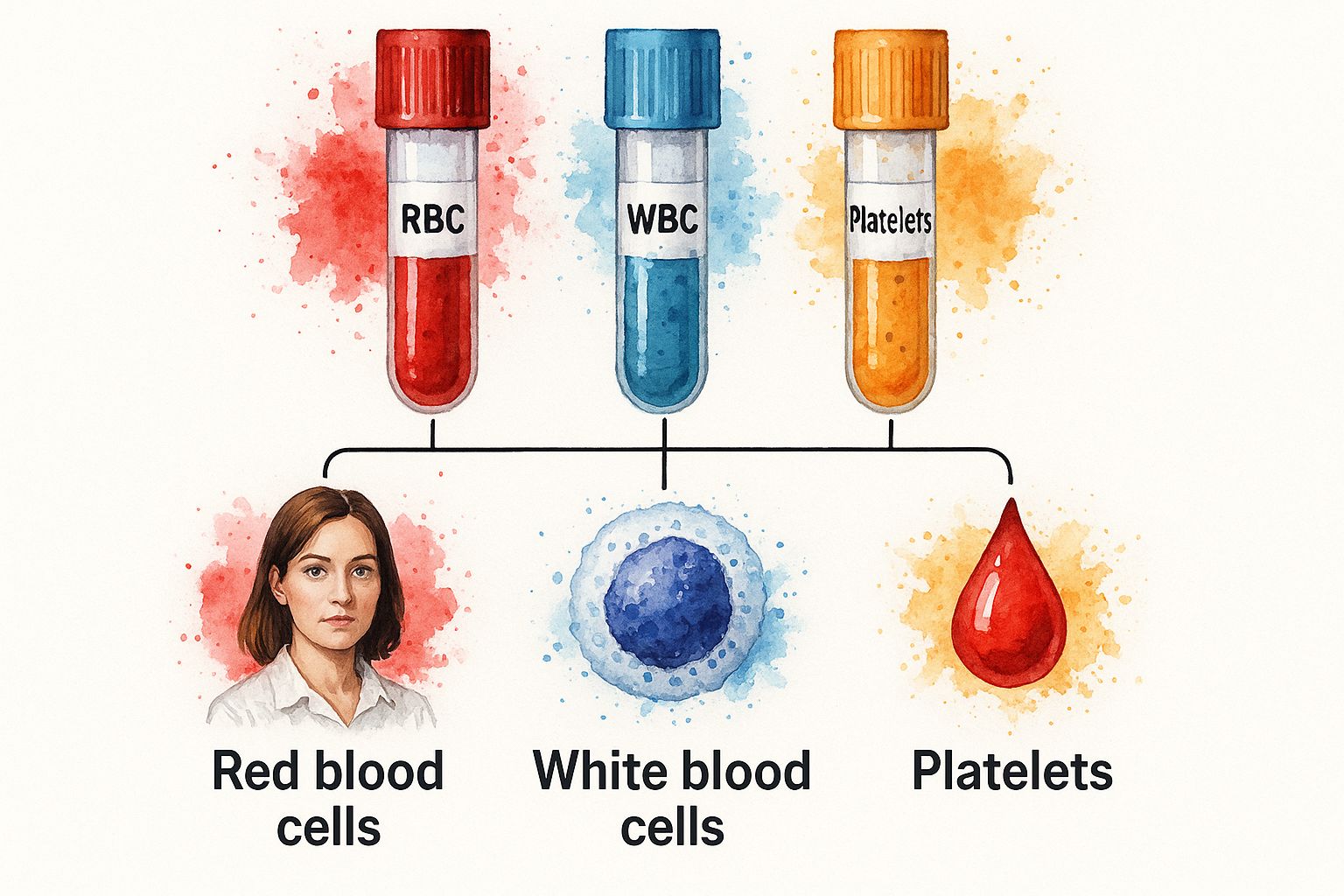
Seeing how Red Blood Cells, White Blood Cells, and Platelets work together makes it easier to see why keeping them in optimal balance is so important for your long-term health.
To help you get a clearer picture, this table breaks down the main markers you'll see on an FBC report.
Key Full Blood Count (FBC) Markers Explained
| Marker | Primary Function | What Low Levels Might Mean | What High Levels Might Mean |
|---|---|---|---|
| Red Blood Cells (RBCs) | Transport oxygen from lungs to tissues. | Anaemia, fatigue, potential nutrient deficiencies (iron, B12, folate). | Dehydration, smoking, potential heart or lung conditions. |
| Haemoglobin (Hb) | The protein in RBCs that carries oxygen. | Anaemia, iron deficiency, poor oxygen delivery to cells. | Dehydration, polycythaemia (overproduction of RBCs). |
| Haematocrit (Hct) | The percentage of blood volume made up of RBCs. | Anaemia, internal bleeding, overhydration. | Dehydration, smoking, living at high altitude. |
| White Blood Cells (WBCs) | Fight infection and inflammation. | Weakened immune system, bone marrow issues. | Active infection, inflammation, high stress levels. |
| Neutrophils | A type of WBC that fights bacterial infections. | Increased susceptibility to infection. | Acute bacterial infection, chronic inflammation. |
| Lymphocytes | A type of WBC that fights viral infections. | Immune system suppression. | Viral infection, certain types of leukaemia. |
| Platelets (PLT) | Help blood to clot and prevent bleeding. | Risk of uncontrolled bleeding, bruising easily. | Increased risk of blood clots, inflammation. |
Each of these markers tells a piece of your health story, and tracking them over time reveals the bigger picture of your biological ageing process.
Reading Between the Lines of Your Red Blood Cell Count
When you look at the red blood cell section of your report, two key markers for longevity are haemoglobin (how much oxygen-carrying protein you have) and haematocrit (the percentage of your blood that’s made up of red cells).
Low levels can point to anaemia, which leaves you feeling tired and sluggish. But even levels that are consistently at the lower end of the "normal" range can hint at suboptimal energy production at a cellular level. This could be linked to a lack of iron, B12, or folate—all vital for energy and cognitive health. On the flip side, unusually high levels can thicken your blood, putting extra strain on your heart and accelerating wear and tear.
Longevity isn't just about avoiding disease; it's about optimising function. Aiming for the middle-to-upper end of the normal haemoglobin range often correlates with better energy and vitality, fuelling a longer, more active life.
For a deeper look at all the numbers, you can get a more detailed breakdown by understanding your full blood count explained in our thorough guide.
White Blood Cells as Inflammation Signals
Your total White Blood Cell (WBC) count is a surprisingly powerful indicator of chronic inflammation, a key driver of ageing. A massive spike usually means you’re fighting off an infection right now. But a count that consistently sits in the upper quarter of the normal range can be a quiet red flag for simmering, low-grade inflammation.
This is the kind of inflammation that’s linked to nearly every major age-related condition, from heart disease to cognitive decline. The FBC also gives you a breakdown of the different types of white blood cells. Two to keep a close eye on for longevity are:
- Neutrophils: These are often the first responders to bacterial infections and are a key marker of systemic inflammation.
- Lymphocytes: A cornerstone of your adaptive immune system; their balance with neutrophils is incredibly revealing about your immune resilience.
A powerful metric you can calculate from this is the neutrophil-to-lymphocyte ratio (NLR), an emerging biomarker for gauging your inflammatory state and biological age. A higher ratio can suggest your body is under more physiological stress. By tracking your NLR over time, you get real, actionable feedback on how your lifestyle choices, like diet, exercise, and stress management, are affecting your body's baseline inflammation. A downward trend is a brilliant sign that your longevity strategies are paying off.
Navigating Cholesterol and Lipids for Heart Health
When your blood test results land, the lipid panel, the section covering cholesterol and other fats, is one of the most revealing for your long-term heart health, a cornerstone of longevity. For years, we’ve been told a simple story of "good" vs. "bad" cholesterol. But if you’re focused on living a longer, healthier life, you know the real picture is far more detailed and, thankfully, much more helping.
Imagine your arteries are busy motorways. The cholesterol particles in your blood are the vehicles. The goal for longevity is to keep everything flowing smoothly and prevent any damaging pile-ups (plaque) that cause blockages and wear and tear. Understanding the different players in your lipid panel is the first step to becoming a better traffic manager for your own body.
The Key Players in Your Lipid Profile
Your report will break down a few key markers. It’s not just one single figure that matters; it’s the balance and interplay between all of them that truly tells the story of your cardiovascular risk and points toward actionable strategies for optimisation.
- Low-Density Lipoprotein (LDL): Often called the "bad" cholesterol. The trouble starts when you have too much of it, or when the LDL particles themselves are small, dense, and easily damaged—a recipe for plaque build-up in your arteries.
- High-Density Lipoprotein (HDL): This is the "good" cholesterol, and it acts like a fleet of cleanup trucks. HDL’s role is to scavenge excess cholesterol from your arteries and ferry it back to the liver for disposal, helping to keep those arterial motorways clear and youthful.
- Triglycerides: Think of these as a type of fat your body uses for immediate energy. High levels are often a direct result of excess sugar and refined carbs, and are a major risk factor for heart disease and metabolic dysfunction.
To get a clearer sense of where you stand, it helps to compare your numbers against a detailed cholesterol level chart for the UK, which shows the optimal ranges for each of these markers.
Why Your Cholesterol Numbers Change
Your lipid profile isn't set in stone. It’s a dynamic snapshot of your genetics and, most importantly, your lifestyle. It’s completely normal for cholesterol levels to shift over time, and knowing why helps you take control.
In an analysis of over 24,000 UK cholesterol blood tests, the data made it clear just how much these factors matter. It showed that cholesterol often rises in middle age, contributing to a higher cardiovascular risk. With heart disease still a leading cause of death in the UK, regular cholesterol monitoring is a vital preventative tool for a long life. This is precisely why getting your blood test results explained UK is so important for proactive health management. You can dig into more of these UK cholesterol statistics on Forthwithlife.co.uk.
By tracking these numbers regularly, you can see the direct impact of your lifestyle choices, turning your results into a powerful feedback loop for longevity.
Actionable Strategies for a Healthier Heart
Seeing your lipid results shouldn’t spark alarm—it should be a call to action. You have a surprising amount of control over these numbers. The aim is to cultivate a healthy lipid environment that will support a long, vibrant life.
The most powerful insight from a lipid panel is not where you are today, but the direction you can steer your health for tomorrow. It's a measure of opportunity for a longer, healthier life.
Here are a few evidence-based, actionable strategies to get you started:
- Focus on Fibre: Soluble fibre, found in oats, beans, apples, and psyllium husk, acts like a sponge, binding to cholesterol in your digestive system and removing it from your body.
- Choose Longevity-Promoting Fats: Swap saturated and trans fats for unsaturated ones. That means more avocados, nuts, seeds, and extra virgin olive oil. Omega-3s, found in oily fish like salmon, are especially brilliant for lowering triglycerides and reducing inflammation.
- Incorporate Regular Movement: Aerobic exercise, a brisk walk, run, or cycle, is proven to raise your protective HDL cholesterol and improve metabolic health. Aim for at least 150 minutes of moderate-intensity activity a week.
- Limit Sugar and Refined Carbs: A high intake of sugar and white flour products can send your triglyceride levels soaring and accelerate ageing processes. Cutting back is one of the fastest ways to improve your metabolic health.
By adopting these habits, you shift from being a passive recipient of your results to an active participant in your own longevity. You’re not just managing numbers; you’re building a more resilient cardiovascular system for the decades ahead.
How Organ Health Impacts Your Biological Age

Think of your liver and kidneys as the unsung heroes of your body—a sophisticated, high-performance filtration system that never stops working. They quietly purify your blood, process everything you consume, and get rid of harmful toxins.
The efficiency of this internal system is directly linked to your biological age. When these vital filters get clogged or start working less effectively, the whole system feels the strain, which can speed up the ageing process at a cellular level.
Blood test results give you a powerful check-up on these organs. Instead of waiting for a warning light to flash, you can use these markers to see exactly how they're performing and take action before a problem develops. Keeping your liver and kidneys in top shape is a cornerstone of any smart longevity strategy.
Checking Your Body's Engine Filter: The Liver
Your liver is an absolute powerhouse. It juggles over 500 vital jobs, from metabolising nutrients to neutralising toxins. A Liver Function Test (LFT) looks for specific enzymes that can leak into your bloodstream when liver cells are under stress or damaged.
Two of the most important markers to keep an eye on are:
- Alanine Aminotransferase (ALT): This enzyme is found almost exclusively in the liver. A high ALT level is a specific sign that your liver might be feeling the strain.
- Aspartate Aminotransferase (AST): While AST is also in the liver, it’s present in other areas like your heart and muscles, too. We usually look at it alongside ALT to get the full picture.
While very high levels can point to disease, even numbers just creeping into the upper end of the 'normal' UK range are a nudge. It’s a sign that your liver is working harder than it should, often due to diet, alcohol, or metabolic stress. Taking action to lower these levels can directly reduce the burden on this vital organ, promoting long-term health.
Monitoring Your Waste Removal System: The Kidneys
Your kidneys are your body's master filtration plant, cleaning your entire blood supply several times a day. Their performance is critical for managing blood pressure, balancing fluids, and clearing out metabolic waste.
The key markers for kidney health and longevity are:
- Creatinine: A waste product from your muscles. Healthy kidneys filter it out with ease, so if creatinine levels start to rise, it can be an early sign that kidney function is declining.
- Estimated Glomerular Filtration Rate (eGFR): This is a clever calculation based on your creatinine level, age, and sex. It gives a clear view of how well your kidneys are filtering waste. For eGFR, a consistently high number is what you want to see.
It's normal for eGFR to decline slowly as we get older, but a rapid drop is a red flag. By monitoring this trend, you can make lifestyle tweaks, like managing blood pressure and staying hydrated, to protect your kidney function for the long haul.
Think of your organ health markers not as a final verdict, but as a live feedback report. They show you the direct impact of your lifestyle choices, helping you to adjust your course and protect your future healthspan.
Practical Steps to Support Your Organs for Longevity
The best part? Your liver and kidneys have a remarkable ability to bounce back. By reducing their workload, you can significantly improve their function and help slow down your biological clock.
Here are a few actionable strategies you can start with:
- Hydrate Intelligently: Water is important for helping your kidneys flush out toxins efficiently. Aim for consistent hydration throughout the day.
- Limit Processed Foods and Sugar: A high sugar intake, especially from fructose, is a major driver of fatty liver disease. Cutting back gives your liver a much-needed break and reduces metabolic stress.
- Moderate Alcohol Intake: Your liver has to process every drop of alcohol. Sticking to UK guidelines and having plenty of alcohol-free days is one of the best things you can do for long-term liver health.
- Eat a Nutrient-Dense Diet: Fill your plate with antioxidant-rich foods. Think leafy greens, colourful berries, and cruciferous vegetables like broccoli, which contain compounds that support your body's detoxification pathways.
Beyond simply tracking your blood markers, it's also important to understand how certain health conditions, like diabetes, can significantly impact organ health and biological age. As part of a holistic approach to long-term planning, it can be useful to look into related areas, such as life insurance options for individuals with diabetes.
Making Sense of Your Inflammatory and Nutrient Markers
Beyond the big-picture numbers for your organs and heart, some of the most powerful clues about your longevity potential are hiding in your inflammatory and nutrient markers. These are important for understanding your body's underlying stress levels and whether it has the raw materials it needs to thrive.
Think of chronic, low-grade inflammation as a tiny fire that’s always smouldering inside you. Over time, it’s a key driver of almost every major age-related disease. At the same time, essential nutrients like Vitamin D and B12 are the cogs that keep your cellular machinery turning. When they run low, everything from your energy and mood to your immune system can start to sputter, accelerating the ageing process.
Here, we'll connect these specific results to actionable, science-backed ways to get your levels into the optimal zone for a long and healthy life.
C-Reactive Protein: The Inflammation Barometer
One of the best ways to gauge this internal "fire" is with High-Sensitivity C-Reactive Protein (hs-CRP). Your liver produces hs-CRP in response to inflammation anywhere in the body. The hs-CRP test is sensitive enough to pick up on the quiet, chronic inflammation that silently ages us.
For longevity, the goal is simple: keep this number as low as possible. Ideally, you want it below 1.0 mg/L. If your hs-CRP is consistently creeping up, it’s a red flag that your body is stuck in a state of defence, which accelerates ageing.
I like to think of hs-CRP as a smoke detector for the body. A low reading means all is calm. A number that’s climbing, even if it's still technically in the 'normal' range, is your cue to take anti-inflammatory action to protect your future health.
Several everyday factors have a direct impact on your hs-CRP levels:
- Diet: Processed foods, sugar, and unhealthy fats are pro-inflammatory. An anti-inflammatory diet is a useful tool to lower hs-CRP.
- Stress: Chronic stress keeps your body's inflammatory systems switched on.
- Sleep: Poor sleep disrupts your body's repair processes and drives up inflammation.
- Gut Health: An unhealthy gut microbiome is a common source of body-wide inflammation.
By tackling these areas, you can bring your hs-CRP number down and, with it, your long-term risk of age-related disease.
The Sunshine Vitamin: Vitamin D
Vitamin D acts more like a hormone than a vitamin, and it’s involved in hundreds of processes in the body, from immune function to bone health. Unfortunately, thanks to the UK’s grey skies, deficiency is incredibly common.
For optimal health and longevity, you should be aiming for a level above 75 nmol/L. Anything less can impair immune function, weaken bones, and impact mood.
Since it’s tough to get enough from food alone and sun exposure is limited, a good-quality supplement is a reliable strategy for most people in the UK. Regular testing helps you find the right dose to maintain optimal levels all year round.
Vitamin B12: The Energy and Brain Nutrient
Vitamin B12 is a powerhouse for making red blood cells, maintaining nerve health, and supporting cognitive function. When you're running low, it can show up as relentless fatigue and brain fog.
The standard UK reference range for B12 goes quite low, but for peak brain function and energy, many longevity experts suggest aiming for the upper end of that range—often above 350 pmol/L. If you follow a plant-based diet or have digestive issues, you’re at a higher risk of deficiency and need to be proactive with supplementation and testing.
It’s also worth remembering how critical blood tests are in more urgent situations. For example, UK cancer diagnosis pathways depend heavily on them to get patients treated faster. As of early 2024, 76.6% of patients received a diagnosis or the all-clear within the NHS’s 28-day target following an urgent referral. That speed relies on the quick turnaround of blood work. You can read more about this in Cancer Research UK's latest analysis.
Turning Your Results Into Action
Just knowing your numbers is only half the battle. The real power for longevity comes when you use that information to make smart, targeted changes to your lifestyle.
- Fight Inflammation: Adopt an anti-inflammatory diet rich in colourful vegetables, oily fish (like salmon), nuts, and seeds. Prioritise stress-reducing activities like mindfulness or yoga.
- Optimise Vitamin D: Get your level tested, then supplement accordingly, especially during the autumn and winter months in the UK.
- Boost B12: If your levels are suboptimal, incorporate more B12-rich foods like meat, fish, and eggs. A high-quality supplement is essential for vegans or those with absorption issues.
By actively monitoring and improving these key markers, you're doing more than just dodging disease. You’re building a more resilient body, full of energy, and primed for a longer, healthier life.
Got Questions About Your UK Blood Test Results?
Once you start getting into the habit of checking in on your health, you're bound to have a few questions. It's completely normal. Here, I'll walk you through some of the most common queries, giving you clear, practical answers to help you turn those numbers into meaningful action for your longevity.
How Often Should I Be Getting Blood Tests?
For most healthy adults aiming for longevity, a full blood test every one to two years is a great rhythm. This establishes a solid baseline, your personal 'normal', allowing you to easily spot trends over time. Think of it as creating a long-term map of your health journey.
Of course, if you have a family history of a condition or are actively managing your health, more frequent checks might be needed. If you're implementing lifestyle changes to lower your cholesterol or boost vitamin D, re-testing after three to six months is a brilliant way to get direct feedback on what’s working, helping you stay motivated on your longevity path.
What Does a 'Borderline' Result Actually Mean?
A 'borderline' result means a particular marker is just outside the standard 'healthy' range. It's not a diagnosis, but it is a important signal to pay attention.
Think of it as an early warning light. It’s your body giving you a nudge that a particular system is under strain. This is a fantastic opportunity—it's your chance to make positive lifestyle changes before it develops into something requiring medical intervention. This is the essence of proactive health and longevity.
A borderline result isn't a diagnosis; it's a prompt for prevention. It’s your body encouraging you to take action now to secure your health for the future.
The best next step is always to chat with your doctor. They can interpret that single result in the context of your whole health picture and help you create an actionable plan.
Can I Get a Private Blood Test in the UK?
Absolutely. Getting a private blood test in the UK is very straightforward and a popular choice for people who want to be more proactive with their health. It often provides faster access to a wider range of tests than a routine NHS check-up, including key longevity markers like hs-CRP or detailed cholesterol panels.
If you decide to go this route, here are a few things to look for:
- Accreditation: Check that the lab is CQC-registered and UKAS-accredited. This ensures they meet the same rigorous standards as NHS labs.
- Professional Review: A good service will have a qualified doctor or clinician review your results. Numbers without context are just data; an expert review turns them into actionable insights.
- A Clear Process: It should be obvious how you'll give your sample, whether that's a home visit or an appointment at a local clinic.
Private tests are a superb tool for a health deep-dive, but they're most powerful when you use the results to have a more informed conversation with your own GP about your long-term health strategy.
What's the Best Way to Track My Results Over Time?
This is where the real longevity magic happens. A single blood test is a snapshot; tracking your results over years reveals the true story of your health. It shows you the direction you're heading in, and that’s where the most valuable insights lie.
You don't need anything fancy. A simple spreadsheet, a dedicated notebook, or a health app will work. The key is to consistently log the date, the marker, your result, and the lab's reference range. I also recommend a 'notes' column to add context like "started a new diet" or "prioritising sleep."
When you do this, your blood tests become a dynamic feedback loop. You can literally see how your choices affect your body's chemistry. It helps you spot a negative trend early and proves which positive changes are actually working for you. It's one of the most powerful habits you can build for a long and healthy life.
Ready to move beyond standard ranges and get a clear, actionable picture of your health? Lola offers at-home blood testing with in-app results, trend tracking, and a personalised doctor's review, giving you the insights you need to optimise your well-being for the long term.
Take control of your health journey with Lola
At-Home Blood Testing
Check your levels from home
Professional phlebotomist visit. Doctor-reviewed results in 2-5 days. Track your health with comprehensive blood panels.
→45-70 biomarkers tested · Venous blood draw · From £130