


Getting a high LDH result back can be a bit confusing, but it’s a valuable signal from your body that something needs a closer look. The most common ldh elevated causes range from a tough workout to muscle injuries, liver stress, or even heart issues. For those focused on longevity, this isn't a red flag to panic over; it's an actionable data point.
Think of it as a general 'check engine' light for your cells. It tells you there's cellular stress, but it doesn't pinpoint the exact location. Your job is to use this information to investigate and optimise.
What High LDH Levels Really Mean for Your Longevity
Lactate dehydrogenase, or LDH, is an enzyme essential for cellular energy production. Found inside virtually every cell, it helps convert sugar into fuel, a fundamental process for life. Because of its universal presence, it serves as a highly sensitive, though not specific, marker for cellular damage or turnover.
When cells experience stress, injury, or natural death, they release their contents, including LDH, into your bloodstream. A blood test showing high levels signals that something is causing cellular breakdown somewhere in your body.
A Signal, Not a Diagnosis
A high LDH level is not a diagnosis; it’s a clue prompting a deeper investigation. For anyone serious about optimising their healthspan and lifespan, this is an incredibly useful piece of biological data. It’s not a reason for alarm, but an invitation to become more strategic about your health.
So, what are the usual suspects?
- Intense physical activity: A demanding workout or long run causes temporary muscle cell damage, leading to a short-term, normal LDH spike.
- Tissue injury: Damage to organs like the liver, heart, or kidneys will cause them to release LDH.
- Haemolysis: This is the technical term for the breakdown of red blood cells.
- Certain medical conditions: Infections, some cancers, and other underlying health issues can also elevate levels.
Think of LDH as a smoke alarm. It screeches when it detects smoke (cellular stress), but it can't tell you if you've just burnt the toast or if there's a real fire in the kitchen. The whole point of the alarm is to get you to investigate the source.
By understanding what this biomarker means, you can turn a number on a lab report into a useful measure for your longevity strategy. It allows you to monitor how your body is responding to your lifestyle, training intensity, and overall wellness, guiding you to make intelligent adjustments that support long-term cellular health.
How Heart Stress Impacts Your LDH Levels

Your cardiovascular system is the foundation of a long and healthy life. Within this system, your LDH level acts as a sensitive barometer for cellular stress. When heart muscle cells are damaged or under strain, they leak LDH into the bloodstream, making it a important, albeit general, indicator of cardiac health.
A major event like a heart attack (myocardial infarction) triggers a sharp spike in LDH. As heart tissue dies from oxygen starvation, it releases a flood of enzymes, creating a clear signal on a blood test.
However, for longevity, the real value lies in tracking the subtle, day-to-day pressures on your heart that shape your LDH profile over time.
The Patterns of a Stressed Heart
Myocardial infarction is one of the most significant ldh elevated causes in the UK. NHS data shows a heart attack can cause a 3-4 fold increase in total LDH, peaking 2-3 days after the event and staying high for up to two weeks. For high-performing individuals, early detection is key, and convenient at-home phlebotomy can be a significant advantage.
Beyond acute events, chronic stress, from a demanding job or intense training, places a constant burden on your heart. This sustained strain can lead to low-grade inflammation and cellular wear, causing a subtle but persistent rise in your baseline LDH. The link between chronic anxiety and heart attack risk underscores how our mental state physically impacts our cells.
A single high reading might be a blip, but a consistently upward trend in your LDH baseline tells a richer story. It’s a clear signal from your body that your cardiovascular system is under sustained pressure, creating an opportunity to make lifestyle adjustments before damage becomes significant.
Using LDH to Build Cardiovascular Resilience
Monitoring your LDH trends provides an early warning system for your heart's resilience. It reveals the real-time cellular impact of your lifestyle choices - from stress management to diet and exercise. This transforms a simple biomarker into a useful measure for building long-term health.
This proactive strategy allows you to:
- Identify and manage key risk factors before they escalate.
- Make informed lifestyle changes to reduce chronic strain on your heart.
- Measure the tangible, cellular-level success of your health interventions.
This puts you in the driver's seat of your cardiovascular health. For a deeper dive, learn why blood tests for heart disease are so vital for a proactive health strategy.
The Connection Between Liver Health and LDH
Your liver is a master filter, tirelessly processing everything you consume. Its health is a cornerstone of longevity, and your LDH level offers a direct window into its resilience. When liver cells are stressed or damaged, they release LDH, causing levels to rise.
Think of your liver as a high-tech filtration system. When healthy, it keeps toxins contained. But if the system is damaged, by viral infections, excessive alcohol, or certain medications, things leak through. LDH is one of them. The more significant the damage, the more LDH escapes, signalling a breach in your body's primary detoxification pathway.
Interpreting Your Liver's Signals
Not all liver stress is equal, and different issues create distinct LDH patterns. A moderate increase might signal temporary inflammation. A more significant spike could point to more substantial injury. For anyone serious about long-term health, acting on these signals is non-negotiable.
This data help you to make smarter decisions about your diet, lifestyle, and supplements to protect this vital organ and support its regenerative capacity.
An elevated LDH is your liver's way of sending up a flare. It's an early warning that its workload is becoming overwhelming, prompting you to investigate the source of the stress before it leads to long-term damage.
Liver disease is a major driver of significant ldh elevated causes in the UK. Data shows conditions like toxic hepatitis can cause levels to surge up to 10 times the upper limit of normal. This is especially relevant for busy professionals managing frequent travel and client dinners, or athletes placing a heavy metabolic burden on their detoxification pathways. Tracking these levels is important for catching problems early. Discover more about how different liver conditions affect LDH on jlpm.amegroups.org.
Protecting Your Body's Master Filter
Consistently monitoring LDH alongside other liver markers helps you build a detailed picture of your liver's health. It turns a simple blood test from a reactive diagnostic tool into a proactive strategy for optimising longevity.
This data gives you the power to:
- Pinpoint lifestyle factors straining your liver.
- See the real impact of dietary changes or reducing alcohol intake.
- Catch potential issues early, when they are far easier to manage and reverse.
By learning to interpret your LDH levels, you gain a powerful advantage in your pursuit of a long and healthy life. To build on this, explore our guide on understanding liver function test results.
Muscle Strain: Good Stress vs. Bad Stress

For anyone serious about fitness, an elevated LDH result is often a sign of effective training, not a health red flag. The key to longevity is understanding the difference between productive muscle stress (anabolism) and harmful overtraining (catabolism).
Mastering this distinction is essential for optimising performance and long-term health. A temporary LDH spike after a tough session is a normal part of the muscle repair and growth cycle. This is the "good stress" that drives adaptation, making you stronger and more resilient.
The Science of How We Get Stronger
When you push your muscles, you create microscopic tears in the muscle fibres. This controlled damage is the trigger for your body to rebuild them bigger and stronger. As these muscle cells break down, they release LDH into your bloodstream, causing a temporary rise in levels.
This is a healthy, adaptive response - your body's internal progress report confirming you’ve applied enough stimulus to kickstart growth. With quality rest and nutrition, your LDH levels return to baseline as your muscles recover and supercompensate.
A transient rise in LDH post-exercise is the biological signature of effective training. It’s evidence that you’ve pushed past your comfort zone, signalling your body to repair and adapt, which is fundamental for long-term physical improvement.
When Good Stress Turns Bad
The problem arises when this stress becomes chronic. Persistently high LDH levels are a strong indicator that you're breaking down muscle faster than you can rebuild it. This is the "bad stress" of overtraining, which accelerates aging processes and leads to injury, burnout, and performance decline. Understanding principles for preventing running injuries can be applied to any physical pursuit to find this balance.
Chronically high LDH is a data point telling you to prioritise recovery. By monitoring LDH alongside other markers like Creatine Kinase, you can make data-driven decisions about your training intensity and rest days. To go deeper, learn what a Creatine Kinase blood test reveals. This ensures your fitness journey contributes to your longevity, rather than detracting from it.
Other Important Causes of High LDH
We’ve covered the big three, heart, liver, and muscle, but because LDH is in nearly every tissue, other conditions can elevate it. Think of it as a sensitive, body-wide alarm system for cellular distress.
A high LDH reading is a non-specific signal that cells somewhere are breaking down faster than usual. It tells you that something is happening, but not what or where. That’s why context is everything for turning this data into actionable insight.
When Blood Cells Break Down
One of the most significant culprits is haemolysis, the premature destruction of red blood cells. These cells are packed with LDH, and when they rupture, they flood the bloodstream with their contents, causing a sharp spike.
Haemolysis isn't a disease itself but a sign of an underlying issue, like an inherited blood disorder or an autoimmune condition. It's a key possibility a doctor will investigate if more common causes are ruled out.
Kidney Health and Systemic Stress
Your kidneys also contain LDH. Injury or disease affecting the kidneys can cause damaged renal cells to leak the enzyme, contributing to a higher reading. This is usually seen alongside more specific markers of kidney function.
Widespread infections can also be a factor. A significant bacterial or viral illness triggers a body-wide inflammatory response, putting stress on cells everywhere. This systemic assault can lead to a generalised increase in LDH, reflecting the intensity of the battle your immune system is waging.
Think of your LDH level as a sensitive barometer for your body's internal state. A rise can signal that a single organ is in trouble, or it can indicate that your entire system is under pressure from a widespread challenge like an infection.
A Marker in Oncology
It’s also important to touch on the connection between LDH and cancer. Some cancers cause high LDH levels because malignant cells have a high metabolic rate - they grow and turn over incredibly quickly. This rapid life cycle of creation and destruction releases a lot of LDH.
In oncology, LDH is not used for diagnosis but as a useful prognostic marker to monitor disease progression and treatment response. For anyone tracking their health for longevity, a persistently high LDH without a clear explanation, like a recent marathon, is a signal that warrants a conversation with a doctor. It’s an anomaly worth investigating.
Your Action Plan for an Elevated LDH Result
Seeing a high LDH result is not a diagnosis, but the start of an investigation. Your next steps are clear and manageable. The first rule: don't panic. A single data point rarely tells the whole story.
Become a health detective. The first clue is context. Did you just complete a gruelling workout? Intense physical exertion is one of the most common and benign causes of elevated LDH, simply reflecting muscle repair. Next, review any medications or supplements you’re taking, as some can stress the liver or other organs. Situating the result within your lifestyle is the important first step to generating actionable insight.
Interpreting the Result with Your Doctor
The magnitude of the elevation matters. A result slightly over the reference range is very different from one that is several times the upper limit. Your doctor will interpret the number alongside other biomarkers, symptoms, and your personal health history.
Often, the most sensible next step is to repeat the test in a week or two. This can quickly determine if the elevation was a temporary blip or a persistent issue. If your level remains high, it's time to investigate the root cause.
An elevated LDH isn't a diagnosis; it's the start of a conversation. It’s a prompt to take a closer look at your cellular health, guiding you and your doctor toward the right strategies for your long-term wellness.
The decision tree below shows how a clinician might approach an investigation, focusing on key areas like red blood cell health, kidney function, and infection.
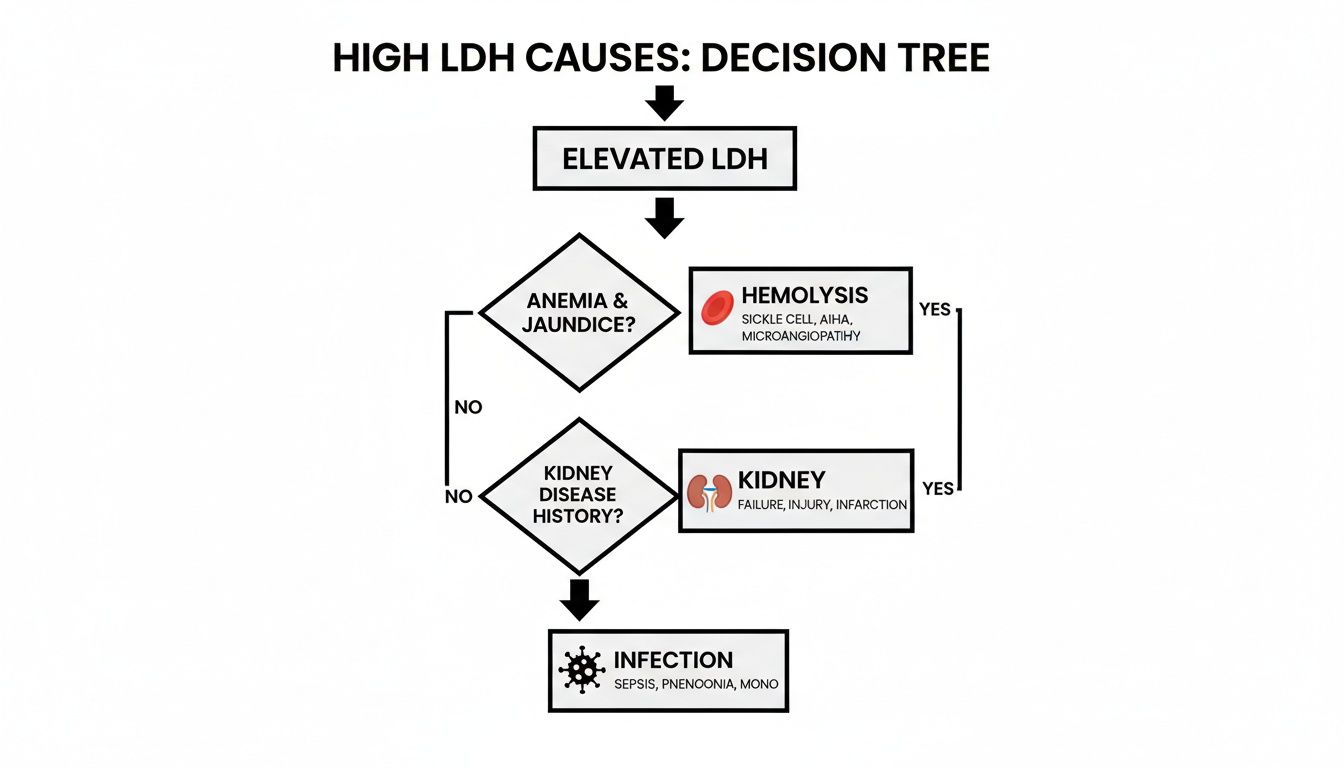
This visual highlights why a single marker can point to several different systems, underscoring the importance of comprehensive testing for an accurate picture.
Turning Data into Decisions
This structured approach helps you move from concern about a number to proactive decisions about your health. With Lola, you can monitor your LDH levels over time in the app, providing a clear view of your personal trends. This turns a potentially worrying result into a useful measure for managing and optimising your health for years to come.
Your Questions About LDH, Answered
Blood test results can be complex. Here are answers to common questions about LDH and what it means for your long-term health.
Can High Stress Alone Cause Elevated LDH Levels?
Chronic psychological stress isn't a direct cause, but it can create the conditions for elevated LDH by promoting systemic inflammation or straining your heart over time. The most direct link is with intense physical stress. A marathon or a heavy lifting session causes temporary muscle breakdown, releasing LDH. This is a normal, healthy part of the adaptive process, not a sign of pathology.
How Long Does LDH Take to Return to Normal After Exercise?
After a tough workout, LDH levels typically peak within 24 hours. They will then gradually return to your baseline over several days to a week. This is why context is critical. Always inform your doctor about recent intense exercise to differentiate between a normal training response and a potential health issue.
Getting to know your personal post-exercise LDH pattern is a powerful biofeedback tool for optimising recovery. It gives you real insight into how effectively your body is repairing itself—important for boosting long-term performance and avoiding overtraining.
Are There Specific Foods That Can Lower LDH?
No single food or supplement can directly lower LDH, because LDH is a marker of cellular activity—it's the smoke, not the fire. The most effective strategy is to address the root cause of the elevation.
Your action plan should focus on improving overall cellular health:
- Optimise recovery: Prioritise sleep, nutrition, and strategic rest days.
- Support your liver: Eat a nutrient-dense diet and be mindful of alcohol.
- Manage underlying conditions: Work with your doctor to address any identified health issues.
Ultimately, normalising your LDH is about building a more resilient, healthier body from the ground up.
Take control of your health metrics and understand your body's signals. With Lola, you get professional, at-home blood testing with NHS-standard lab analysis and a doctor's review, all tracked within our app. Start monitoring your trends and making informed decisions for your longevity today at https://lolahealth.com.
At-Home Blood Testing
Check your levels from home
Professional phlebotomist visit. Doctor-reviewed results in 2-5 days. Track your health with comprehensive blood panels.
→45-70 biomarkers tested · Venous blood draw · From £130