


While the standard normal magnesium level in the UK is officially pegged between 0.7 and 1.0 millimoles per litre (mmol/L), that simple range is just the first chapter in a much deeper story about your long-term health. Simply landing within this ‘normal’ window doesn’t guarantee you have the optimal levels needed to support a long and vibrant life. For those focused on longevity, the goal isn't just to be 'normal,' but to be optimal.
Why an Optimal Magnesium Level Is Your Longevity Powerhouse

Magnesium is far more than just another mineral on a blood test report. Think of it as a master regulator for healthy aging, quietly managing over 300 critical biochemical reactions in your body. Every second, this mineral is working behind the scenes, playing a vital role in everything from DNA repair and cellular energy production to stable nerve function and cardiovascular health.
For ambitious professionals and dedicated athletes, these functions are the very foundation of sustained high performance over a lifetime. Yet, here’s the problem: the standard serum magnesium test can be misleading. It only measures the magnesium circulating in your blood, which accounts for less than 1% of your body's total supply.
This is like checking a car's oil gauge. The gauge shows the level in the pan, but it tells you nothing about the quality of the oil actively protecting the engine's moving parts from wear and tear. Similarly, a blood test might show a "normal" level while hiding a significant deficiency deep inside your cells and bones, where magnesium performs its most critical longevity-promoting work.
The Problem With 'Suboptimal' Levels
This is where the idea of suboptimal magnesium levels becomes so important for longevity. You might be technically within the normal range but still lack enough magnesium to protect against age-related decline. This is a common grey area where you're not clinically deficient, but you're missing out on the full protective benefits of this powerful mineral.
For those of us pushing our physical and mental limits, these suboptimal levels can accelerate the aging process, showing up as:
- Persistent fatigue that drains your vitality
- Slower recovery from physical and mental stress
- Increased muscle soreness and cramping
- Difficulty managing stress, impacting long-term resilience
Ignoring these subtle signs is a missed opportunity. More importantly, it can accelerate the ageing process over time by allowing low-grade inflammation and cellular stress to build up unchecked, compromising your healthspan.
The Widespread UK Deficiency
The challenge of maintaining optimal magnesium is more common than you might think. A study of 8,000 Brits uncovered that around 70% of participants had low magnesium levels. The Government's own National Diet and Nutrition Survey also found that most children and teenagers fall short of recommended intakes.
For adults aged 19-64, the UK government advises a daily allowance of 300mg for men and 270mg for women. However, absorption can become more challenging after 55, meaning intake needs may increase to support healthy aging.
Here’s a quick guide to help you contextualise what your magnesium level might mean for your future health.
Understanding Your Magnesium Level at a Glance
| Magnesium Level (mmol/L) | Classification | Immediate Impact for Athletes & Professionals | Long-Term Longevity Risk |
|---|---|---|---|
| Below 0.7 | Deficient | High risk of muscle cramps, poor recovery, fatigue, and arrhythmia. Performance is significantly impaired. | Increased risk of osteoporosis, cardiovascular disease, and neurological issues. |
| 0.7 - 0.85 | Suboptimal | Noticeable fatigue, slower workout recovery, brain fog, and heightened stress response. | Contributes to chronic inflammation, metabolic dysfunction, and accelerated aging. |
| 0.85 - 1.0 | Optimal | Sharp mental focus, efficient energy production, strong stress resilience, and quick muscle recovery. | Supports healthy ageing, strong bones, protects cardiovascular function, and aids DNA repair. |
| Above 1.0 | High | Can cause nausea, lethargy, and low blood pressure. Rare from diet alone, often linked to supplementation. | Very high levels can lead to serious issues like irregular heartbeat and respiratory distress. |
This table shows why aiming for the higher end of the normal range, what we consider optimal, is a smart longevity strategy.
Your serum magnesium level is a snapshot, not the full story. True optimisation for longevity requires looking beyond the 'normal' range to ensure your cells have the fuel they need to thrive for decades to come.
Understanding your unique magnesium status is a non-negotiable step for anyone serious about long-term vitality. It's not just about avoiding deficiency; it's about actively building a foundation for a longer, healthier life. Gaining clarity on what constitutes normal ranges for key blood tests is an excellent starting point. Proactive, precise testing gives you the data needed to move from simply 'normal' to truly 'optimal.'
How Modern Life Silently Drains Your Magnesium

It’s a frustrating paradox many of us feel. You’re doing your best to eat well and stay active, yet you still feel just a bit off—constantly tired, stressed out, or taking ages to recover from a workout. The culprit might not be your effort, but the very environment we live in, which has become incredibly efficient at stripping our bodies of essential magnesium, compromising our long-term health.
Achieving a normal magnesium level isn't something that just happens anymore; it requires an active strategy to push back against a tide of modern-day depleting factors. This constant drain is precisely why so many high-achievers find it tough to stay on top of their levels, even when they’re living a seemingly healthy life.
The problem often starts right at the source: our food. Decades of intensive farming have systematically leached magnesium from UK soil. This means the spinach or almonds you’re eating today simply don't pack the same mineral punch as they did just 50 years ago.
The Impact of Soil Depletion
This isn’t just a tiny dip; it's a major shift in our nutritional landscape. So even if you're meticulously tracking your diet to hit your magnesium targets, the food itself might be letting you down, creating a deficit that can compound over the years.
This underlying deficit creates a perfect storm. Your body starts with less magnesium in the tank, right at the moment modern life starts demanding more from it. For busy professionals and committed athletes, this is a serious vulnerability for future health.
A recent report, combining data from the UK National Diet and Nutrition Survey (NDNS) and Office for National Statistics (ONS), painted a pretty stark picture. It revealed that a staggering 35% of British adults are living with suboptimal magnesium levels, contributing to a silent health issue impacting the entire nation. You can find more insights from the UK national health data on wecovr.com.
Stress: The Silent Magnesium Thief
Chronic stress is probably the single biggest drain on your magnesium stores, acting as an accelerator of the aging process. When you’re up against a tight deadline, your body’s ‘fight-or-flight’ response floods your system with stress hormones like cortisol and adrenaline.
Managing this hormonal surge requires a huge amount of magnesium. Worse still, these same hormones signal your kidneys to actively flush magnesium out of your body. It's a classic vicious cycle: stress depletes magnesium, and low magnesium makes you less able to cope with stress, leading to a state of chronic cellular strain.
In a high-stakes career, your body essentially sacrifices magnesium to manage constant pressure, leaving you progressively more depleted and vulnerable to burnout and accelerated aging over time.
For anyone in a demanding role, this relentless physiological tax makes it incredibly difficult to maintain a normal magnesium level without taking conscious, targeted action.
The Athlete’s Dilemma: Increased Demand and Loss
For athletes, magnesium is a double-edged sword. First, intense physical activity massively increases the body's demand for the mineral. You need it for energy production, muscle contractions, and cellular repair.
Second, you lose a significant amount of magnesium through sweat. Just one hour of hard exercise can cause a measurable drop in your body's reserves. This one-two punch of higher demand and faster loss means athletes have to be particularly smart about replenishing their stores to support long-term performance and recovery.
Dietary and Lifestyle Saboteurs
On top of poor soil quality and high stress, several common habits can trip you up, either by blocking magnesium absorption or by speeding up how quickly your body gets rid of it.
- Processed Foods: These are often stripped of their natural minerals. They also frequently contain phosphates, which can bind to magnesium in your gut and prevent your body from ever absorbing it.
- Caffeine: That daily coffee habit might be costing you. Caffeine is a diuretic, which means it makes you urinate more, causing your kidneys to excrete magnesium at a faster rate.
- Alcohol: Much like caffeine, alcohol has a diuretic effect. It directly messes with kidney function, leading to a significant loss of magnesium and other vital minerals.
Realising that these modern factors are actively working against your long-term health is the first step toward taking back control. It makes it clear why just ‘hoping for the best’ is no longer a viable strategy for maintaining a healthy magnesium level in our demanding world.
Recognising the Warning Signs of Magnesium Imbalance
Connecting the dots between magnesium science and your daily life starts with learning to listen to your body. Long before a blood test might flag a clinical deficiency, your system often sends out subtle signals that impact your longevity. Think of them as your body's early warning system, letting you know that magnesium stores are getting low.
For high-achievers, these early warnings are incredibly easy to write off. Persistent fatigue, nagging muscle cramps, or a dip in sleep quality can be quickly mistaken for simple burnout. In reality, these are classic signs that your body is struggling to maintain a normal magnesium level, compromising its ability to repair and regenerate.
Ignoring these messages is more than just a missed opportunity to optimise performance; it's a gamble with your long-term health. The signals don't just disappear; they tend to get louder.
The Subtle Symptoms of Low Magnesium
When your body doesn’t have enough magnesium (hypomagnesemia), it compromises hundreds of processes that govern your energy, mood, and physical resilience. This can show up in ways that feel frustratingly familiar to many busy professionals and athletes.
Common warning signs include:
- Persistent Fatigue and Weakness: You feel drained because your cells lack the magnesium needed for efficient energy production and repair.
- Muscle Cramps and Twitches: Involuntary muscle spasms are a hallmark sign. Magnesium is important for muscle relaxation; without enough, they can't switch off properly.
- Poor Sleep Quality: You might struggle to fall asleep or wake up repeatedly. Magnesium helps calm the nervous system and supports the deep, restorative sleep necessary for cellular repair.
- Anxiety and Restlessness: A constant feeling of being on edge can be linked to low magnesium, as it plays a key role in managing your body's stress-response system.
- Migraines and Headaches: For some people, insufficient magnesium can be a direct trigger for debilitating headaches by affecting blood vessel constriction and neurotransmitter function.
It’s important to see these symptoms not as personal failings but as valuable data. They are your body's way of telling you that a fundamental resource for longevity is becoming scarce.
High Magnesium Symptoms Are a Different Story
While low magnesium is common, it's also possible to have too much (hypermagnesemia). This is rare from diet alone and is almost always linked to over-supplementation, particularly in people with underlying kidney issues that impair their ability to filter out excess amounts.
The signs of high magnesium often include nausea, lethargy, muscle weakness, and low blood pressure. This really underscores the importance of testing your levels before you start a high-dose supplement regimen.
Ignoring the early warnings of magnesium imbalance is like ignoring a slow puncture in a tyre. At first, it's a minor inconvenience, but if left unaddressed, it can lead to a complete breakdown, impacting everything from your cardiovascular health to your cognitive function.
This isn't just a theoretical risk. Research shows just how critical maintaining a normal magnesium level is, especially as we age. One NHS Foundation Trust audit of older hospitalised patients found that 22.3% had low magnesium. Alarmingly, this deficiency was linked to acute cognitive decline in 33.8% of those cases, compared to just 13.3% in patients with normal levels. You can explore more insights from this study on magnesium and cognitive health on pmc.ncbi.nlm.nih.gov.
Treating these warning signs as actionable intelligence is a powerful longevity strategy. By addressing the root cause, an imbalanced magnesium level, you not only enhance your immediate performance but also build a more resilient foundation for decades of future health.
Getting an Accurate Picture of Your Magnesium Levels
If you're serious about optimising your health for longevity, you can't rely on guesswork. The first real step is to get concrete data on where you stand.
But here’s the important part: not all tests give you the full story. The standard serum magnesium test you might get from your GP often paints a dangerously incomplete picture. It measures the amount of magnesium floating around in your blood, which accounts for less than 1% of your body's entire supply.
This can lull you into a false sense of security. Your body works hard to keep your blood magnesium levels stable. If stores are low, it will pull magnesium from your cells and bones to maintain that balance. So, a "normal" serum result could be hiding a serious deficiency where it actually counts—inside your cells, impacting your long-term health.
Why the RBC Magnesium Test is the Gold Standard
For a truly insightful and actionable measurement for longevity, the Red Blood Cell (RBC) magnesium test is a much better choice. This test measures the magnesium levels inside your red blood cells, giving you a far more accurate reflection of your body’s true reserves over the last 2-3 months.
Here’s a simple analogy to make sense of it:
- A serum test is like counting delivery lorries on the motorway. It shows you what’s in transit, but it tells you nothing about whether the warehouses are actually stocked.
- An RBC test is like doing a stocktake inside the warehouse. It reveals the actual reserves of magnesium your body has on hand to support long-term health and cellular function.
For anyone committed to their healthspan, the RBC test provides the kind of data you need to make genuinely informed decisions about your diet and supplements.
The Importance of a Clinically Accurate Sample
Getting reliable data isn't just about choosing the right type of test; it's also about how the sample is collected and analysed. When it comes to a vital biomarker like magnesium, precision is everything.
This is why a professional venous blood draw remains the gold standard. Services like Lola use qualified phlebotomists who can collect your sample at home or in a clinic, ensuring a high-quality sample with a 99.8% success rate. This approach practically eliminates the risk of user error that can skew the results of less reliable finger-prick tests.
Your sample is then processed in UKAS-accredited labs—the same high standard the NHS trusts. This guarantees the results you get are not just convenient, but clinically precise and dependable.
Interpreting Your Results for Longevity
Once you have your results, the real work begins. The goal isn't just to scrape by in the 'normal' range; it's to be optimal. For longevity, this means aiming for the upper end of the normal range, ensuring your body has plenty of resources to manage stress, repair DNA, and produce energy efficiently for years to come.
Modern health services make this process incredibly straightforward. With an app like Lola's, for example, you don't just get a number on a page. You get a clear explanation of what that number means for your personal longevity goals.
Here you can see how the Lola app helps you track lifestyle factors alongside your biomarker data.
This lets you connect the dots between your daily habits, your sleep quality, stress levels, and exercise routine, and what’s happening inside your body.
Being able to track your levels over time is a significant advantage. It allows you to see the real-world impact of your dietary tweaks or new supplement regimen. You can confirm that what you're doing is actually working and make small adjustments to keep your levels in that optimal zone for long-term health. To understand more about what to test for, you can learn more about a comprehensive blood test for minerals and vitamin deficiencies and how it fits into a proactive health strategy.
Your Action Plan for Optimal Magnesium Levels
Knowing your magnesium status is the first step, but turning that knowledge into action is what builds a foundation for a long and healthy life. Optimising your magnesium doesn't require a massive life overhaul. It’s all about making smart, consistent choices that compound over time.
I like to break down the process into three core areas: Diet, Supplementation, and Lifestyle. By tackling each one, you create a powerful combined effect that not only boosts your magnesium levels but also reinforces your long-term health and performance. Let's get started on building your personal roadmap.
Fortify Your Diet with Magnesium Powerhouses
The most sustainable way to build healthy magnesium levels starts on your plate. While modern farming has left our soil depleted, you can still make huge strides by focusing on foods naturally packed with this vital mineral. The key is to weave them into your meals consistently.
Here are some of the top magnesium-rich foods you can easily find in the UK:
- Dark Leafy Greens: Spinach and Swiss chard are nutritional champions, giving you a solid dose of magnesium. A simple side salad or some greens wilted into your pasta makes a real difference.
- Nuts and Seeds: Pumpkin seeds, almonds, and cashews are incredibly dense sources. A small handful is the perfect snack to support cellular health.
- Legumes: Black beans, lentils, and chickpeas are fantastic. They’re not only high in magnesium but also give you a great hit of fibre and plant-based protein.
- Dark Chocolate: Yes, you read that right. A little high-quality dark chocolate (70% cocoa or higher) can be a delicious way to top up your magnesium.
Getting these foods into your diet doesn't have to be a chore. Start small. Add a portion of leafy greens to one meal each day or swap your usual afternoon snack for a handful of almonds. These small habits are investments in your future health.
Choose the Right Supplement for Your Goals
While a food-first approach is the best foundation, smart supplementation can be a significant advantage for longevity, especially if testing shows your levels are low or if your lifestyle places high demands on your body. But here's the catch: not all supplements are created equal. Choosing the right form of magnesium is absolutely critical to getting the results you’re after.
Before you even think about buying a supplement, get your levels tested. Supplementing blindly is a waste of time and money. Always let data guide your decisions to ensure you're addressing your body's specific needs for long-term wellness.
The journey from a basic screening test to achieving a truly optimal level is a process, as this flowchart shows.
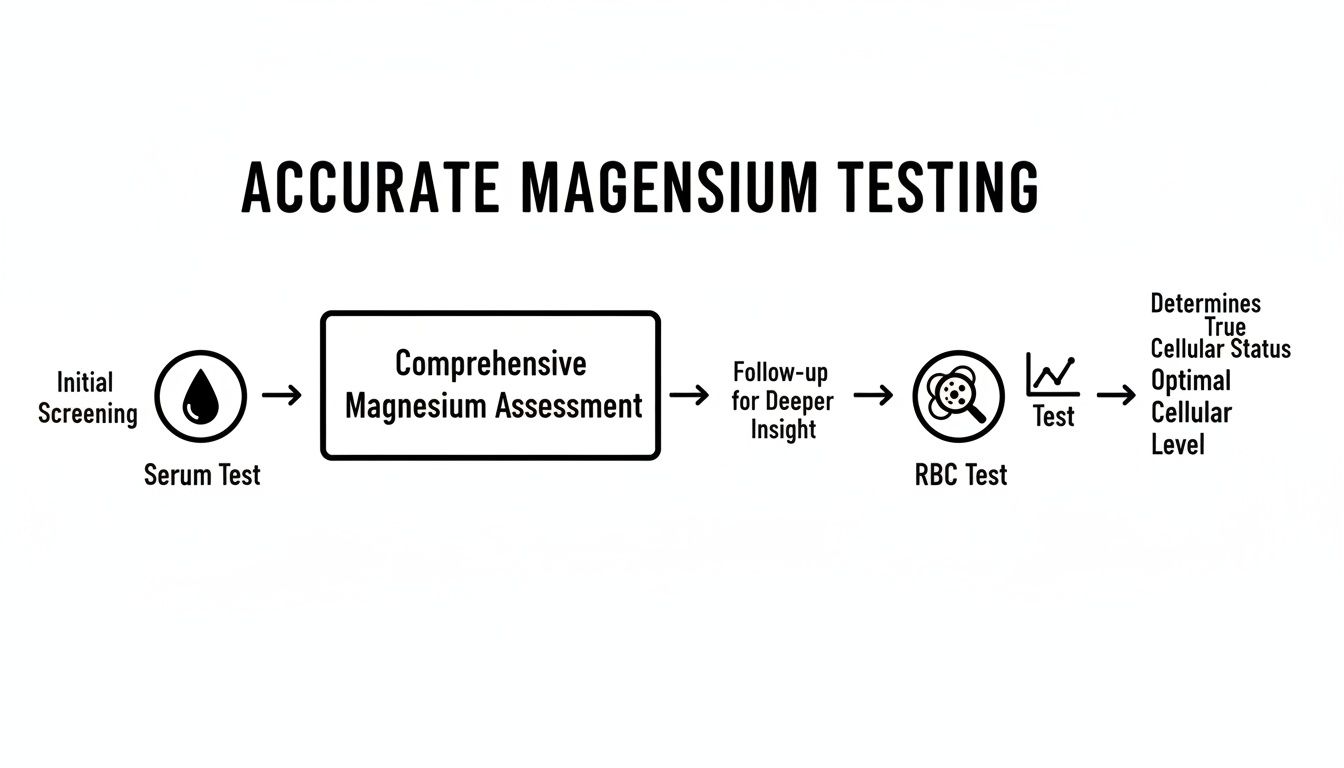
As you can see, a simple serum test is just the starting point. A more detailed RBC test gives you a much clearer picture of what's happening inside your cells, which is what really matters for optimising your magnesium.
Different forms of magnesium are absorbed differently by the body and come with their own unique perks. If you're building a holistic wellness plan, you might also want to look into the role of the best longevity supplements to see how they can support your goals.
To help you navigate the options, here's a quick comparison of the most common types of magnesium supplements.
Choosing the Right Magnesium Supplement for Your Goals
| Type of Magnesium | Primary Benefit | Best For | Things to Consider |
|---|---|---|---|
| Magnesium Glycinate | High bioavailability, calming effect | Improving sleep quality, reducing anxiety, and general replenishment without laxative effects. | Excellent for evening use to promote relaxation and restful sleep. |
| Magnesium Malate | Energy production | Combating fatigue, supporting muscle function, and reducing muscle soreness. | Often preferred by athletes and those with chronic fatigue; best taken earlier in the day. |
| Magnesium Citrate | High bioavailability, laxative effect | General magnesium replenishment and supporting regular bowel movements. | Can cause digestive upset in sensitive individuals if the dose is too high. |
| Magnesium Threonate | Crosses the blood-brain barrier | Supporting cognitive function, memory, and long-term brain health. | A specialised form focused on neurological benefits, a key component of healthy aging. |
This table should make it easier to pinpoint which form aligns best with what you're trying to achieve, whether it’s better sleep, more energy, or sharper focus.
Optimise Your Lifestyle to Preserve Magnesium
Finally, let's talk about your daily habits. You can eat all the spinach in the world and take the perfect supplement, but if your lifestyle is constantly draining your magnesium reserves, you’ll just be treading water.
Here are two powerful lifestyle tweaks to protect your magnesium stores for the long run:
- Master Your Stress Response: Chronic stress is a notorious magnesium thief. Bringing in stress-management techniques like mindfulness, deep-breathing exercises, or even just a 15-minute walk in nature can lower cortisol and help your body hold onto this precious mineral, reducing the long-term wear and tear on your system.
- Replenish After Exercise: Athletes lose a significant amount of magnesium through sweat. It’s important to replenish post-workout. Have a magnesium-rich meal, or consider an Epsom salt (magnesium sulphate) bath. It’s a great way to soothe sore muscles and support recovery.
To round things out, pairing your nutritional strategy with a solid fitness routine can work wonders for your overall health. If you're looking for tools and guidance to stay active, platforms like GrabGains can be a great resource.
By bringing these three pillars together, diet, supplements, and lifestyle, you create a complete system to get your magnesium levels where they need to be for peak performance and lasting health.
Got Questions About Your Magnesium Levels?
It's completely normal to have a few questions when you start digging into health markers like magnesium. Once you realise just how vital this mineral is for your long-term health and daily performance, practical questions about what to do next are the logical next step.
Let's walk through some of the most common queries to give you the clarity you need to take control of your health.
How Quickly Can I Actually Improve My Magnesium Levels?
You can often feel improvements in symptoms like muscle cramps or sleep quality within a few weeks of consistent changes. However, restoring your body's deep cellular stores, the key to long-term benefits, is a longer process that can take several months.
This is exactly why follow-up testing is so important as a longevity tool. Checking your levels every three to six months gives you concrete proof that your strategy is working. It allows you to fine-tune your approach, moving you from just ‘normal’ to genuinely optimal for a long, high-performing life.
Is It Possible to Get Too Much Magnesium From Food?
This is a great question, and thankfully, the answer is a reassuring one. It's virtually impossible to overdose on magnesium from food alone. Your kidneys are brilliant at their job; they simply filter out any excess magnesium from your diet and get rid of it through your urine.
The real risk of dangerously high magnesium levels (hypermagnesemia) comes almost entirely from overdoing it with supplements, especially for anyone with poor kidney function. It all comes back to a core principle of proactive health management: always test first to find out what your body actually needs before you start supplementing.
Relying on food for your magnesium is both safe and effective. Your body knows how to handle it, taking what it needs and discarding the rest, which prevents any risk of overload.
Are At-Home Finger-Prick Tests Good Enough for Magnesium?
While the idea of a quick finger-prick test at home is tempting, they just aren't as reliable for measuring minerals like magnesium when compared to a proper venous blood draw. A professional draw provides a much larger and cleaner sample, reducing the risk of contamination and allowing for a far more precise analysis.
When you're dealing with a biomarker as important as magnesium, where small fluctuations can impact your long-term health, you want the most accurate data possible. For anyone serious about optimising their health for longevity, the superior accuracy of a venous blood draw is the gold standard.
Do Athletes Really Need More Magnesium?
Yes, absolutely. The demands of training ramp up your body's magnesium requirements significantly. This is due to magnesium loss through sweat and its increased use for energy production, muscle function, and cellular repair.
If levels are too low, you'll feel it. It can lead to weaker performance, more cramping, and slower recovery. That’s why athletes should aim for the higher end of the normal range, around 0.85-1.0 mmol/L, to support output and build resilience. For an athlete focused on a long career, regular testing is an essential part of managing performance and preventing injury.
Stop guessing and start knowing. With Lola, you get professional, at-home blood testing that delivers clinically accurate insights into your magnesium levels and other key health markers. Our app helps you track your progress and truly understand what your results mean for your performance and longevity. Discover the clarity of Lola today.
Test This Biomarker at Home
This biomarker is included in our Magnesium Test and Peak Insights 70 — results in 2-3 working days with GP-reviewed insights.
At-Home Blood Testing
Check your levels from home
Professional phlebotomist visit. Doctor-reviewed results in 2-5 days. Track your health with comprehensive blood panels.
→45-70 biomarkers tested · Venous blood draw · From £130