


Let’s get straight to it: "elevated liver enzymes" is a sign that your liver cells are under stress. Think of it as an early warning system for your long-term health. When liver cells get inflamed or damaged, they release certain enzymes into your bloodstream, and a blood test picks this up. While a high reading might seem alarming, it’s not a diagnosis - it’s a important clue about your body's internal state, and a powerful opportunity to take proactive steps towards a longer, healthier life.
Your Guide to Understanding Elevated Liver Enzymes
Seeing "elevated liver enzymes" on a blood test can be unsettling. But instead of worry, view it as an opportunity. This result is a biological signal flare from one of your body’s hardest-working organs. For anyone serious about health and longevity, from dedicated athletes to driven professionals, learning to interpret this signal is the first step toward taking meaningful action that can extend your healthspan.
Your liver is a true powerhouse, juggling over 500 essential jobs like filtering toxins, managing metabolism, and storing nutrients. When its cells, known as hepatocytes, are put under pressure, whether from diet, alcohol, certain medications, or even a tough workout, they can get damaged and leak enzymes. A standard blood test measures these enzymes, giving you a real-time snapshot of your liver's health and a direct insight into your future well-being.
Why This Matters for Your Long-Term Health
It’s tempting to ignore a single test result, but these signals can have serious long-term consequences. Chronic, low-grade liver inflammation can silently progress over years, potentially leading to fibrosis (scarring) or cirrhosis, which can shorten your lifespan. The good news is that the liver is incredibly resilient and has a remarkable ability to heal. Catching elevated enzymes early gives you a massive advantage in the long game of health.
This isn't just a number on a lab report; it's a call to action. By understanding what the data is telling you, you can make targeted changes that not only normalise your enzyme levels but also boost your overall health and longevity.
It’s like the check-engine light in a high-performance car. You wouldn't ignore it and hope for the best. You'd find out what’s wrong to keep the car running smoothly for the long haul. Addressing the root cause of elevated liver enzymes is a fundamental part of any strong longevity strategy.
This guide is here to give you that knowledge. We'll break down:
- What enzymes like ALT and AST reveal about your cellular health.
- The most common lifestyle factors that can impact your long-term liver function.
- Actionable steps to get your liver health back on track for a longer life.
Learning to read your body’s signals is the cornerstone of optimising your health. By understanding these results, you're no longer just reacting to a test - you're proactively managing your well-being and paving the way for a healthier future.
Your Liver’s Key Messengers: What The Enzymes Are Telling You
When your blood test results come back, that list of enzyme names can look a bit like alphabet soup. Don't worry, you don't need a medical degree to get the gist. The best way to think of these enzymes is as messengers, each with a very specific story to tell about what's going on inside your liver and what it means for your long-term health.
Let’s try a simple analogy. Picture your liver as a massive, bustling factory. The different enzymes are like highly specialised sensors, each one monitoring a specific part of the production line. If something goes wrong, a machine overheats or a pipe gets blocked, the relevant sensor sends out an alert.
That's exactly what a blood test picks up. When your liver is stressed or damaged, it releases these enzymes into your bloodstream, and that’s what we measure.
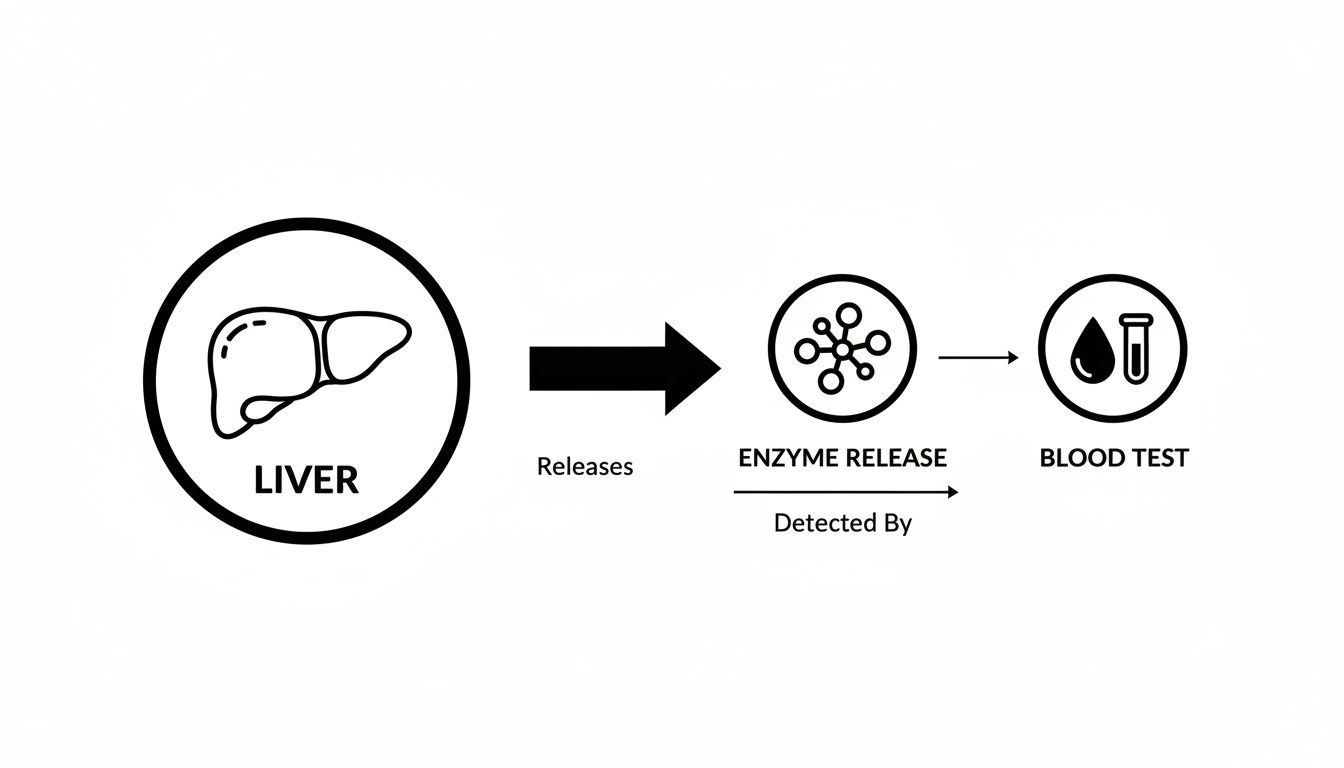
So, a spike in your enzyme levels is a direct signal from inside the factory. Now, let’s meet the key players.
The Liver Cell Health Monitors
Two of the most important names you'll see are Alanine Aminotransferase (ALT) and Aspartate Aminotransferase (AST). These are your go-to indicators for the health of the liver cells themselves.
-
ALT (Alanine Aminotransferase): Think of ALT as a true liver specialist. It's found almost exclusively inside liver cells, so if its levels are up, it’s a very strong and specific signal that your liver cells are under some kind of stress or injury. It's our most direct marker.
-
AST (Aspartate Aminotransferase): AST is also plentiful in the liver, but it's more of a generalist. You'll find it in your heart, muscles, and kidneys, too. This means a rise in AST could point to a liver issue, but it might also be from something as simple as muscle soreness after a heavy gym session.
This is where the real detective work begins. We don't just look at one number; we look at the relationship between them. The AST/ALT ratio offers powerful clues about what might be causing the problem. For instance, an AST level more than double the ALT level (a 2:1 ratio) is a classic pattern seen in alcohol-related liver strain. A lower ratio, on the other hand, is more typical in conditions like non-alcoholic fatty liver disease (NAFLD).
Looking at these patterns over time provides a far richer story than a single snapshot ever could. For a more detailed look, you can check out our guide on understanding liver function test results.
The Bile Duct Sentinels
Next up are the enzymes that keep an eye on your liver's drainage system - the bile ducts. These are the tiny tubes responsible for transporting bile, which is essential for digestion, from your liver to your gallbladder and intestines.
The main sentinels for this system are Alkaline Phosphatase (ALP) and Gamma-Glutamyl Transferase (GGT).
-
ALP (Alkaline Phosphatase): This enzyme is concentrated in the cells lining your bile ducts. So, if ALP is high, it can suggest a problem with bile flow - maybe a blockage from a gallstone or some inflammation. But, just like AST, ALP is also found elsewhere, particularly in bone, so it's not always a liver-specific signal.
-
GGT (Gamma-Glutamyl Transferase): This is where GGT comes in handy. It's also very sensitive to bile duct problems and often rises alongside ALP. Seeing both go up together helps us confirm that the problem is likely coming from the liver's "plumbing." GGT is also known to be quite sensitive to alcohol and can be raised by certain medications.
A helpful way to understand the main enzymes is to see them side-by-side.
Key Liver Enzymes and Their Primary Functions
| Enzyme | Primary Location | What High Levels May Indicate |
|---|---|---|
| ALT | Almost exclusively in liver cells | Direct liver cell stress or damage |
| AST | Liver, heart, muscle, kidneys | Liver cell damage, but also muscle injury |
| ALP | Bile ducts, bone, placenta | Bile flow obstruction, bone disorders |
| GGT | Bile ducts, liver cells | Bile flow issues, alcohol use, medication effects |
This table neatly summarises where each 'sensor' is located and what its 'alert' typically means.
An isolated rise in ALP and GGT, with normal ALT and AST, points investigators away from direct liver cell damage and towards a potential issue with the plumbing of the liver. This distinction is important for accurate diagnosis and effective action.
By getting to know these key players and the patterns they create, you can move beyond just seeing "elevated liver enzymes." You can begin to understand the specific messages your body is sending, which help you to have more informed conversations with your doctor and take control of your long-term health.
The Most Common Causes of Elevated Liver Enzymes
While a high enzyme reading can be triggered by many things, a handful of lifestyle-related factors are behind the vast majority of cases. These aren't rare conditions; they're deeply connected to modern life - our diet, how we manage stress, and our social habits. Understanding these common causes is the first step toward taking back control and protecting your long-term health.
Think of your liver as incredibly resilient, but it does have its limits. Constant exposure to certain stressors wears it down over time. For many people, the two biggest pressures come from what they eat and what they drink, often leading to two very common, yet distinct, conditions.
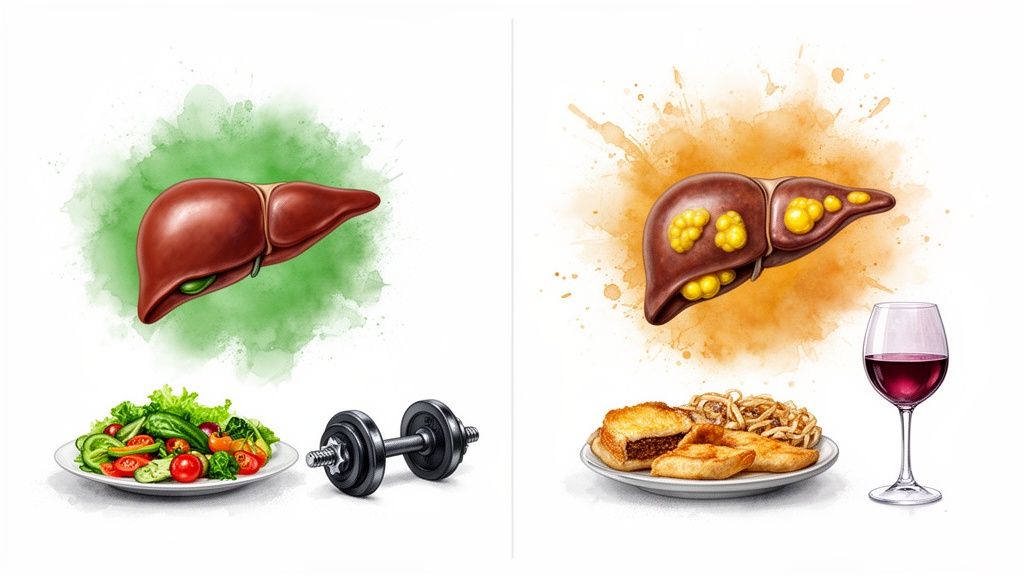
Let’s dig into the primary drivers behind abnormal liver function tests, starting with the one that has become a silent epidemic.
Non-Alcoholic Fatty Liver Disease (NAFLD): The Modern Culprit
These days, the single most common reason for elevated liver enzymes has nothing to do with alcohol. It’s a condition called Non-Alcoholic Fatty Liver Disease (NAFLD), where excess fat builds up in liver cells. Imagine your liver cells as tiny, perfectly functioning balloons; with NAFLD, these balloons start to fill with droplets of fat, causing them to swell and become stressed.
This stress triggers inflammation and damage, which in turn prompts the cells to leak enzymes like ALT and AST into the bloodstream. NAFLD is a 'silent' disease because it rarely causes symptoms in its early stages, making proactive blood testing the only reliable way to catch it and protect your future health.
So, what fuels this condition? It's closely tied to our overall metabolic health and driven by factors that are becoming all too common:
- Excess body weight, particularly visceral fat around the abdomen.
- Insulin resistance or Type 2 diabetes.
- High cholesterol and triglycerides.
- A diet high in processed foods, sugar, and unhealthy fats.
The rise of NAFLD is a direct reflection of our changing lifestyles. In the UK, it affects up to 1 in 5 people. The numbers are even more stark when you look at the obesity epidemic - prevalence jumps to a staggering 70% in obese individuals. It has become a top driver of liver disease deaths, second only to alcohol in working-age losses.
The good news is that NAFLD is often reversible. Making meaningful lifestyle changes focused on diet, exercise, and weight management can significantly reduce liver fat, allowing the organ to heal and enzyme levels to return to normal. This is a powerful step towards ensuring your liver supports your health for decades to come.
The Impact of Alcohol Consumption
While NAFLD has taken the top spot, alcohol remains a major cause of liver strain. Your liver breaks down alcohol, but this process creates toxic by-products. Regular or excessive drinking forces the liver to work overtime, leading to inflammation and cellular damage that can shorten your healthspan.
This is why enzymes like GGT are particularly sensitive to alcohol intake. A high GGT can be one of the earliest signs that alcohol is straining your liver, long before significant damage occurs. Similarly, a pattern where the AST level is more than double the ALT level often points towards alcohol-related liver stress. Our guide to the GGT blood test offers a deeper look into this important marker.
It’s important to realise that you don’t have to be a heavy drinker to see an impact. For some people, even moderate or social drinking can contribute to persistently elevated enzymes over time. It all comes down to how your body individually processes alcohol and the cumulative effect of your drinking habits.
Both NAFLD and alcohol-related liver stress highlight a vital principle for longevity: your daily choices have a direct, measurable impact on your internal health. Early detection through regular testing gives you the critical data needed to make informed adjustments, creating an opportunity to reverse the damage and protect your liver for the long term.
Hidden Culprits Like Medications and Intense Exercise
It’s easy to point the finger at diet and alcohol when liver enzymes are high, but sometimes the cause is hiding in plain sight. Things you do every day, from taking a painkiller to hitting the gym, can cause temporary spikes in your results. Understanding these less obvious culprits is important for separating a temporary blip from a genuine health concern that could impact your longevity.
Think of your liver as the body's main processing plant. Every substance you ingest, from your morning coffee to prescription medication, has to pass through it. This constant workload means that sometimes, the liver's cells get a little stressed, leading to a short-term, reversible rise in enzymes.
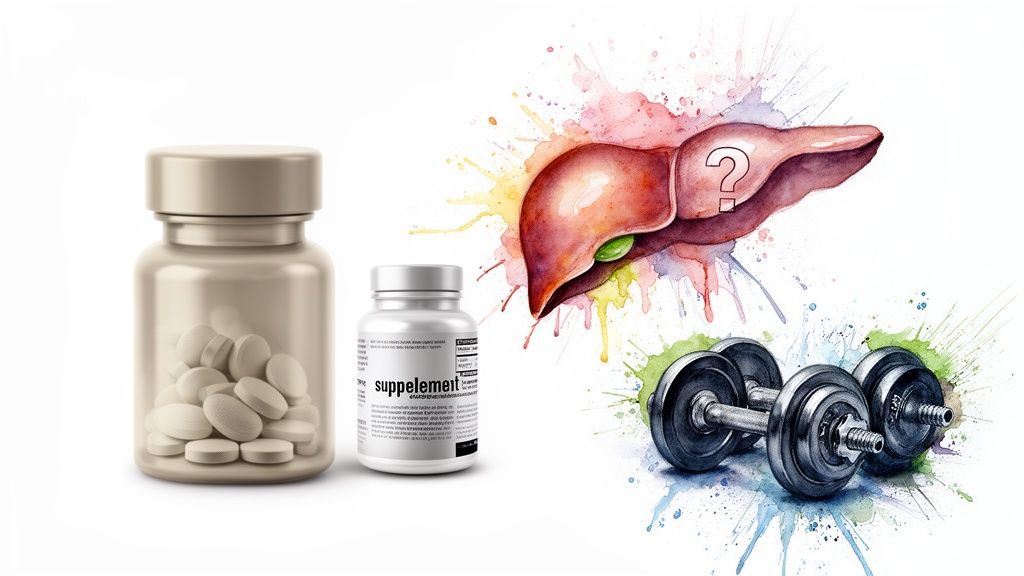
Medications and Supplements as Potential Stressors
It’s not just powerful prescription drugs that put a strain on your liver. Common over-the-counter remedies and even "all-natural" health supplements can be surprisingly taxing. As your liver works to break these down, it can trigger mild, temporary inflammation.
A few examples you might find in your own home include:
- Over-the-counter pain relievers: Paracetamol is a classic example. It’s perfectly safe at the right dose, but taking too much or for too long is a well-known cause of liver stress.
- Prescription medications: A whole range of drugs, from statins for cholesterol to certain antibiotics and anti-inflammatories, can nudge enzyme levels up.
- Health supplements: This is a big one. Just because something is sold as "natural" doesn't mean it gets a free pass. Some herbal supplements, high-dose vitamins, and workout-enhancing compounds can place a significant burden on the liver.
In some cases, specific medical treatments are known to affect the liver; for instance, understanding targeted therapy side effects is vital for anyone undergoing such a regimen. The key takeaway isn't that these substances are bad, but that being completely transparent with your doctor about everything you're taking is essential.
Intense Exercise: A Key Distinction for Athletes
If you're into fitness, this one’s for you. Strenuous exercise, particularly heavy weightlifting, causes tiny micro-tears in your muscle fibres. This is a totally normal and necessary part of getting stronger.
Here's the catch: the enzyme AST (Aspartate Aminotransferase) isn't just in your liver; it’s also found in your muscle cells. When those muscle cells break down after a tough workout, they release AST into your bloodstream. The result? A temporarily elevated AST level that has absolutely nothing to do with your liver's health.
A post-workout spike in AST is a classic example of why context is king. Without knowing about your recent training, a doctor might misinterpret this signal as a liver problem. It’s the perfect illustration of a benign fluctuation versus a genuine health concern.
This is precisely why tracking your health over time is so powerful. A single high AST reading the day after a brutal leg session is probably just noise. But if that number stays high week after week, even on your rest days, then it’s a signal worth investigating. Making this distinction helps avoid needless worry and builds a true picture of your liver's condition.
Looking at Less Common (but More Serious) Causes
While the usual suspects like diet and alcohol account for most cases of high liver enzymes, sometimes the root cause is something less common but more serious. It's important to know about these other possibilities – not to worry you, but to ensure you are fully informed. If you've made positive lifestyle changes and your levels are still high, being aware of these conditions helps you and your doctor dig a little deeper.
Think of it as good detective work. Once you’ve ruled out the obvious culprits, you need to broaden the investigation. Leaving no stone unturned is the best way to protect your long-term health, especially if your results stay stubbornly high or you’re experiencing other symptoms.
Viral Hepatitis: The Silent Attacker
Viral hepatitis is simply liver inflammation caused by a virus. The ones we hear about most are Hepatitis B and Hepatitis C, both of which can linger in the body for years, becoming chronic problems. These viruses can quietly damage liver cells over a long period, often with no obvious symptoms until things get serious.
This slow, simmering damage is what leads to a steady trickle of liver enzymes into your blood. That's why blood testing is so critical for catching it early.
- Hepatitis B (HBV): There's a vaccine for this, which is great, but a chronic infection still needs careful management to prevent long-term liver issues.
- Hepatitis C (HCV): Modern treatments are incredibly effective, but the challenge is that many people don't even know they have the virus until their liver is already significantly damaged.
If your doctor suspects viral hepatitis, a few specific blood tests can quickly give you a clear yes or no, paving the way for effective treatment.
When Your Own Body Turns Against Your Liver
Sometimes, your immune system gets its wires crossed and starts attacking your healthy liver cells. This is a condition called autoimmune hepatitis. This "friendly fire" from your own body causes chronic inflammation and damage, which shows up as consistently high ALT and AST levels. It tends to be more common in women, and the symptoms, like fatigue, can be frustratingly vague.
Autoimmune hepatitis needs a specialist to diagnose and manage it, usually with medications that help dial down the immune system's attack. Getting onto this early is vital to stop the inflammation from causing permanent scarring (cirrhosis) and protect your liver function for the future.
Inherited Conditions That Affect the Liver
Finally, some liver problems are simply down to genetics. One of the most common genetic disorders affecting the liver is hereditary hemochromatosis. In simple terms, it makes your body absorb too much iron from the food you eat. All that extra iron has to go somewhere, and it often ends up being stored in your liver.
Over time, this iron overload becomes toxic, damaging liver cells and pushing enzyme levels up. If it isn't treated, it can lead to severe liver disease. The good news? Once diagnosed, it’s easily managed by regularly giving blood (a procedure called phlebotomy) to remove the excess iron. It's a perfect example of how proactive testing can turn a serious genetic risk into a completely manageable condition.
Your Action Plan for Lowering Liver Enzymes
Seeing a blood test result with elevated liver enzymes is a clear signal to take positive, decisive action. This isn’t about a quick fix. It's about making smart, sustainable lifestyle changes that support your liver's ability to repair itself—a cornerstone of your long-term health and vitality.
Let’s walk through the roadmap for turning that data into a powerful longevity plan.
The very first step is straightforward: confirm the reading. A single high result can be a temporary blip. Your doctor will likely recommend a follow-up test. This helps establish if the elevation is a persistent trend, confirming there's an underlying issue that needs your attention.
Once a trend is confirmed, the focus shifts to powerful, evidence-backed lifestyle changes that can make a real difference to your long-term health.
Embrace a Liver-Friendly Diet
What you eat has a direct impact on your liver. The goal is to ease the burden on your liver cells and reverse processes like fat accumulation. Adopting a Mediterranean style of eating is one of the most effective strategies for longevity.
This isn't a restrictive diet, but a way of eating that emphasises:
- Whole Foods: Think fruits, vegetables, whole grains, and legumes.
- Healthy Fats: Focus on sources like extra virgin olive oil, nuts, seeds, and avocados.
- Lean Proteins: Include plenty of fish (especially oily fish rich in omega-3s), poultry, and plant-based proteins.
- Limiting Processed Foods: Actively cut back on sugary drinks, white bread, pastries, and anything high in saturated and trans fats.
This way of eating fights inflammation, improves insulin sensitivity, and can directly reduce liver fat, giving your organ the space it needs to heal. As you think about what to drink, you might wonder about things like non-alcoholic beer. You can explore that question further by reading this piece on Is Non Alcoholic Beer Bad For Your Liver.
Move with Purpose
Exercise is a non-negotiable tool for liver health. It works its magic by promoting weight loss, directly reducing liver fat, and making your body more sensitive to insulin—all key factors in a long and healthy life. The key is to find a routine you genuinely enjoy and can stick with.
A balanced plan should include both cardio and resistance training. Aim for at least 150 minutes of moderate-intensity aerobic activity, like a brisk walk, a bike ride, or swimming, each week. It's also a great idea to add two or more days of strength training to build muscle, which further boosts your metabolic health.
Manage Your Weight and Alcohol Intake
For many people, getting to and maintaining a healthy weight is the single most effective way to bring liver enzymes back to normal. Even a modest weight loss of just 5-10% of your body weight can have a dramatic effect, significantly reducing liver fat and calming inflammation.
At the same time, it’s important to take an honest look at your relationship with alcohol. Alcohol misuse is a massive driver of liver problems in the UK, where liver disease tragically kills over 11,000 people every year. Regularly going over the Chief Medical Officers’ low-risk guideline of 14 units a week puts a direct, toxic strain on your liver. You can learn more about the impact of alcohol on liver health from the British Liver Trust.
Taking control of your liver health is one of the most powerful investments you can make in your longevity. By focusing on diet, exercise, and mindful consumption, you're not just lowering numbers on a test; you're building a more resilient foundation for a healthier future.
By putting these strategies into practice and keeping an eye on your progress with follow-up testing, you can actively work towards normalising your enzyme levels. For those who want a convenient way to track their progress from home, options like an at-home liver function test can provide incredibly valuable insights. This help you with the practical tools needed to turn knowledge into tangible, lasting health improvements.
Your Questions Answered
So, what happens next? Knowing what causes high liver enzymes naturally leads to more questions. Let's tackle some of the most common ones to help you feel more confident about your long-term liver health.
Can My Liver Enzymes Return to Normal?
Yes, they absolutely can. The liver is an incredible organ with a powerful ability to repair and regenerate itself. In many cases, once you identify and address the root cause – whether that's your diet, alcohol intake, or a certain medication – your enzyme levels can fall back into a healthy range.
Think of it this way: lifestyle changes are your best tools for the job. Things like eating a more balanced diet, getting regular exercise, managing your weight, and cutting back on alcohol can give your liver the break it needs to heal. Regular blood tests are a great way to see how you're getting on and watch those positive changes happen in real time.
How Worried Should I Be About a Single High Liver Enzyme Result?
A one-off, slightly high reading isn't necessarily a reason to panic. Your enzyme levels can temporarily spike for all sorts of reasons, from a really strenuous workout to a recent cold or even certain over-the-counter supplements.
What really matters for your long-term health is the pattern over time and just how high the levels are. This is why a follow-up test is often suggested. A consistently high reading, or one that's significantly elevated, is the real signal that it's time to dig a bit deeper to find out what's causing it.
It's important to remember that elevated liver enzymes often come with no symptoms at all, especially in the early stages of conditions like fatty liver disease. That's why it's so often called a ‘silent’ condition.
When symptoms finally do show up, they can be easy to dismiss – maybe some tiredness or a dull ache in your upper right abdomen. More serious signs like jaundice (yellowing of the skin and eyes), dark urine, or swelling only tend to appear when the liver damage has become more advanced. This is exactly why proactive blood testing is such a vital tool for catching problems early and protecting your long-term health.
Take control of your health by understanding what your body is telling you. With Lola, you get professional at-home blood testing, analysis by UKAS-accredited labs, and a doctor's review of your results, all delivered through an easy-to-use app. Discover your health trends and take action today by visiting https://lolahealth.com.
At-Home Blood Testing
Check your levels from home
Professional phlebotomist visit. Doctor-reviewed results in 2-5 days. Track your health with comprehensive blood panels.
→45-70 biomarkers tested · Venous blood draw · From £130